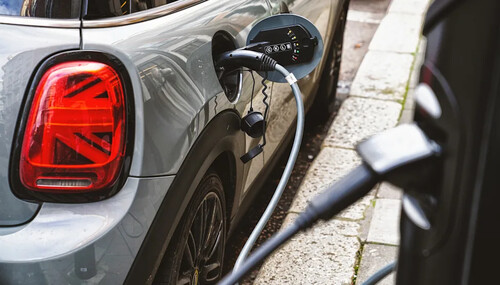
Ryan Mitchell · 4 months ago@ryanmitchell1772% Of New EV Buyers Just Traded In A Gas Car, Even After Losing The $7,500 Credit Liked by+1 othersPost commentRelated PostsA Fully Functional Boeing T50 Jet Turbine Engine Just Surfaced on eBay for $7,500 87 · Madeleine Roy · 2 months agoCar Prices Are Near $50,000, but Buyers Keep Returning to These BrandsParker Hill · 13 days agoUS vs China EV Readiness Index: It's Not Even CloseLily Campbell · 17 days agoWhy The Gas Pump Keeps Stopping (Even Though Your Tank Isn't Full) 46 · Matthew Moreau · 27 days agoOregon's EV Rebates Are Back. Here's How To Get Up To $7,500 90 · Evan Lavoie · 2 months agoAverage Monthly New Car Payment in U.S. Hits $787 a Month, Over 25% of Buyers Financing for 7+ YearsJacob Macdonald · 15 days ago2028 Jaguar Type 01 EV Revealed With 1,015 HP, A 400-Mile Range And Even Wilder Looks Than The ConceptConnor Carter · 16 days agoEven as gas price spikes hit the US, electric vehicle sales remain stale 10 · Caleb Roy · 1 months agoE15 Gas Vs Fuel Economy: How Many MPG You Could Be Losing 32 · Jackson Scott · 4 months agoLand Rover Dealership Quoted Woman $7,500 For Part, So Her Dad Called Them For A Price Check 90 · Lauren Lee · 2 months agoMazda’s New EV SUV Can Tell Pedestrians Whatever You Want—Even Naughty WordsClaire Green · 18 days agoCanada Loses $2.4 Billion To Give Drivers 10 Cents Back On A 40-Cent Gas Spike 37 · Daniel Côté · 6 months agoAt $7,500, Could This 1999 BMW Z3 2.8 Win Your Heart? 50 · Samuel Labelle · 3 months agoConsumer Reports Says Buyers Are Overpaying For These 10 New CarsLauren Harris · 19 days agoRivian continues to ramp with R2 even as EV market growth slowsNicole Walker · 21 days ago2027 Range Rover Electric Debuts: An Even Better Luxury Off-Roader Than The Gas One? 61 · Alexander Walker · 1 months agoAt $7,500, Is This 2004 Chrysler Sebring GTC On Track For A Quick Sale? 23 · Amelia Hall · 3 months agoA Documented 440 Superbird Tests What Wing-Car Buyers Really Pay For 80 · Audrey Côté · 24 days ago‘Neue’ 2027 BMW 3-Series Resembles Its EV Relative, Even If They’re Different Under the Skin 75 · Caleb Hall · 24 days agoMIT study finds EVs beat gas cars on emissions, even where coal powers the grid 46 · Hannah Carter · 2 months ago


 +1 others