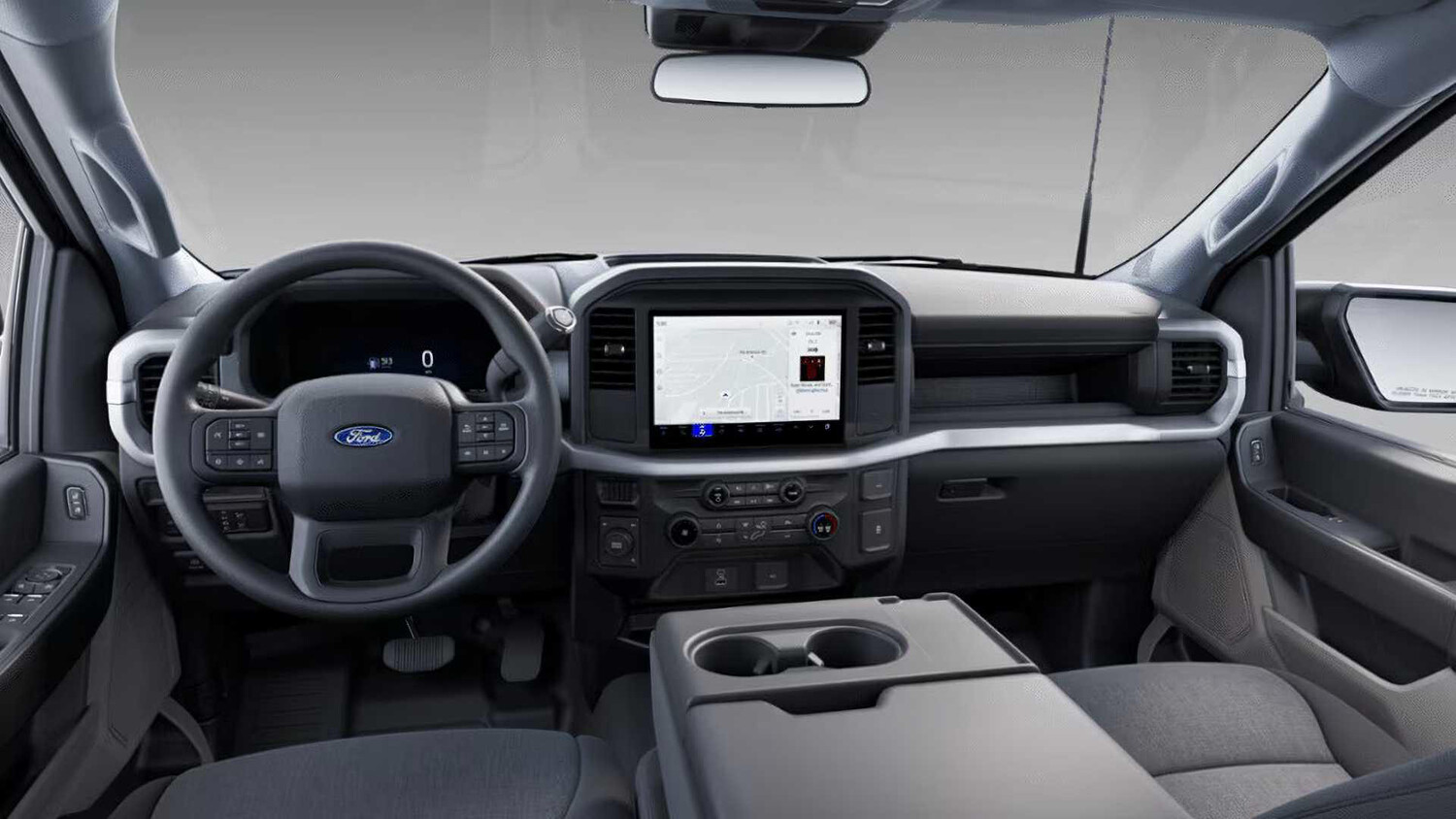
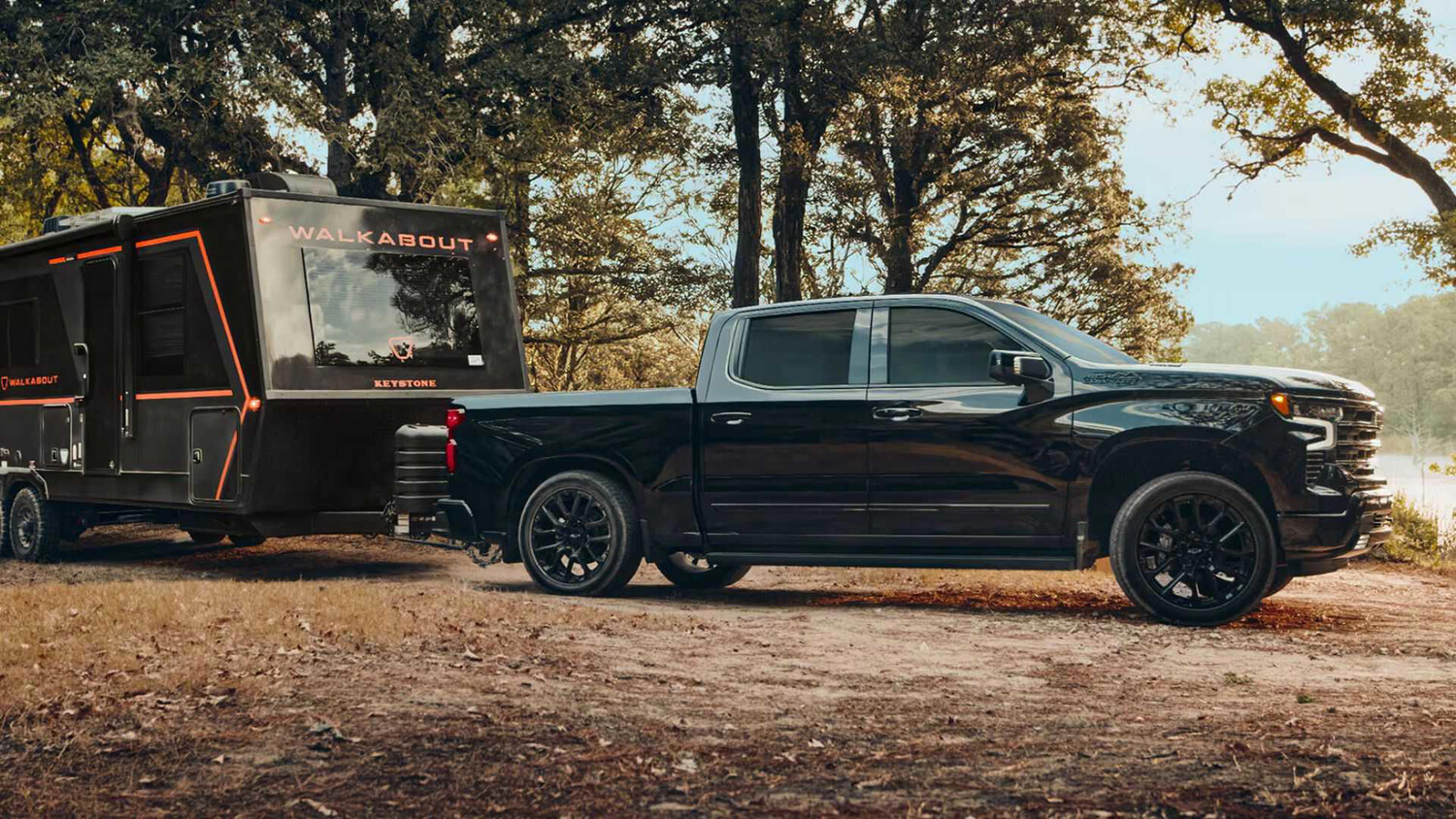
Many US truck buyers who purchase a vehicle for utility do not want any unnecessary drama, let alone the theater of leather trim, giant wheels, and premium audio. Instead, they want something down-to-earth, honest, and ready to go, with all the parts that matter, and at a price that works.For them, the sticker price on a new full-size pickup may be attractive if the truck itself leans toward sensibility. And they can just buy the work trim, skip the indulgence, and keep the payment under control while walking away with a gleaming full-size workhorse. But today’s marketplace may not be quite as straightforward as that. A lower sticker price may still look reassuring, but a base full-size pickup may not always give budget-conscious buyers the best truck for their cash. The Work Truck Badge Still Feels Like The Honest Choice FordBase full-size pickups have always been more credible than glamorous, and you could argue that that's part of their appeal. After all, vehicles like the XL, WT, or Tradesman get right down to the point and don't try to seduce their buyers with oversized touchscreens or stitched-up dashboards. Instead, they come across as tools through and through, with plenty of legitimacy to back up their claims. The 2026 Ford F-150 XL is a good example, as it checks all the right boxes with its standard 2.7-liter EcoBoost V6, delivering 325 hp and a towering 400 lb-ft of torque. Ford gives buyers in this segment other options as well, with an available 3.5-liter EcoBoost and a 5.0-liter V8.The 2026 Silverado 1500 WT offers Chevrolet's TurboMax engine, a 2.7-liter turbo four-cylinder with 310 hp and an equally inspiring 430 lb-ft of torque. And the Ram 1500 Tradesman has its 3.6-liter Pentastar V6 that comes with eTorque mild hybrid assistance, and reasonable numbers of its own, at 305 hp and 269 lb-ft. All these are proper full-size trucks with engines that have more than enough muscle for real everyday work, and they satisfy many buyers in this segment.Buyers with this mindset may not be looking for luxury, but want towing capacity, bed space, warranty coverage, and a truck that can keep going with a minimum of fuss. They don’t want to worry about small scratches here or there or cringe about jumping into the cab with dirty clothing. Instead, they want their base full-size pickup truck to give them functionality, confidence, and tenacity. They'd rather not mess around with higher trims that could push them deep into premium SUV territory.But when all is said and done, the least expensive full-size truck today may still not be the best value. These trucks can be as capable and honest as the day is long, but they may not be the smartest buy when it comes down to the way that many owners actually use them. Base Trucks Are No Longer Primitive But They're Still Built To A Price Line Ford While current base full-size trucks may be no-nonsense and modern where it matters, you're not dealing with hand-cranked windows or empty dashboards as you might have expected some decades ago. For example, the Ford F-150 XL still has a 12-inch center touchscreen, LED reflector headlamps, Sync 4 infotainment, and modern driver assistance availability.But while there's nothing archaic about these base entries at all, you can still see where their manufacturers have drawn the line, in an attempt to control costs as much as possible. If you look closely at the cabin, trim, seating materials, wheels, and other comfort features, you can see how those OEMs have shaped their choices to try and keep the advertised price down. And while this can be okay or even a strength for some commercial buyers, it's not for everyone. For those who want to use their truck every day as more of a lifestyle vehicle, the cheapest full-size model may not necessarily represent the most satisfying ownership experience.Arguments for this type of truck in this configuration often come down to price, so it’s also important to put that into perspective. For example, a 2026 Ford F-150 XL SuperCrew 4x2 is listed at $43,935 MSRP, while the Ram 1500 Tradesman Quad Cab 4x2 shows $42,025. You can get a Silverado 1500 WT Regular Cab for slightly less, but if you choose a Crew Cab or a four-wheel-drive configuration, the price rises accordingly. And that may be where the budget logic begins to wobble. The Cheapest New Pickup Is Often A Value Mismatch FordAt this point, full-size truck buyers may start to split into different camps. The cheapest new full-size pickup may not be the best buy for some of them because those vehicles may offer too much truck in the wrong places, with not enough truck in the everyday lifestyle places. Some of those buyers may question the value proposition if they need to pay full-size ownership costs but are getting capabilities that they may not use most of the time.For these buyers, something like the Ford Maverick may make a better case for itself. Certainly, you can't compare this to an F-150 in terms of towing or payload. But if you're mostly looking for a truck for commuting, home improvement runs, or carrying a small amount of tools, it's an unusually strong alternative. For example, the 2026 Maverick XL comes with a standard 2.5-liter hybrid engine, a power-split electric CVT, front-wheel drive, a 13.2-inch Sync 4 display, and a Flexbed system. You'll also get an EPA-estimated 42 MPG city, 35 MPG highway, and 38 MPG combined from the hybrid version.And when you look at the price, you can start to see a significant difference. Here, a 2026 Maverick starts at around $29,990, and alongside the F-150 SuperCrew XL at north of $43K, that's a different transaction universe, even before options, accessories, finance costs, or taxes come into the frame. Current five-year cost-to-own data shows that a Maverick XL should be around $52,852, but the F-150 SuperCrew XL comes in at $70,455. And that reflects the broader cost of owning a larger, heavier, and less fuel-efficient full-size truck.Buyers who are starting to think twice about that entry-level full-size truck could even consider the Hyundai Santa Cruz. Certainly, this is a different type of beast altogether from a Silverado WT, as it's a unibody SUV-based pickup and not a body-on-frame full-size vehicle. But it still has an open bed, a comfortable cabin, daily usefulness, and with its manageable footprint, belongs in the conversation for a large segment of buyers. This one costs $29,750, and it features a 2.5-liter inline-four turning out a useful 191 hp and 181 lb-ft of torque. Used Full-Size Trucks Complicate The New-Truck Argument Ford The cheapest new full-size pickup may also lose its shine quite quickly when the used market offers a better-equipped vehicle instead. And that could be really appealing to someone who wants full-size space, full-size road presence, and the comfort of a larger cab but does not necessarily need a brand-new base model to get there.Those buyers may be able to find a two or three-year-old F-150 XLT, Silverado LT, or Ram Big Horn where the previous owner has absorbed some of that early depreciation. And those trucks could still offer the features many retail buyers are looking for, but in lightly used form instead.Such buyers could still get a more comfortable driver's seat, better interior materials, larger or more useful infotainment setups and additional driver-assistance features. But having said that, buyers will still need to check the previous history of any vehicle for accidents, service compliance, towing use, and warranty status.A new base truck may still be the clean and lower-risk choice, especially for those who want to try to access some favorable financing, but the used alternative does shine a spotlight on the central weakness of the new base truck argument.For those who want a full-size truck mostly for family use or road trips with occasional towing thrown into the mix, a used mid-grade full-size may be their answer. They may find more of the comfort and equipment they're really looking for and not have to deal with the stripped new capability. And for them, the new versus old argument is not so clear after all. Full-Size Still Wins When The Job Is Truly Full-Size Chevrolet There are still many good reasons to buy a brand-new F-150 XL, Silverado WT, or Ram Tradesman. After all, they offer adult-sized rear seating in crew cab form, plenty of confidence when towing, easier long-distance comfort, and a satisfying sense of stability.Even those buyers who only tow a few times per year may find that a new full-size is the way to go, to give them confidence and competence during their own high-stakes adventures.Resale values also complicate the case and tile the argument in favor of those base full-size vehicles. After all, full-size pickups are central to the American vehicle market, and when it comes down to used versions, the right configuration can still hold its value relatively well.iSeeCars has current resale projections that show five-year resale values at about 60–62% for the F-150, Silverado 1500, or Ram 1500. And that suggests that the full-size market has plenty of depth, loyalty, and long-term demand.So, while the cheapest new full-size pickup is not automatically a bad buy, it can become questionable if a buyer is paying for size, weight, and capability they will rarely use. For those who are looking for comfort, efficiency, or levels of equipment that matter every day, a better-equipped smaller pickup or a carefully chosen used full-size may be the way to go.