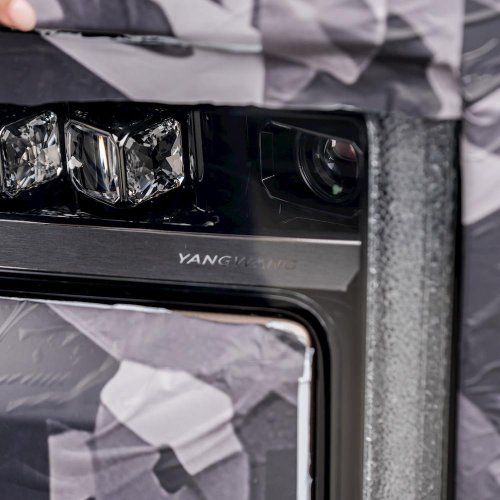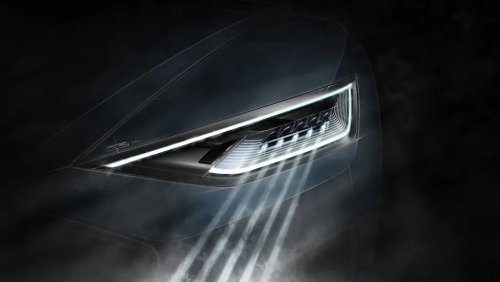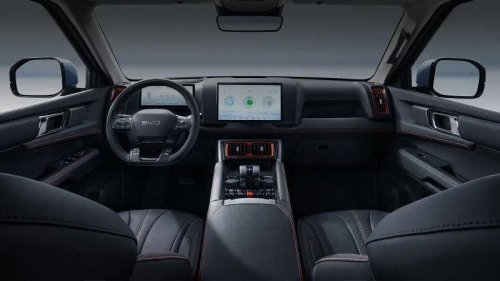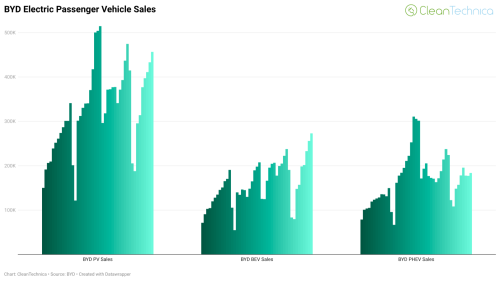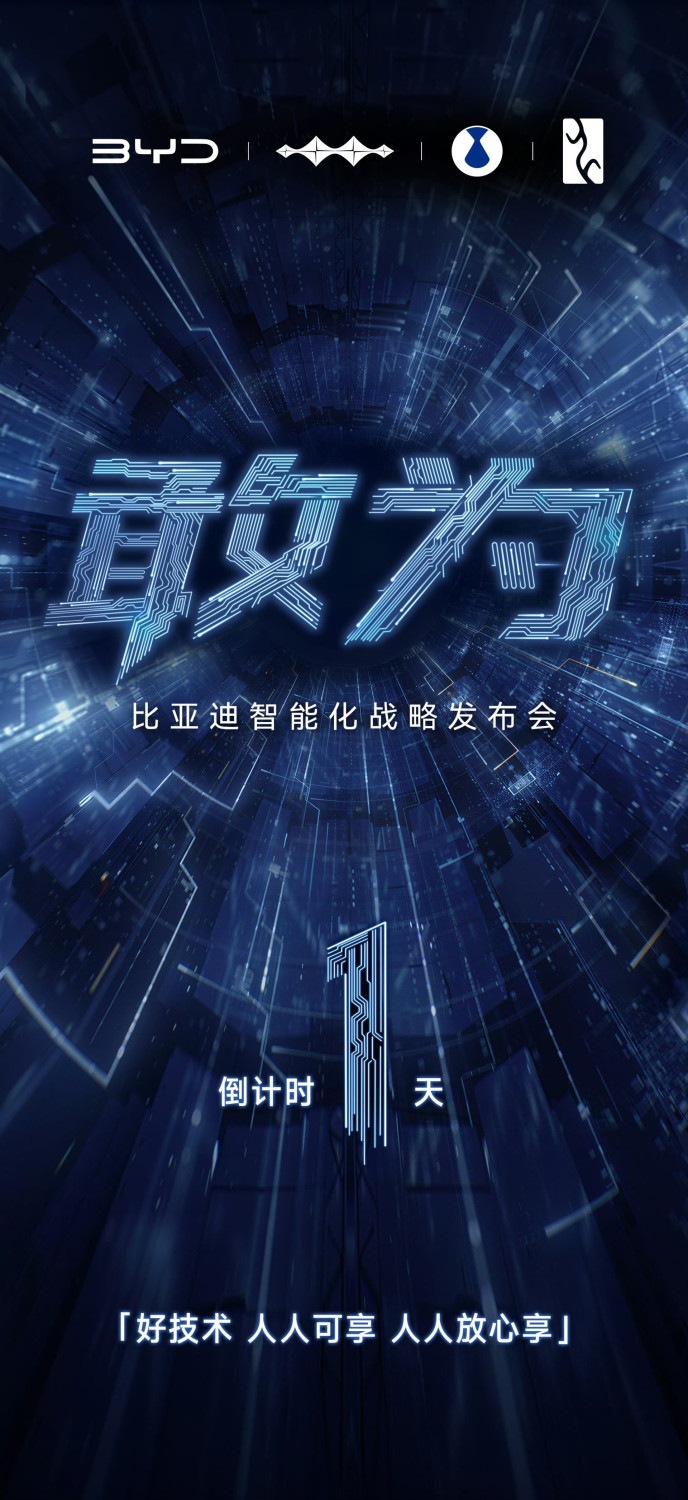
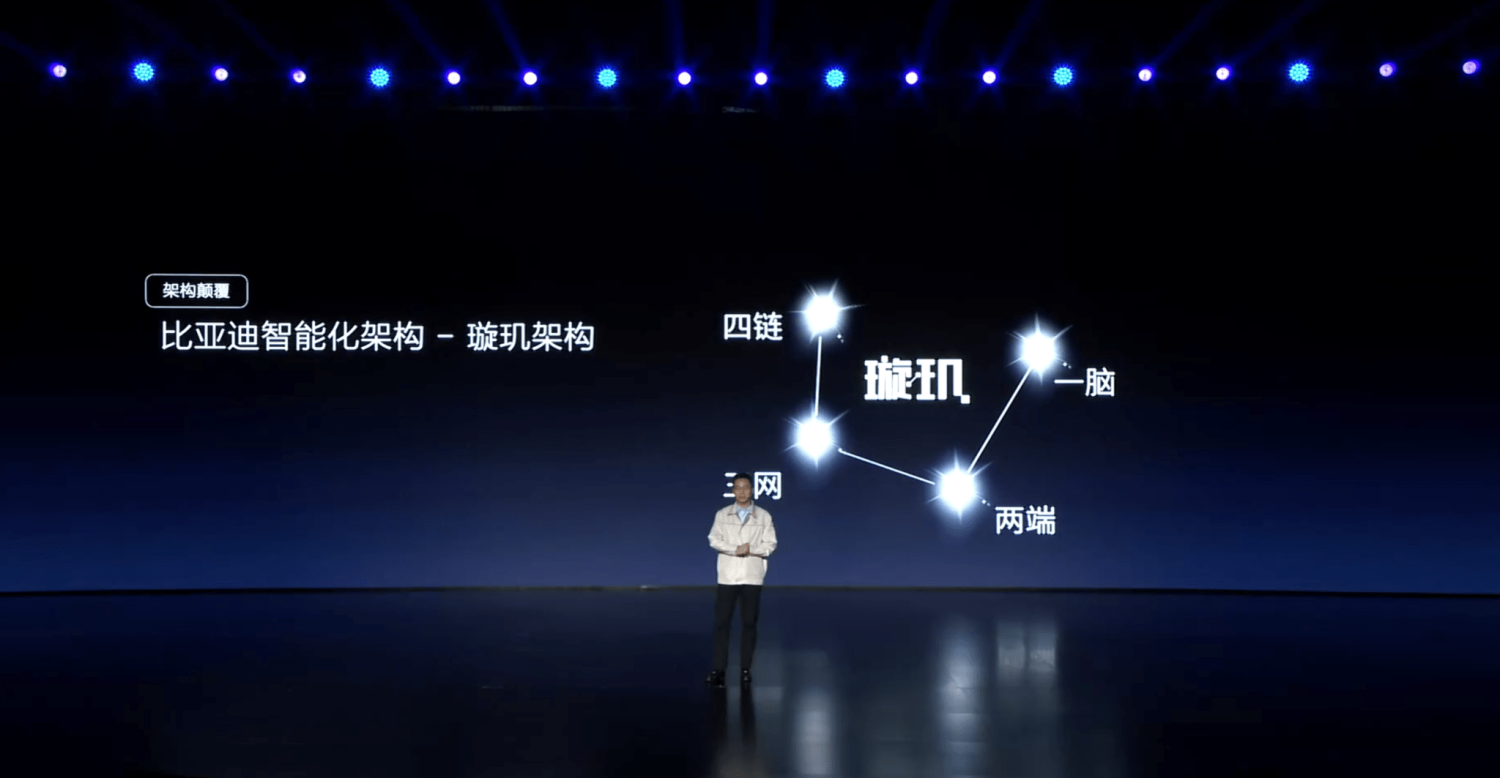
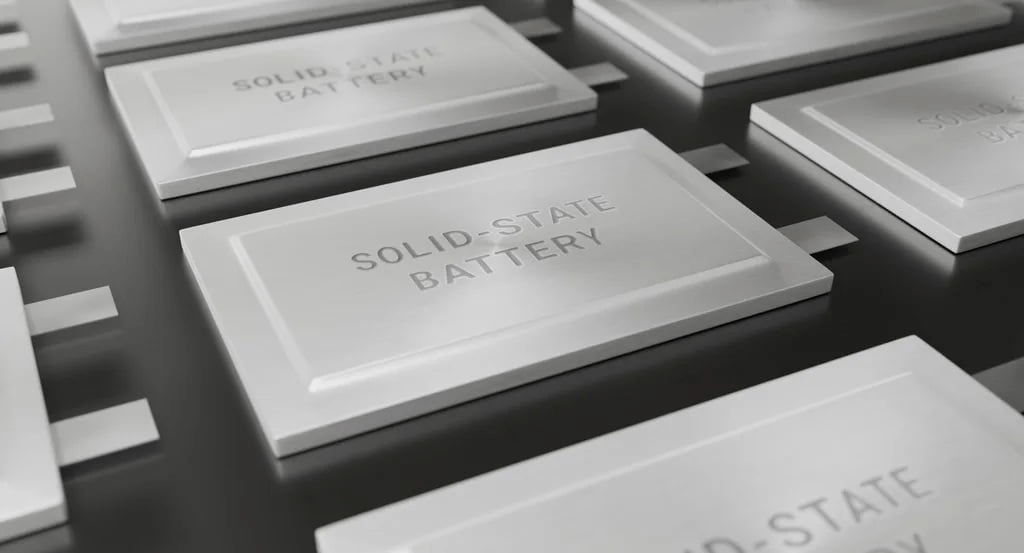



















BYD is set to hold its “Dare to” intelligent strategy event on May 28, marking another major technology showcase after its second-generation Blade Battery and flash-charging launch in March. Ahead of the event, BYD executive vice president He Zhiqi posted that the market has been speculating on multiple possible technologies, including solid-state batteries, in-house chips, end-to-end AI models, L3/L4 autonomous driving, magnetic motors, photovoltaic roofs, and next-generation DM hybrid systems. Li Yunfei, general manager of BYD’s brand and public relations department, later stressed the event theme: “Good technology for everyone; safe technology for everyone.” While BYD has yet to confirm the final product lineup, industry attention has increasingly focused on self-developed chips. The latest teaser poster featured prominent semiconductor design elements, fueling speculation that chips will become the core highlight. BYD “Dear to” Teaser Poster Currently, BYD mainly relies on Nvidia’s Orin-X and Orin-N chips, delivering 84–508 TOPS of computing power. Rival Chinese EV makers such as Li Auto, XPeng, and NIO have already launched self-developed chips exceeding 2,000 TOPS, putting pressure on BYD in the high-end intelligent driving race. Industry sources said BYD may unveil its integrated cockpit-driving “Xuanji” chip at the event. The chip reportedly delivers 2,000 TOPS from a single unit, supporting an integrated cockpit-driving architecture plus nationwide map-free NOA coverage. Mass production is expected in the second quarter of 2026. Mass production of the in-house chip would break BYD’s dependence on external suppliers for high-compute autonomous driving hardware. BYD’s previous press conference regarding Xuanji On sensing hardware, BYD’s current production models mainly use 128-line lidar systems. Industry reports suggest BYD and RoboSense are jointly developing the EM4 digital lidar system, which in mass-production form supports 1,080-line to 2,160-line resolution. The company has not officially confirmed the reports. Combined with the Xuanji chip, the EM4 lidar could form a “high-compute plus ultra-HD sensing” hardware stack, supporting the next-generation God’s Eye intelligent driving platform. AI cockpit systems are also expected to become a major focus. BYD’s rumored Xuanji AI large model may improve environmental understanding, intention prediction, and vehicle coordination across driving, chassis, and powertrain systems. Beyond smart driving, solid-state battery technology remains another key point of speculation. At the Beijing Auto Show earlier this year, BYD displayed a sulfide-based all-solid-state battery prototype with 480 Wh/kg energy density, passing nail penetration tests. Whether the technology appears at the May 28 event remains unclear. Solid-State Battery As of the end of 2025, BYD vehicles equipped with the God’s Eye intelligent driving system had exceeded 2.56 million units in cumulative ownership, providing massive real-world driving data for its nationwide smart-driving strategy.