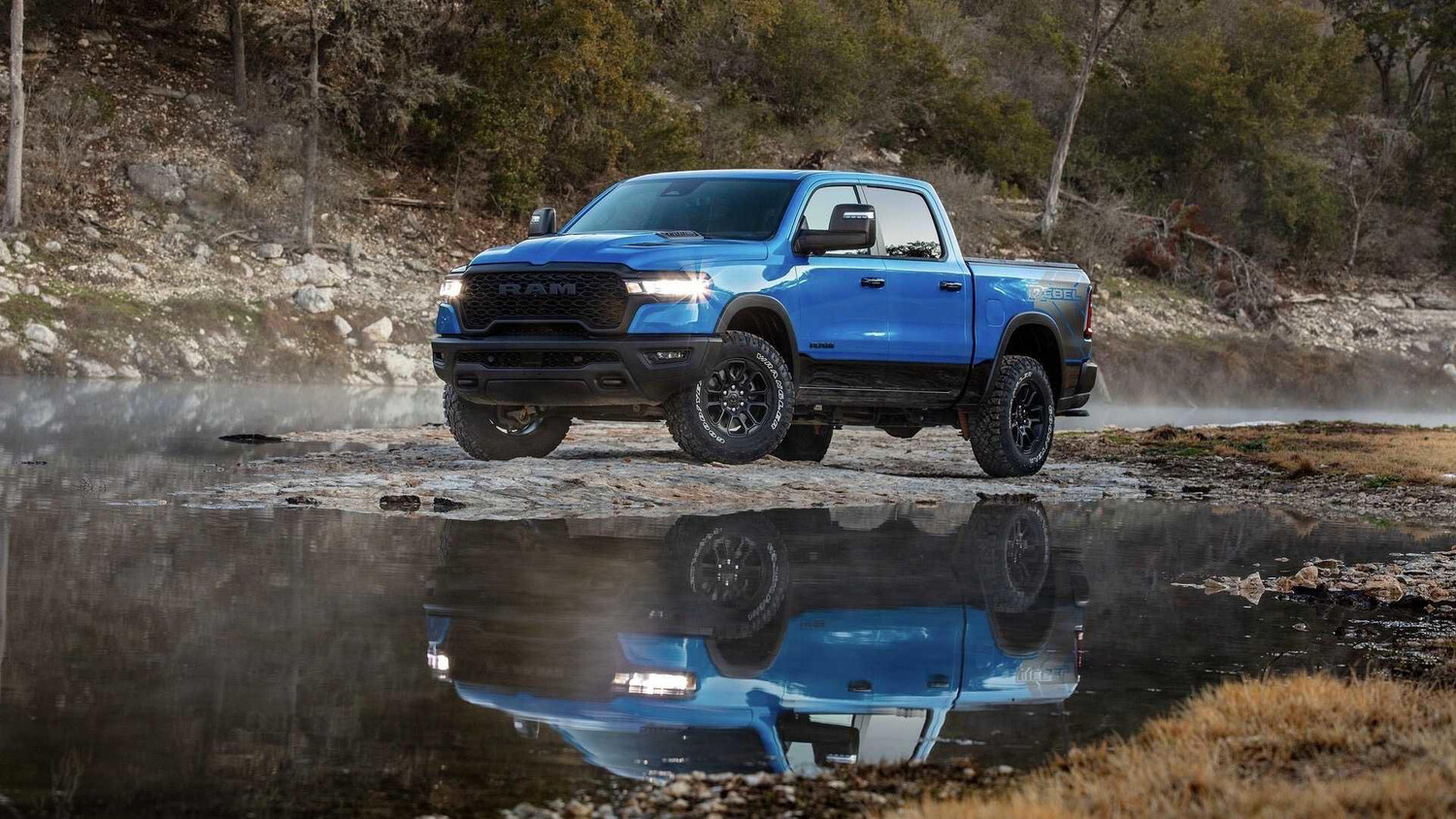
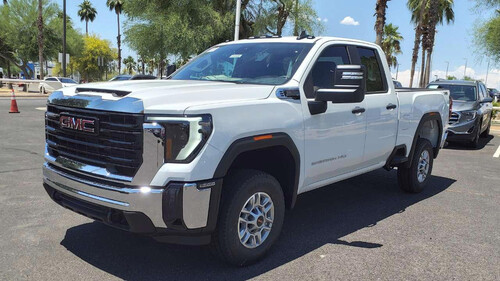
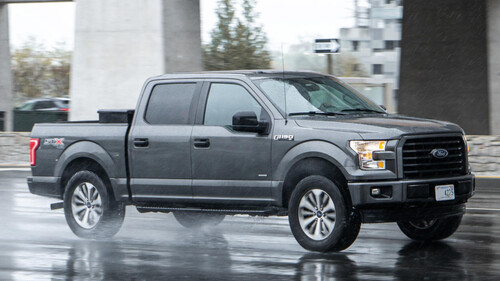
At some points during the pandemic, it was easier to buy a Ford F-150 than it was to buy a roll of toilet paper– and for quite a while, pickup truck prices were just the craziest. Suddenly, folks were second-guessing public transit, trading older cars in for newer ones to help eliminate uncertainty in their lives, and (importantly) looking to spend more time outside and away from one another.The pandemic poured gas on an already-hot adventure-vehicle market that was expanding to include the first hybrid-powered Toyota Tundra, the first electric-powered F-150, and heavy-duty models that were churning out more torque than ever.The Maverick and Santa Cruz promised lower prices, but base-model units could be tricky to find, and available units often traded for higher-than-MSRP levels. People paid ridiculous amounts of money over asking to be among the first to buy the new Ford Bronco.Stellantis Meanwhile, full-size model after full-size model deployed top-dog grades with luxury SUV sticker prices and interiors trimmed like your favorite luxury steakhouse. All this commotion pushed used pickup prices skyward. With supply chains disrupted and model years muddled, shoppers turned to the used market, where pickup inventory was pretty plentiful.An immediate surge in demand triggered immediate predatory pricing that saw a roughly one-percent-per-week surge in used truck values, to their pandemic level peak in early 2022, according to a report by WolfStreet.com using Manheim data. At this point, truck inventory was turning over rapidly.So, has the bubble finally popped? Not exactly, and as we’ll see below, the future is anyone’s guess. Still, current data shows a gradual and sustained softening of prices that may be pushing things back towards normality, as data shows that post-pandemic price plunges surrendered 60 percent of their pandemic gains. While window stickers remained high, the real story was panning out in dealer back lots, where surplus inventory was starting to become a liability. The Secret Depreciation Sleeper Of The Big Three GMC From the pandemic pricing peak of early 2022, here’s what’s going on with some of the pickups you're most likely considering from the used market today, with regards to pricing and depreciation.Over the past five years, the Chevrolet Silverado 1500 has depreciated by about 42 percent, ditto the GMC Sierra. Data from CarEdge.com shows how the pandemic put the brakes on depreciation.The 2020 Silverado depreciated 7.4 percent in its first year (2020), 14 percent in its second year (2021), but only seven percent in both its third and fourth years (2022, 2023), right along with that pandemic pricing peak. In its fifth year, 2024, depreciation catches back up, now coming in at 33 percent. That’s a decline of $18,837.When it comes to the Ford F-150, a Jalopnik report citing 2025 data from KBB.com calls it the fastest-depreciating truck on the market, and one of the slowest-selling. Looking back at five-year depreciation data from CarEdge.com, we see used pricing play out similarly to the GM truck in the previous paragraph: a 2020 Ford F-150 would lose seven percent of its value in the first year (2020), 21 percent in its second year (2021), but just seven percent apiece in 2022 and 2023 when used prices were highest.In 2024, the depreciation curve for that 2020 model-year truck returns to its expected steepness, with a 31 percent decline.Ford There’s another point worth looking into here: The 2021-2022 F-150 PowerBoost Hybrids are finally hitting the used market in volume, after launching as tricky-to-find "miracle" trucks during the pandemic. Some buyers are wary of out-of-warranty hybrid battery complexity, with uncertainty affecting pricing to make the F-150 a "buyer's market" sleeper. Keep your eye on this one.On the Ram 1500, it’s a similar story. Historical depreciation data from CarEdge.com shows a 2020 Ram 1500 would lose 11 percent of its value in its first year (2020), and 15 percent the following year (2021). In 2022 and 2023, high pandemic-level pricing meant that the 2020 model year Ram 1500 would only lose six and 10 percent of its value in model years 2022 and 2023.CarEdge doesn’t list depreciation data for 2024 and 2025, but a depreciation hit of about a third, maybe slightly more, is a reasonable assumption that brings it in line with the rest of the big three. Did You Spot The Signals? Ram Most of the general public was still complaining about high prices in late 2023 and early 2024, though savvy shoppers watching behind-the-scenes data were picking up on some smoke signals. First, in October and November 2023, the Manheim Used Vehicle Value Index began showing significant month-over-month declines. Customers were paying high prices at dealers, but wholesale prices (what dealers pay) for used cars were dropping fast. Remember, KBB.com suggests it can take 6–8 weeks before a wholesale price drop translates into lower prices on the lot.Right around that point, in early 2024, inventory levels for full-sized trucks were surging as machinery started to pile up. For context, during the frenzy of the pandemic, used pickup trucks were commonly sold in a week or less. Some dealers had trucks pre-sold before their drivers traded them in. Others posted billboards offering top dollar for your trade in, practically begging for inventory to sell.As 2024 got rolling, those same trucks were sitting around for months, resulting in an oversupply that pushed prices down. Add in some pressure from higher interest rates that made it even costlier to have unsold inventory lying around, and dealers had to reduce prices to move units.Toyota If you’re one of the shoppers who saw early signals of a softening market like these, you likely sat back with some popcorn and watched prices fall until you, the shopper, would be in the driver’s seat when the time came to pounce on a deal. By the time the calendar switched over to 2025, the "take it or leave it" pricing of the pandemic-era dealership had to change as higher inventory narrowed profit margins. Here’s a Snapshot Of The Current Situation And What To Expect This Year FordAccording to KBB.com data from early last year, car dealers paid nearly one percent less for used cars at auction in December than they did in November of 2024. That coincides with the decreased Used Vehicle Value Index findings, as well as higher inventory levels we mentioned. At that time, KBB experts identified compact cars and luxury cars as the fastest-dropping used values on the scene, if you're curious.More recently, this past March, KBB.com identified unusual price growth in the market at large, and average used vehicle transaction prices approaching their pandemic peak levels once again. Pickup trucks are only a part of these figures, but could the softening in the pickup marketplace have been that short-lived?Maybe so, maybe no. Though smart shoppers may have been able to set themselves up to act at the perfect moment as pickup inventory swelled, other factors will affect future used pickup pricing in ways that are yet to be seen. Specifically, in March, KBB.com said the war in the Middle East is likely to impact prices, but hasn’t done so yet. It’s anyone’s guess where fuel prices will go as global conditions remain volatile.We know that new pickups are likely to continue growing in price, and that unstable fuel prices may push some shoppers to downsize out of a pickup altogether, adding to the used supply in the market. Conversely, more pickup shoppers may be tempted into used models to save money, driving up demand.Geopolitical shocks can create noise in the data but it's vital to remember that buyer behavior doesn't pivot overnight. As KBB's analysts pointed out this spring, most truck buyers have ridden the gas-price rollercoaster before and are more likely to wait out a spike than ditch a vehicle they rely on.In 2026, shoppers buying used trucks can expect pricing to remain firm and negotiations to be a little tougher. That’s according to Caredge.com data showing that lower interest rates may help spur additional demand for higher-end vehicles, like pickup trucks.You’ll need to be smarter than ever to track down a good deal, perhaps targeting 2021 or 2022 lease returns and pinpointing models that have been in dealer inventory for several months. You’ve still got time to do your homework and watch any new developments, including a recent jump in wholesale pricing once again, which is just how the price crunch of 2020 began.