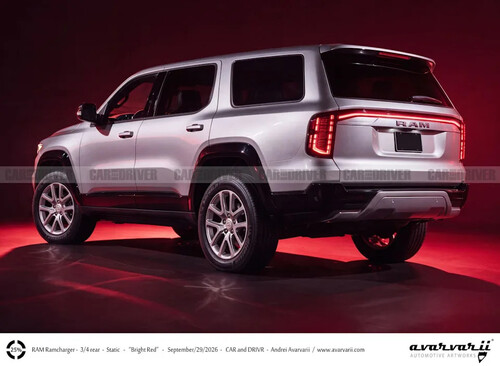
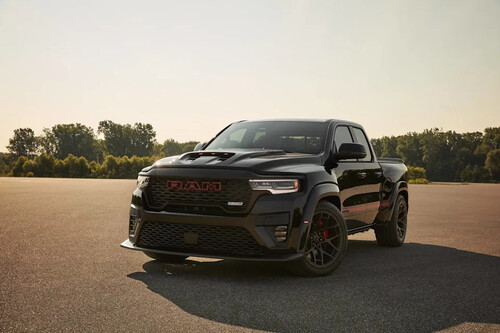
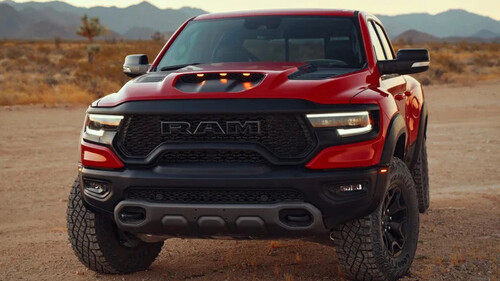
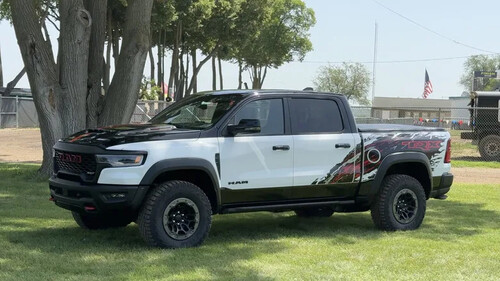
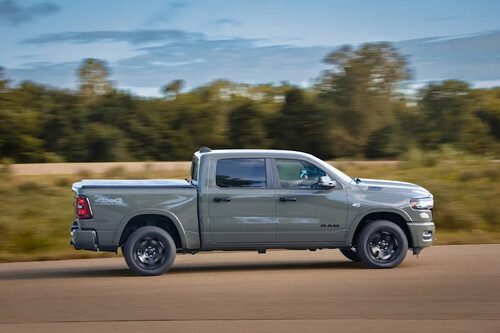
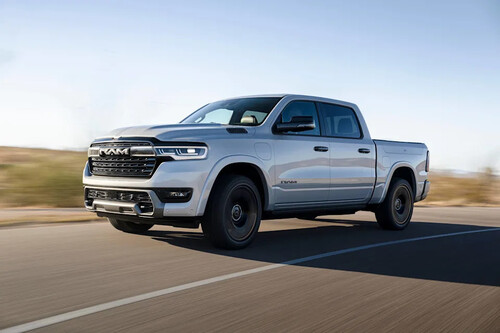
The electric car market has gone through a rough patch in recent times, with continued low sales forcing manufacturers to drastically swivel their strategies. The electric revolution has been touted as the future of motoring by manufacturers and the world's governments alike, but their various limitations have ultimately led motorists to stick with their internal combustion-engined or hybrid vehicles instead.With profits taking a massive dive as a result – which is also down to the huge development costs the brands have had to swallow by working on EVs – they're scrabbling to find a different route.For most, such as Stellantis, this constitutes a focus towards hybrid machines. These combine the best of both worlds: a traditional ICE backed up by an electric powertrain. The global giant has gone as far as canceling some of its full electric models, such as the Ram 1500 REV, to convert them into range-extending hybrid offerings. This could be a genius move, especially for those who want to use the truck to tow frequently. The Ram 1500 REV Has Been Repurposed StellantisRam's original plan was to offer a pair of electrified 1500 models. The REV was to be an all-electric version of the popular full-size truck, while the Ramcharger would be a version of the vehicle with a range-extending engine onboard. This wouldn't power the wheels in any way, but instead fire up purely to keep the batteries topped up.Both trucks were continually delayed, having first been announced in 2021, before Ram announced in 2025 that the all-electric REV would be canceled due to a lack of interest in electric vehicles from the public. At the same time, it revealed that the range-extending Ramcharger would be renamed the REV, since the latter name was apparently more recognizable by that point.Still with us? Good, well, the hope is that the renamed REV will reach dealers in late 2026. This isn't set in stone though, and further delays could push it back into 2027. The 1500 REV Will Provide Plenty Of Punch StellantisThe REV will get down the road thanks to the efforts of a pair of electric motors, with one placed on each axle to afford the vehicle all-wheel drive. A 250 kW component will drive the front wheels, while a slightly smaller 248 kW unit will keep the rear wheels moving, with Ram's current target being a total power output of 647 horsepower and 610 lb-ft of torque.Backed up by the tough underpinnings expected from a 1500, the expectation is that it'll be able to tow up to 14,000 lbs. To keep the batteries and motors running, a 3.6-liter Pentastar V6 will be present, though there'll be no mechanical connection to the wheels.When combined with the added traction from the AWD setup, the truck is set to be a proper weapon when it comes to towing. Of course, the original REV EV would have been effective in this regard, but the extended-range machine is vastly superior in a different way. It Won't Need Refueling Every Five Minutes Stellantis The biggest drawback with the original REV was its peak range. Ram estimated that it would be able to cover around 350 miles on a single charge, which isn't horrendous for an EV, but the real issue would have come when you hitched something heavy to the rear. EVs tend to lose around 50% of their total range when towing something sporting considerable mass, which in theory, would have slashed the 1500 REVs' total range to just 175 miles. This would have made the vehicle practically useless when transporting things over longer distances, as you'd have to stop and fully charge the truck three times over a 500-mile trip, for example.The REV may have been effective at actually towing stuff, but wasting time having to charge it up constantly would have made for an extremely frustrating experience, especially given the vehicle would have started from well north of $50,000. Plus, given that the electric charging infrastructure in the US remains sub-par in terms of the available number of stations, finding one would likely have caused range anxiety to rear its ugly head. Luckily, the revised REV should sort out this issue neatly. The Range-Extended 1500 Can Plow On Much Further Stellantis The beauty of the 1500 REV is that – because of its onboard 3.6-liter Pentastar V6 engine that charges up the batteries or directly powers the motors – it can travel much further on a single run. Ram reckons it'll be able to travel around 690 miles by the time both the batteries and fuel tank are completely exhausted, which translates to roughly 345 miles when towing something large behind you. While being considerably better off versus the pure EV version, there's another advantage.When the time comes to fill the vehicle once more, you simply have to pull into a more-frequently found gas station and top up the fuel tank, which takes five minutes rather than the minimum 20–30 minutes you'd need to directly charge the batteries. This means you can wave goodbye to any range anxiety, but still enjoy the torque benefits of its EV powertrain. Unlike the original 1500 REV, the extended-range version makes towing a much more realistic prospect. Added Complexity Brings Challenges RamOf course, it's not all great news. One key drawback of the upcoming 1500 REV versus the EV vehicle is that there is more stuff to maintain, and therefore, go wrong. The electric motor and battery setup are very simple, meaning it shouldn't provide much of a headache until the battery eventually needs replacing. The 3.6-liter V6 on the other hand can prove more problematic, and will need to be routinely serviced to keep running smoothly. This costs money, as does replacing any mechanical bits that decide to no longer play ball.The upshot is that the new REV 1500 will cost more to run than a full-EV version of the truck over longer periods of time, which can be a turn-off for some. That said, it shouldn't cost any more to run than a standard ICE 1500 does at the moment, and at least offers the benefits of a torquey EV powertrain.As a compromise though, the RAM 1500 REV is a damn good one, and we reckon it has a great chance of being the future of effective pickup truck towing. The Best Pulling Power If You'd Rather Not Wait Stellantis North AmericaIf you don't fancy waiting for the 1500 REV to reach the showroom, or would prefer to stick with trusty ICE tech for now, then the best way of ensuring you can tow stuff with a 1500 is by opting for a model with Stellantis' 3.0-liter twin-turbocharged Hurricane inline-six hybrid powerplant. The cheapest way of getting it is by opting for the Warlock trim, which also comes with four-wheel drive as standard. By handing over $54,560, you'll have access to the 305-hp unit, which affords the vehicle a maximum towing capacity of 11,430 lbs.This may be somewhat short of the mass the 1500 REV will be able to deal with, but it's still pretty punchy for a machine without the extra torque that a full EV powertrain can provide. From a payload standpoint, the Warlock can deal with 1,780 lbs of weight thrown into its bed.If this doesn't cut the mustard, then perhaps waiting a little for the 1500 REV to arrive will better suit you. After all, it delivers on both sides of the coin: by offering the insane pulling power made possible by an EV powertrain, but at the same time providing the outright range and simplicity that a standard ICE makes possible. The new machine could be a real gamechanger, but the proof will be in the pudding.Sources: Ram.