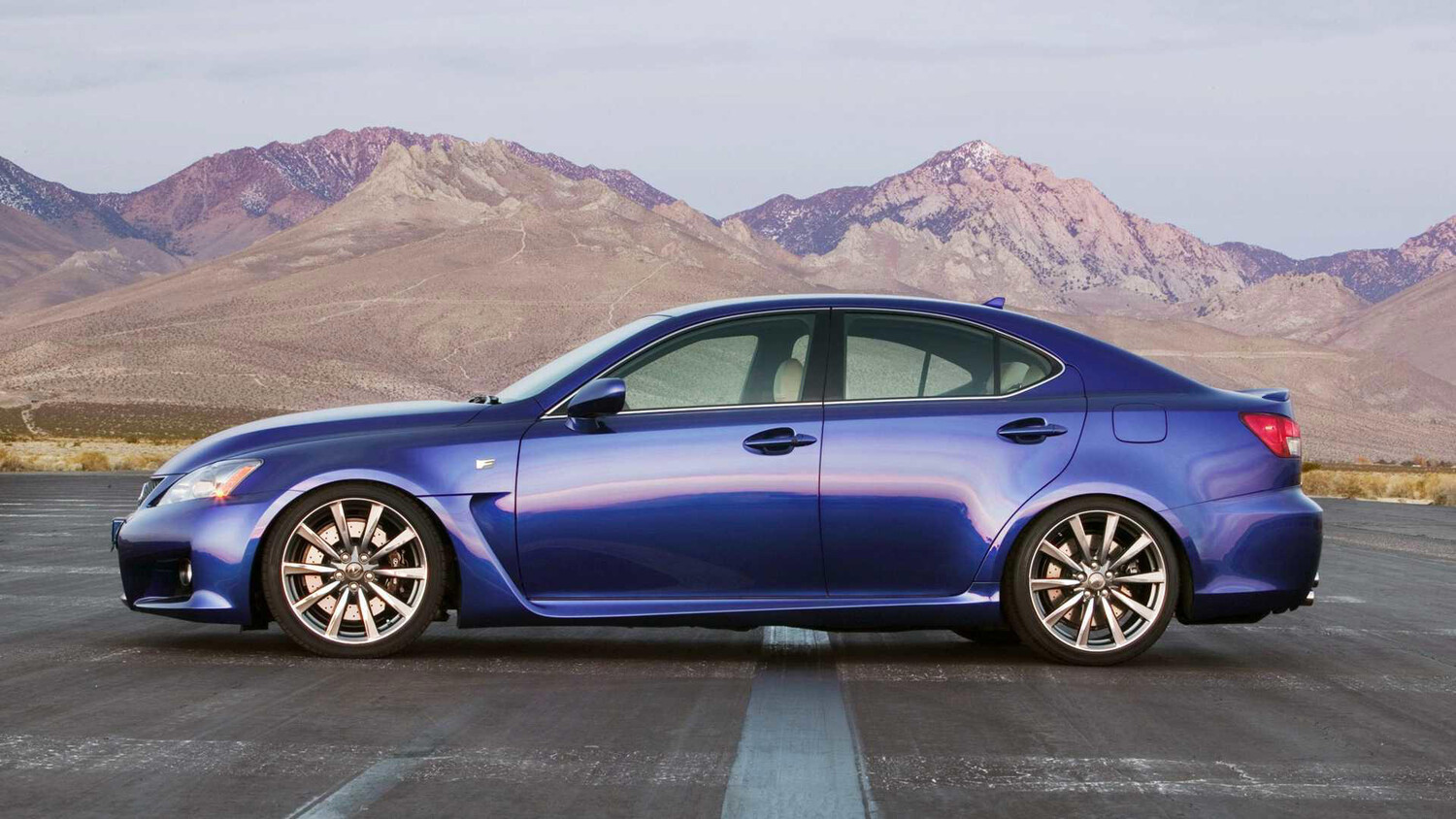
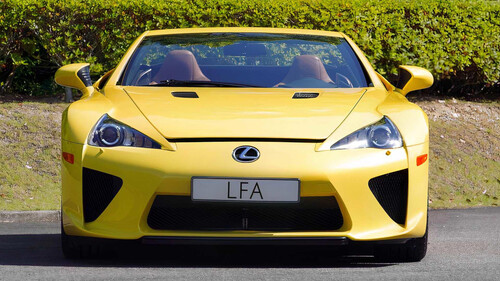
Jump LinksToday, Lexus has built a very strong case for itself in the performance world, with models like the LFA proving groundbreaking and the company's F badge appearing on several sporty models. The brand even has a well-received IS 500 model to remind buyers that it still understands the emotional pull of a naturally aspirated V8.However,when the IS F arrived for the 2008 model year, it had to work a little harder to get attention. Lexus had to try hard to sell it as a credible rival to some of the major German sport sedans, while also leaning heavily on the refinement and durability that had made the brand famous. Some people thought that that might be an uphill task, but the IS F turned out quite well. The car's character has aged far better than many of those critics expected. Proving The F Badge LexusIn the late 2000s, the compact executive performance sedan sector was one of the most demanding arenas in the industry. After all, you had the likes of the BMW M3, with its decades of credibility, or the AMG-spec Mercedes C-Class, which was a true tire-smoking V8 bruiser in the traditional sense. Audi was also turning out some credible vehicles, with Quattro traction and high-revving power, to carve out a unique identity.Among these gladiators, Lexus was really nowhere to be seen. The brand's cars certainly had a reputation for build quality, reliability, and customer satisfaction. In such a highly charged environment, Lexus knew it needed to really up the ante to prove that its F performance designation meant something. And the IS F had to be far more than just a nice marketing exercise if it was to be the first production model to wear that F badge on the rear.LexusIn the Lexus world, “F” stands for Fuji Speedway, where Lexus did much of its IS F development. The company also took the car to other motorsport shrines such as the Nürburgring Nordschleife and Circuit Paul Ricard. And this hard work showed that the company was clearly trying to add a meaningful sports package to its otherwise luxury sedan and give it a performance identity instead.From the outside, the IS F looked quite similar to the second-generation IS sedan, but it now had bigger fenders, a raised hood section to clear the V8 engine, vents and openings for cooling, and 19-inch wheels. The Lexus also came with stacked quad exhaust outlets for some extra drama, though it still seemed quite constrained compared to the German rivals. The 5.0L V8 Is The Reason The IS F Matters Lexus While Lexus may have been playing catch-up compared to those Germans, the model concealed a world-class performance engine. After all, the IS F used the renowned Toyota 5.0-liter 2UR-GSE V8, which Lexus tuned carefully for high output and durability. In US specifications, it would produce 416 hp at 6,600 rpm and 371 lb-ft of torque at 5,200 rpm. It would also rev to a redline of 6,800 rpm and provide far more energetic top-end character than you'd normally expect out of a quiet Lexus sedan.Lexus certainly went to town with this V8, using a forged crankshaft with mirror-finish journals, forged sintered iron alloy connecting rods, Yamaha high-flow cylinder heads, hollow chain-driven camshafts with forged lobes, and titanium intake valves. The engine also had a dual air intake system that would open both intake passages at about 3,600 rpm, allowing the engine to breathe more freely at higher engine speeds.LexusAll this work meant that the IS F's V8 engine would never feel like a lazy luxury-car engine shoved into a smaller body. Instead, it had a high-revving personality and pulled very cleanly at the top end. This comprehensive work helped to make the project sing and would be a major part of any arguments surrounding the IS F being a future classic, too. After all, this vehicle now belongs to a narrowing group of cars that represent the last great era of naturally aspirated performance. Emissions, rules, turbocharging, and electrification have changed the business case, doing away with really old-school vehicles that offer that direct mechanical character.When it came to the transmission, Lexus chose an eight-speed Sport Direct Shift automatic for the IS F. This allowed it to blend automated manual-style performance with the smoothness of a planetary automatic. In manual mode, you could take each gear up to the 6,800-rpm red line and execute upshifts in as little as a tenth of a second.While purists decried the lack of a proper manual gearbox, the automatic approach may have made the IS F a more balanced all-round car. Don't forget that it had a dual-purpose brief for most of its consumers, and the eight-speed automatic may have made it easier for those who also wanted the IS F to be a tame Lexus cruiser on the way to work. Reliability Gives A Different Kind Of Performance Credibility Lexus Reliability may be the trump card in selling an IS F today, because performance sedans from that era tend to carry some maintenance anxiety. Many of those cars can surely be quick, desirable, or charismatic. Buyers often have to watch out for complicated failure points or deal with deferred maintenance that can quickly catch up.In the case of the IS F, you're looking at a serious performance engine built around the brand's broad reputation for durability. And some small hardware statements here and there can tend to back up that thought, such as a scavenge pump that maintains a reliable oil supply when cornering beyond 1g. Attention to such detail ought to make this car quite reliable well into its life cycle, although potential buyers should be on the lookout for infamous issues like the valley plate leak. Here, coolant leaked into the area between the cylinder heads, which can be quite expensive to repair due to the number of work hours required. The Market Is Recognizing What Buyers Missed Lexus For many years, the IS F seemed to occupy an odd place in the used performance market. It didn't have the obvious badge theater of an M car or an AMG, and, as mentioned, some enthusiasts didn't particularly like the automatic-only specification. But slowly, the IS F has grown to become one of those rare modern V8 performance sedans that can represent a good long-term proposition while still delivering genuine pace. The car's story may be resonating with the broader collector market as well.The CarBuzz Marketplace suggests an average sale price of around $37,000 for a 2008 Lexus IS F, ranging from lows of around $20,000 to highs of about $39,000, and obviously dependent on mileage and condition. This suggests that clean, low-mileage original examples aren't just some ordinary used sedans anymore. Those averages seem to be consistently high, and this could be the beginning of a move into collector territory. The IS F Stands Between The Old Lexus And The New One Lexus The long-term appeal of the IS F is not simply about power, value, or rarity, but the fact that it sits at a turning point in the company's history. After all, Lexus didn't really have a track record for pure performance before the IS F came along, but after that, you had vehicles like the LFA, the RC F, the GS F, the LC 500, and later the IS 500. So, you could say that the IS F made those later machines more practical and gave Lexus a credible F-badged starting point.This may be why the IS F is aging with more dignity than many of its contemporaries. It was never the loudest personality in the segment and perhaps sat in the shadow of AMG or BMW M. Still, it did filter the compact super sedan formula through the value proposition of Lexus. Today, its relative restraint feels like part of the charm.Most future classics tend to have a clear identity, a distinct driving experience, and a meaningful place in their brand's storyline. The IS F scores in each category, as the first production F model, with a carefully engineered naturally aspirated V8. And it also came from a moment when Lexus was trying to prove that it could build more than just quiet luxury sedans.But what really sets this car apart is that it never really tried to follow the likes of AMG or BMW M down a narrow path. Instead, it delivered its performance with precision rather than theater and paved its own way rather than copying others.Source: Lexus