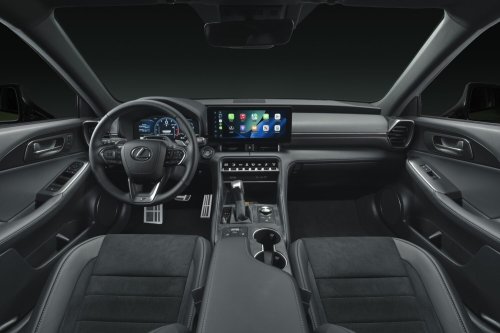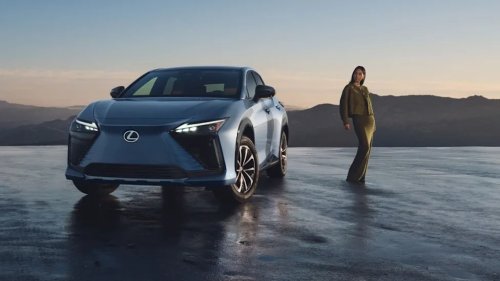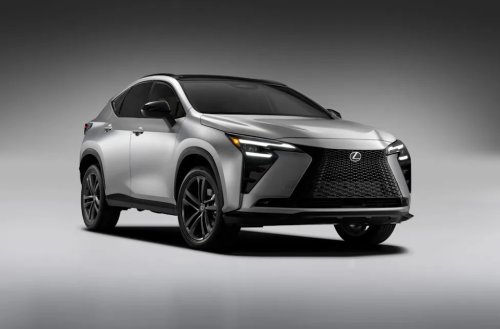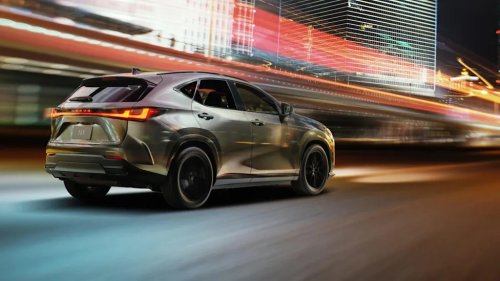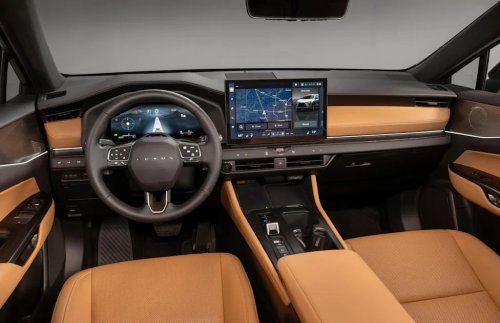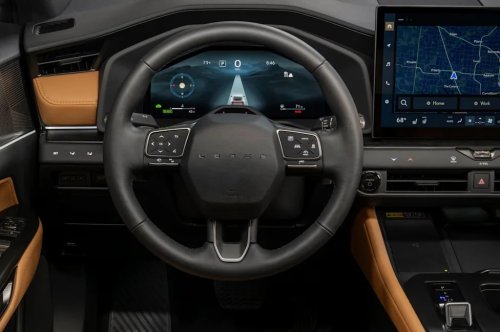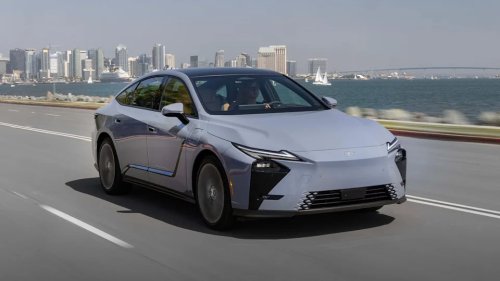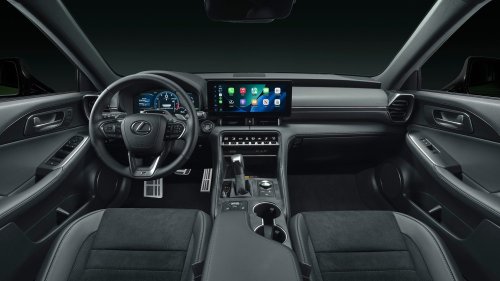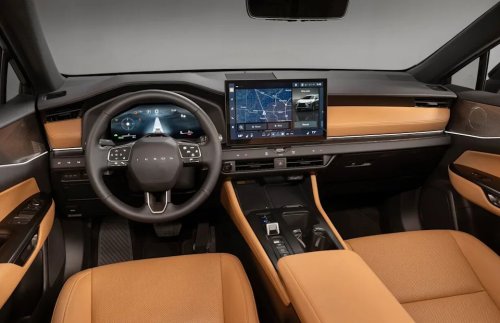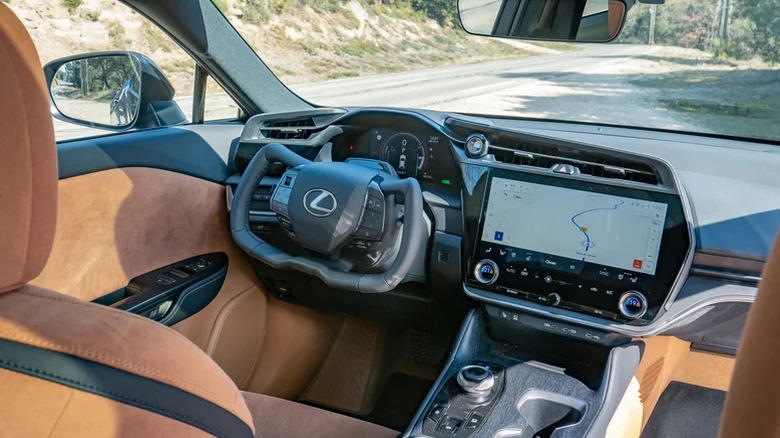
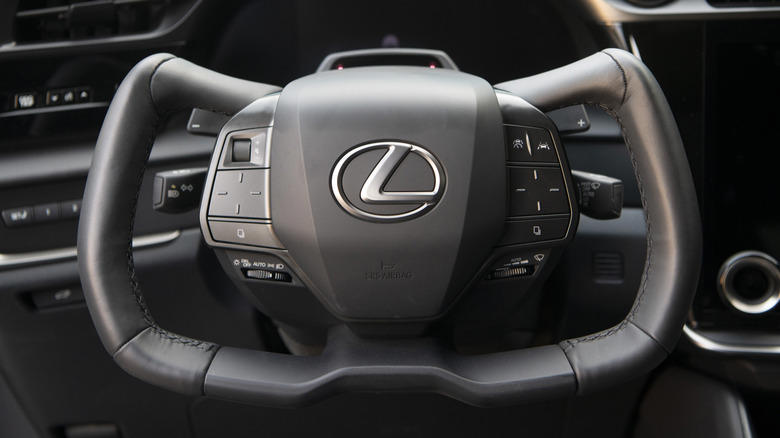



















Fewer turns of the wheelA typical, traditional steering wheel can have anything from 900 to 1,200 degrees of rotation: effectively, you can turn the wheel fully two, three, or more times to adjust the steering angle from hard left to hard right. Lexus' steer-by-wire yoke, in contrast, requires just 150 degrees of rotation to go lock-to-lock. To make up for that reduction, a variable steering ratio is used, so that how much you turn the yoke at one vehicle speed may adjust the steering more or less than you do at another speed.Variable steering ratios have been used before, but Lexus' is considerably more aggressive. If you're in a parking lot, for example, a small turn of the yoke will have an outsized impact on the steering angle. That's to make it easier to maneuver into spaces without doing lots of arm-over-arm turning. At higher speeds, meanwhile, Lexus slows the steering ratio down. That, the automaker says, leaves the RZ more stable when you're driving in a straight line on a highway, for example. The computers in the electric SUV are constantly assessing speed, steering inputs, and other factors, and adjusting the ratio accordingly.You can still feel the roadIt's not a one-way connection, either. The Steering Control Actuator that turns the steering rack, along with other sensors, can send feedback about road conditions — such as low surface traction or even if the wheels are about to lose grip altogether — to the Steering Torque Actuator that the yoke is connected to. The controls can therefore adjust in overall weight, such as making the yoke firmer at low speeds, for example, but lighter at higher speeds. Drive mode can also be used as a criterion, such as making the steering easier to turn when the EV is set to Comfort, but cranking up the weight in Sport mode. The amount of road feedback can also be dialed-in depending on whether the driver is likely to want more isolation or to feel more connected to the surface. Cutting out a mechanical link, only to replace the feeling that you'd get from it via artificial means, might sound a little ridiculous. Lexus' argument, however, is that it can better filter what sensations drivers might want to experience from what they'd prefer to ignore, like tire vibration or the bumps from low-quality road surfaces.