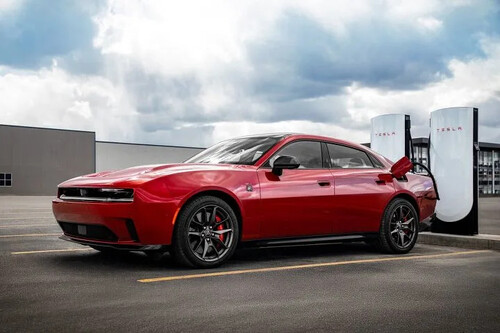
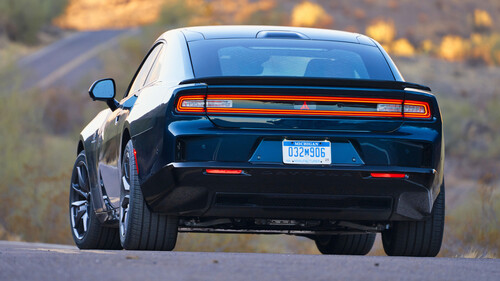
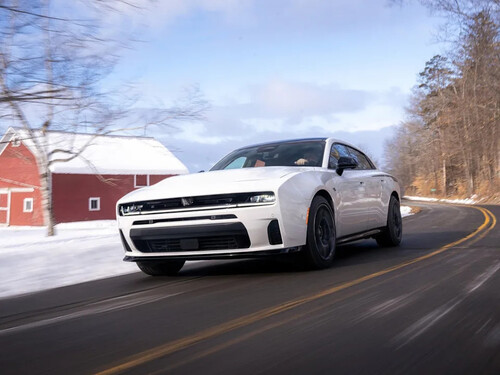
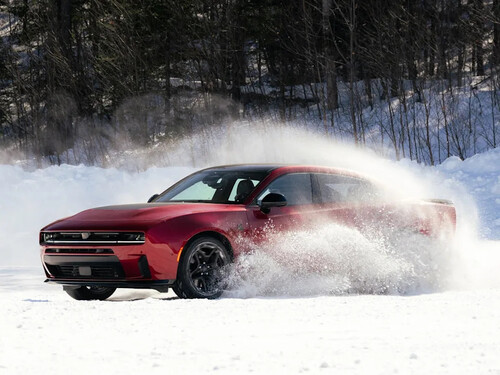
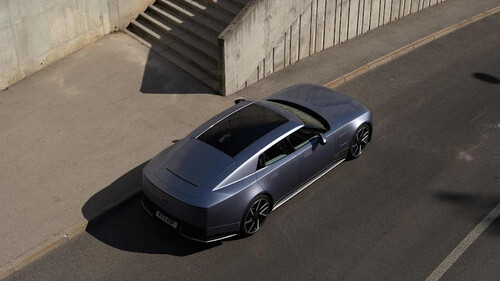
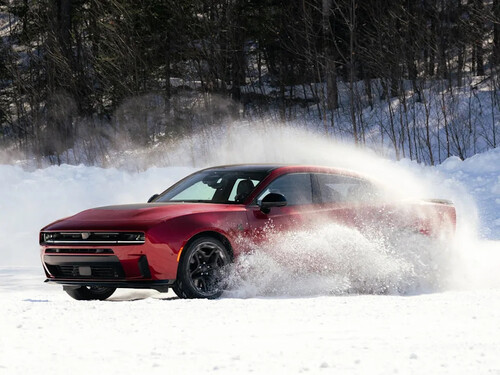
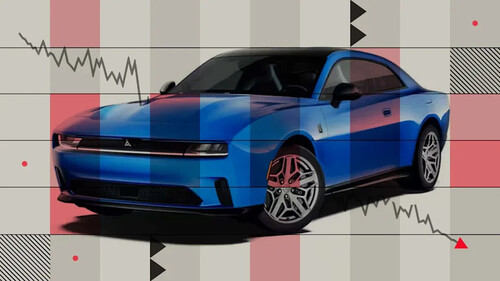
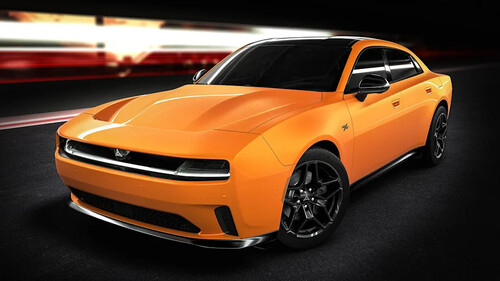
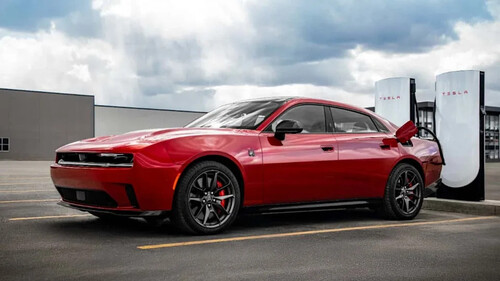
Dodge boss keeps Charger Daytona Banshee EV future on the tableDodge has spent the past few years turning the Charger into the spearhead of its electric ambitions, only to pull back just as the 900-hp halo car was expected to arrive. Yet even as official plans shifted toward more attainable models, the company’s leadership now insists that the Charger Daytona Banshee idea is not gone for good. The future of that flagship EV sits at the intersection of tariffs, cooling battery-car demand, and a renewed embrace of the Hellcat V8, and Dodge appears determined to keep its options open. The brand’s current strategy pairs a high-performance electric Charger with a revived combustion lineup, while executives publicly leave room for a tri-motor Banshee to reappear when conditions improve. That approach turns the Charger into a rolling test of whether American muscle buyers are ready to accept a battery-powered hero alongside a roaring V8, and whether Stellantis will push back toward aggressive electrification once the market stabilizes. The Banshee’s apparent cancellation and quiet survival The Charger Daytona SRT Banshee was initially framed as the all-electric successor to the previous Charger SRT Hellcat, with suppliers reportedly working on a tri-motor powertrain and an 800-volt electrical system intended to deliver at least 800 horsepower and very rapid DC charging. Reporting on Stellantis later described a retreat from that plan, with suppliers no longer developing the Banshee’s unique systems and the project portrayed as canceled in favor of more conventional trims that share hardware with other models from the group. Separate coverage of Dodge’s product plan indicated that the company had axed a nearly 900-hp electric Charger in order to align with consumer demand, a move that suggested the Banshee would not reach showrooms in its originally envisioned form. Inside Dodge, however, the official line has shifted from finality to ambiguity. In public comments highlighted in an analysis of Dodge’s Range, Dodge CEO Matt McAlear has described the Banshee concept as a matter of timing rather than a closed chapter. A separate breakdown of the company’s EV strategy quoted the executive saying the Banshee is never completely dead, and that the broader plan for the Charger lineup did not change after reports of the halo car’s demise. Those remarks do not resurrect the original tri-motor program, but they do keep the door open for a future range-topping EV that revives the Banshee name or philosophy once market conditions and corporate priorities line up. Tariffs, demand, and the pivot to Scat Pack Dodge’s decision to scale back its near-term EV ambitions did not happen in a vacuum. McAlear has publicly linked the retreat from the Charger Daytona R/T and associated variants to tariff pressures and a market that has cooled on expensive battery models. A social post summarizing his comments noted that Dodge puts the focus on the production of the 2026 Charger Daytona R/T and that only the Charger Daytona Scat Pack remains in the immediate product plan. That choice reflects a broader recalibration inside Stellantis, which has been reassessing the pace of its electrification push as incentives shift, raw material costs fluctuate, and early adopters give way to more price-sensitive shoppers. The model that survives this cull is not a token effort. Official specifications describe the Dodge Charger Daytona as delivering 670 horsepower and 627 pound-feet of torque from a dual-motor setup, figures that place it squarely in modern super-sedan territory. Performance pages for the Daytona Scat Pack add that it can sprint to 60 in a 3.3-second run and cover the quarter mile in an 11.5-second pass, which gives Dodge a credible electric flagship even without a 900-hp tri-motor variant. By making this car the tip of the spear, Dodge can test demand for high-output EV muscle while avoiding the cost and risk of a more exotic powertrain that might have struggled to find buyers at the price it would require. Balancing Hellcat nostalgia with electric ambition While the Banshee story has unfolded, Dodge has simultaneously been plotting the return of the Hellcat V8 to the Charger. Coverage of the company’s internal thinking has described a scenario in which a new Charger Hellcat, rumored at 777 horsepower, could be sold alongside a 900-hp electric variant, effectively turning the showroom into a referendum on the future of performance. One analysis of the strategy argued that welcoming the Hellcat V8 back into the Charger makes sense in a market where EVs are losing ground to traditional powertrains, and that Dodge could ultimately sell a Hellcat and a side-by-side if conditions change. That pairing would allow the brand to satisfy loyalists who want supercharged noise while also offering a cutting-edge EV for customers who care more about instant torque and silent speed. McAlear’s recent comments hint that this dual-track approach remains the long-term goal even if the Banshee nameplate is temporarily shelved. A social post that amplified his remarks about the range-topping EV noted that Dodge’s range-topping Charger, and repeated that only the Charger Daytona Scat Pack remains in the near term. In parallel, a detailed look at the 2026 Charger lineup explained that the all-electric Charger arrives first, followed by the gas-powered Charger Sixpack that uses the Hurricane twin-turbo engine tuned for 420 or 550 horsepower. That sequencing, described in coverage of the Charger Sixpack Hurricane, shows Dodge methodically building a portfolio that can swing toward electricity or internal combustion depending on how buyers respond. What a future Banshee would need to deliver If Dodge does revive the Banshee concept, the company will have to justify its existence above an already potent Scat Pack and an emotional Hellcat. The original technical targets, including a tri-motor layout and 800-volt architecture, were meant to deliver not only headline power but also faster charging than the 400-volt system that underpins the current EV. Social coverage of Stellantis’ move away from that project noted that the Banshee would have been positioned as a major leap over the 670-hp dual-motor Daytona Scat Pack, with stronger acceleration, more repeatable performance on track, and significantly better DC fast-charging capability. Any future attempt to revive the name would likely need to restore some version of that technical edge in order to stand apart from the rest of the Charger range and from rival performance EVs. More from Fast Lane Only Unboxing the WWII Jeep in a Crate 15 rare Chevys collectors are quietly buying 10 underrated V8s still worth hunting down Police notice this before you even roll window down