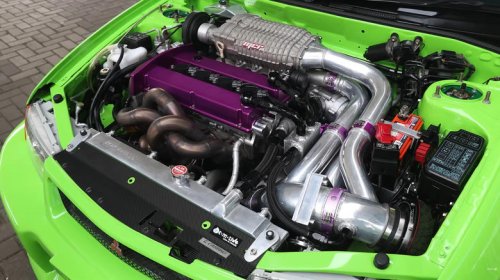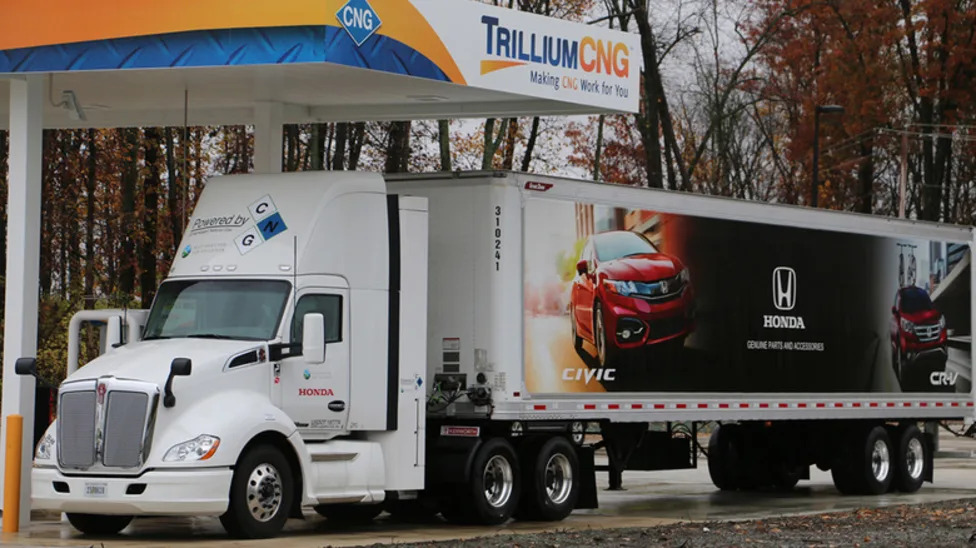

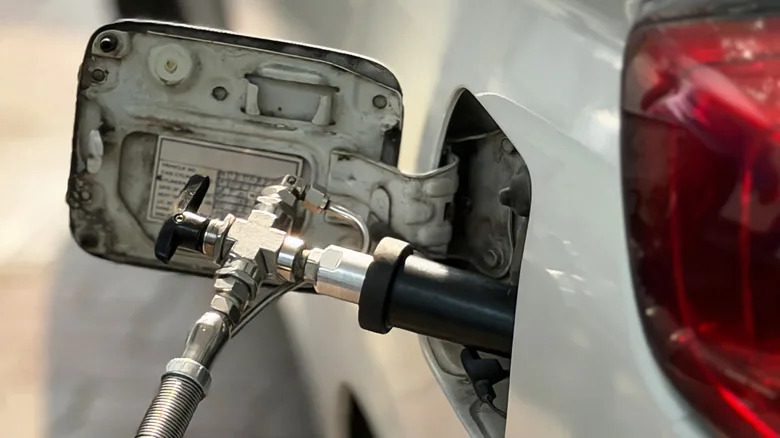



















A semi truck filling up at a Honda-backed CNG filling station in Troy, Ohio - Walter Cicchetti/Getty ImagesThe English language can be confusing, and the word "gas" is a perfect case in point. After all, the gas you put into a car isn't a gas at all — it's a liquid. Now, the exact origins of the term aren't certain, but some armchair etymologists trace it back to a trademark battle over the name of an early version of gasoline, which was named Cazeline after its inventor, John Cassell, in the 1860s. When a second person was caught counterfeiting the product and using the same name, they changed the "C" to "G" to give us "Gazeline." According to this story, the brand name eventually morphed into gasoline over time, which was shortened to gas.The point is, don't let their names confuse you: Gasoline and compressed natural gas (CNG) are completely different substances, albeit with related chemical ingredients. They are, in fact, related enough that they can each be used to power cars — but not at the same time and only with properly modified engines.The ultimate source of both compressed natural gas and gasoline is the same. Crude oil that makes gasoline doesn't come from dinosaurs but from biological organisms that were there well before them. As millions of years pass by, and that biomass becomes buried deeper and deeper in the earth, it becomes subject to ever-higher pressures and temperatures. This intense heat and pressure end up breaking down the biomass into a mixture of various hydrocarbons that need to be refined into gasoline.AdvertisementAdvertisementMeanwhile, natural gas is generally formed when this mass gets ratcheted up even deeper and exposed to higher pressures, causing it to break down into mostly one particular hydrocarbon — methane.Read more: When (And Why) Did Cars Switch From Leaded To Unleaded Fuel?The pros and cons of gasoline and natural gasThe rear end of a 2007 Honda Civic GX sedan powered by CNG - HondaThe two substances have different energy densities as well, further complicated by the fact that gasoline is typically measured in gallons and CNG in either cubic feet or pounds. For instance, according to the Alternative Fuels Data Center, it takes 5.66 pounds of compressed natural gas — or 123.57 cubic feet –- to deliver the equivalent amount of energy in a gallon of gasoline. That has a couple of interlocking real-world effects, starting with the fact that even though this natural gas is compressed, CNG tanks tend to take up more space than gasoline tanks while delivering less range.The 2012 Honda Civic gives us a great apples-to-apples comparison for both this and performance, because this specific model year features both a factory-made CNG powertrain and its direct gasoline-powered counterpart. The gasoline-powered Civic sedan, features a 1.8-liter four-cylinder engine making 140 hp and 128 lb-ft of torque witha 13.2-gallon fuel tank and the ability to hit 38 mpg on the highway. The result is an EPA total range of 409 miles. As for the CNG model, with the same engine and same highway mpg rating, the tale of the tape included 110 hp/106 lb-ft, a CNG tank holding the same energy equivalent as 8 gallons of gasoline, and a range of merely 190 miles.AdvertisementAdvertisementThe good news is that CNG produces fewer emissions and is significantly cheaper than gasoline, just like propane gas. With that in mind, many fleets rely on CNG-powered vehicles because they can install their own CNG pumps and eliminate one of the biggest hassles regular owners have with trying to drive a CNG passenger vehicle – the lack of a fueling infrastructure.What does it take to convert a gasoline engine to CNG?A car being filled up with CNG - Mtreasure/Getty ImagesAs for the physical differences in the vehicles themselves, those may be fewer than you'd think. Under the hood, for example, the primary modification to an engine using CNG is the use of hardened valves and seals that can stand up to the increased heat of CNG combustion. It's also worth pointing out that even though no automakers currently produce CNG vehicles themselves, companies like Ford still offer "gaseous prep" packages for factory engine upgrades, including for the Blue Oval's massive 6.8- and 7.3-liter V8s, regardless of any other differences between them.The conversion process is then handled by an upfitter, and it can be an expensive proposition that can easily cost upward of $10,000, which includes the price of the specially designed tanks needed to safely hold CNG at pressures of up to 3,600 psi. They also have to meet a long list of safety criteria and have to be inspected by a certified CNG fuel system inspector after installation, after any collision at more than 5 mph, and after every three years or 36,000 miles.You should further know that CNG is lighter than air, meaning it tends to quickly float away into the atmosphere in case of a leak. In addition, the auto-ignition temperature of CNG is much higher than for gasoline, meaning more heat is needed for CNG cars to catch fire. And with those precautions and more, many sources now claim that vehicles running on CNG are actually safer than those relying on gasoline or diesel.AdvertisementAdvertisementWant more like this? Join the Jalopnik newsletter to get the latest auto news sent straight to your inbox, and add us as a preferred search source on Google.Read the original article on Jalopnik.