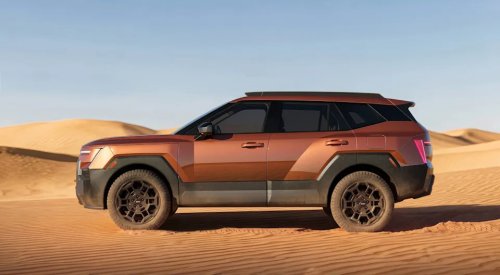
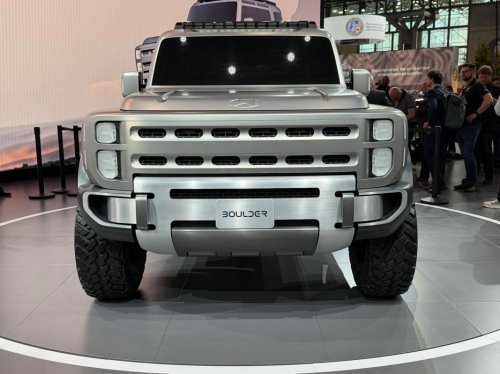
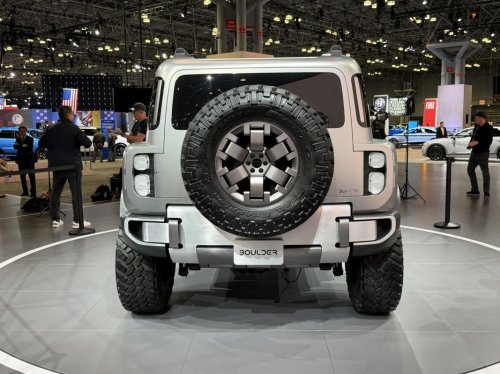
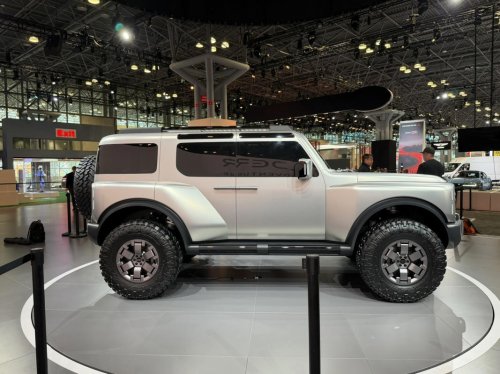
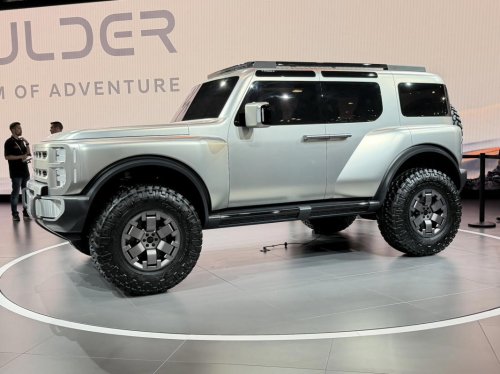
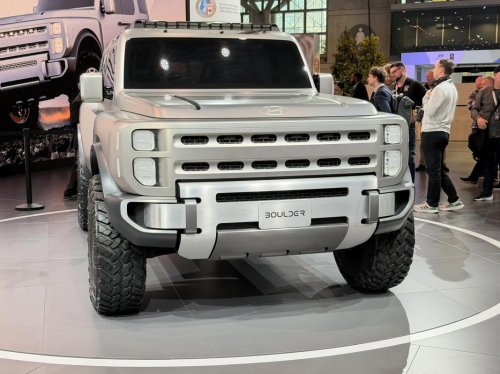
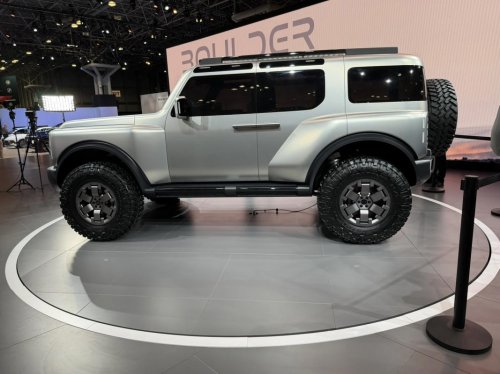
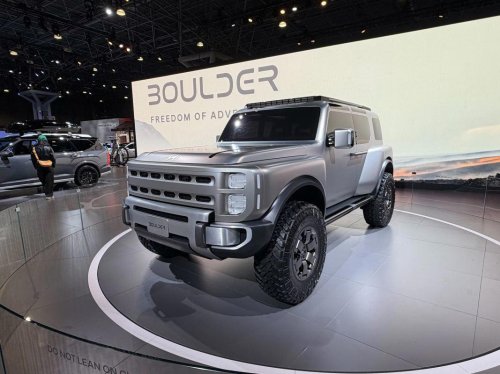
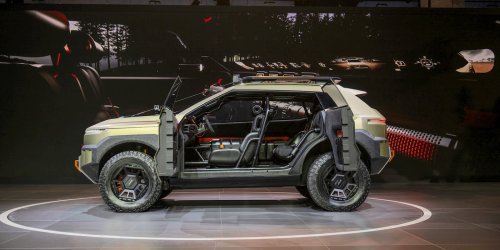
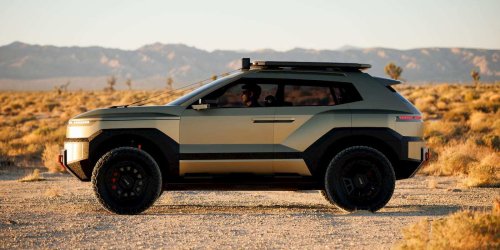
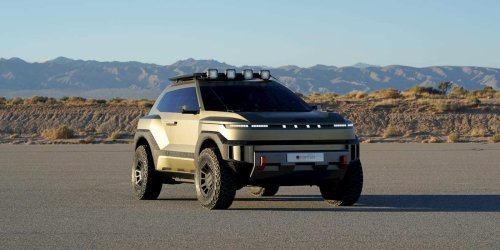
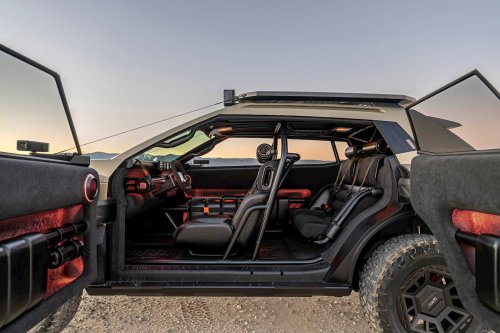
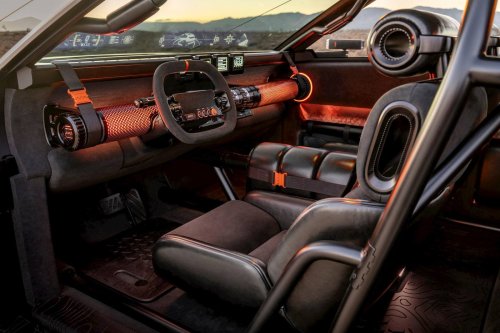
The biggest news at the 2026 New York International Auto Show was, without a doubt, the new Hyundai Boulder concept, an off-road, body-on-frame SUV that previews the Korean automaker's plans for the rest of the decade. Yes, this may just be a concept for now, but Hyundai intends to launch several products drawing influence from this concept by 2030, and since we were present at the launch, we got a good look at the Boulder from every angle. Unfortunately, Hyundai hasn't given us any idea of what to expect in the cabin, but that's okay; there's plenty to dissect. Boulder Concept Keeps Hyundai's Promise For some time now, Hyundai has been hinting at a Tacoma rival that will be far more rugged than the Santa Cruz, its only current pickup, and the Boulder concept realizes that ambition, ditching the rounded edges and toy-like look of the Crater concept we saw in November last year. Like that vehicle, the rear doors are reverse-hinged, allowing the glasshouse to flow neatly from front to back. Above the side windows, portal windows that have more than a little Defender flavor show that Hyundai has drawn inspiration from several sources. The angular, oversized fenders and the markers ahead of the taillights also appear to be influenced by the classic British off-roader, while the wraparound rear window reminds one of the Toyota FJ Cruiser. From the front, the large slotted grille seems like a mix of Jeep and Ford styling, while prominent tow hook receptors and short overhangs hint at serious off-road capability. Dead on, the wing mirrors call to mind a Ford Super Duty truck, and at the rear, more tow hooks and an externally mounted spare wheel, coupled with vertically stacked taillights that match the headlights, put this SUV in the same aesthetic family as the Wrangler and Bronco. Like a G-Wagen, the rear opening is a swing-gate. With a short wheelbase, lofty ride height, and chunky 37-inch rubber, the design seems like a great basis for a pickup, and one is expected to arrive by 2030.Expect Changes for Hyundai Boulder's Production Design We expect tow hooks, short overhangs, the external spare wheel, and the side steps to arrive on the production vehicle, along with the roof rack and potentially the small windows above the glasshouse. However, the aggressive bodywork may be toned down considerably, with less bulbous fenders and almost certainly traditional door openings—creating a rigid body without a B-pillar can be quite cost-intensive. Nevertheless, the overall look manages to be unique despite its numerous inspirations, and when a production SUV based on the Boulder arrives, it will doubtless be similarly bold, six-hole lugs and all. Of course, convincing buyers that Hyundai can provide as good an off-road experience as its ultimate rivals (or even better) will take time, but if Hyundai pulls it off, this could be its greatest hit yet. That's what we think from what we saw, anyway.


















 +44 others

![Hyundai, Hyundai Ioniq, Hyundai is testing a smaller EV — could it be the IONIQ 4? [Video]](https://cdn.topcarnews.net/thumb/id/aHR0cHM6Ly9pMC53cC5jb20vZWxlY3Ry-ZWsuY28vd3AtY29udGVudC91cGxvYWRz-L3NpdGVzLzMvMjAyNi8wMi9IeXVuZGFp-LUlPTklRLTEtRVYtZnJvbnQuanBlZz93-PTE1MDAmYW1wO3F1YWxpdHk9ODImYW1w-O3N0cmlwPWFsbCZhbXA7c3NsPTE/62d7459438201b3f1399106554e467d7.jpeg?t=20261010&post_id=68203)
![Hyundai, Hyundai Ioniq, Hyundai is testing a smaller EV — could it be the IONIQ 4? [Video]](https://cdn.topcarnews.net/thumb/id/aHR0cHM6Ly9lbGVjdHJlay5jby93cC1j-b250ZW50L3VwbG9hZHMvc2l0ZXMvMy8y-MDI2LzA4L0h5dW5kYWktbmV3LUVWLVNV-VnMtRVJFVnMuanBlZw/73fd48fd4bfe49b04f78eb3c3d2a248b.jpeg?t=20261010&post_id=68203)
![Hyundai, Hyundai Ioniq, Hyundai is testing a smaller EV — could it be the IONIQ 4? [Video]](https://cdn.topcarnews.net/thumb/id/aHR0cHM6Ly9lbGVjdHJlay5jby93cC1j-b250ZW50L3VwbG9hZHMvc2l0ZXMvMy8y-MDI2LzAyL0h5dW5kYWktSU9OSVEtMS1F-Vi1iYWNrLmpwZWc/7b032c20873a857336b6fe5e0368a3d4.jpeg?t=20261010&post_id=68203)