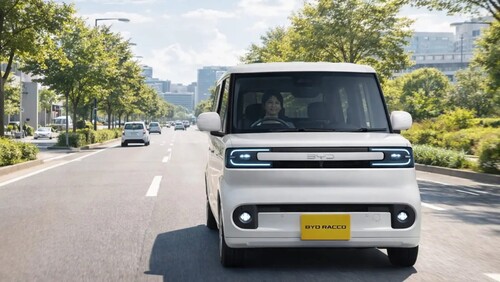
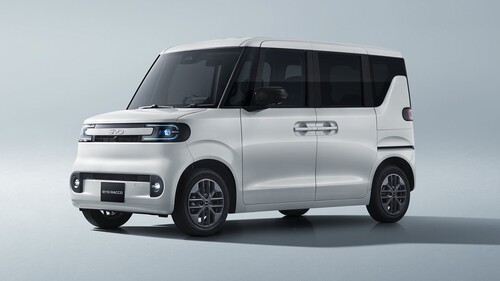
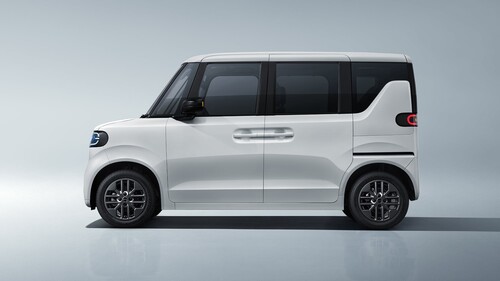
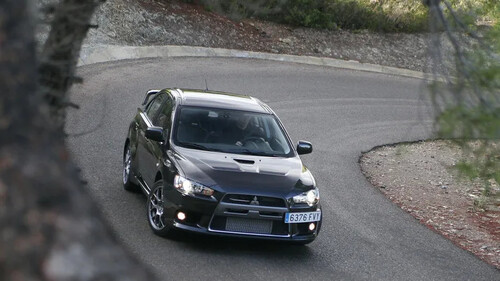
Justin Turner · 3 months ago@justinturner66This “Bulletproof” Mitsubishi Evo X Turbo Engine Blew Holes In Both Sides Liked by+50 othersPost commentRelated PostsThe Man Designing the New Mitsubishi Pajero Took Its Death Personally 28 · Nicole Pelletier · 2 months agoMitsubishi Eclipse Sportback EV Starts at $37,745Victoria Clark · 18 days agoMitsubishi Pajero Returns Next Week With Ladder Frame, Super All-Wheel Control 86 · Lauren Martin · 2 months agoBYD’s Racco Kei EV jumps out of Japan, prepares for launch in Sri Lanka and MacauThomas Leblanc · 18 days agoWhich Car Has The Smallest V6 Engine? 86 · Oliver Lee · 2 months ago5 Reasons to Buy the 2026 Mitsubishi Outlander Plug-In HybridIsabelle Lewis · 22 days ago2000 Mitsubishi Lancer Evolution VI Tommi Mäkinen Edition for Sale With 62,000 Miles 51 · Victoria Mitchell · 2 months agoI Need Something More Mature Than My Mitsubishi EVO! What Should I Buy?Emily Bouchard · 23 days agoExhaust Shape Matters, and This Dyno Test Shows Why With Visual Proof 69 · Adam Anderson · 2 months agoNo-Reserve 1995 Mitsubishi Minicab Is a Yellow, 5-Speed Kei Truck With Just 26K MilesParker Anderson · 23 days agoThe collector car Gen-Z has never heard of 46 · Henry Nelson · 2 months agoNissan Bets The Farm On Hybrids In North America 80 · Adam Lee · 24 days ago2027 Mitsubishi Eclipse Sportback 89 · Sarah White · 2 months agoThe 10 Coolest Cars for Sale on Motorious This Week 43 · Charlotte Hall · 25 days ago5 Used Sports Cars Cheaper Than The Mazda MX-5 Miata 83 · Morgan Harris · 2 months agoThese Cars Have The Dumbest Names 73 · Mason Tremblay · 25 days agoMitsubishi Delica, RAV4 Convertible, Lancer Evo Wagon: The Dopest Cars I Found For Sale Online 80 · Jackson Bouchard · 3 months ago2028 Mitsubishi Outlander To Gain Extra Electric Motors, Concept Style 31 · Amélie Martin · 25 days ago5 Forbidden JDM Performance Wagons You Can Finally Import To America 74 · William Scott · 3 months agoNissan Rogue Plug-In Hybrid Is Dead Just Months After Debut 86 · Emily Brown · 26 days ago




 +50 others

























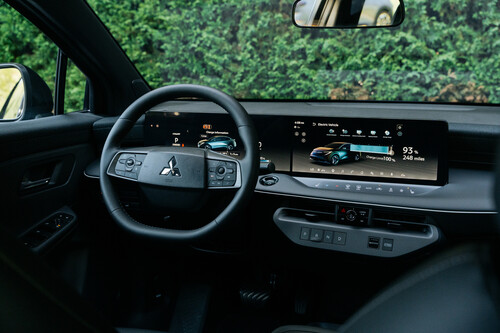
![459 hp, 0-60 in 3.9 sec, and AWD – meet Mitsubishi's new-age electric EVO [video]](https://cdn.topcarnews.net/en/69622/thumb/id/aHR0cHM6Ly9pMC53cC5jb20vZWxlY3RyZWsuY28vd3AtY29udGVudC91cGxvYWRzL3NpdGVzLzMvMjAyNi8xMC9taXRzdWJpc2hpX2FzeF92cmUuanBnP3c9MTUwMCZhbXA7cXVhbGl0eT04MiZhbXA7c3RyaXA9YWxsJmFtcDtzc2w9MQ/df09dac7018f01bb4b02a95fa8fc92c8.jpg)