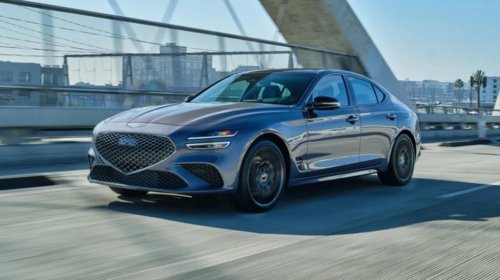
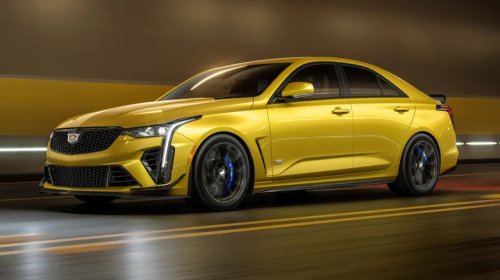
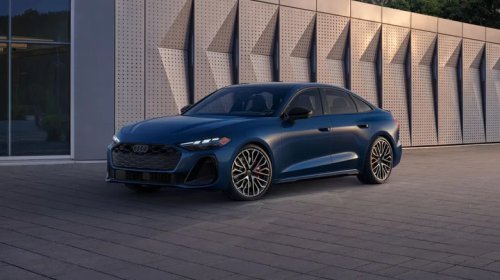
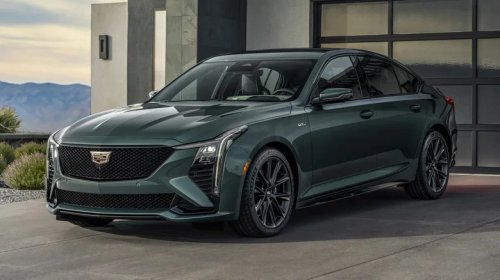
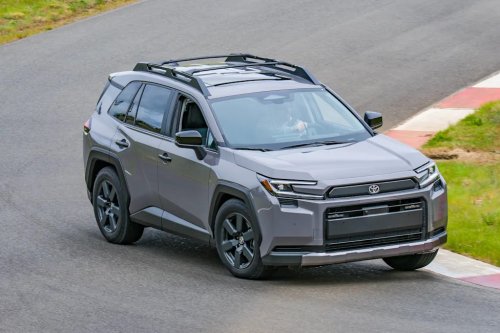
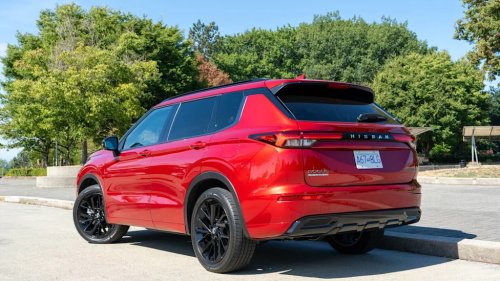
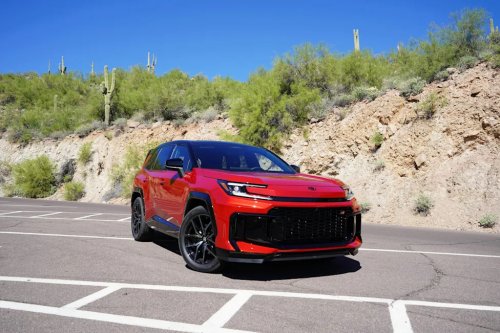
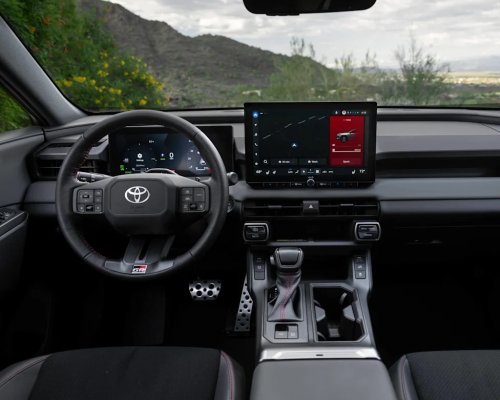
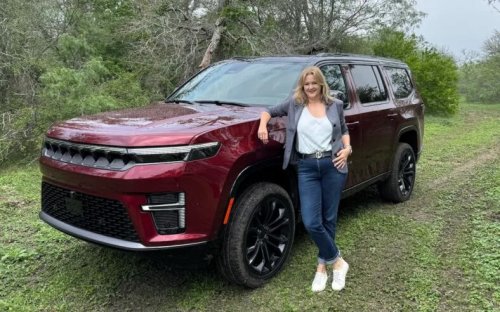
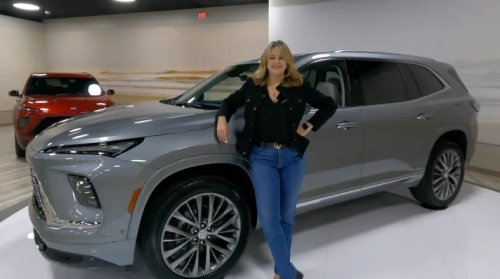
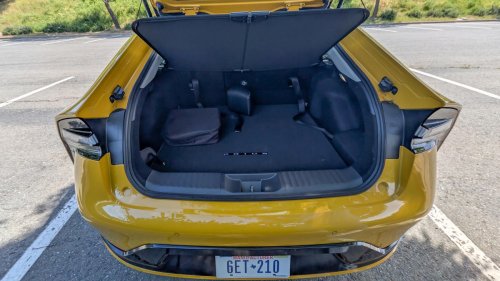
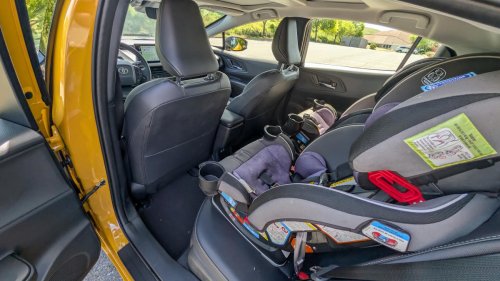
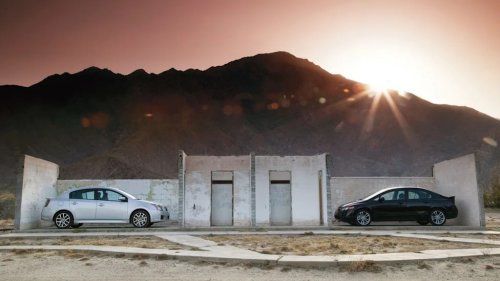
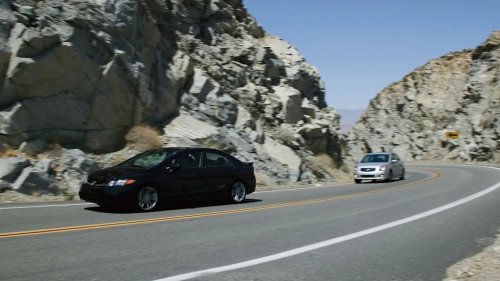
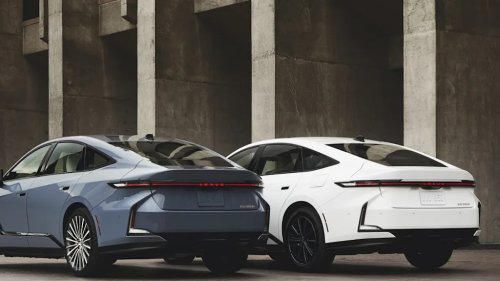
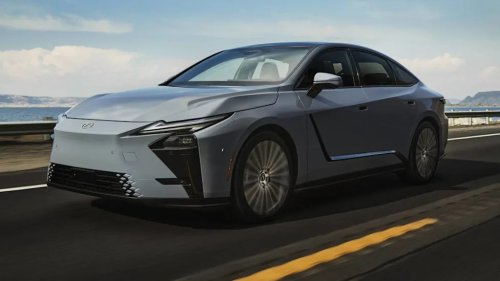
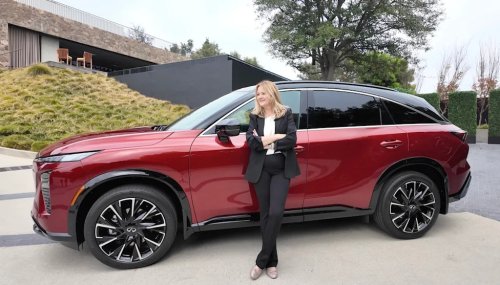
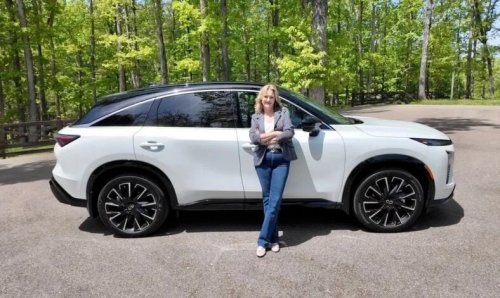
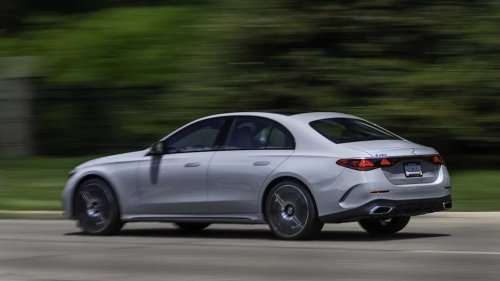
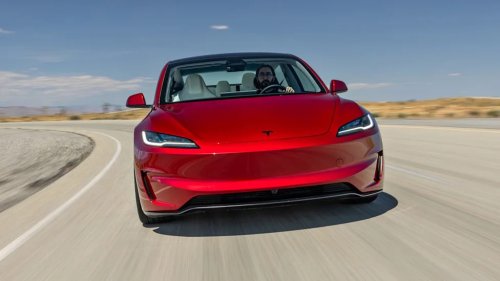
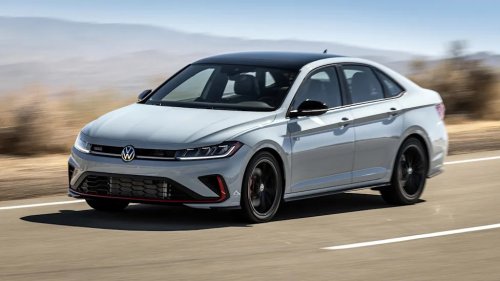
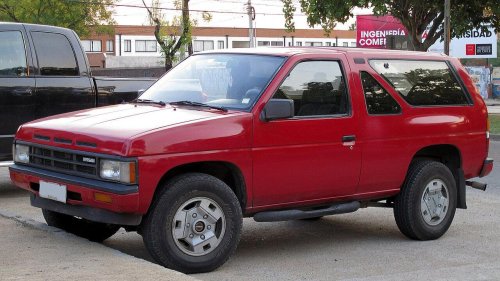
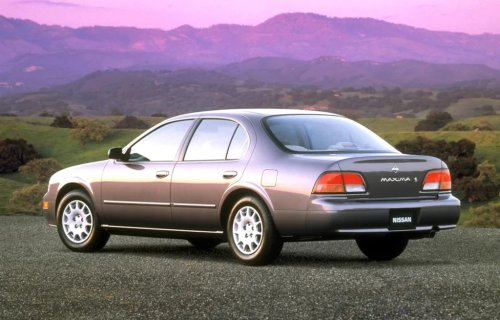
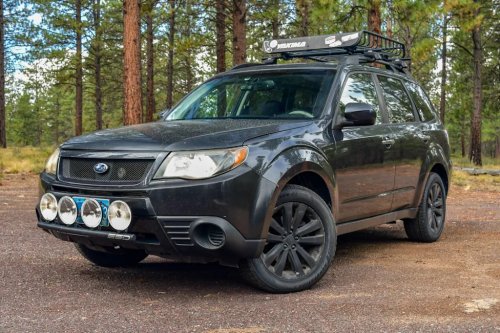
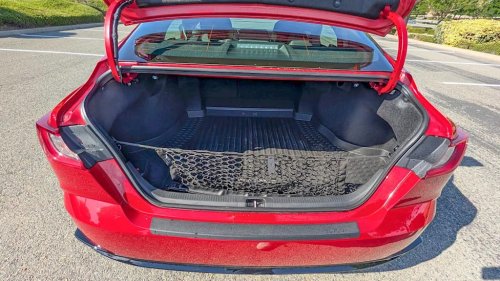
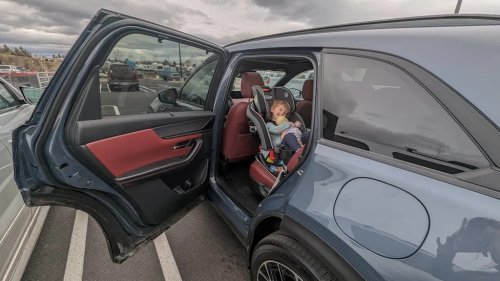
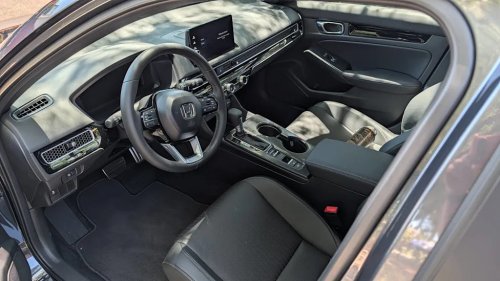
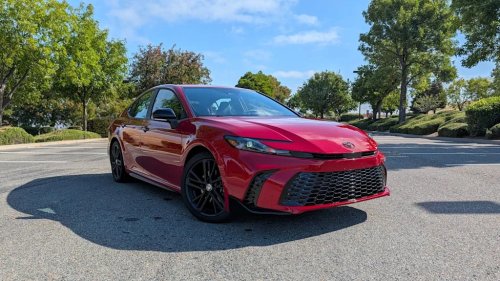
Autoblog and Yahoo may earn commission from links in this article.Back in 2018, long before I had kids, I drove a 1999 Nissan Maxima. It had a bulletproof V6, a plush ride, and a massive trunk. With over 250,000 miles on the clock, it was proof that Nissan had done something right. I loved that car. But as I prepared to move four hours away to finish my degree, I decided it was time for a "grown-up" upgrade. My now-husband and I had been dating for a few years, and we knew children were in our future. So, I ponied up and bought a 2011 Subaru Forester. I did it because I had been conditioned to believe—just like everyone else in America—that a looming family milestone requires an SUV upgrade.NissanThe funny thing is, my husband told me not to do it. He argued that the Maxima had plenty of room, a trunk big enough for a family, and cheap insurance. Since he did the wrenching, he knew how easy it was to fix. We didn't need an SUV, he said. But darn it, the cultural conditioning was strong. I wanted the crossover, so I bought it. Today, as an automotive journalist, I review cars for a living. Every time I swap out of an SUV and into a standard sedan for a week of testing, I think back to those conversations. And it pains me to admit it, but he was right. I could have kept that Maxima. It would probably have clocked more than 300,000 miles by now.Kristen BrownWhile I don't regret buying my Forester, my years spent putting my toddlers into modern sedans have completely flipped my perspective. It turns out the "SUV family mandate" is largely, though not completely, a myth. Let's break down the realities of sedans versus SUVs for daily family life—and why the humble four-door might actually be the ultimate parenting hack.AdvertisementAdvertisementRelated: Road Ethos Launches: The New Automotive Lifestyle Site You Should ReadArgument 1: The trunk vs. rear cargo holdOne of the debates my husband and I got into was about how an SUV's rear cargo area isn't statistically better than a sedan's trunk. I loved to argue that I needed all the extra vertical space for my camping gear, and we'll eventually need all that height for a stroller. The reality is, yes, the vertical height is sometimes beneficial. But a sedan's lower, contained trunk design is, a lot of times, more helpful. More times than I'm happy to admit, I've opened up the rear hatch of my Subaru on my sloped driveway and had groceries, gear, and other items spill out onto the pavement. No bueno if you have a baby in one arm, trying to keep a toddler from running into the street, while now having to worry about your spilled or maybe broken items. When my husband worked and I was alone with the kids, this exact scenario had frustrated me numerous times. A sedan wouldn't have done that to me.Kristen BrownThe vertical height has only ever come in handy while moving, when being able to stack furniture or boxes was needed. But that was only a few times, and since I moved twice with my Nissan, I can confirm there is still tons of available space when you fold the seats down. You just don't have the stacking capabilities. Otherwise, I appreciate the containment of a trunk over the openness of a rear cargo area in an SUV. I also remember arguing that things are easier to load and unload into or from an SUV compared to a lower sedan, and that's simply not true.This isn't to say one is better than the other, though. I'm just stating that a sedan's trunk is much more useful and family-friendly than we've been conditioned to think it is.Argument 2: Loading the kids into an SUV is easierThen there is the great myth of the "easy loading" SUV height. Everyone tells you (like they told me) that high-riding vehicles save your back when you're buckling in a kid. And sure, when they are tiny infants in a bucket seat, lifting them up and clicking them into a base is fine. But once your kids hit the toddler stage, everything changes. Toddlers, like my two, want to do everything themselves. Climbing into a towering SUV requires a death-defying scramble up a running board (depending on the model, of course), scraping their shins, while you stand behind them acting as a spotter so they don't fall backward. Or, if they're having a meltdown, you're deadlifting thirty pounds of thrashing toddler up into a high-perch seat at shoulder height. Many onlookers in my Costco's parking lot can attest to that.Kristen BrownSedans are a bit different. The lower step-in height means a three or four-year-old can easily open the door and hop right into the footwell without a secondary mountain-climbing license. It gives them a sense of independence and completely saves your lower back. When it's time to buckle them in, you aren't reaching up and leaning awkwardly into a giant cabin; you're just leaning slightly forward, securing the chest clip with a straight shot, and shutting the door. Of course, this depends on the sedan. But all of this is to say that the lower entry point in a sedan isn't as bad as you think it would be.AdvertisementAdvertisementRelated: The 5 Best Luxury Sports SUVs for FamiliesArgument 3: SUVs are easier to get in and out ofNow, I do have to add that people with mobility issues will probably like how easy it is to get in and out of an SUV compared to a sedan. My mother-in-law, for instance, hates climbing into my father-in-law's Camry, while she loves the ease of entry of his RAV4. I'll say, too, that after a rigorous leg day, I do prefer climbing into my Forester over my WRX. However, before I even bought my Forester, I'd only owned sedans, and climbing in and out of one wasn't something I even thought about.Kristen BrownBut, for us normies that don't have preexisting knee or back issues, sedans are perfectly fine. My husband is taller than I at 6'0", and he prefers something low to the ground since it feels "sporty" over the SUV's more exposed setup. It's all a matter of personal preference for this argument.Argument 4: Sedans tend to be less expensive and just as roomy as SUVsIf you look at the cold, hard numbers, the financial case for the sedan becomes undeniable. Take a look at the two most ubiquitous family haulers on the road today: the Toyota Camry and the Toyota RAV4. When most parents are cross-shopping, they assume upgrading to the RAV4 means they are buying a significantly larger, more accommodating vehicle for their family. But if you look closer, you are mostly just paying a premium for a vehicle that's mainly just taller. On paper, a base Camry starts roughly $3,000 cheaper than a base RAV4. For that extra cash, you'd expect a massive leap in passenger space, right?Kristen BrownIt turns out, the math doesn't back up the marketing. If you look at rear seat legroom, the Camry actually edges out the compact SUV, offering 38 inches of space compared to the RAV4's 37.8 inches. When you're trying to wedge a rear-facing car seat behind the driver's seat without driving with your knees pinned to the dashboard, every fraction of an inch counts. As for cargo, while the RAV4 wins on raw cubic volume thanks to its tall roofline, how often are you truly packing your car to the ceiling? For the vast majority of weekly grocery hauls and stroller placements, the deep, wide floor of a sedan trunk offers just as much usable, real-world floor space—without forcing you to pay a premium for air you rarely use.AdvertisementAdvertisementRelated: Sedan vs Coupe: The Difference Is Not As Simple As It Used To BeArgument 5: Sedans usually have a better ride qualityNobody buys a family car expecting it to feel like a Porsche, but we need to talk about how much better a sedan actually feels from behind the wheel. Typical family SUVs are tall, heavy, and have a high center of gravity. When you take a sharp corner or hit a highway transition ramp in a crossover, you can feel the entire vehicle lean. Your body tosses to the side, and in the rearview mirror, you can see your kids' heads swaying like bobbleheads. It turns daily driving into a chore of constant, subtle steering corrections just to keep the ship steady.Kyle Edward - AutoblogSedans handle the road with an entirely different level of composure. Because they sit lower to the ground, they are inherently stable. When you steer, the car just turns—no dramatic body roll, no top-heavy swaying. They brake faster, accelerate more crisply, and react with agility if you have to swerve around a piece of debris on the freeway. Driving a sedan doesn't feel like navigating a cargo ship; it feels connected, predictable, and, dare I say, fun. When you spend hours a week commuting to daycare and running errands, driving a car that actually responds to you makes a massive difference in your daily stress levels.Argument 6: Sedans can boast better mileage figures, thanks to aerodynamicsThen there is the line item that hits your wallet every single week: fuel efficiency. It is a simple law of physics that tall, boxy vehicles require more energy to push through the air than low, sleek ones. SUVs are essentially motorized bricks fighting a constant battle against wind resistance (I have Bob Seiger stuck in my head now), and you pay for that battle at the pump. Even in our modern era, where standard hybrid powertrains are taking over the market, the sedan remains the undisputed king of efficiency. Kristen BrownLet's look at the numbers again. A front-wheel-drive Toyota RAV4 Hybrid gets a very respectable EPA-estimated 43 mpg combined. But switch to a standard Toyota Camry Hybrid, and that number skyrockets to an astonishing 52 mpg combined. When you are managing a family budget, that gap translates to hundreds of dollars saved every year. It means fewer mid-week disruptions to swipe your card at a gas station while your kids scream in the backseat, and more miles of pure, uninterrupted road trip range. Choosing a sedan isn't just a stylistic pivot away from the crossover crowd—it is a massive, ongoing raise for your family's monthly bank account.AdvertisementAdvertisementRelated: Out of All the Hybrids I've Tested, I'm Planning to Buy a 2026 Honda Civic Hatchback Hybrid. Here's WhyFinal thoughts: Both are winners, but you don't have to give up sedan life if you don't want toLet's be clear: no parent is at fault for buying an SUV. Navigating the modern parenting landscape is a masterclass in managing anxiety, and if buying a high-riding crossover gives you a sense of security and peace of mind when you're hauling your most precious cargo, you should drive it with pride. But if you are sitting there holding a positive pregnancy test, looking at your beloved, paid-off four-door sedan, and feeling a twinge of sadness about trading it in—I am here to tell you that you don't have to. You don't have to give it up.The humble sedan isn't a compromise or a placeholder until you can afford something bigger. It is a fully capable, highly practical family machine. It can be just as good as any crossover on the market, and as it turns out, in the daily trenches of toddler life, it can actually be a whole lot handier. It will save your lower back during car seat battles, keep your groceries from rolling out onto the pavement, drop an extra chunk of cash back into your monthly budget, and actually give you a little bit of joy when you hit a twisty back road. Your toddlers don't need eight inches of ground clearance to get to daycare. So go ahead, skip the SUV tax, keep the keys to your sedan, and enjoy the drive.This story was originally published by Autoblog on Jul 4, 2026, where it first appeared in the Features section. Add Autoblog as a Preferred Source by clicking here.



















 +24 others