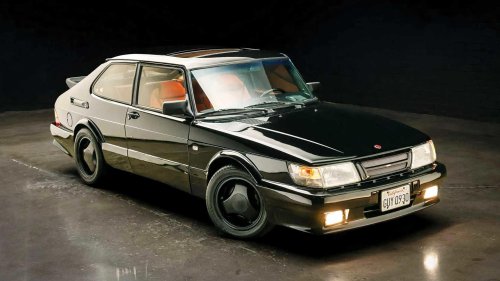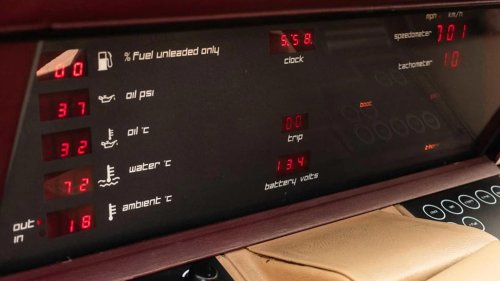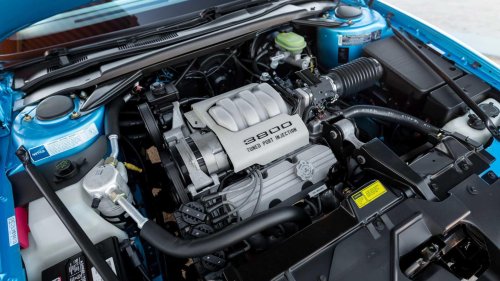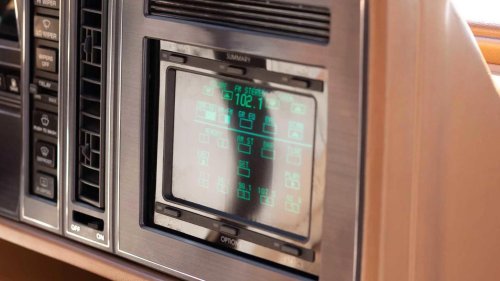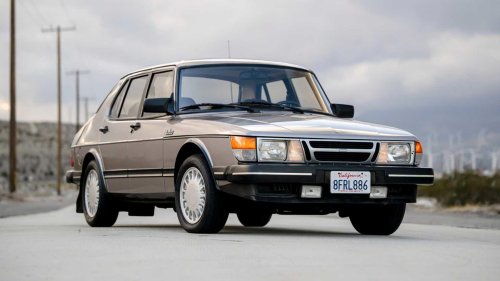
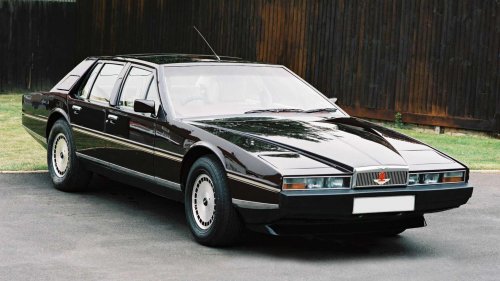
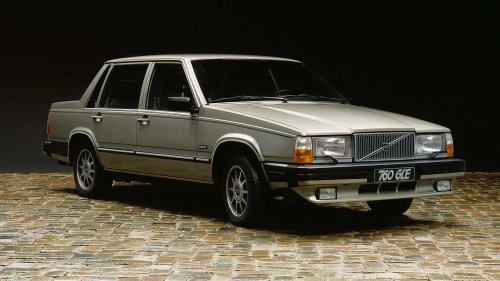
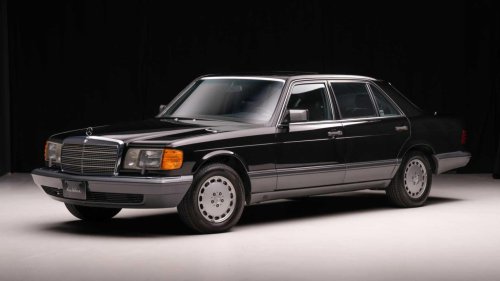
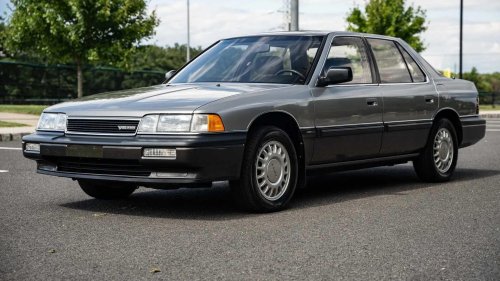
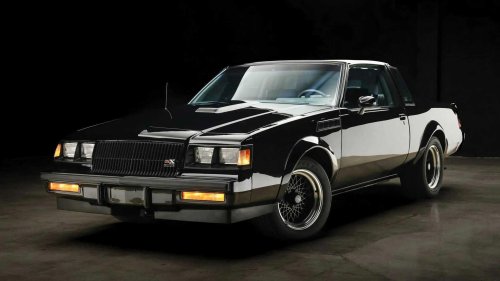
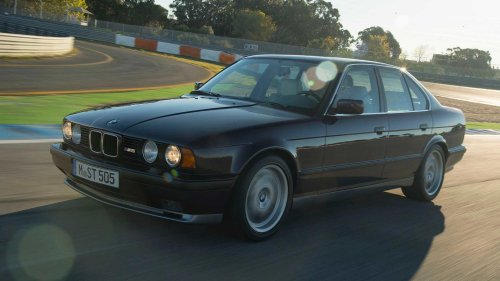
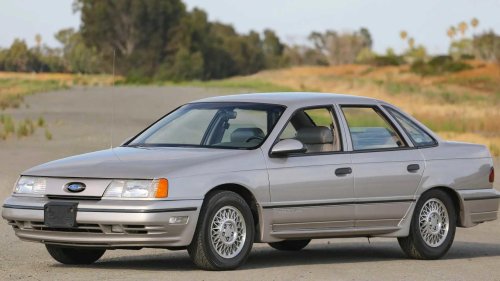
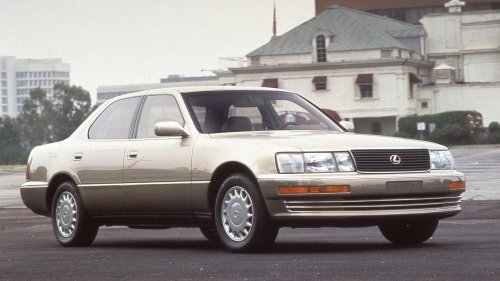
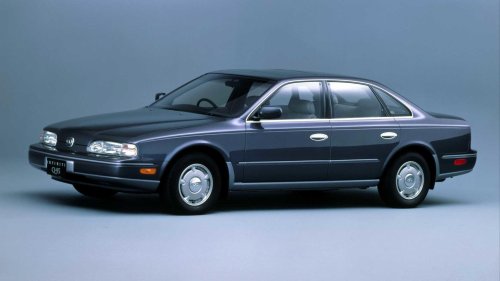



















The 1980s were a turning point in automotive engineering. The digital age was upon us, and automakers were finally starting to figure out how to overcome the power deficiencies brought on by the emissions equipment of the 1970s. LCD dashes and pop-up headlights were becoming the rage, and Japan was finally entering the luxury fray as a serious contender. All things were looking up, and most importantly, money was being thrown around that helped to create some of the most over-engineered cars of all time.Now, "over-engineering" is a broad and vague term, one that's open to interpretation when it comes to just about any machine. In sedan terms, we look at it to mean any vehicle that boasts a combination of advanced technology, impressive build quality, cutting-edge performance, or any combination of the three. Each of the 10 sedans on this list boasts at least two of these traits, and together they make up some of the most over-engineered cars of their time.In this article, we take a look at 10 different over-engineered sedans from the 1980s, placed in order from the oldest to the newest. Saab 900 Turbo 1979–1993 1985 Saab 900 Turbo Sedan 5-Speed front 3/4The Saab 900 Turbo was one of the most interesting and over-engineered models of its time. First, let's start with the 900 itself. The model was heavily aircraft-inspired, featuring a large, curved windshield, driver-focused controls, and a unique fastback design that was unmistakable at any distance. It was an adept handler, mostly because it utilized a double-wishbone suspension up front with the engine and transaxle pushed far back in the engine bay.The turbo model increased performance with the addition of, you guessed it, a turbocharger. The 1981 and newer models featured an improved engine design with mechanical and later electronic fuel injection, plus the addition of Automatic Performance Control (APC) from 1982 onwards, which helped mitigate knocking regardless of the fuel used. These later models were very reliable and safe, creating a sought-after legend to this day. Aston Martin Lagonda 1976–1990 1976-1990 Aston Martin Lagonda front 3/4The Aston Martin Lagonda is one of the most glorious failures of its day, and that doesn't make us love it any less. In the 1970s, Aston Martin was on the brink of collapse, and only through the investment of a consortium led by a Silicon Valley venture capitalist did the company survive. However, it needed a hit, and it needed one fast, so, of course, the company decided to create the most complicated and alluring sedans ever made. Introduced in 1976, it featured long, radical, sharp, and wedge-shaped styling that shocked onlookers at the British Motor Show.However, the interior was where the magic lay, as it featured the world's first fully digital dashboard and instrumentation. It featured upwards of 40 touch-sensitive buttons, which controlled every facet of the car. This would have been hard for GM to do at the time, let alone a tiny British automaker like Aston, and, as one can imagine, it turned out to be a debacle. However, by the time the Series 2 production version arrived in 1979, the system had been completely overhauled with a change from LCD to CRT, and it was much more agreeable. For the rest of the 1980s, this was the system it used, and while not perfect, at least it gave the gorgeous car a little more allure. Volvo 760 GLE 1982–1990 1982 Volvo 760 GLE front 3/4 parkedThe Volvo 760 GLE was an extremely important car for the brand because it was the car that kept it alive in the 1980s and changed its design direction forever. Before that, the company had always worked with more conventional, curved designs that were all the rage at the time. However, due to a desire to maximize space, safety, and cost, the slab-sided 760 was envisioned, which was a radically different kind of option at the time.Reinforced pillars, excellent crumple zones, and strong safety cells made it one of the safest vehicles of its time, and performance was also impressive, thanks to being offered with RWD and a V6 engine in the GLE model. The only issue was the use of a solid axle for 1983, but this was later changed to a multi-link setup in 1988, so all was right with the world. While not full of as many fancy features as the other entrants on this list, the car's advanced design made it a hit. Mercedes-Benz 560SEL (W126) 1985–1991 1989 Mercedes-Benz 560SEL front 3/4The 560SEL is one of Mercedes-Benz's greatest engineering triumphs, and it's easy to see why. From the outset, the company wanted to create a vehicle that was more aerodynamic than its predecessor without losing what it meant to be an S-Class model. Bruno Sacco and his team went to work and delivered one of the most iconic designs the company has ever released. It was long, regal, and attractive, and sported a reasonably powerful engine under the hood for the first time in decades. As solid as a bank vault, yet still lighter than one would think, thanks to its steel alloy and polyurethane construction, it soaked up the bumps like they weren't even there.This was especially thanks to the optional hydropneumatic suspension, which became more advanced as the years wore on. Its operation was barely perceptible, and the car was exceptionally safe thanks to a laundry list of additions like ABS, traction control, airbags, seatbelt pre-tensioners, and more. There was so much luxury in this model, it's hard to list it all here, and we probably wouldn't be sugarcoating it if we said the 560SEL is one of the most overengineered vehicles of all time. Acura Legend 1986–1990 1987 Acura Legend Sedan front 3/4While not as fancy as the other cars on this list, the Acura Legend lived up to its name with a reputation for nearly unparalleled reliability and performance. It was the first car introduced under the Acura brand here in the US, hitting our shores in 1986 under the new brand with its "Precision Crafted Performance" slogan. Developed with the help of Rover, the car offered the typical upgraded stereo, leather seats, and attractive design, but what really set this car apart was its performance.It was the first production Honda product to be offered with a V6, and it was a thoroughly modern fuel-injected unit, which was a massive departure from the carbureted vehicles most consumers were used to seeing at the time. Paired with four-wheel independent suspension and an available manual transmission, it was one of the best-driving luxury cars of its day, and little did buyers know its reliability would put most others to shame. Buick GNX 1987 1987 Buick GNX front 3/4Ah, the GNX. Much has been said about this car over the years, yet we never get tired of talking about it. Perhaps it's because it's from a brand that never gets a lot of love, and perhaps it's because it could outpull cars more than three times its price. Whatever the reason, the Grand National Xperimental was Buick refusing to pull any punches with the Regal. This over-engineering was all about performance, and it mostly had to do with the turbocharged 3.8-liter V6.This was produced in partnership by McLaren Performance Technologies and ASC, completely overhauling the powerplant to produce well over 300 horsepower (although factory rated figures were downplayed somewhat) and 350 lb-ft of torque at a time when most other production performance cars weren't even coming close. Thanks to a strengthened transmission, drivetrain, and suspension upgrades, the car could hit 60 mph in less than five seconds, which blew the Porsche 911 Turbo out of the water. The fact that the only vehicles in the world that could beat it in a straight line came from the likes of expensive European exotics is all you need to know about why it's so beloved. BMW E34 M5 1988–1995 1989 BMW M5 front, three-quarter on trackThe original BMW M5 was a revelation, but we think the successor was the one that really upped the ante. The E28 was a gorgeous 5 Series generation, but its design was dated by the time the '80s got into full swing. The E34 improved those looks, softening them and making it more approachable while sticking true to its sport sedan formula. This was the last generation to use an M1-derived engine, the 3.6-liter S38 inline six, which received a host of changes like a forged crankshaft, new camshaft, and Bosch electronic engine management to boost output to 310 horsepower and 265 lb-ft of torque.While not much by today's standards, this was a riot in the mid-to-late' 80s, and combined with suspension, transmission, and brake upgrades to create one of the most attractive all-around sports car packages of its time. Also, this was still during the era when reliability was still of paramount concern to the company, and this car proved to be a stout long-term companion. The GNX might have been able to beat it in a straight line, but we know which one we'd rather drive every day. Ford Taurus SHO 1989–1995 1989 Ford Taurus SHO Silver Front Angled View parkedFord had already shocked the world when it debuted the Ford Taurus in 1986, but little did we know the company envisioned something even crazier that would arrive just a few years later. It seemed to be a car built around an engine, and that engine was the Yamaha-produced 3.0-liter V6, which put out 220 horsepower to the front wheels, and gave off one of the best exhaust notes of its time. It was a very advanced engine for its time, only used in this single car, and it was powerful enough to propel the SHO to 60 mph in just 6.6 seconds.To handle all of that power was a stiffer suspension that was specifically tuned to reduce torque steer, along with larger brakes, better rubber, and a notchy five-speed transmission. The combination is still a benchmark for FWD performance sedans today, as it held its own admirably against some rather impressive German and Japanese fare. For a time, it was the best American performance sedan there was, and today Ford doesn't even make sedans anymore. What a shame. Lexus LS 400 1989–1994 Lexus LS 400 front 3/4The story of the LS 400 is basically the story of Lexus itself. After building a massive presence here in the US, Toyota wanted to enter the luxury market, and it wanted to beat the best. This meant writing a blank check and spending more than a billion dollars on creating what would eventually turn out to be the LS 400. It was a stylish, comfortable, and supremely luxurious sedan that showed the world that luxury and reliability are supposed to go hand-in-hand.The 1UZ V8 alone cost $400 million to create, and it was smooth and powerful with precision-balanced internals, pairing with the four-speed auto to make acceleration effortless. Over a million miles were driven in the prototypes to ensure that it had all the qualities of a flagship luxury sedan, with NVH and panel gaps that made competitors nervous. This single model started the brand, and by the late 1990s, Lexus was outselling them all in the US. It forced them to evolve to compete, so, yeah, it was over-engineered. Infiniti Q45 1990–1996 1989 Infiniti Q45 Selection Package front / sideThe last of our crop of over-engineered 1980s models is the Infiniti Q45, and like the other Japanese cars on this list, it was a vehicle that helped launch a brand. While the LS 400 gets all the attention, the Q45 actually debuted at the same auto show along with the M45 coupe. It wasn't as bold as the Lexus, as Nissan wasn't aiming for the same stately luxury, instead focusing on driving pleasure and emotion.It debuted with the titanium-valve VH45DE V8, which produced more power than the unit in the LS, and could be paired with an active suspension with four-wheel steering for improved agility. The interior didn't offer the wood finishes of many of its competitors, but the leather and plastic were of high quality, and the cockpit was unmistakably focused on the driver, with everything in easy reach. It was the driver's luxury car, and we feel it would have been more of a hit if the company had focused a little less on an engineering-first approach and a little more on making the looks sharper.Sources: Infiniti, Lexus, BMW, Mercedes-Benz, Volvo, Saab, Buick, Ford, Acura, Aston Martin.