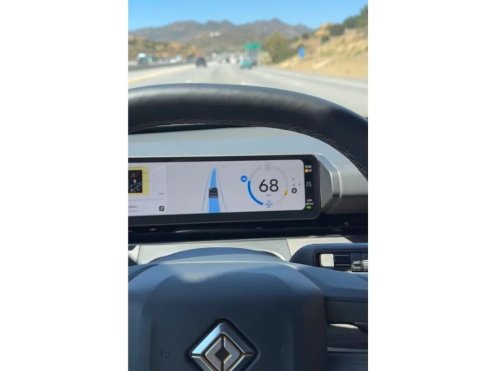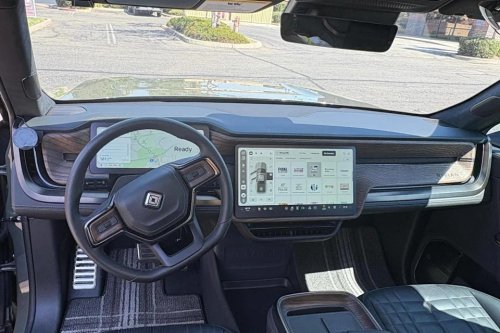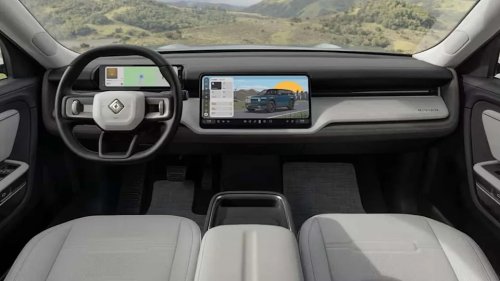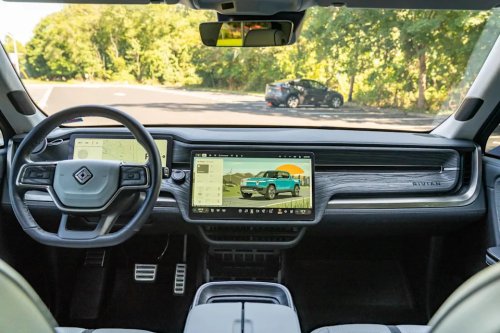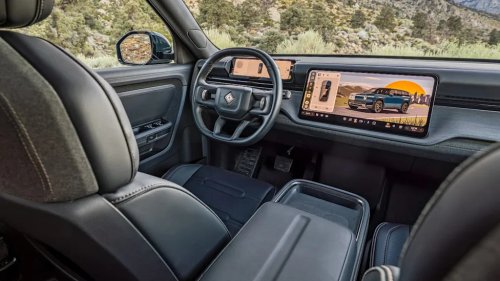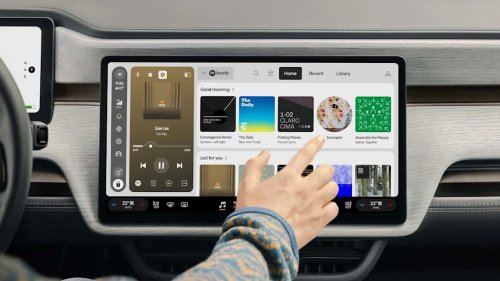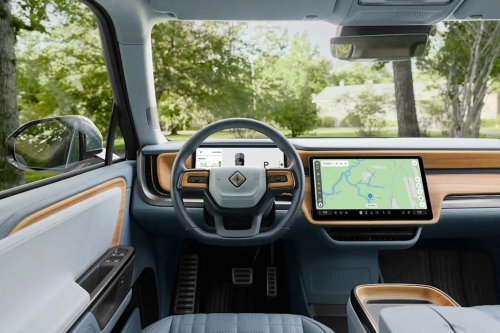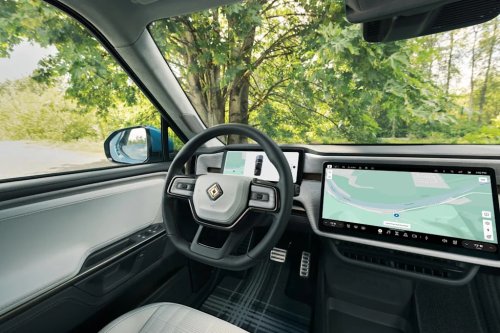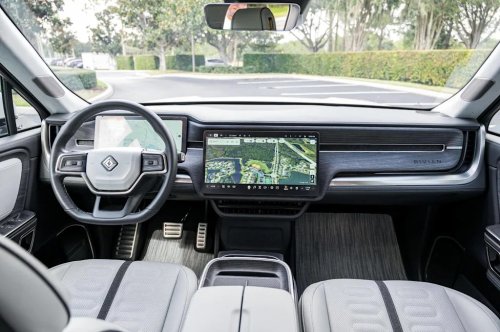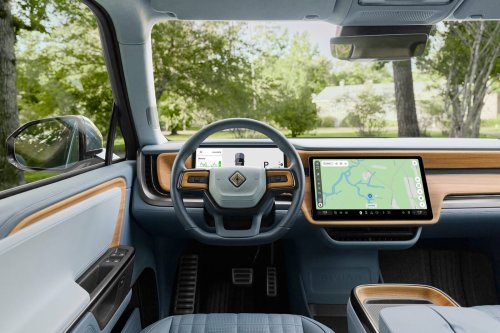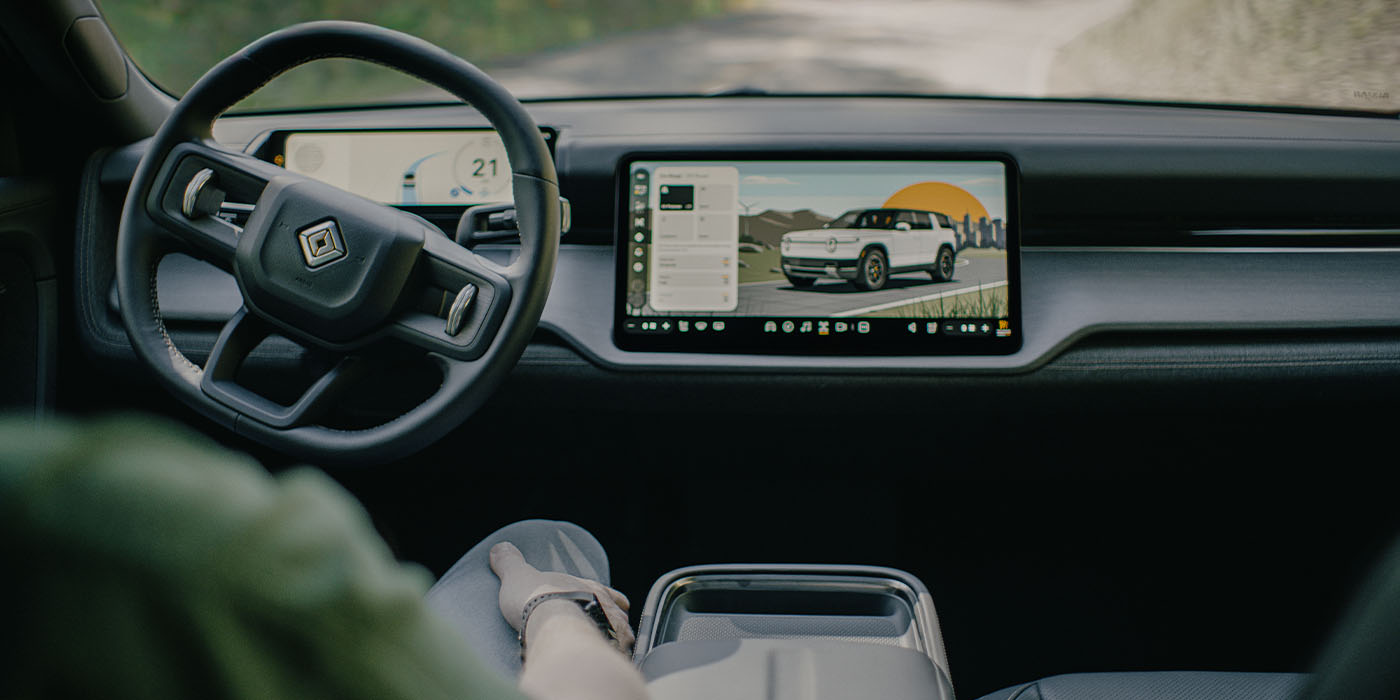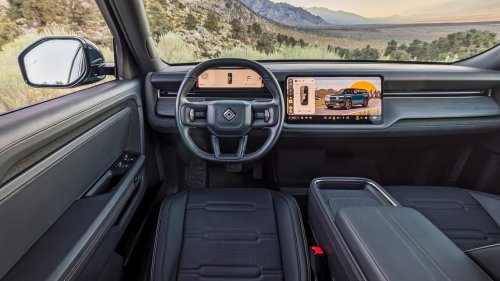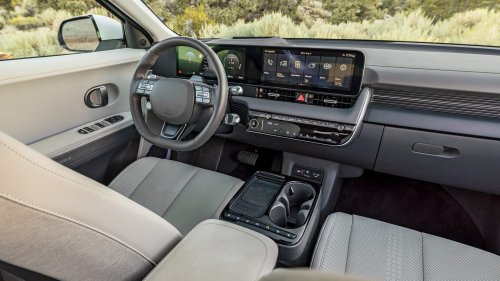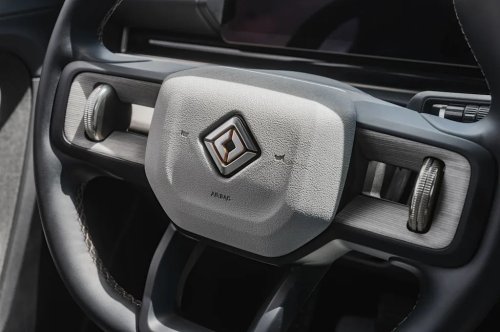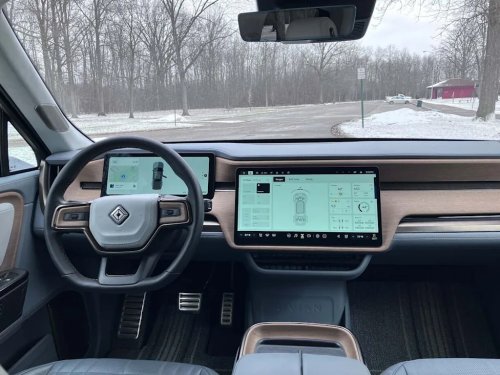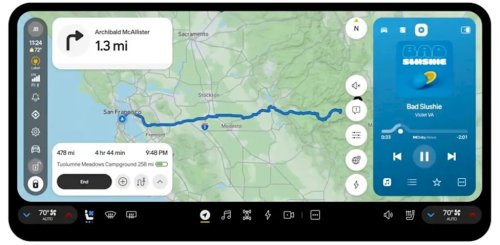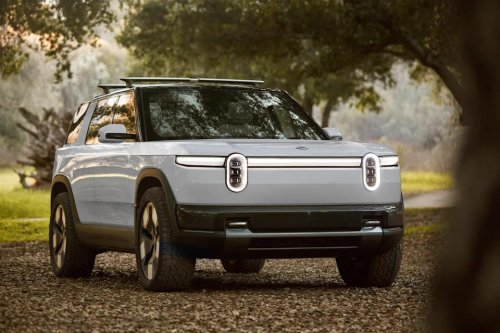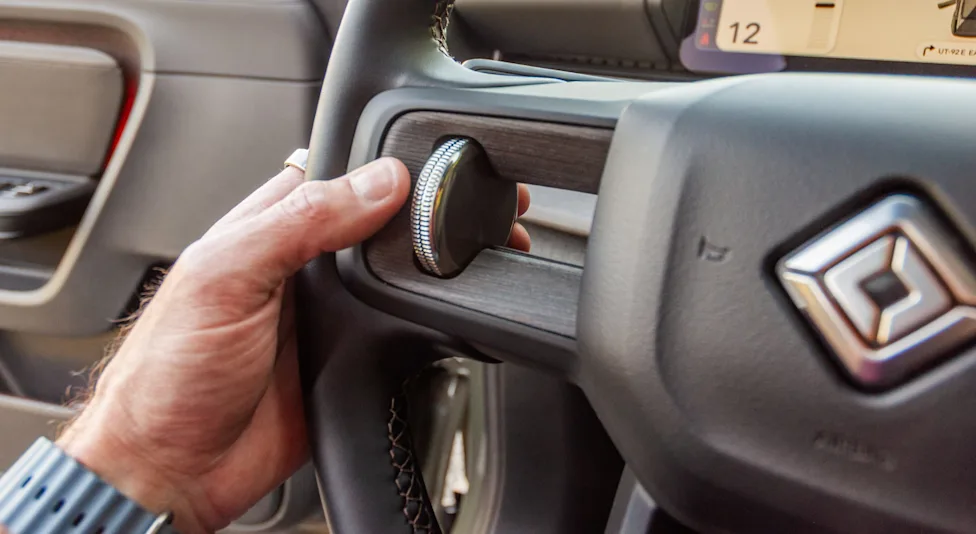



















2027 Rivian R2Key TakeawaysRivian introduces innovative Halo wheels. These software-driven controls offer a customizable haptic experience, enhancing user interaction. Complex engineering behind simplicity. The Halo wheels feature motors and software for configurable feedback, akin to iPhone's haptic feedback. Versatile functionality. Halo wheels control drive modes, climate, audio, and more, adapting based on screen interactions. Unique market offering. Rivian's Halo wheels provide a tactile experience unmatched by competitors, setting the R2 apart. Bottom line: Rivian's R2 model features groundbreaking Halo wheels, blending software innovation with tactile feedback to enhance vehicle control and user experience. ✦AI assisted, editor reviewedAdvertisementAdvertisementGet into a Rivian to date and there's a lack of buttons, knobs, and toggles. The startup automaker sees you and has taken the criticism personally. Who hurt Rivian? Pretty much everyone, but then it took that energy and completely over engineered how you can interact with vehicle controls.In Park City, Utah, in an exclusive interview on the latest episode ofThe Drivecast Rivian Founder and CEO RJ Scaringe said, "We wanted to have some more haptic experience, and so creating those [Halo] wheels was a big part of that, and a huge engineering effort."Listen to the entire conversation starting at the moment Scaringe talks about physical controls, the Halo wheels, and how to interact with a Rivian below.Scaringe was up front that engineering the Halo wheels wasn't easy. "Yeah, the haptic wheels that are on the steering wheel, that was a very large engineering effort because when you're rotating those and you hear the, feel the haptic clicks. That's actually software, so there's actually no indents like you'd have in a typical wheel that has that click," Scaringe said.AdvertisementAdvertisementExplaining the complex engineering effort in detail Scaringe said, "What it is, is it's a little motor that's creating that torque rise and torque fall." That's similar to how the silence/vibrate function now operates in an iPhone. Scaringe continued, "Yeah, so it's all software-driven. And the beauty of that is that those wheels now are completely configurable. So while they have all the haptic clicks, when you go to a different screen, the wheels update, or if we have an over-the-air update we want to change some of the capabilities of the vehicle and have those haptic wheels do something different or behave in a different way, that's entirely possible. And so that was one of the reasons we initially were so philosophically aligned with using a multi-touch screen, is we liked the ability to continually refresh and update it. But as you said, we wanted to have some more haptic experience, and so creating those wheels was a big a big part of that and a huge engineering effort. Far bigger engineering effort than it looks when you see it finished. Inside of that wheel, there's a PCBA, there's a motor, there's a motor driver, there's cooling systems, it's quite complex. And then as you said on the stalks, we put more thoughtful design into some of the controls, or as you said, a little knob for rotating up and down on the speed when you're in self-driving mode."Rivian Chief Software Engineer Wassym Bensaid told The Drive, "It's really a first principle way of thinking about how we can introduce a tactile experience, a touch experience, but then without cluttering the whole user interface."Bensaid continued, "And this is how we came up with the software defined haptics, which the beauty is that it provides you a different type of feedback depending on the action. And then we can configure them as we wish from a software standpoint."View this post on InstagramThe man in charge of the software stack at Rivian isn't wrong. In our early testing at the R2 launch the Halo wheels on the steering wheel are a game changer with nothing else on the market like them today. Mounted on an axis, the silver wheels with satisfying notches in them can be rotated, pushed side-to-side, and back-and-forth.AdvertisementAdvertisementMounted on either side of the steering wheel, each Halo wheel correlates with functions that get brought up on the digital gauge cluster depending on how they are pushed, pulled, slid, or rotated. The right Halo wheel can change drive modes, climate control settings including fan speed and temperature, and the display mode. The left Halo wheel can change audio volume, display efficiency, audio functions, and vehicle status information such as tire pressures.The Halo wheels are extremely satisfying to use and play with as they deliver a satisfying click sensation upon each interaction. Bensaid noted, "You will see it depending on the menu, it will have different functionality, and even the detent of the action will be quite different."Bensaid isn't wrong. The Halo wheels function like nothing else on the market and truly set the R2 apart.Got a tip about future tech? Send us a line at tips@thedrive.com