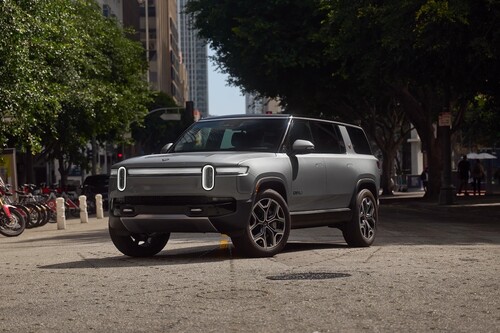
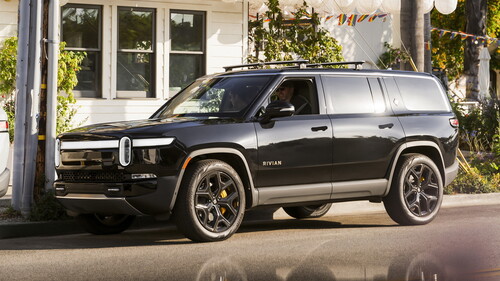
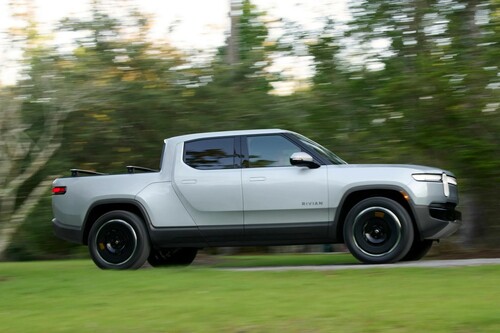
Rivian Recalled Its Turn Signals Last Year. Now It's Recalling the Recall.On August 5, Rivian told federal regulators that a turn signal defect it already recalled hadn't actually been contained. Fourteen months after the original filing, the automaker is back with a bigger version of the same recall.NHTSA logged the expansion as campaign 26V-508, Rivian's internal number FSAM-1833. The defect: one or both front turn signals on certain 2025 and 2026 R1S and R1T models may fail to illuminate and flash, putting the vehicles out of compliance with Federal Motor Vehicle Safety Standard 108, the rule governing exterior lighting. NHTSA doesn't mince words about why that matters: "Turn signals that do not function properly increase the risk of a crash."None of that is the interesting part. The interesting part is what this filing actually admits: that Rivian's first attempt to fix this problem, over a year ago, didn't catch everyone who needed it.AdvertisementAdvertisementThat original recall, campaign 25V-387, covered 27,882 vehicles back in June 2025. Owners received what NHTSA calls an interim notification letter, mailed that September, a phrase worth pausing on, because it means Rivian sent out recall paperwork for a repair procedure that didn't exist yet. Federal law requires automakers to notify NHTSA within days of confirming a safety defect and get letters into owners' hands within 60 days, whether or not an actual fix is ready. So 27,882 owners got a letter describing a dead turn signal and a promise that a second letter would follow once Rivian figured out how to repair it. That second letter, and the real fix, didn't show up until this month. Call it the first wait-really moment: a recall notice isn't proof a repair exists. It's a legal deadline for admitting one doesn't, yet.The new expansion adds 3,829 more vehicles, bringing the combined total to more than 31,700 R1S and R1T's now covered by this single lighting defect. These were built between June 12, 2024 and May 26, 2026, a production window stretching almost two full years. Rivian attributes the cause to a supplier that failed to properly quarantine the defective lamps once the original problem was identified. In plain terms, once Rivian caught bad turn signals in its supply chain, someone downstream was supposed to physically pull every unit from that lot out of circulation. That didn't fully happen, and Rivian is still finding vehicles, nearly a year later, that received the bad parts anyway. That's wait-really moment number two: a "fixed" recall doesn't mean the defective parts stopped moving. It means the automaker is still hunting for where they ended up.This isn't an isolated Rivian problem, and it isn't even an isolated Rivian recall. In July, Rivian told regulators it had already fixed a rear suspension defect by recalling 19,641 vehicles, before two new crashes prompted NHTSA to open an investigation covering 114,922 R1S and R1T's, nearly six times the original number. Stellantis just went through its own version of this with 1.5 million Ram 1500s recalled over a bolt torque spec that went unnoticed for eight years. Tesla, meanwhile, is fighting its own supplier over who actually controls Cybertruck production tooling. Different companies, different parts, same root problem: modern vehicles are assembled from thousands of externally sourced components, and once a bad lot slips past inspection, tracing exactly which finished vehicles received it can take longer than it took to build them.The size of this particular defect is almost beside the point. Exterior lighting standards don't require a crash or an injury to trigger a recall, only a documented failure to meet FMVSS 108. Rivian says it isn't aware of any accidents linked to the defect, and estimates fewer than 1 percent of the newly added 3,829 vehicles are actually affected. That estimate doesn't change the remedy. Every vehicle in the population gets inspected anyway, because there's currently no way to know which specific trucks got the bad lamps without a technician looking at each one.AdvertisementAdvertisementFor owners, the actual fix is almost anticlimactic: an inspection and replacement, under an hour, done through Rivian's mobile service with no dealership visit required. That detail matters more than it looks. Rivian has no franchise network to lean on, so the entire remedy depends on its own service fleet reaching thousands of driveways and parking lots directly. It's a very different logistics problem than the one legacy automakers solve by routing recall traffic through a few thousand independently owned dealerships. Wall Street likes to frame over-the-air software as the future of recall economics, but this is the unglamorous flip side: even on one of the most software-defined vehicles on the road, some defects still require a person with a replacement part to show up in person.None of this makes Rivian unusually careless. Tracing a bad parts lot across two years of build dates is slow, expensive, and tedious, and doing it before anyone gets hurt is the system working, not failing. What it does expose is how little control even a vertically integrated automaker has over the last mile of its own supply chain, the point where a supplier's warehouse, not Rivian's own factory floor, decides which specific vehicles end up with which specific parts. Rivian is about to ramp production of the R2 to volumes it has never attempted before. The turn signal lamp on an R1S is a cheap part. The quarantine process behind it isn't optional.The blinking light was never the real story here. The real story is that "recalled" and "fixed" are two different words for a reason, and at Rivian, the gap between them just ran fourteen months long.Join our Newsletter, follow our Instagram page, and connect with us on Facebook.