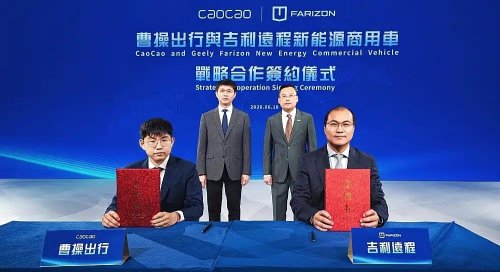
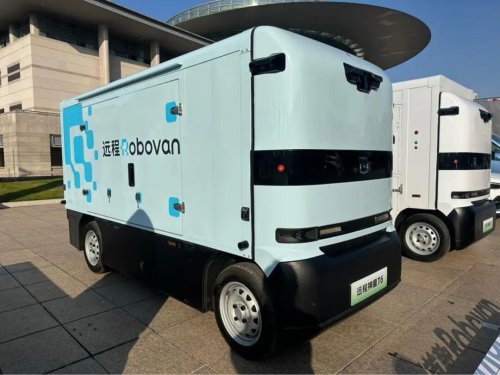
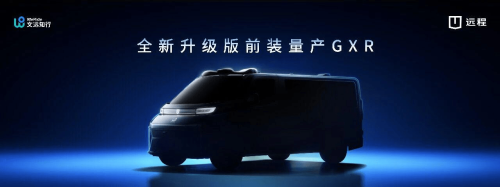
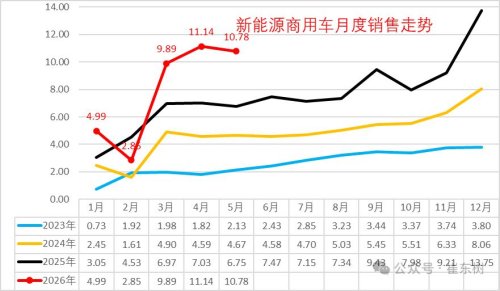
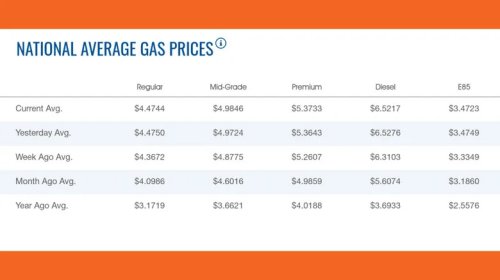
On June 18, the opening day of the 2026 Hong Kong Auto Expo, Geely-owned Farizon New Energy Commercial Vehicle and CaoCao Mobility announced a strategic partnership aimed at the large-scale deployment of Robovan autonomous freight vehicles. According to the plan disclosed by both companies, the partners aim to deploy a cumulative 100,000 Farizon Robovan Shentong T6 vehicles across China and overseas markets by 2030, supporting logistics distribution and urban delivery operations. Cooperation signing ceremony between Farizon and Caocao Mobility The collaboration falls under Geely’s “One Geely” strategy and combines commercial vehicle manufacturing with mobility platform operations. Under the partnership structure, Farizon will provide vehicles and technology, while CaoCao Mobility will focus on operations, building logistics and urban delivery capacity networks based on autonomous commercial vehicles. Alongside the announcement, CaoCao Mobility formally unveiled its RoboX strategy, signaling a broader transition toward AI-driven operations. Farizon Robovan Under the plan, the company will expand simultaneously across both Robotaxi and Robovan business lines while developing an intelligent dispatching platform known as CaoCao Robo OS, designed to connect autonomous vehicles with transportation networks. CaoCao Mobility has also established a dedicated AI business division to support a shift toward an algorithm- and data-driven organizational structure. Farizon’s autonomous driving ambitions extend beyond the Robovan segment. Upgraded GXR Robotaxi, co-developed by Farizon and WeRide In March, the company deepened its partnership with WeRide and unveiled the upgraded GXR Robotaxi, a factory-built autonomous vehicle designed for mass production. Under current plans, approximately 2,000 units are expected to be delivered in 2026 for deployment in both domestic and international markets. The broader commercial vehicle sector is also seeing rapid electrification. Data from CPCA show that new energy commercial vehicle sales reached approximately 110,000 units in May, up 60% year-on-year and 13% month-on-month. New energy vehicle penetration in the commercial segment reached 39.3%, up 13 percentage points from a year earlier. Against a backdrop of elevated fuel prices, commercial transport operators remain more sensitive to operating costs, accelerating electrification at a faster pace than in the passenger vehicle market. From an operational perspective, Farizon continues to maintain growth momentum. Latest data show the company sold 18,441 vehicles, while several product categories achieved market shares exceeding 20%. Sales of the Farizon Super Van increased approximately 70% year-on-year. The model has remained the market leader in China’s new energy wide-body light commercial vehicle segment for two consecutive years and became the first brand in the category to surpass 20,000 cumulative deliveries.