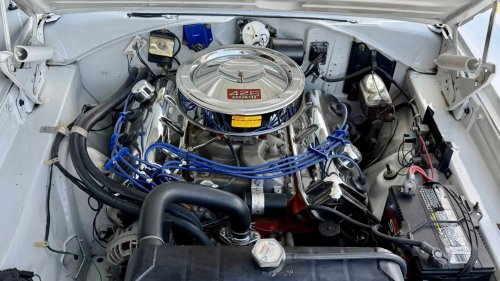
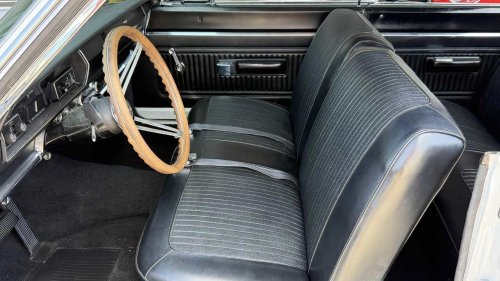
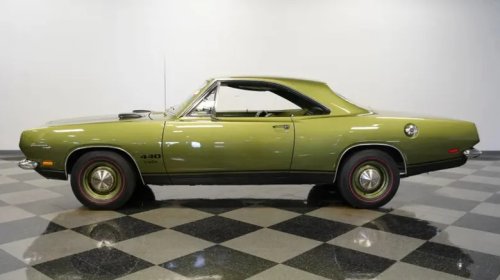
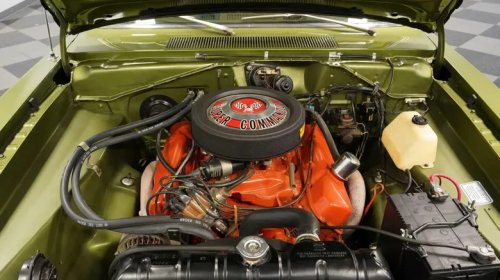
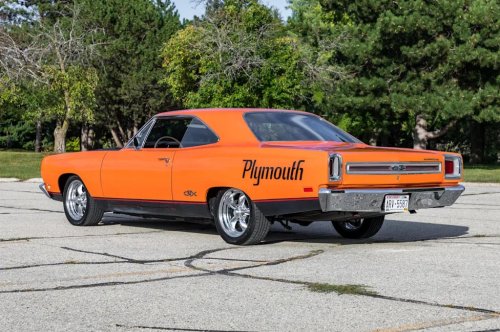
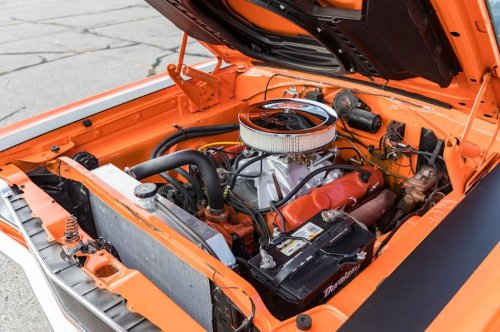
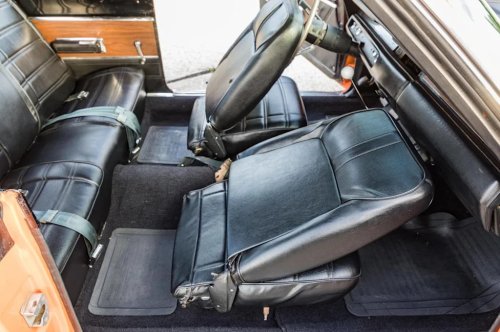
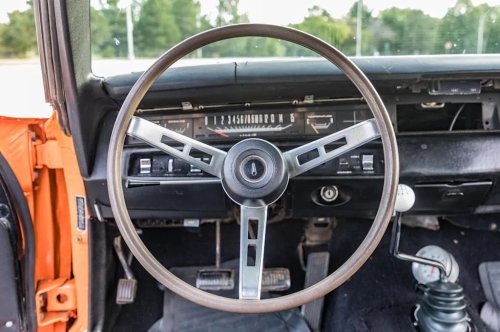
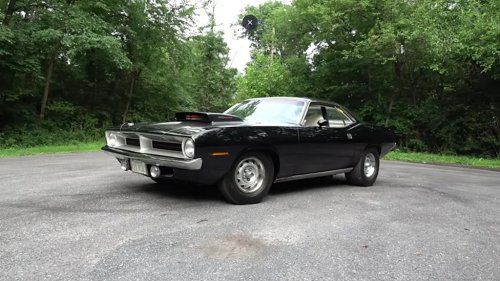
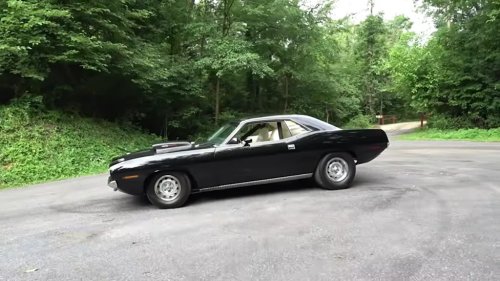
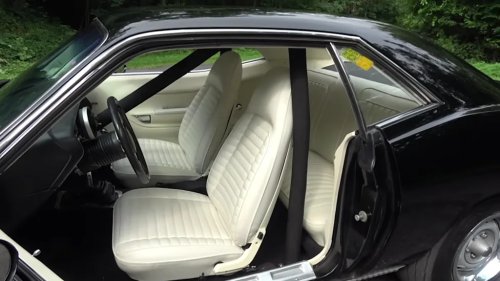
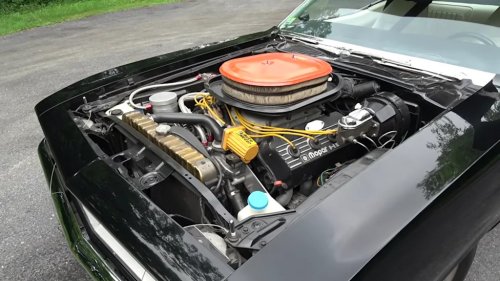
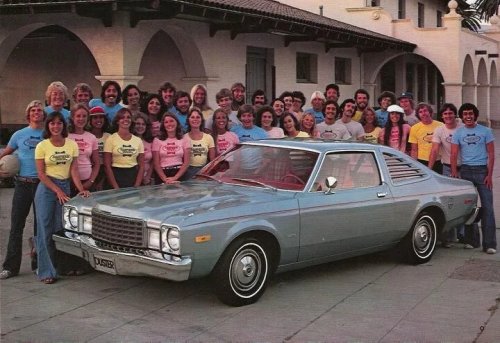
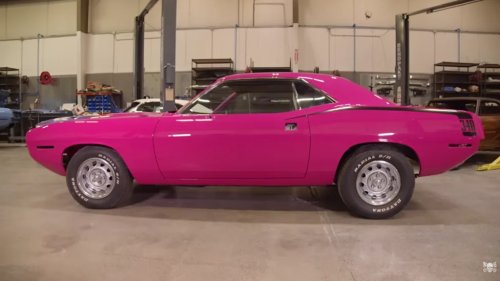
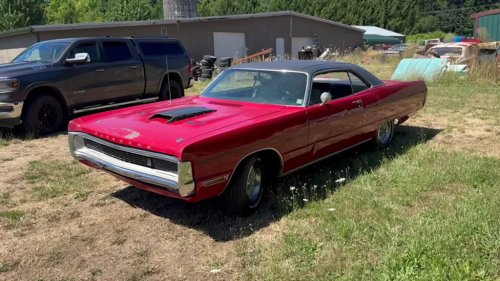
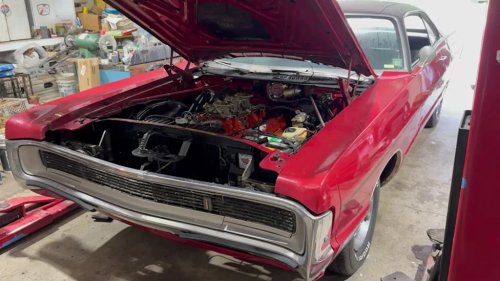
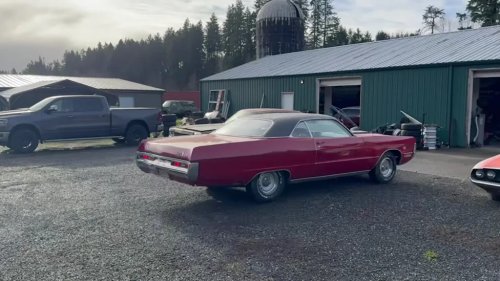
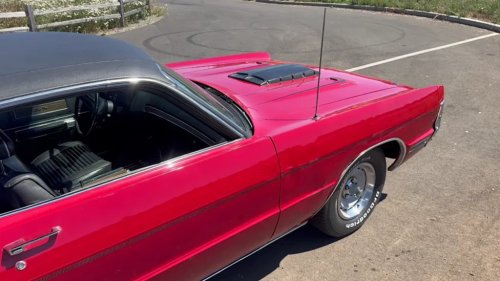
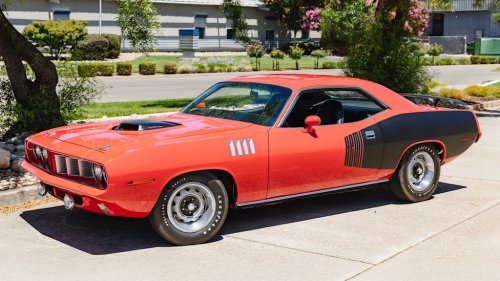
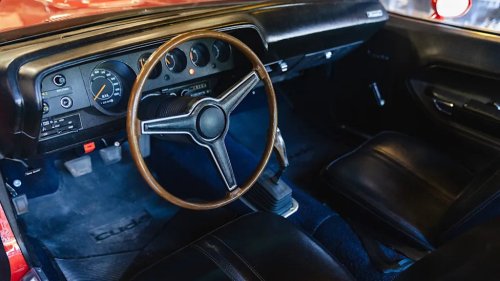
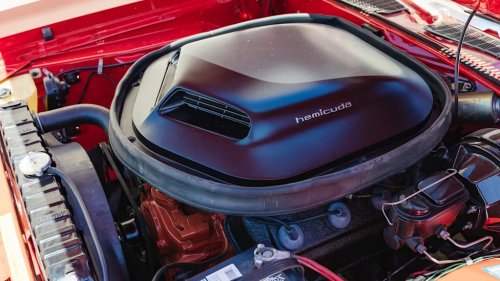
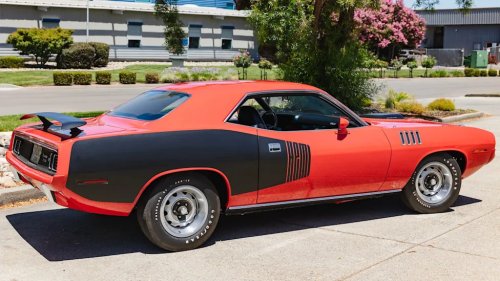
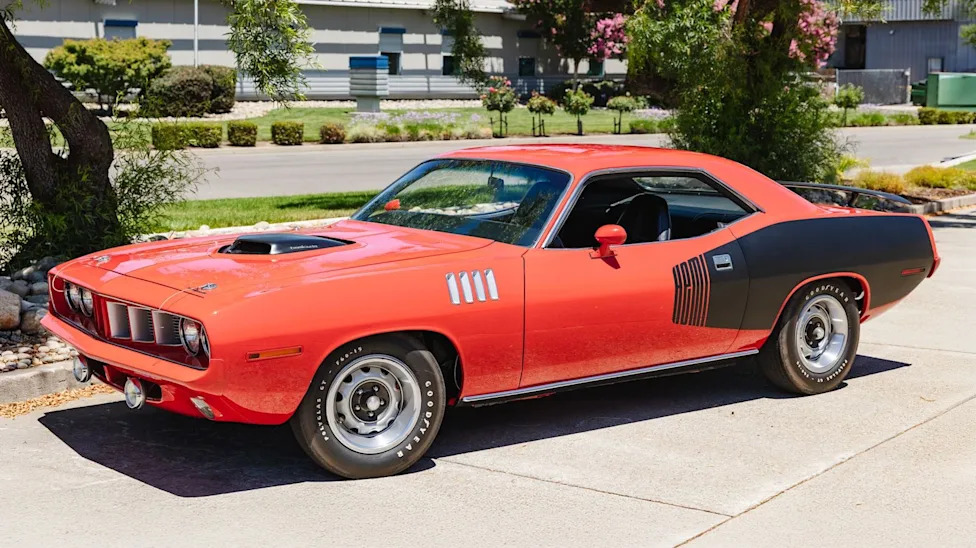
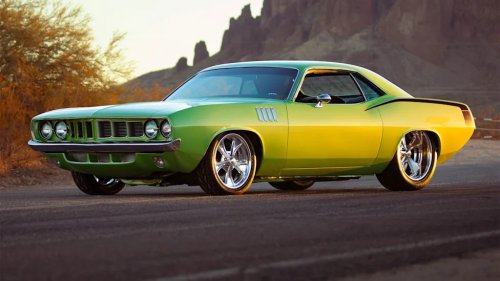
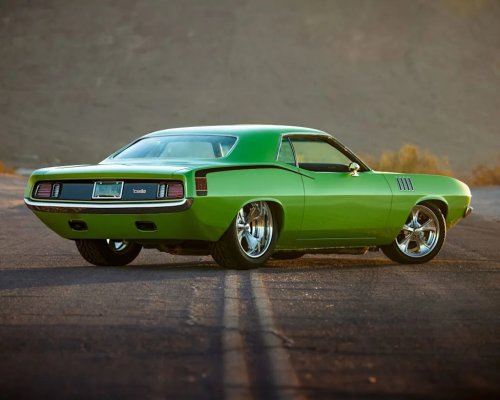
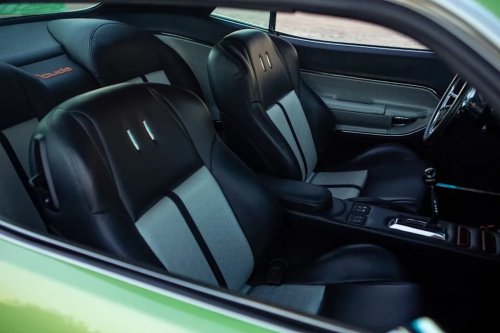
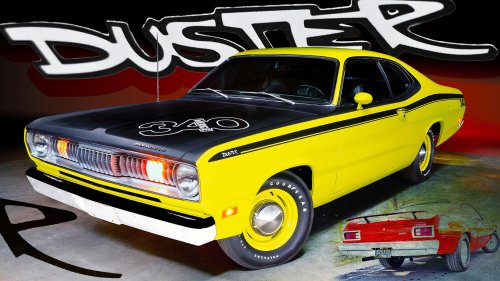
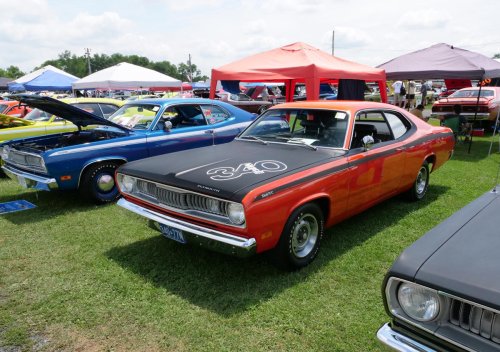
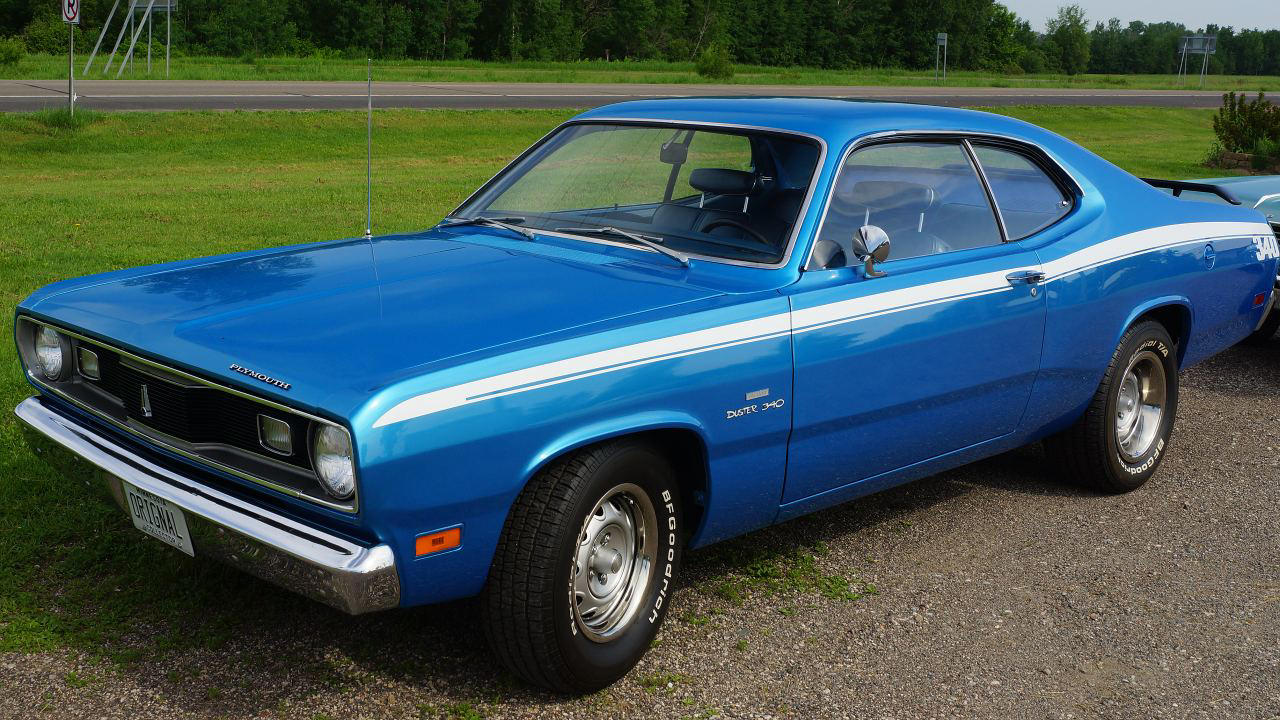
Budget-friendly on paper, the 1970 Plymouth Duster 340 proved surprisingly quickThe 1970 Plymouth Duster 340 rarely appeared as a headline muscle car in its own era, yet it quietly delivered performance that challenged far more expensive and better-advertised rivals. Built on Chrysler’s compact A-body platform and powered by a high-output small-block V8, it combined lightweight construction, factory tuning, and accessible pricing in a way that made it one of the most effective “budget muscle” packages of the early 1970s. While it lacked the prestige of larger Mopar performance icons, the Duster 340 earned respect where it mattered most—on the street, at stoplights, and in quarter-mile comparisons. Over time, it has developed a reputation as one of the most overlooked performance bargains of its era. What happened By 1970, the American muscle car market was at its peak, with manufacturers competing across nearly every segment of performance. Plymouth, a division of Chrysler, had already found success with larger muscle offerings like the Road Runner and GTX, but insurance pressures and rising costs pushed buyers toward smaller, lighter alternatives. This shift created the perfect environment for the introduction of the compact performance coupe that would become the Plymouth Duster 340. The Duster itself debuted as a fastback coupe variant of the Plymouth Valiant, built on the lightweight A-body platform. While most trims focused on economy and practicality, Plymouth engineers recognized the chassis had untapped performance potential. The answer was the 340 cubic-inch V8, a high-revving small block originally designed for the performance-oriented Barracuda and other Chrysler muscle applications. In Duster 340 form, the engine delivered roughly 275 horsepower in factory specification, though period testing and real-world performance often suggested stronger output thanks to conservative factory ratings. More importantly, the engine produced strong torque across the midrange, giving the car immediate response off the line. Paired with a relatively light curb weight—often around 3,000 pounds depending on configuration—the Duster 340 achieved an impressive power-to-weight ratio. This made it significantly quicker than many larger, more expensive competitors equipped with bigger engines but also more mass. Buyers could choose between a 4-speed manual transmission or a 3-speed TorqueFlite automatic. Enthusiasts overwhelmingly favored the manual, which allowed better control of the engine’s power band. The suspension setup was straightforward but effective, with torsion bars up front and leaf springs in the rear, tuned more for stability and traction than comfort. Visually, the Duster 340 remained subtle compared to more aggressive muscle cars of the time. Plymouth avoided excessive styling cues, instead relying on dual hood scoops, modest striping, and performance badging. This understated appearance contributed to its sleeper reputation—many competitors underestimated it until the race began. Inside, the car reflected its budget-conscious origins. Vinyl seats, simple gauges, and basic trim were standard, though buyers could option bucket seats, rally instrumentation, and upgraded interiors. It was a functional cabin rather than a luxury environment, reinforcing the car’s focus on performance per dollar rather than refinement. Despite its capabilities, the Duster 340 never received the marketing push given to larger Mopar performance models. Chrysler’s advertising spotlight remained on high-profile nameplates like the Road Runner, leaving the Duster to quietly build its reputation through real-world performance rather than promotional campaigns. Why it matters The significance of the 1970 Plymouth Duster 340 lies in how effectively it democratized performance during the height of the muscle car era. While many competitors required large-displacement engines and higher price tags to achieve similar acceleration, the Duster 340 demonstrated that smart engineering and weight reduction could deliver comparable results at a lower cost. This made it particularly attractive during a period when insurance companies were beginning to penalize high-performance vehicles. Buyers who wanted speed without the financial consequences of flagship muscle cars found the Duster 340 to be a practical alternative. Its compact size also played a major role in its appeal. Unlike full-size muscle cars that prioritized straight-line power, the Duster offered agility that made it effective not just in drag racing but also in everyday driving scenarios. The smaller wheelbase contributed to responsive handling, especially when paired with performance tires and upgraded suspension components. In the broader Chrysler lineup, the Duster 340 filled an important strategic gap. It sat below the Road Runner in hierarchy but delivered similar real-world performance in many situations. This overlap allowed Plymouth to capture buyers who might otherwise have opted for more expensive performance models from competing brands such as Chevrolet and Ford. Engineering-wise, the 340 engine itself was a standout. Unlike some larger engines that relied purely on displacement, the 340 featured a relatively high compression ratio, solid valvetrain design, and excellent breathing characteristics for its class. These factors gave it strong high-rpm capability while still maintaining street usability. Modern enthusiasts often highlight how underrated this engine was compared to its reputation at the time. In many cases, the Duster 340’s acceleration figures rivaled or exceeded larger V8-equipped cars that cost significantly more when new. Another key factor in its importance is how it reflected the changing direction of American performance. By 1970, the muscle car era was beginning to transition away from pure displacement wars toward more balanced performance formulas. The Duster 340 represented that shift, prioritizing efficiency, weight reduction, and packaging as much as raw horsepower. Its influence can still be seen in later performance compact cars, where the combination of small footprint and strong engine output became a recurring theme in automotive design Driving experience and real-world performance On the road, the Duster 340 delivered performance that often surprised first-time drivers and competitors alike. Acceleration was immediate, especially with the manual transmission, which allowed the engine to stay within its optimal power band. Quarter-mile times in period testing frequently placed the car in the low-14-second range, with some well-tuned examples dipping into the high 13s. For a relatively inexpensive compact coupe, this level of performance was highly competitive with much larger muscle cars. The lightweight chassis contributed significantly to its driving character. Steering was unassisted in many configurations, giving the car a direct, mechanical feel that enthusiasts appreciated. While not refined by modern standards, it provided clear feedback and predictable behavior at speed. Braking performance was adequate for its time, though not exceptional. Like many muscle cars of the era, repeated high-speed stops could reveal limitations in fade resistance. However, the car’s light weight helped compensate for this in everyday driving. Handling was surprisingly capable for a straight-line performance car. The torsion bar front suspension provided decent balance, and the car could be driven confidently on winding roads when properly equipped with performance tires. It was not a corner-carving sports car in modern terms, but it exceeded expectations for its class. Market positioning and legacy The Duster 340’s pricing strategy played a major role in its success. It was positioned as an affordable entry point into true performance driving, making it accessible to younger buyers and enthusiasts who could not afford premium muscle cars. Insurance classifications also worked in its favor. Because it was based on an economy platform and carried less aggressive branding than flagship performance models, it sometimes escaped the highest insurance brackets associated with muscle cars of the period. Over time, however, its reputation grew among enthusiasts. As surviving examples became rarer, collectors began recognizing its historical significance as one of the most effective sleeper performance cars of its era. Today, the Duster 340 is increasingly viewed as an authentic representation of early 1970s American engineering philosophy—simple, lightweight, and focused on real-world speed rather than marketing spectacle. Restored and original examples have gained attention in classic car auctions, especially those retaining factory drivetrains and correct performance specifications. While still generally more affordable than top-tier Mopar collectibles, values have steadily increased as awareness grows. What to watch next Interest in the Plymouth Duster 340 continues to rise as collectors look beyond the most famous muscle cars. Its combination of affordability, performance, and simplicity makes it an appealing entry point into classic Mopar ownership. Future value trends are likely to favor well-preserved, numbers-matching examples with original engine and transmission configurations. Cars with factory performance packages, correct interior trim, and period-correct detailing tend to attract the strongest buyer interest. At the same time, modified versions remain popular among driving enthusiasts. Upgraded suspension systems, modern braking conversions, and mildly built 340 engines allow the platform to perform reliably in contemporary driving conditions while maintaining its classic identity. Parts availability remains relatively strong due to shared Chrysler A-body architecture, which helps support long-term restoration potential. However, original trim components and rare factory options are becoming more difficult to source, which may further separate high-quality restorations from average examples in the future. As automotive media continues to revisit overlooked performance cars of the muscle era, the Duster 340 is likely to gain additional recognition. Its story fits neatly into the broader narrative of underdog performance machines that delivered more than their price tags suggested More From Fast Lane Only: Unboxing the WWII Jeep in a Crate 15 rare Chevys collectors are quietly buying 10 underrated V8s still worth hunting down Police notice this before you even roll window down



















 +25 others