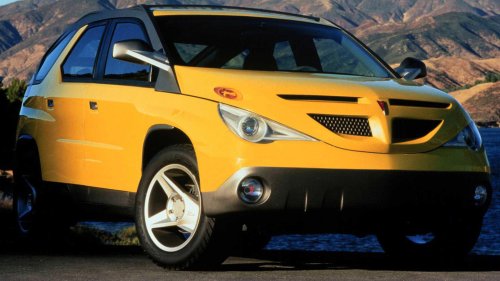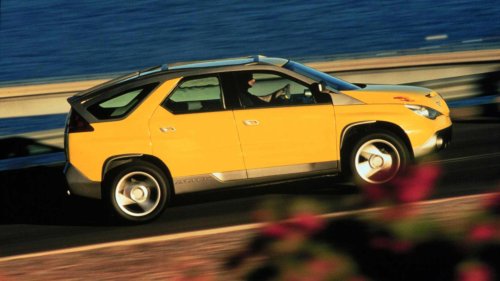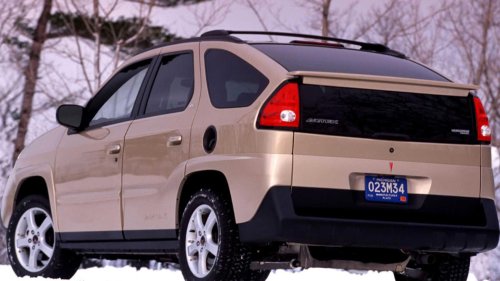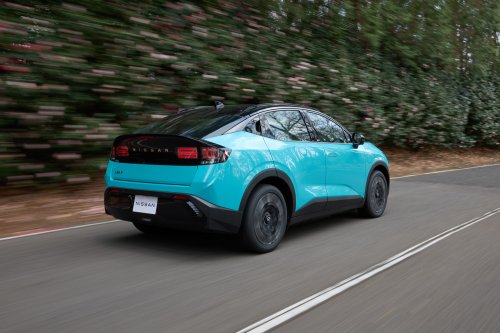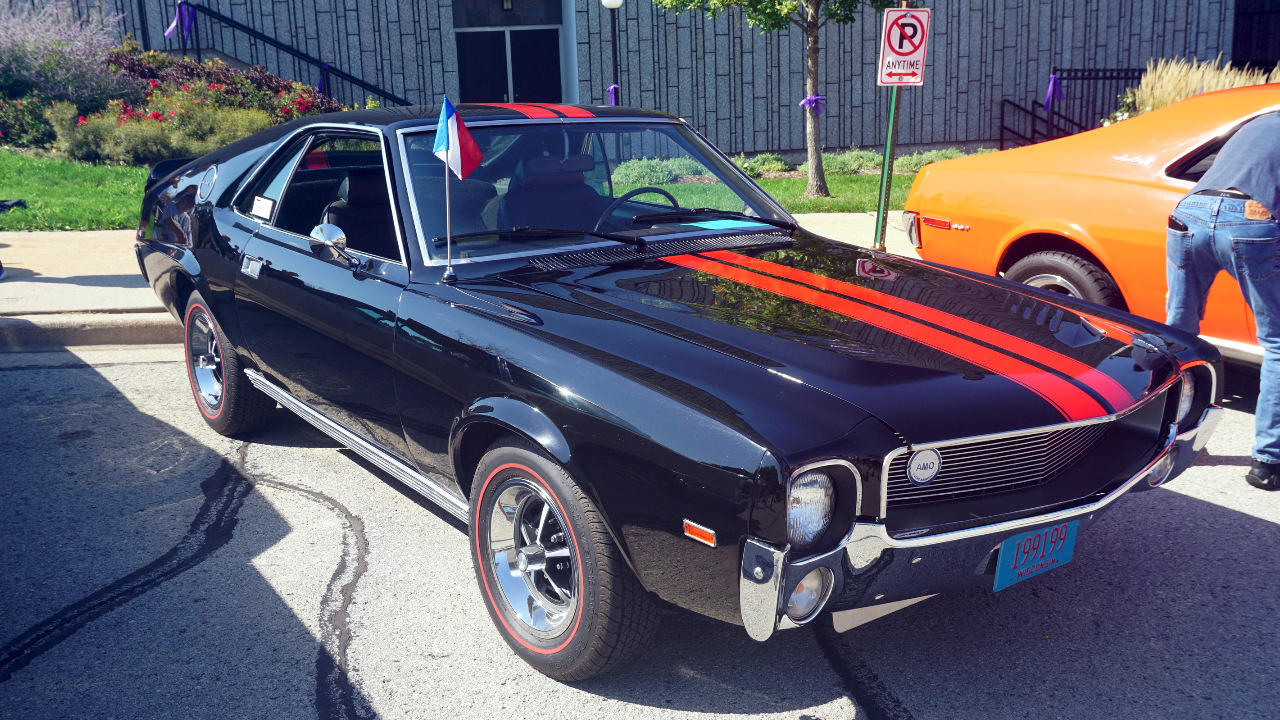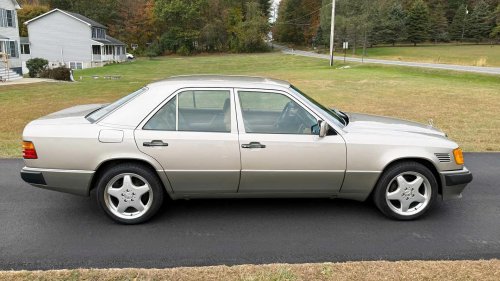
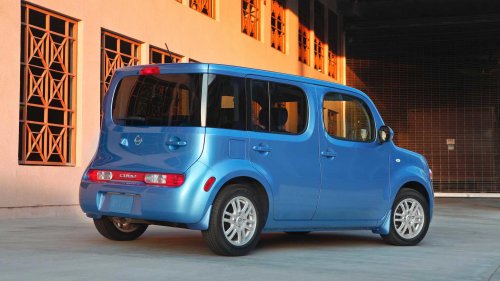
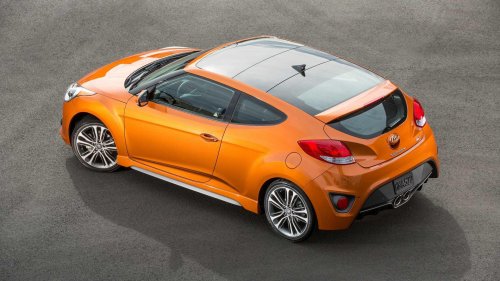
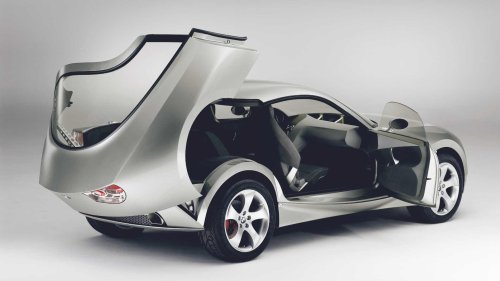
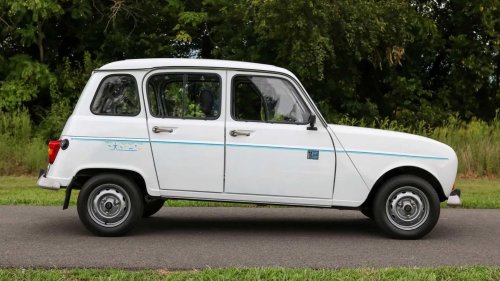
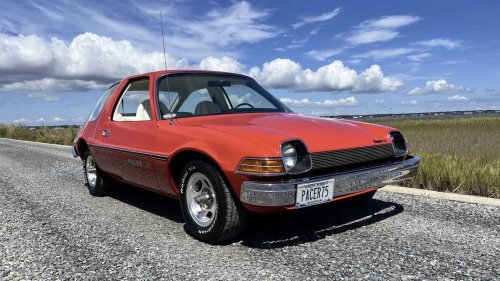
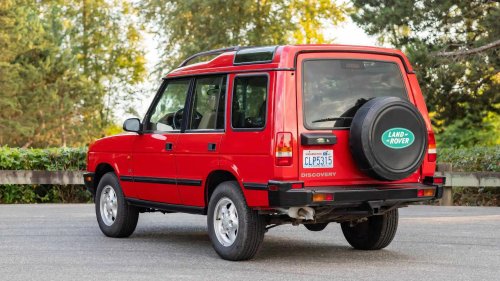
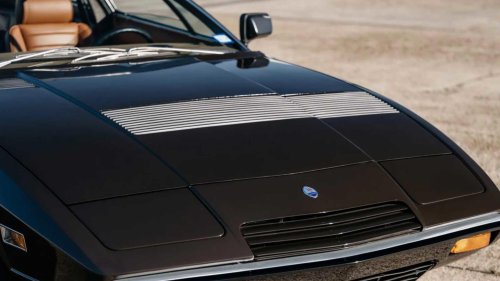
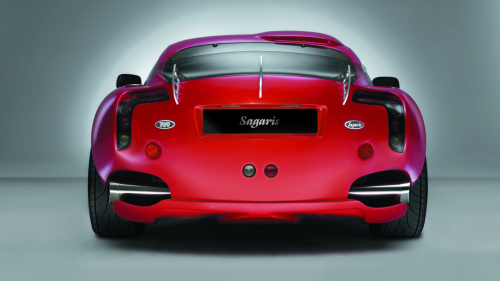
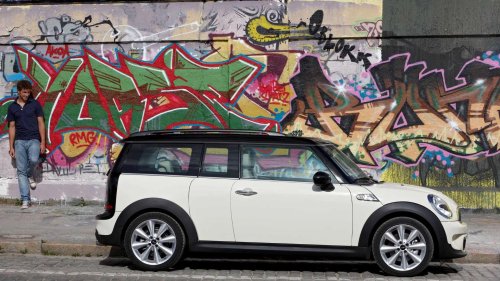



















Humans often find beauty in symmetry. Some say it's because we have an innate need to create order, or because we associate it with health and efficiency. Think of the massive stone statues in Egypt, which showcase an astounding amount of symmetry. Who would waste all that time making the carving's face perfectly symmetrical if it wasn't important?Symmetry has also made its way into car design since the dawn of the automobile. Think of how a typical car looks. It has two headlights, two wheels on each side, and the right side usually matches the left, save for very minor details like a single exhaust pipe or a steering wheel. However, some automakers have produced cars that were decidedly asymmetrical for reasons such as performance, aesthetics, or a plain "make-it-work" attitude.The tables found below cover the model's entry-level powertrain specs. The model years shown below mark the years that carried asymmetrical styling. Mercedes-Benz 300TD 1988–1995 1991_mercedes-benz_300td_sideKicking off our list is one of the most reliable cars ever to grace the earth's asphalt. The Mercedes-Benz 300TD carried the legendary OM-family diesel engine under its hood. The turbocharged iteration was introduced in 1979, four years after the 300D entered the fold.However, by 1988, Mercedes-Benz decided the mill needed a little extra cooling, since its turbo was getting so hot. To solve the issue, a single vent was machined into the model's right-hand fender, without a matching one on the left. The vent fed cold air directly to the air cleaner, and turbos like cold, dense air. Nissan Cube 2002–2014 2009-2014 Nissan Cube Blue Rear Angled View 3/4The Nissan Cube hit the US market at the end of the 2000s, after being sold in Japan since 1998. At the time, the United States was enjoying a wave of square, toaster-shaped cars, as they'd been in fashion for a short time. Models like the Kia Soul and the Scion xB were also around at this time. Only the Cube boasted a strange styling cue. Its rear windows were different on either side: the right side featured a wraparound look, while the left didn't. This was due to the large, side-hinged rear tailgate. Hyundai Veloster 2011–2022 Hyundai Veloster Turbo The Veloster was Hyundai's sporty hatchback, in production from 2011 to 2022. At first, it was a popular little car, but over time, the sales began to decline sharply, leading to its axing 11 years after the model's debut. Throughout its tenure spanning two generations, it carried a unique stylistic cue: different doors.On the driver's side, there was just one large door, as you'd find on a coupe. However, on its passenger side were two smaller doors, much like a sedan. This was done to mimic the look of a coupe, while also providing some of the practicality expected of a sedan or larger hatchback. BMW X Coupe Concept 2001 2001 bmw x coupe concept rear hatchIn 2001, BMW unveiled something of a curveball: the X Coupe Concept. The public first saw the thing at the North American International Auto Show in Detroit, and it was produced as a contrast to the BMW Z9 concept vehicle lineup.While the X Coupe Concept was never meant for mass production, its main purpose was to show the world where the Bavarian automaker wanted to take its design language over the coming years. Apparently, this meant designing an asymmetrical rear hatch that hinged only on the right side of the car. Why? Well, since it's a design concept, the better question is: why not? Renault 4 1961–1992 1986 renault 4 sideYou can't see why theRenault 4 makes it onto our list just by looking at it; you have to get underneath the body to figure it out. While it appears normal, the Renault 4 actually has an asymmetrical wheelbase, with one side slightly ahead of the other by about 1.5 inches.The reason behind the strange design was the pursuit of comfort. Its designers wanted to use a torsion-bar suspension with frame-width reach. To make this possible, the frame was staggered so the bars wouldn't overlap. It ended up working well, and the Renault 4 is well-known for its extremely comfy ride, alongside, of course, its weird wheelbase. AMC Pacer 1975–1980 1975 AMC Pacer front, three-quarterThe AMC Pacer is regarded as one of the ugliest cars ever made, and while that's a matter of opinion, its asymmetrical design is a fact. If you look closely at the first two images above, you'll notice that its driver's side door is slightly shorter than its passenger-side door. The exact measurement is four inches shorter, and this was done with rear-seat passengers in mind. Having a larger passenger door meant back-seat riders could exit more easily and safely, especially when along a curb. Land Rover Discovery 1989–1998 1998 Land Rover Discovery rear 1/4The first-gen Land Rover Discovery is another asymmetrical model you have to squint to spot. While the exterior appears perfectly normal, its rear window is anything but uniform. On its left side, it extends further down the tailgate than on the right, a purposeful design that extends past just wrapping around the spare tire. Some Land Rover Discoveries from the first generation featured third-row seating, and some models needed extra rear-window visibility. So, the left-hand side of the window was slightly elongated to provide visibility. The spare wheel conceals this element, though. Maserati Khamsin 1974–1982 1977_maserati_khamsin_front_close_upThere were loads of forgotten supercars built during the latter half of the 1970s into the early 1980s, and the Maserati Khamsin is one of them. The name "Khamsin" comes from an Egyptian term for a hot, gusty wind that blows through the desert.This heat may have inspired Maserati to give its Khamsin a large, off-center air intake on its front hood to counteract it. In addition to the weirdly-placed intake, the model also sports just one side mirror on the driver's side. Two were not required by European vehicle law at the time of its production. TVR Sagaris 2005–2006 tvr sagaris rearIn the world of automotive oddballs, TVR is one of the most prevalent. In one of its most recent displays of production quirkiness, it gave the Sagaris model a unique roofline. Instead of being flat and level throughout, the right-hand side of the roof is raised slightly. This isn't for any aerodynamic reason, but for safety. The raised bubble is there solely to fit a crash helmet. Apparently, someone at TVR during the Sagaris' design phase was a bit too tall with a helmet on, and so the roof was altered to make things work. Mini Clubman 2007–2014 2008 - 2010 Mini Cooper Clubman (23)Last on our list of oddball, asymmetrical cars is the Mini Clubman. When Mini first introduced the model in 2007, the brand was looking for new ways to diversify its lineup. So, a longer, more practical version of the existing Mini Hardtop was drummed up. Its asymmetry becomes apparent when you look down its flanks. On the right side of the model, a small half-door behind the front door allows passengers to climb in and out of the back. However, the left side of the Clubman lacks a rear door. Odd? Yes. Impractical? Maybe, but it's better than no back doors, right?