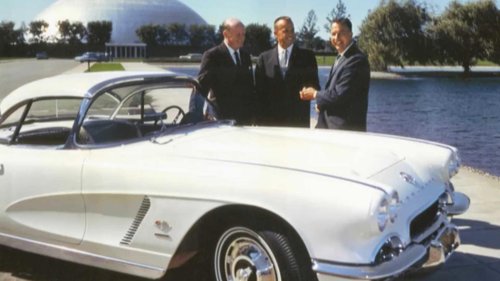
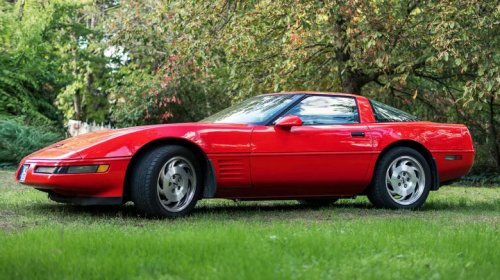
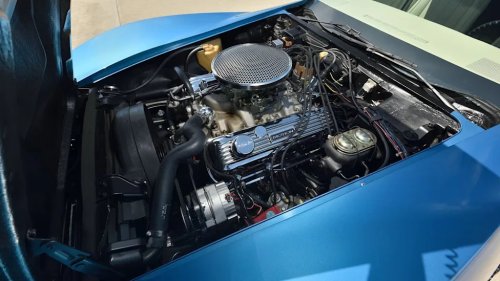
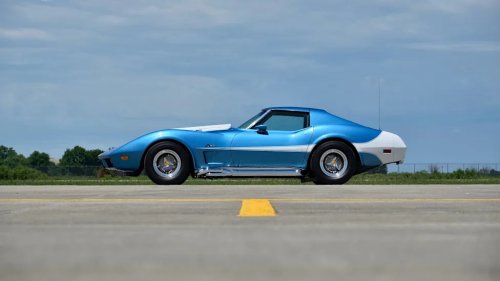
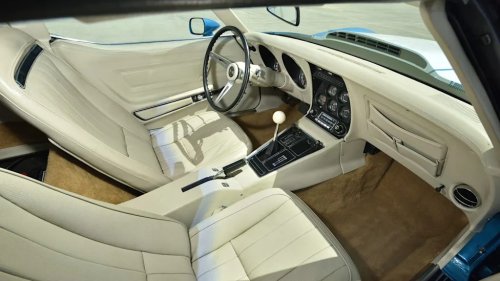
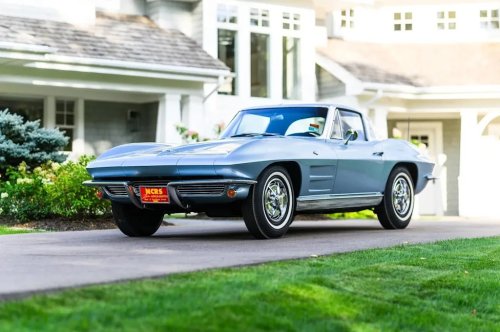
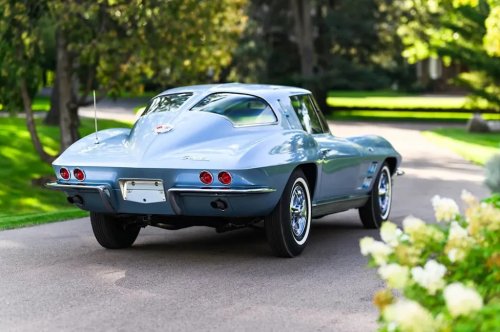
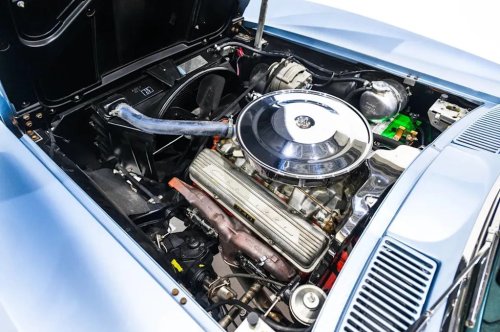
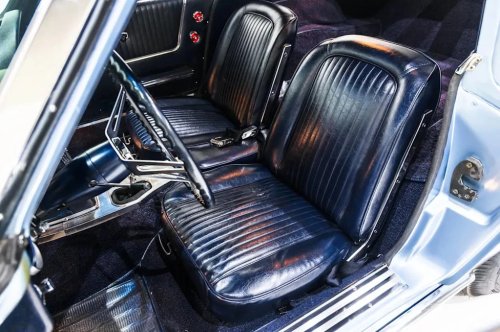
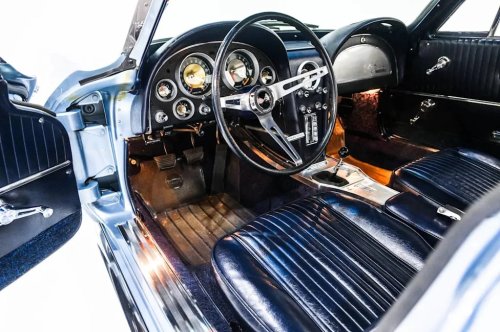
On April 1, 2026, NASA launched the first crewed lunar mission in 50 years, sending four astronauts on a ten-day fly-around of the moon. It's a follow-up to the 2022 Artemis I mission, and its aim is to test life-support systems on board the Orion spacecraft that should lay the foundation for a return to the moon in the near future. It's an exciting time for those who envision long-term human presence on the moon - but for those who remember the glory days of the space program in the '60s, there's a fun fact they might have forgotten: Chevrolet "rewarded" astronauts in the most bizarre way - by selling them Corvette's for literally a buck. But there's more to it than that.Throughout the 1960s, NASA’s effort to develop manned space travel was a source of endless fascination for Americans, as the hallmark of an age of rapid technological progress. The astronauts who first made it into space were given celebrity status, and anything they were associated with quickly became popular with the general public. Here's how the Corvette benefited from the hype around the Space Race.When an enterprising automotive dealer sought out the favor of popular astronauts in the late '60s, the sales of the Corvette were heavily affected. This is the story of how the Corvette formed an indelible association with the Space Race and the culture that surrounded it. Why The Corvette? General MotorsModern astronauts may be choosing the Tesla Model X as their preferred means of transport when they're on terra firma on planet earth, but throughout the last century, when asked what kind of car they pictured an astronaut driving, most Americans would have brought up the Chevrolet Corvette. The quintessential American sports car, it has been associated with US pop and motoring culture for over half a century, making numerous appearances in the world of music and on the big screen. Its popularity came about not just because of American drivers’ love of anything fast, fun and powerful, but also because of an unusual historical event associated with the Space Race. The Astronaut-Corvette Leasing Program Conrad Gordon Bean Astronaut Corvettes Ralph Morse General Motors-1The connection between astronauts and Corvettes started in 1962 with Alan Shepard, the second person and first American to travel into space. Shepard had befriended Zora Arkus-Duntov, one of the most prominent engineers at GM (nicknamed the “father of the Corvette” due to his contribution to the model). Arkus-Duntov convinced Edward Cole, then president of GM, to give Shepard a Corvette as a gift; it was not customary for GM to give out free cars, but the company made an exception for Shepard, given the immense potential for publicity.The next crucial figure in the creation of the Corvette program was Jim Rathmann, the owner of a Florida car dealership that specialized in Chevrolets and Cadillacs. Rathmann recognized not only the promotional potential, but the untapped customer base: many astronauts were former fighter pilots, and the love of all things fast was one of their defining traits. He set up a unique deal for the “Mercury Seven” astronauts (the first group of astronauts selected to pilot spacecraft as part of Project Mercury, NASA’s first man-in-space program). They could lease a Corvette for the nominal sum of $1 a year, and every year they could trade it in for the newest model.Not all the Mercury Seven astronauts took up Rathmann’s offer: Scott Carpenter owned a blue Shelby Cobra, and Wally Schirra briefly leased a Corvette, but eventually opted for a Maserati instead. John Glenn wasn’t bitten by the sports car bug at all: his daily driver of choice was an NSU Prinz, an underpowered German sedan with a two-cylinder engine, which could not go anywhere above 60 mph even with a strong tailwind. He did eventually take up Rathmann’s offer, but instead of getting a Corvette he opted for a GM station wagon for his family. The remaining four astronauts, however, loved their Corvettes and enthusiastically signed up for the lease program: Gus Grissom, Gordon Cooper, Deke Slayton and, of course, Alan Shepard.Chevrolet Aside from the original Mercury crew, other astronauts subsequently took advantage of Rathmann’s offer to bag a Corvette of their own, including Alan Bean, Pete Conrad and Richard Gordon (from the Apollo 12 crew) and Neil Armstrong, the first person to walk on the Moon. It wasn’t uncommon to see astronauts racing their pride and joy across Florida’s roads; soon GM began to feel the positive effect on the Corvette’s image among the general public. Thanks to the era’s cultural fascination with space travel, the Corvette’s association with astronauts helped boost its popularity; owning one (with the aviator sunglasses to match, of course) was now a status symbol. What Happened To The Astronauts' Corvettes? Mitchell Shepard Cole Corvette General MotorsThe $1 lease offer carried on until 1971, when GM eventually called time on it. Of course, the astronaut Corvette program was built on a leasing model, so none of the cars were owned outright. The fact that it was possible to upgrade every year meant that many of the cars went back on the market, and many were advertised as formerly driven by an astronaut as a way to increase their resale value.Several AstroVettes, as they became known, ended up in museums, temporary exhibitions, or private collections. In 2019, Al Worden and Alan Bean’s cars were loaned to the National Corvette Museum in Bowling Green, Kentucky, as part of the “From Gas Station To Space Station” exhibition. Three of the cars were eventually acquired by collector Danny Reed (more on that later). Some ended up being sold at auctions over the years; a 1968 Corvette that had once belonged to Alan Shepard was auctioned off at Barrett-Jackson's Scottsdale 2022 event. Conrad, Bean, And Gordon: The Matching AstroVettes Alan Bean 1969 Corvette Historic Vehicle AssociationRemember the Apollo 12 astronauts we mentioned earlier (Alan Bean, Pete Conrad and Richard Gordon)? They all decided to get matching cars, built to the same spec and finished with the same paint job. The cars were finished in a black and gold paint job; Riverside Gold was the main color, while custom black “wings” were added to give the cars a distinct appearance.The three Corvettes also carried a special badge above the Sting Ray emblem, with the initials CDR (Commander, for Conrad), CMP (Command Module Pilot, for Gordon), and LMP (Lunar Module Pilot, for Bean). While the fate of Gordon’s and Conrad’s cars is not known, Bean’s car has survived to the present day. Red, White And Blue: Al Worden's Corvette Al Worden 1971 Corvette Project AstroVette EndeavourThe Apollo 12 cars were not the only ones carrying a matching paint scheme. The crew of the Apollo 15 mission (Al Worden, Dave Scott, and Jim Irwin) also decided to get matching ‘Vettes, finished in a red, white, and blue color scheme. This decision was the result of a playful rivalry: in his 2011 autobiography, Falling to Earth, Worden wrote “Our crew saw those Corvettes [referring to the black-and-gold Apollo 12 cars] not only as a deliberate challenge, but also a little tacky [...] So we did something a little different (and went with a patriotic color scheme).Worden’s car was acquired by collector Danny Reed, along with two other Corvettes that had belonged to astronauts. In 2020 William Worden-Penczak, Worden’s grandson, was able to buy the car from Reed; sadly, Worden himself died shortly afterwards, before he could be reunited with his Corvette. Penczak embarked on a restoration project with the help of Max Kaiserman, owner of a space collectibles company called Luna Replicas (which also holds a licence to reproduce Worden’s flight jacket). The car had been sitting in a field for a while, and its components and paintwork had begun to deteriorate. It still ran, but some parts needed replacing and the bodywork needed some work to be restored to its original condition.The restoration effort was dubbed “Project AstroVette Endeavour”, with updates about the work being posted on the Luna Replicas website. Penczak’s ultimate goal is to take the car on a road trip 250,000 miles long, about the same distance between the Earth and the Moon; a fitting way to honor his grandfather’s legacy, and celebrate the history of the one-of-a-kind AstroVettes.Sources: CorvetteChevyExpo, Hagerty, Corvette Museum, Smithsonian, HobbyCarCorvettes, Luna Replicas, NASA