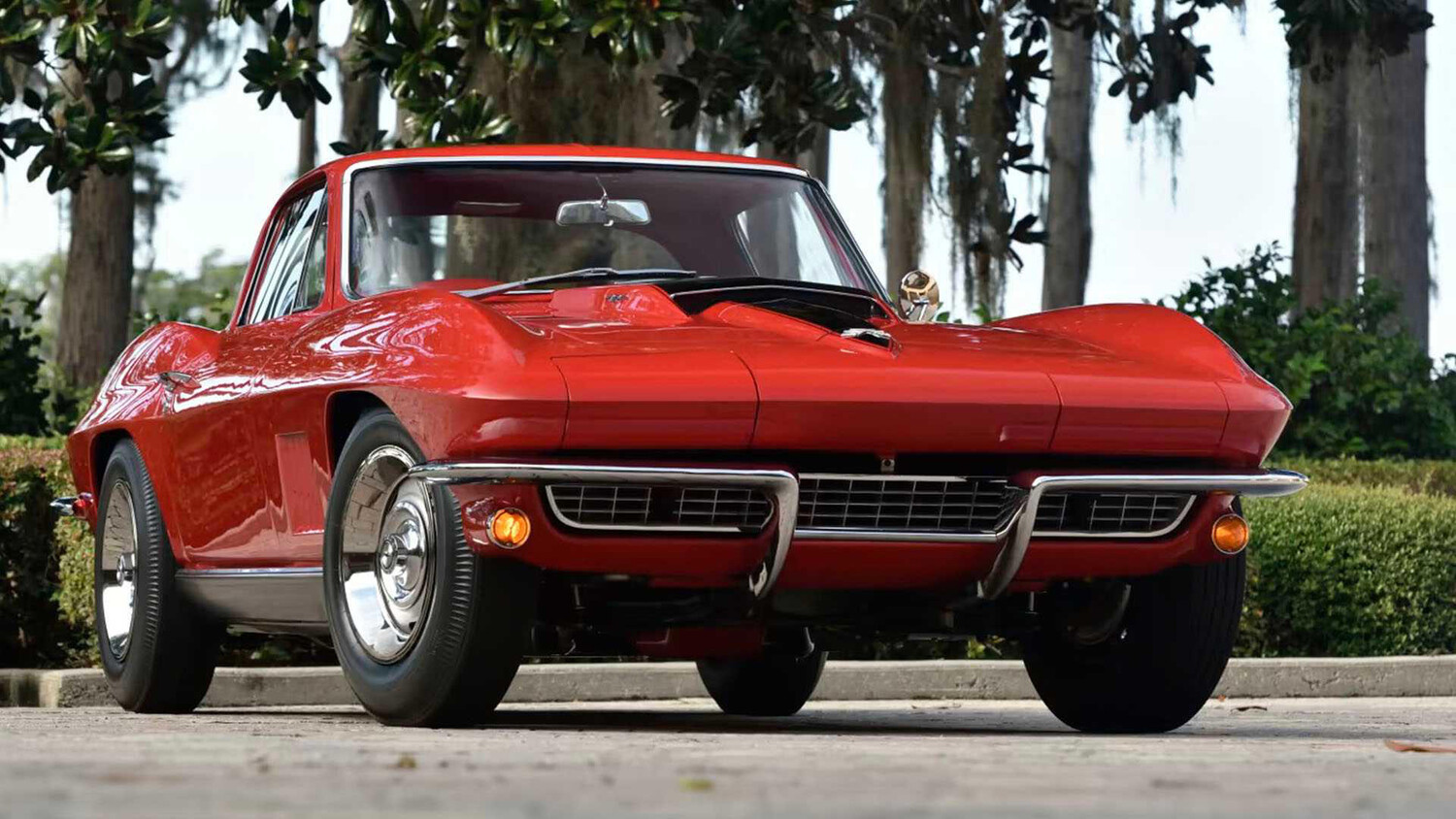
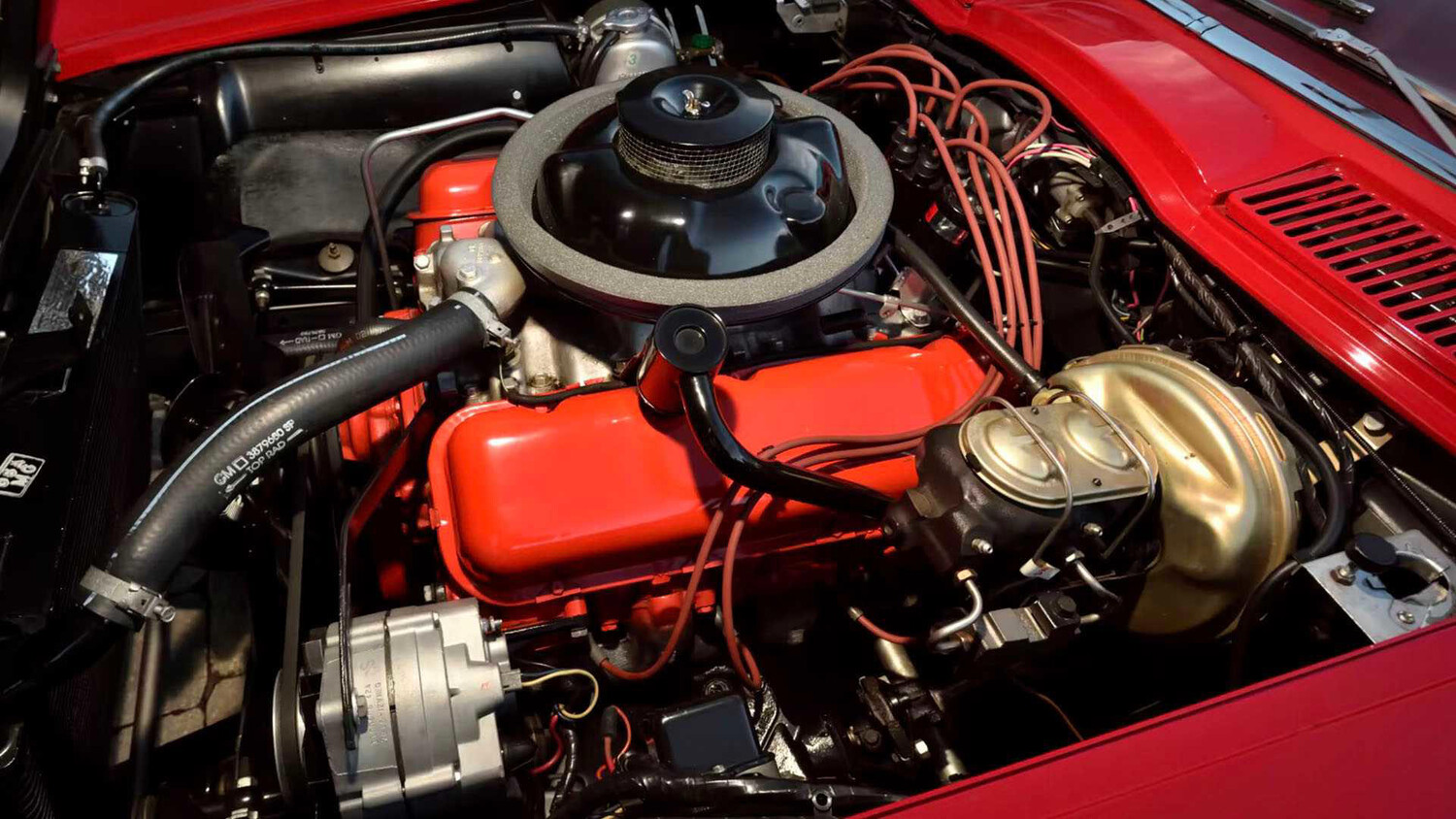
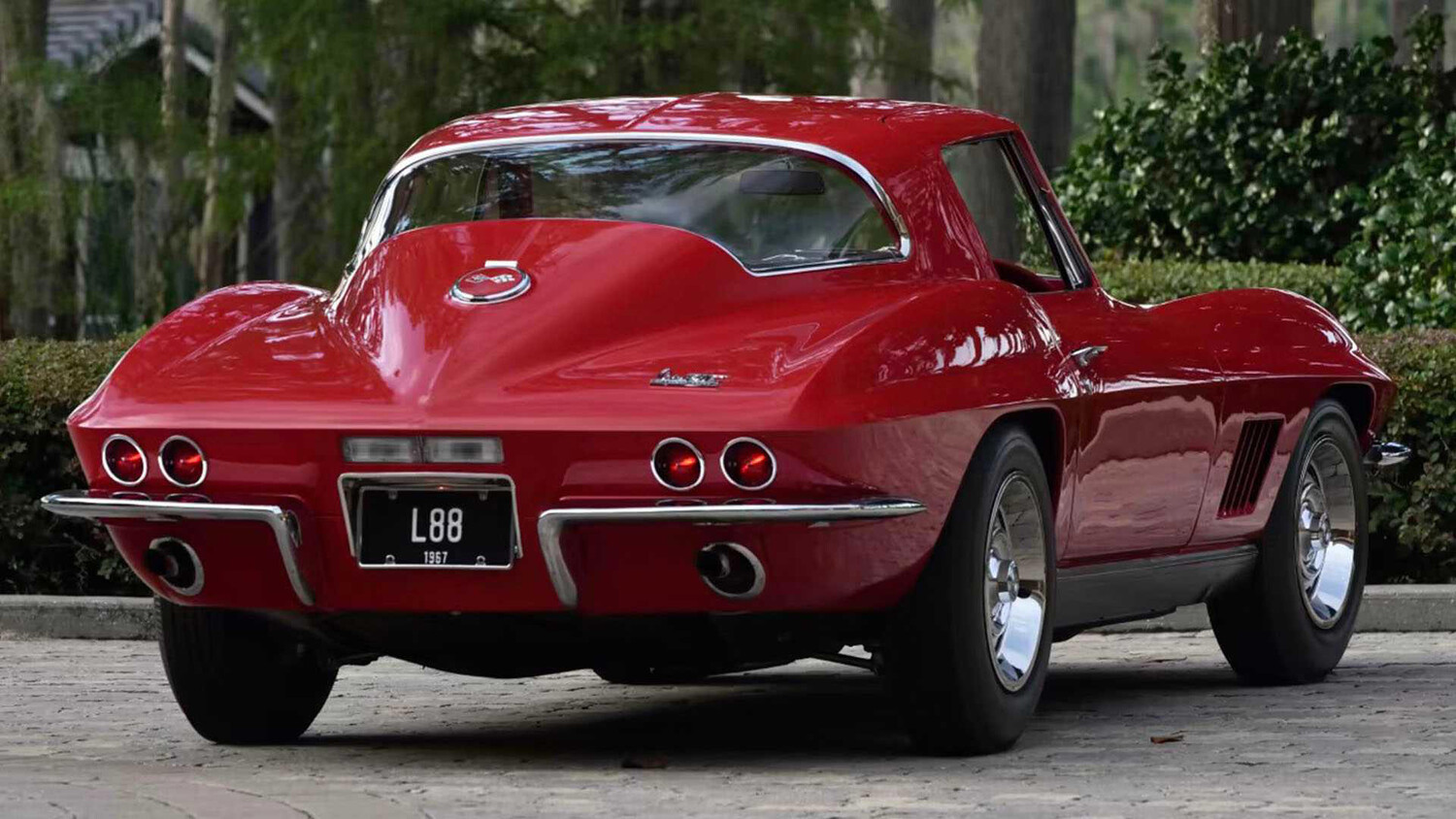
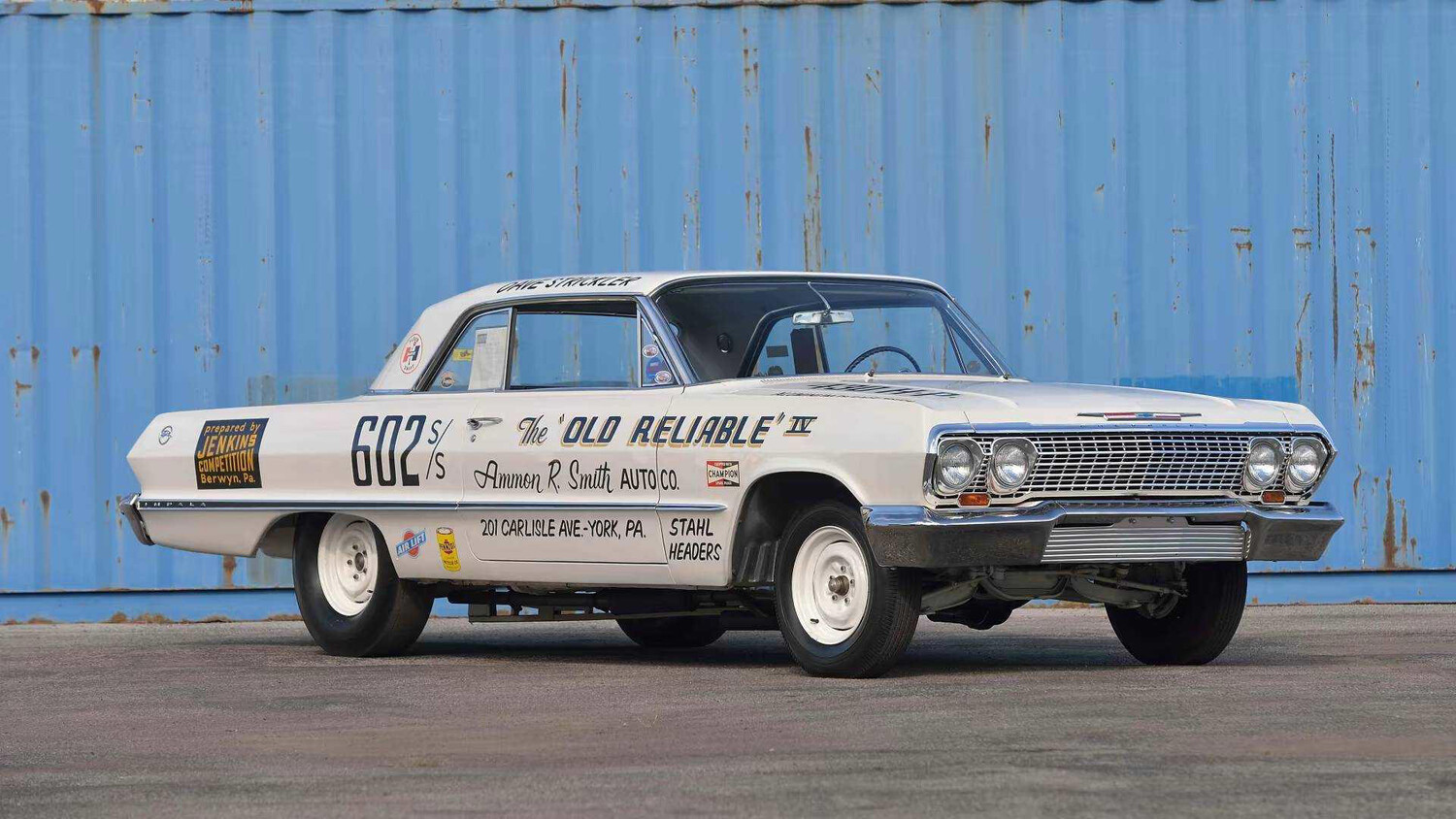
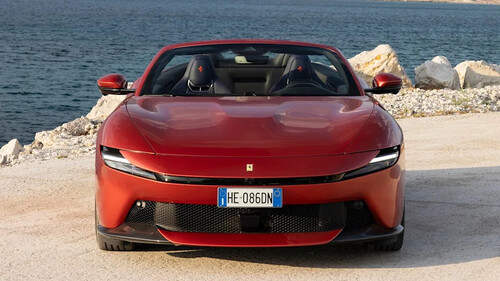
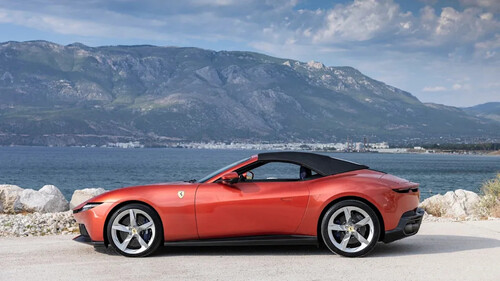
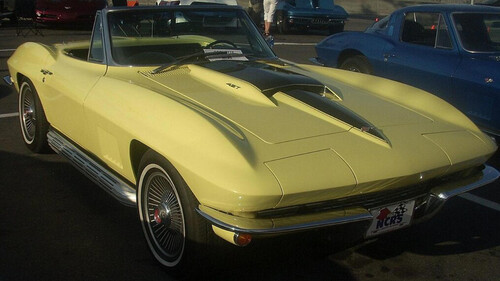
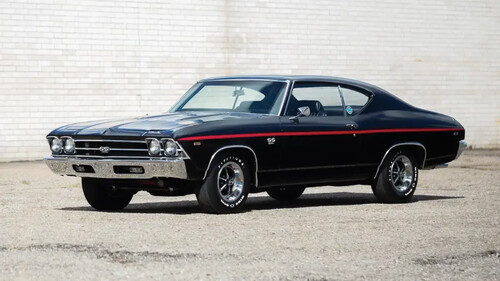
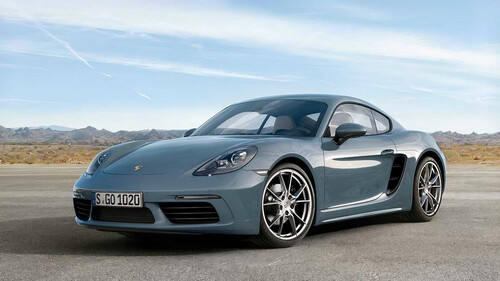
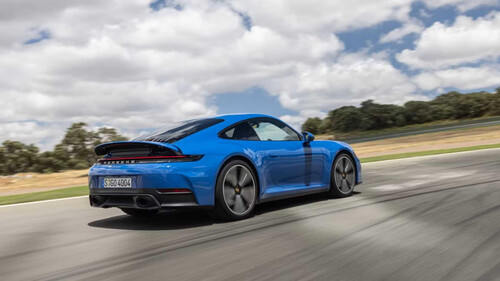
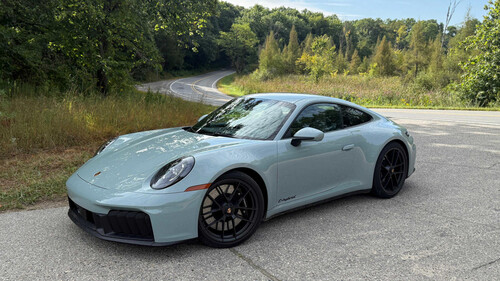
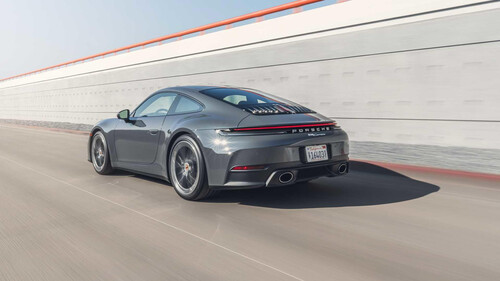
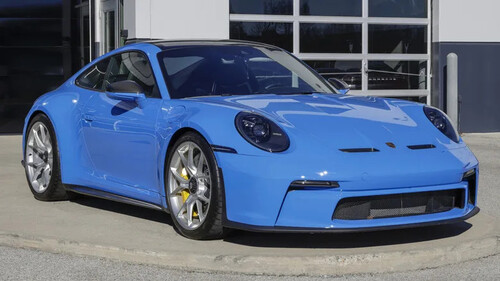
Six-figure supercars are defined by their numbers. The manufacturers spend years engineering those numbers, the publications test them, and the buyers pay handsomely for them. What almost nobody stops to consider is whether the same numbers were achievable decades ago, before the engineers had the budgets, the computers, or the turbochargers.Chevrolet built something in the late 1960s that would prove it clearly, and it did so quietly, deliberately, and in a way that almost nobody noticed at the time. The factory did not want you to buy it. Most people who walked into a dealership never knew it existed. The ones who did and got their hands on one found out very quickly that they had something remarkable. Why Modern Supercars Are Not As Fast As You Think Via: Mecum Auctions The word "supercar" implies a level of performance that exists beyond the reach of ordinary machines. In practice, the benchmark for what earns that label in a straight line is not as elevated as the price tags suggest. Independent track testing puts the Porsche 911 Carrera at 11.7 seconds in the quarter mile at 117.2 mph, hitting 60 mph in 3.5 seconds. Ferrari's own figures place the Roma at 3.4 seconds to 60 mph, with an estimated quarter-mile time of approximately 11.2 seconds based on that claim. Both are fast, sophisticated, and genuinely impressive machines. Both also occupy a performance window that was reached by an American car before the Apollo 11 mission launched.That is not a knock on either car. The 911 and the Roma are exceptional in ways that go far beyond a quarter-mile timer, handling and refinement and daily usability chief among them. But the straight-line numbers are where the conversation begins, because it is where the old car makes its most uncomfortable argument. The 1969 machine that would answer this headline was not built to handle well, or to be refined, or to be comfortable. It was built to go very fast in a straight line, and it did that well enough that the factory tried to stop ordinary people from buying it. The 1960s Chevrolet That Came Without A Heater Or Radio Mecum The story begins with Zora Arkus-Duntov, the Belgian-born engineer who spent the better part of two decades turning the Corvette from a styling exercise into a genuine performance car. By the mid-1960s, Duntov had his eyes on international endurance racing, and he needed an engine that could compete against the best Europe had to offer. What he developed was a 427-cubic-inch V8 that was so extreme in its specification that the factory decided it should not be sold to the public at all. The problem was that homologation rules for SCCA A-Production and FIA GT events required road-legal production versions to exist, which meant it had to be.The solution was to make the car as unappealing to casual buyers as possible. The option package arrived with no heater, no radio, no air conditioning, and no power steering. It required 103-octane racing fuel, which was not available at a standard filling station. A warning sticker on the console informed the buyer that the engine demanded a minimum 103 research octane rating, it was hard to start cold and notorious for overheating in traffic. Chevrolet, in short, did everything short of refusing to sell it. Meet The 1967-1969 Chevrolet Corvette L88 427 MecumThe Corvette sits in a classification gray zone that is worth acknowledging directly. It has always occupied its own space between sports car and muscle car, and purists on both sides will make their case. But the L88 was built around a 427 race V8, stripped of every luxury, and designed for one purpose only. A car built like that earns its place in either conversation, and the performance case speaks for itself regardless of the label.The quarter-mile time is where the argument lands with period testers quoting mid-to-high 11-second range, a claim backed up by an 11.44-second run by a silver L88-spec 1969 example at the Pure Stock Drags event in 2011. That is a quicker quarter mile than the 2025 Porsche 911 Carrera achieved in independent track testing. The Roma is estimated at around 11.2 seconds based on manufacturer figures, closer to L88 territory but built with 612 hp, a modern twin-turbocharged V8, and decades of aerodynamic and engineering development behind it. The L88 reached these numbers with a carbureted engine, bias-ply tires, and no traction control of any kind. The top speed of 170 mph was faster than all series production versions of the Ferrari 365 and 330 GTC available at the time. The 427 V8 Chevrolet Underrated By 100 HP Mecum The official output of 430 horsepower was a deliberate fiction. Auction records and period documentation confirm that Chevrolet vastly underrated the L88, partly to deter insurance-conscious buyers and partly to obscure the engine's true competitive potential from rivals. The 12.5:1 compression ratio, one of the highest of any production Corvette engine of its era, required the 103-octane fuel that discouraged street use, but it also unlocked a level of output the factory would not officially acknowledge.The aluminum cylinder heads saved 75 pounds compared to cast iron and allowed the engine to breathe more freely at high rpm. A Holley 850 CFM four-barrel carburetor sat on a high-rise aluminum intake manifold. The rotating assembly used forged pistons, forged rods, and a forged crankshaft held in place by four-bolt main caps. Tuned with headers, real output was estimated by insiders at 550 to 580 hp, with some going higher. The factory rated it at five fewer horsepower than the L71, which anyone who drove both knew was nonsense. Why Only 216 Corvette L88s Were Ever Built Mecum Production across the three-year run broke down as follows: 20 examples in 1967, 80 in 1968, and 116 in 1969, for a total of 216 cars. The 1967 model is the rarest and the most valuable by a significant margin, partly because it uses the more desirable second-generation C2 body rather than the C3 that followed, and partly because only 20 were built. Of those 20, only 16 are accounted for today.The deterrents Chevrolet built into the option package, including no heater, no radio, no air conditioning, 103-octane fuel requirement, and the mandatory M22 Rock Crusher four-speed transmission, ensured that the only people who ordered them were the people who understood exactly what they were buying and what they intended to do with it. Most went racing almost immediately. Several were destroyed in competition. The survivors are among the most documented and scrutinized classic cars in the American collector market. The One Chevrolet That Was Actually Faster MecumHonesty requires one acknowledgment. The L88 is not the quickest old-school Chevrolet ever to run a quarter mile. The 1963 Impala Z11 ran the standing quarter mile in approximately 10.8 seconds, comfortably quicker than any documented L88 pass. It used a 427 W-series V8 with a 13.5:1 compression ratio, aluminum cylinder heads, dual four-barrel carburetors, and an aggressively stripped body that shed around 300 lbs from the standard Impala.Only 57 were built, all delivered directly to NHRA-registered drag racers through a special factory order process. None were available to a member of the public walking into a dealership. The Z11 was a factory race car that happened to carry registration plates, and Chevrolet pulled out of factory racing almost immediately after it was built. The L88, by contrast, was a cataloged production option across three model years that anyone could theoretically order. Corvette L88 Values And What One Costs Today MecumThe gap between a standard 427 Corvette and an L88 is one of the more striking value differentials in the classic car market. Both cars wear the same body. Both carry the same 427-ci displacement badge. A buyer who does not know what they are looking at cannot tell them apart from the outside. One of them is worth roughly $78,000 in good condition according to the current market price guide. The other, in the same condition and year, is worth $1.5 million. That premium is entirely about what is under the hood and what the car was built to do.The auction record for the model stands at $3,850,000, set by a 1967 coupe at Barrett-Jackson Scottsdale in 2014. A 1969 L88 coupe sold at Mecum's Kissimmee 2025 sale for $2,250,000. Values have moved significantly upward over the past decade as the collector market has come to fully understand what the L88 represents, and the 1967 model in particular has reached a point where the supply of quality examples is essentially fixed. Only 16 of the original 20 are known to survive, and the circumstances under which any of them change hands are increasingly rare. The Corvette L88 Legacy And Why It Still Holds Up Today Mecum What makes the L88 remarkable is not just the performance, though the performance earns the headline. It is the combination of what it did, how it was built, and what Chevrolet tried to do about it. The factory spent considerable effort discouraging civilian ownership of its own car, and still managed to produce something that comfortably matches a Porsche 911 Carrera through the quarter mile more than five decades later. Without turbochargers. Without traction control. Without launch control. With bias-ply tires and a Holley carburetor, and fuel that you could not buy at a filling station.The classification debate about whether it is a muscle car or a sports car does not change any of that. When the stopwatch is running, the L88 does not care what category it belongs to, and neither does the 911 it is leaving behind at the stripe.Sources: Edmunds, Hagerty, Hemmings, Mecum.