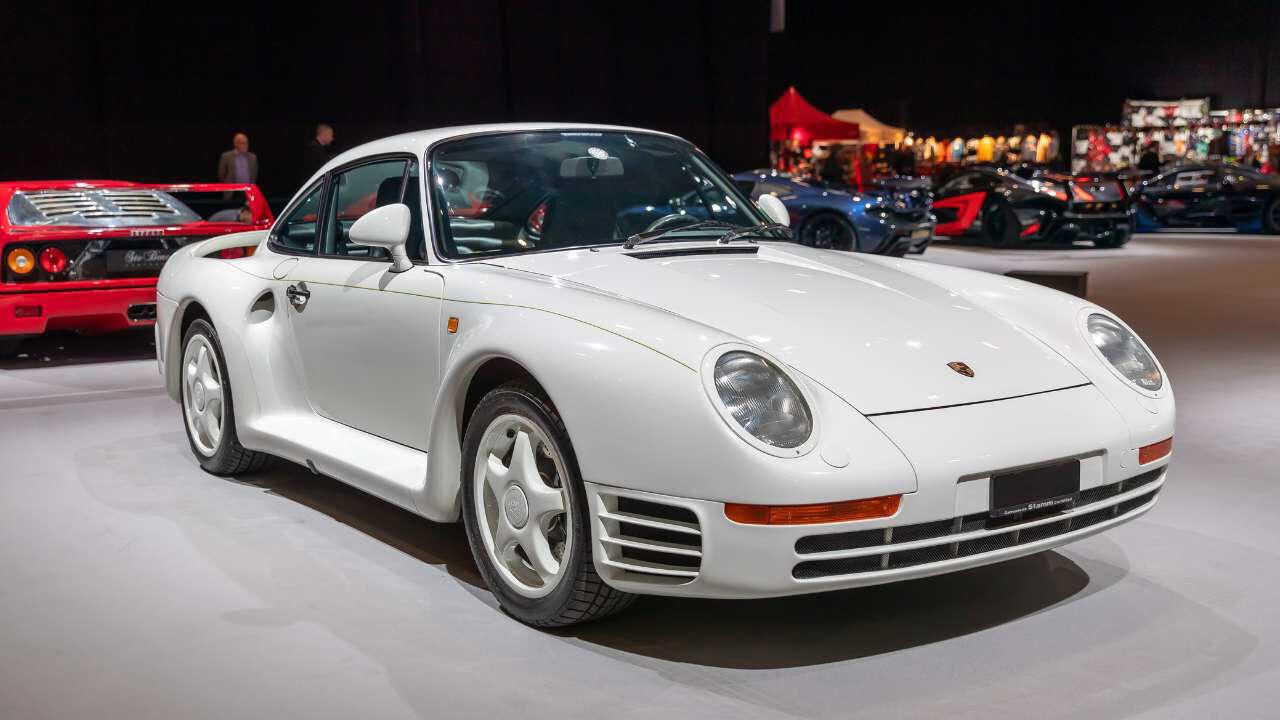
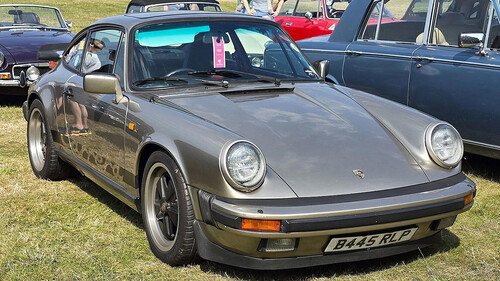
The 1986 Porsche 959 quietly changed supercar technologyThe Porsche 959 arrived in the mid‑1980s looking like a smoothed‑over 911, but underneath it rewired the template for what a supercar could be. Twin turbos, adaptive all‑wheel drive, active aerodynamics, and obsessive materials engineering turned a Group B rally experiment into a rolling test lab that quietly set the agenda for the next four decades of fast cars. Ferrari, Lamborghini, and even Porsche itself would spend years catching up to ideas the 959 treated as standard equipment. Modern flagships such as the Bugatti Veyron, Nissan GT‑R, and Porsche 918 Spyder all trace parts of their engineering playbook back to this understated coupe. What happened Porsche began developing the 959 at the start of the 1980s as a homologation special for Group B rallying, using the familiar 911 silhouette as a starting point. Under that shape sat a 2.85‑liter flat‑six derived from the company’s racing engines, with twin turbochargers, water‑cooled cylinder heads, and air‑cooled barrels. In production form the engine produced around 450 horsepower and more than 500 newton meters of torque, figures that placed the car at the top of the supercar class in the mid‑1980s. The powertrain alone did not define the 959. Porsche paired it with a six‑speed manual gearbox and a highly sophisticated all‑wheel‑drive system called Porsche‑Steuer Kupplung, or PSK. Unlike the simple viscous couplings used in many contemporary performance cars, PSK could continuously vary torque split between the front and rear axles based on throttle position, wheel slip, and gear selection. In normal driving the car behaved like a rear‑drive 911, but under acceleration or on low‑grip surfaces it could send significant power to the front axle. This all‑wheel‑drive layout, wrapped in a coupe body that looked more grand tourer than race car, quickly made traditional rear‑drive exotics nervous. Contemporary rivals such as the Ferrari Testarossa and Lamborghini Countach still relied on rear‑wheel drive and relatively simple suspension tuning, while the 959 used electronically controlled differentials, height‑adjustable suspension, and carefully tuned aerodynamics to put its power to the ground. That combination of all‑weather grip and supercar speed led some commentators to describe it as the all‑wheel‑drive coupe that made other supercars nervous, a reputation reflected in modern retrospectives on the car’s impact on the segment, including one detailed review of its AWD engineering. The chassis itself mixed traditional steel with lightweight materials. Porsche used aluminum for the doors and hood and integrated composite panels for the front and rear sections. The bodywork incorporated fixed aerodynamic devices instead of large wings, with carefully shaped bumpers, side skirts, and a subtle rear spoiler that reduced lift at high speed. The result was a drag coefficient that compared favorably with contemporary sports cars while still delivering stability at more than 300 kilometers per hour. Inside, the 959 looked almost restrained. The cabin used a layout familiar to 911 owners, with analog gauges and straightforward switchgear. Behind the modest presentation sat a dense network of sensors and control units managing the all‑wheel‑drive system, adjustable suspension, and tire pressure monitoring. Porsche treated the car as a development platform for electronics that would later migrate into series‑production models. The 959’s competition story was brief but influential. Group B rally regulations encouraged extreme engineering, and Porsche entered the 959 in events such as the Paris‑Dakar Rally in heavily modified form. Those cars used raised suspension, extensive underbody protection, and revised cooling to handle desert stages. Success in that environment validated the durability of the all‑wheel‑drive system and twin‑turbo engine, and gave Porsche confidence to adapt the technology for road use. Production of the road‑going 959 remained limited, with total output measured in the hundreds rather than thousands. Porsche built a mix of “Komfort” models with more amenities and “Sport” versions with reduced weight and slightly higher performance. Each car required intensive hand assembly, and the company reportedly sold them at a financial loss relative to their development and manufacturing costs. The 959 functioned less as a profit center and more as a showcase for what the company’s engineers could achieve. On the road, independent testing confirmed that the 959 could accelerate from 0 to 100 kilometers per hour in around 3.7 seconds and reach a top speed in the region of 317 kilometers per hour, depending on specification. Those figures placed it at or near the top of the performance charts for production cars of its era. More telling than raw speed, however, was the way the car delivered those numbers: with composure on wet pavement, stability over broken surfaces, and a level of usability that contrasted sharply with the temperamental nature of many 1980s exotics. Why it matters The 959 did not simply add power to an existing formula. It redefined the supercar as a technology demonstrator, where electronics, materials science, and data‑driven control systems mattered as much as engine displacement. That shift can be seen in three broad areas: drivetrain, chassis control, and the integration of road and motorsport development. First, the drivetrain. Before the 959, all‑wheel drive in performance cars usually meant rally‑inspired sedans or coupes that traded finesse for traction. Porsche showed that a sophisticated torque‑vectoring system could enhance both grip and agility in a mid‑engine‑rivaling car. The PSK system’s ability to preempt wheel slip based on driver input anticipated later torque management strategies used in cars such as the Nissan GT‑R and various modern 911 Turbo models. Many current high‑performance vehicles now rely on electronically controlled clutches and predictive algorithms to balance power delivery, concepts that were central to the 959’s design. Second, chassis control. The 959’s height‑adjustable suspension and electronically variable damping foreshadowed the adaptive systems that have become standard on modern performance and luxury cars. Today, magnetorheological dampers, air springs, and multi‑mode suspension settings are common, but in the mid‑1980s the idea that a supercar could change its ride height and stiffness on the fly was radical. Porsche used this flexibility to reconcile conflicting goals: low drag and stability at speed, ground clearance for real‑world roads, and comfort for long‑distance travel. Third, the link between motorsport and road cars. The 959’s development as a Group B project meant that engineering decisions were filtered through the lens of competition, then adapted for public roads. The use of water‑cooled cylinder heads on an otherwise air‑cooled engine, for example, reflected lessons from endurance racing where thermal stability under sustained load was essential. That hybrid cooling approach later influenced the transition of Porsche’s flat‑six engines toward full water cooling in mainstream 911 models. The car also shifted expectations around usability. Supercars of the 1980s were often seen as demanding, fragile, and best suited to ideal conditions. By contrast, the 959 could be driven in rain, on imperfect roads, and at sustained high speeds without constant drama. That usability became a hallmark of later Porsche flagships and influenced competitors who began to prioritize stability control, anti‑lock braking, and refined aerodynamics alongside raw power. In terms of market impact, the 959 helped establish the concept of the “hypercar” as a limited‑run, technology‑heavy halo model that sits above a manufacturer’s regular sports car range. Although production numbers were low, the car demonstrated that there was demand among collectors and enthusiasts for vehicles that served as rolling showcases of experimental engineering. Later projects such as the McLaren F1, Ferrari Enzo, and Bugatti Veyron followed a similar pattern, using small production runs to justify ambitious research and development. The 959’s quiet influence can also be traced through regulatory and safety developments. Its advanced all‑wheel‑drive and braking systems contributed to broader acceptance of electronic driver aids as performance enhancers rather than mere safety nets. Over time, features like anti‑lock brakes and stability control moved from optional extras on high‑end models to mandated equipment across entire markets. While the 959 did not single‑handedly cause those shifts, it provided a high‑profile example of how sophisticated electronics could coexist with driver engagement. From a design perspective, the 959 showed that extreme performance did not require theatrical styling. Its relatively understated shape, derived from the 911 but smoothed and optimized, contrasted with the sharp angles and aggressive wings of many contemporaries. That approach anticipated a later trend toward cleaner, aerodynamically driven forms in performance cars, where wind tunnel results carry more weight than styling flourishes. The car’s long‑term significance becomes clearer when viewed against Porsche’s own product timeline. Technologies tested on the 959 filtered into later 911 Turbo models, which adopted more advanced all‑wheel‑drive systems, improved turbocharging strategies, and increasingly complex electronic controls. The company’s later hybrid hypercar, the 918 Spyder, carried forward the idea of using a flagship model to debut new powertrain concepts that would eventually influence mainstream products. Even outside Porsche, engineers and executives cite the 959 as a reference point when justifying investment in advanced drivetrains or aerodynamics. The car proved that customers would pay for technology that delivered tangible benefits in performance and usability, not just headline power figures. That lesson has shaped the development of everything from all‑wheel‑drive Ferraris to electric supercars that rely on software as much as hardware. What to watch next Four decades after its debut, the 959’s template still informs how manufacturers approach high‑performance projects, and it provides a useful lens for understanding where supercar technology may go next. One area to watch is the integration of electrification with sophisticated all‑wheel‑drive systems. Just as the 959 used PSK to manage torque between the axles, modern hybrid and battery‑electric supercars use multiple electric motors and software control to shape power delivery. Torque vectoring by wire, where individual wheels receive precisely calculated torque inputs, can be seen as an evolution of the principles the 959 explored with mechanical clutches and analog sensors. Another front is active aerodynamics. The 959 relied on fixed but carefully sculpted bodywork to manage airflow, a conservative approach compared with the deployable wings and flaps seen on current hypercars. As regulations around noise and emissions tighten, manufacturers are likely to lean even more on aerodynamic efficiency to extract performance from smaller or electrified powertrains. Future flagships are expected to pair 959‑style attention to drag and lift with movable elements that respond in real time to speed, steering, and braking inputs. Digital control systems will also continue the trajectory the 959 started. Where Porsche’s engineers used early microprocessors to coordinate suspension, drivetrain, and braking, modern cars have the computing power to run complex predictive models. Machine‑learning‑based traction and stability control, over‑the‑air software updates that refine handling characteristics, and driver‑selectable profiles that adjust everything from steering weight to energy regeneration all build on the idea that software can unlock new dimensions of performance. Heritage projects provide another indicator. Manufacturers increasingly revisit landmark models through continuation series, restomods, or spiritual successors. Any future Porsche project that references the 959, whether in name or concept, will likely emphasize advanced all‑wheel drive, lightweight materials, and a blend of combustion and electric power. Similar tributes from other brands may adopt the 959’s philosophy of pairing extreme capability with day‑to‑day usability rather than chasing lap times alone. More from Fast Lane Only Unboxing the WWII Jeep in a Crate 15 rare Chevys collectors are quietly buying 10 underrated V8s still worth hunting down Police notice this before you even roll window down