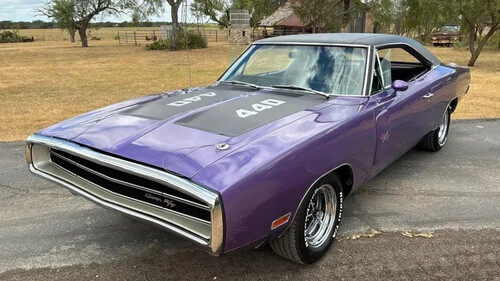
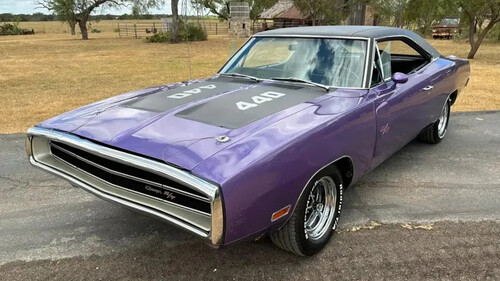
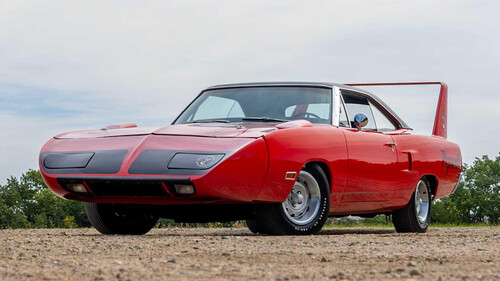
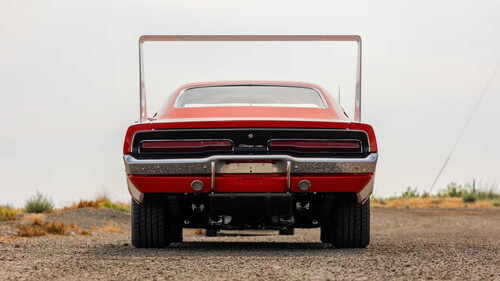
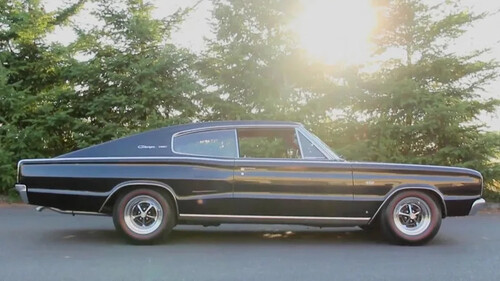
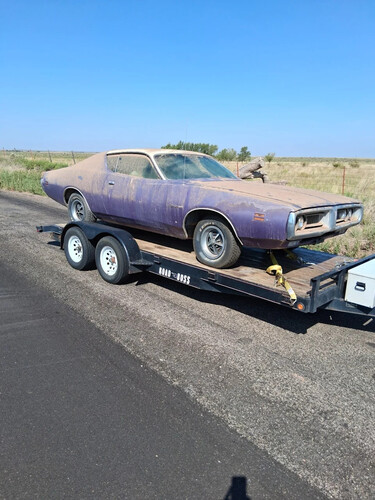
In Hollywood, storytellers employ certain cars and their personalities to help define a character. Nowhere is that more true than with villain cars. While heroes often drive clean, futuristic machines loaded with tech, villains tend to show up in something darker, louder, and built to intimidate. Their cars often carry as much personality as the characters themselves.Think of the heavily modified Jaguar XKRs and rugged black Land Rover Defenders in the James Bond franchise that help add visual cues of power, wealth, and danger. Perhaps the iconic Ford Falcon XB GT from Mad Max. Although driven by the protagonist, its matte black finish, exposed blower, and feral growl gave it the appearance of something a movie villain would command. These cars aren’t just props; they signal intent, attitude, and control.But not every car with villain energy belongs to a true antagonist. Some belong to anti-heroes who walk the line between the hero and the villain. These individuals don’t fit the mold of a clean-cut protagonist, and their cars reflect that. Raw, powerful, and sometimes menacing, these machines act as mechanical counterparts to their conflicted drivers.There’s one car in particular that took this idea further than most. This Dodge Charger helped carry the look of a character, but helped reshape what audiences expect. With brutal styling, deep family ties, and enough torque to challenge supercars, this machine became an icon of cinematic power and rebellion. Dom's 1970 Dodge Charger Redefined The Classic Villain Car In Fast & FuriousVia: Universal Studios Among the many cars that made their mark in the Fast & Furious franchise, none left an impression as deep as Dominic Toretto’s 1970 Dodge Charger R/T. More than just a muscle car, it became a visual and emotional anchor for the franchise. Built with a blend of classic American aggression and cinematic presence, the Charger captured the essence of Dom’s character: power held back by restraint, and intensity shaped by personal loss.The Charger’s stance speaks for itself. Sitting low on wide tires with a matte black finish, its most menacing feature remains the massive supercharger protruding from the hood. Although the film versions often used prop blowers for effect, the actual car was powered by a 7.2-liter 440 Magnum V8 in most stunt builds. Some scenes referenced an even more potent 9.4-liter HEMI V8, producing an estimated 900 hp and over 800 lb-ft of torque. Paired with a stripped-down interior and reinforced chassis, the Charger weighed just over 3,900 pounds, making it a brutal combination of mass and muscle.Via: Mecum Auctions The deep rumble of the exhaust, amplified by the aggressive cam and open headers, added emotional weight to every scene. Whether launching off the line in a street race or flying through the air in a chase, the Charger always appeared during pivotal moments. In The Fast and the Furious (2001), it symbolized Dom’s unresolved grief over his father’s death. Later, in Furious 7, it returned as a vehicle of vengeance.Appearing during standoffs, final battles, and personal reckonings, the Charger R/T became a physical extension of Dom’s internal struggles, helping develop his character. It wasn’t the flashiest car in the series, but it consistently delivered the most impact, both visually and emotionally. Dom’s Charger wasn’t just part of the action; it was part of the story. The Charger R/T Was A Symbol of Power, Trauma, And Family Via: Mecum AuctionsDom’s 1970 Dodge Charger R/T carried the weight of his past and his values. In the Fast & Furious storyline, the Charger originally belonged to Dom’s father, a stock car driver who died in a crash. After the accident, Dom couldn’t bring himself to drive it. Instead, he rebuilt the car in his garage, keeping it tucked away like a time capsule filled with grief, anger, and unfinished business.This backstory gave the Charger emotional depth beyond its mechanical might. On screen, its brutal appearance reflected Dom’s own personality. The car looked ready to explode off the line, with a supercharged V8 that reportedly produced over 900 hp and more than 800 lb-ft of torque. Yet, Dom often kept it idle, just like he held back his rage, until a situation called for full force.Via: Mecum Auctions That parallel carried through the franchise. Each time Dom brought out the Charger, it marked a moment when family, loyalty, or personal trauma took center stage. In The Fast and the Furious, he finally drove it to avenge Jesse and confront his own past. In later films, it returned in rebuilt forms, often updated with frame reinforcements and custom drivetrain setups depending on the stunt or storyline.While Dom drove several cars in the F&F franchise, the Charger's repeated destruction and resurrection symbolized Dom’s resilience. Whether it flipped during a street race or launched off a rooftop in Furious 7, the Charger always came back, sometimes slightly modified, but always with the same core spirit. That resilience matched Dom’s own evolution. The Charger became a metaphor for enduring through pain, rebuilding with purpose, and never backing down when family is on the line. For many fans, that connection gave the car its lasting legacy. The Charger R/T Redefined The "Villain Car" In Hollywood Forever Via: Universal StudiosDom’s 1970 Dodge Charger R/T never officially belonged to a villain, but its presence told a different story. With its matte black finish, exposed supercharger, deep exhaust tone, and imposing stance, it looked like something a movie antagonist would drive. Yet, it became one of the most iconic cars ever associated with a franchise hero, or more accurately, an anti-hero.Dominic Toretto’s character walked a fine line. In the early Fast & Furious films, he ran from the law, led a street racing crew, and often settled disputes with force. Still, his loyalty to family and strong personal code blurred the boundary between right and wrong. The Charger mirrored that same energy: aggressive and threatening, yet loyal and grounded in emotional significance.In terms of cultural impact, the Charger R/T became a global icon. Diecast models from brands like Hot Wheels or Legos continue to sell in large numbers, often among the top sellers in licensed movie car categories. Fans regularly build replicas for car meets and cosplay events. Memes and social media posts often use the Charger to symbolize unbreakable strength or deep family loyalty. In car culture, its popularity revived interest in 1970 Dodge Chargers, leading to rising auction values and restomod projects based on the same chassis. Values Of 1970 Dodge Charger R/T Are Through The Roof In modern car culture, the Fast & Furious franchise has impacted the popularity of several cars and even the recognition of tuners and builders featured in the movies, thus impacting their values. Dom's second-generation 1970 Dodge Charger R/T is valued at $116,951 on average, according to Classic.com. Mint examples with low mileage have brought home between $200,000-350,000 at auction.Compared to other “villain cars” in film, like the black Mercedes-Benz 600 in The Godfatheror the S-Class armored sedans in John Wick, Dom’s Charger stands out because of its raw muscle and personal story. It didn’t represent wealth or calculated power. It represented raw emotion, defiance, and personal history. That distinction helped redefine what a villain car could look like, proving that the most intimidating cars don’t always belong to the bad guy, they just need the right driver.