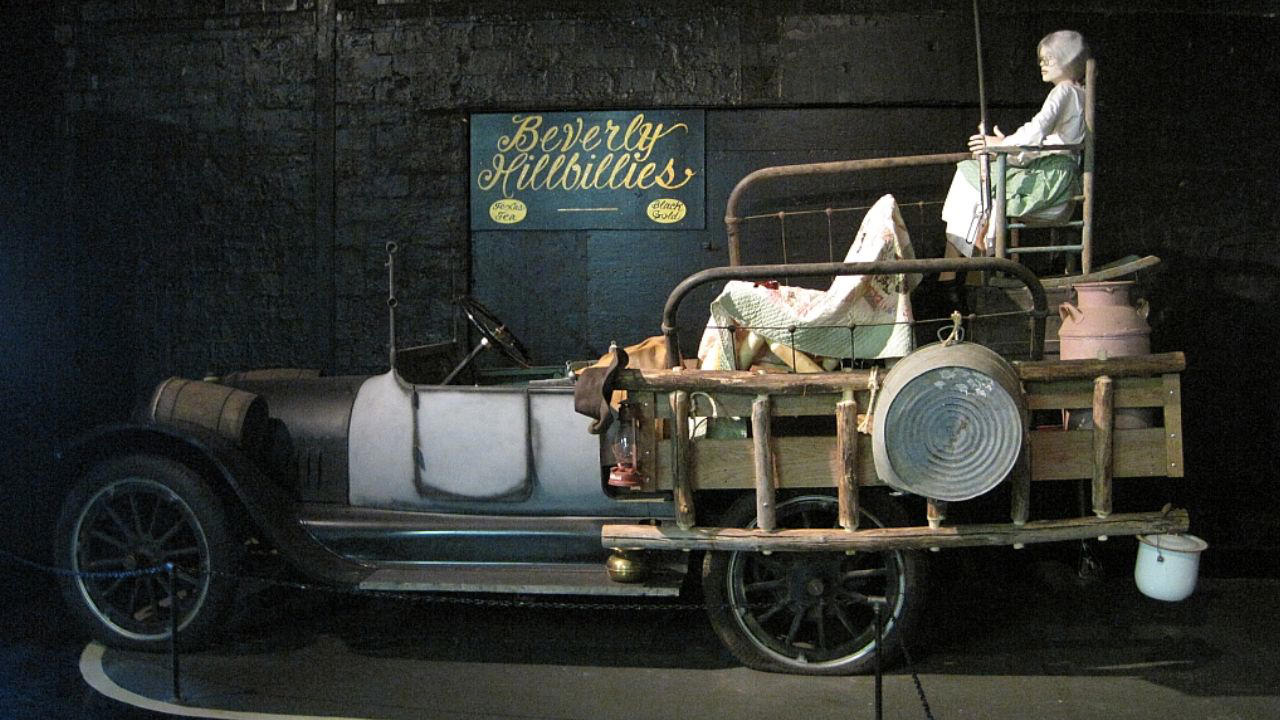
The Beverly Hillbillies truck wasn’t just a prop—it came from real survivalFew vehicles in television history are as instantly recognizable as the battered, overloaded truck from The Beverly Hillbillies. With its sagging suspension, mismatched parts, and a roof piled high with everything the Clampett family owned, it wasn’t just transportation—it was part of the show’s identity. The truck symbolized the family’s journey from rural poverty to unexpected wealth, carrying them from the Ozarks to Beverly Hills in one unforgettable opening sequence. But behind the humor and charm, that truck wasn’t just a quirky prop dreamed up by Hollywood set designers. It was rooted in something very real—an era when Americans had to get creative just to survive. The Clampett truck reflects a forgotten chapter of automotive history, when necessity turned ordinary cars into hardworking machines. Long before it became a pop culture icon, it represented resilience, ingenuity, and the ability to make something out of almost nothing. A vehicle born out of necessity, not style During the Great Depression, owning a purpose-built truck wasn’t always an option. For many families, especially those living in rural areas, money was tight and resources were scarce. But work still had to get done—fields needed tending, supplies needed hauling, and livelihoods depended on mobility. So people improvised. Old passenger cars, often worn out or no longer practical for everyday use, were cut down and reworked into makeshift trucks. Rear sections were removed or modified, wooden beds were added, and whatever materials were available were used to create something functional. These vehicles became known by various regional nicknames, including “Skeeters.” They weren’t pretty. They weren’t comfortable. But they worked. The Clampett truck captures that exact spirit. Its rough, almost cobbled-together appearance wasn’t just for laughs—it reflected a real-world solution born from tough economic conditions. In many ways, it was less of a vehicle and more of a tool, shaped by necessity rather than design. The real machine behind the legend While the truck looks like a chaotic pile of parts, it actually has a surprisingly specific foundation. One of the original screen-used vehicles was built from a 1921 Oldsmobile touring car. Underneath its weathered exterior sat a modest four-cylinder engine producing around 43 horsepower—hardly impressive by modern standards, but adequate for its time. The chassis rode on a 115-inch wheelbase, typical for early 1920s vehicles. From there, the transformation began. The rear of the car was modified to create a cargo area, turning it into a hybrid between a car and a truck. The bodywork was intentionally left looking rough, emphasizing its “built, not bought” identity. The load strapped to the top—furniture, tools, and household items—was carefully arranged to look chaotic but believable, reinforcing the idea that the Clampetts had packed up everything they owned for a one-way trip. What makes the truck so fascinating is that it wasn’t just designed to look authentic—it actually was authentic in concept. It mirrored real modifications that thousands of Americans had made decades earlier. When a vehicle helped determine survival During the Depression, these improvised trucks served more than just a practical purpose. In some cases, they played a role in navigating government regulations and resource shortages. Fuel rationing became a reality during certain periods, especially around wartime conditions. Vehicles used for agricultural work were often given priority access to fuel, as they were considered essential. By converting a passenger car into something that resembled a farm truck, owners could sometimes qualify for those benefits. This blurred line between car and truck wasn’t just clever—it could be critical. For many families, these modifications meant the difference between staying productive and falling behind. A vehicle that could haul crops, tools, or supplies became an extension of survival itself. The Clampett truck, while comedic in presentation, quietly reflects that deeper reality. It represents a time when transportation wasn’t about convenience or comfort—it was about making it through. From backroads to Beverly Hills Within the world of the show, the truck takes on a narrative role just as important as any character. It belongs to Pearl Bodine, Jed Clampett’s cousin, who lends it to the family for their journey west after striking oil. That journey becomes the foundation of the entire series. As the Clampetts travel from rural poverty to sudden wealth, the truck acts as a visual bridge between two completely different worlds. It rolls into Beverly Hills looking wildly out of place, surrounded by luxury cars and polished streets. And that contrast is exactly the point. The truck doesn’t just carry the family—it carries their identity. Even as the Clampetts settle into their new life, the truck remains a reminder of where they came from. It’s a rolling piece of their past, refusing to be polished or replaced, much like the family’s values and outlook. In a show built on culture clash, the truck becomes one of the most powerful symbols of that divide. Why the truck became a television icon Television history is filled with memorable vehicles, but few have the same staying power as the Clampett truck. Part of that comes down to its uniqueness. It doesn’t look like anything else on the road, either in its fictional world or in real life. But there’s more to it than just appearance. The truck resonates because it tells a story without needing dialogue. One glance at it, and you understand everything about the people inside. It speaks of hardship, resourcefulness, and a refusal to waste anything. It’s imperfect, worn, and unapologetically functional. In contrast to the sleek, aspirational cars often seen in entertainment, the Clampett truck stands out by doing the opposite. It doesn’t represent success—it represents the journey to get there. That emotional connection is what turned it into an icon. Even decades after the show first aired, the truck remains one of the most recognizable vehicles in television history. It’s been referenced, recreated, and celebrated countless times, proving that sometimes the most memorable machines aren’t the fastest or the most expensive—they’re the ones with the best stories. Preserved history you can still see today Unlike many television props that are lost to time, one of the original Clampett trucks still exists today. It’s preserved at the Ralph Foster Museum, where visitors can see it up close. Standing in front of it, the details become even more striking. The wear, the craftsmanship, the carefully arranged cargo—it all feels tangible in a way that photographs can’t fully capture. It’s no longer just a piece of television history; it’s a physical link to both the show and the era that inspired it. For fans, it’s a chance to connect with a beloved series. For automotive enthusiasts, it’s a glimpse into a time when creativity and necessity shaped vehicles in ways that modern manufacturing rarely does. And for everyone else, it’s a reminder that even something as simple as an old, patched-together truck can carry a story worth preserving. A symbol of ingenuity that still resonates The Clampett truck may have started as a background prop, but it evolved into something much more meaningful. It represents a kind of ingenuity that feels increasingly rare in today’s world—a willingness to adapt, to repurpose, and to make do with what’s available. In an era of advanced engineering and mass production, it’s easy to forget that many of the most important innovations come from necessity, not luxury. The truck stands as a testament to that idea. It wasn’t built to impress anyone. It wasn’t designed to last forever. But it fulfilled its purpose, both in real life and on screen, in a way that few vehicles ever have. That’s why it endures. Because long before it became one of television’s most recognizable rides, it was something far more important—a solution to a problem, a product of hard times, and a symbol of survival. More from Fast Lane Only Unboxing the WWII Jeep in a Crate 15 rare Chevys collectors are quietly buying 10 underrated V8s still worth hunting down Police notice this before you even roll window down *Research for this article included AI assistance, with all final content reviewed by human editors. The post The Beverly Hillbillies truck wasn’t just a prop—it came from real survival appeared first on FAST LANE ONLY.

















 +33 others