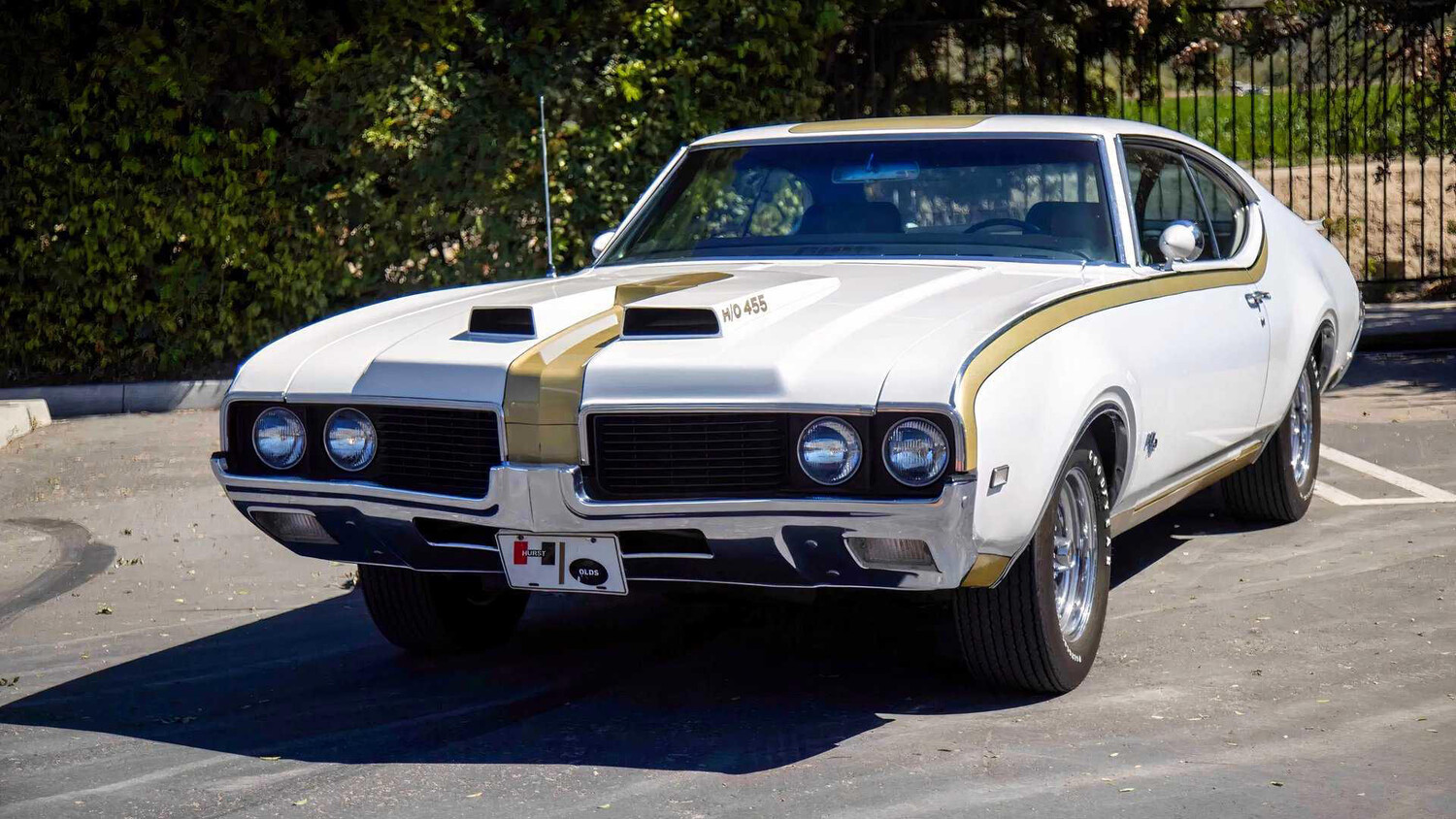
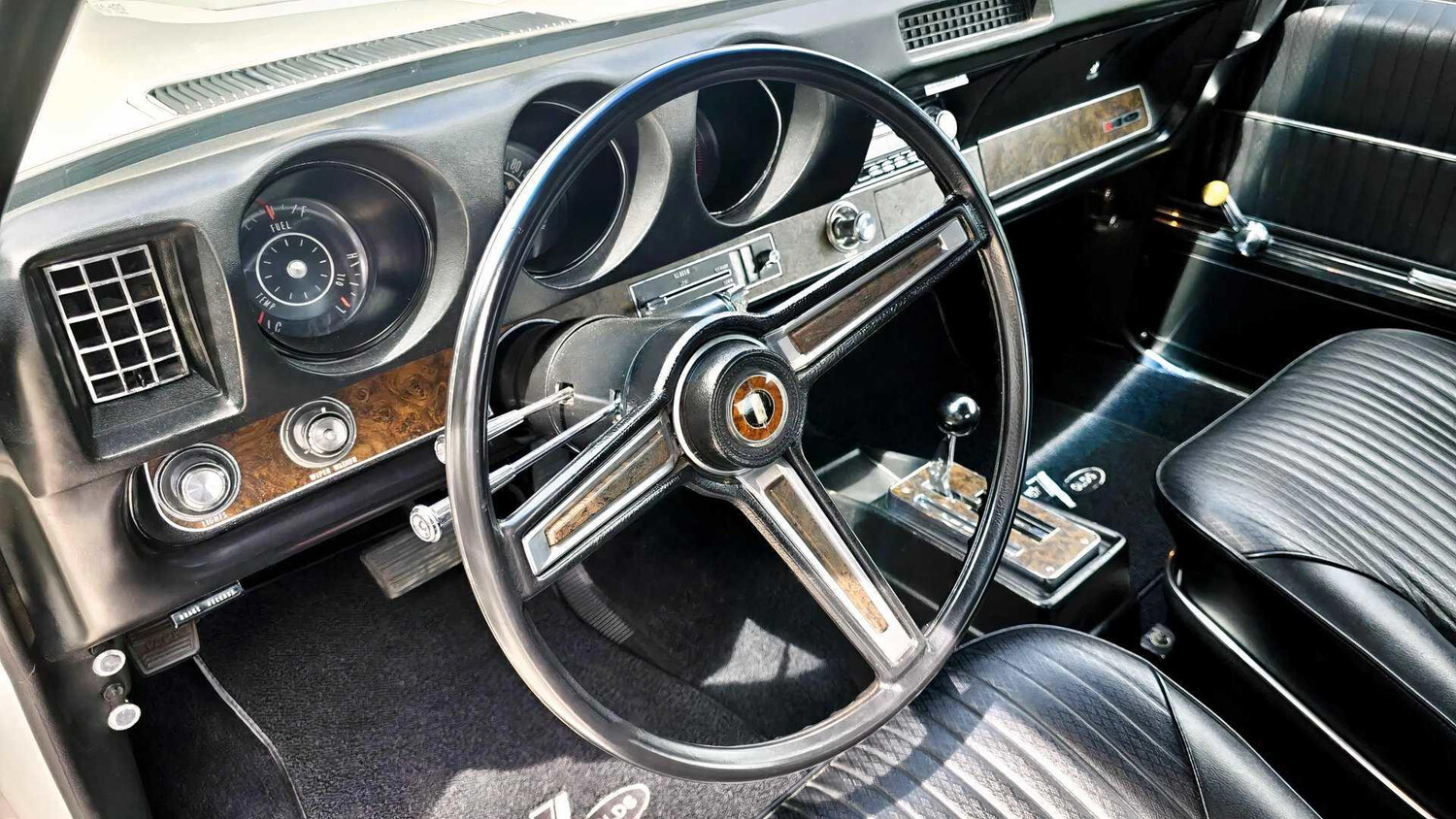
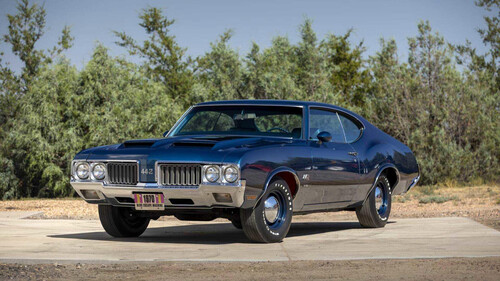
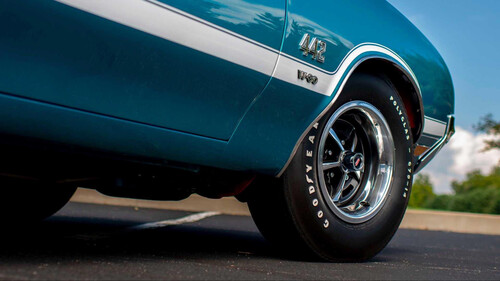
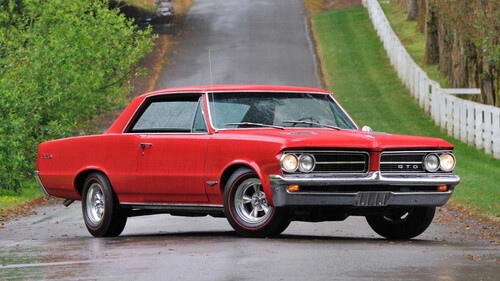
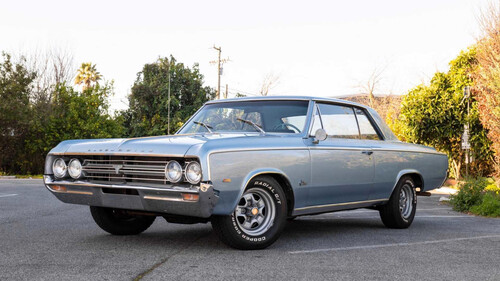
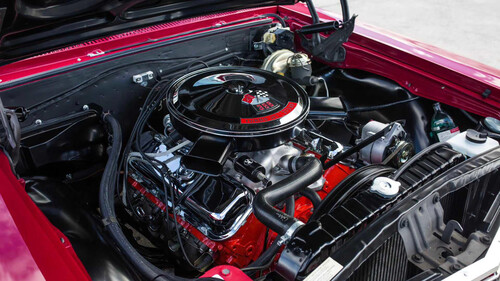
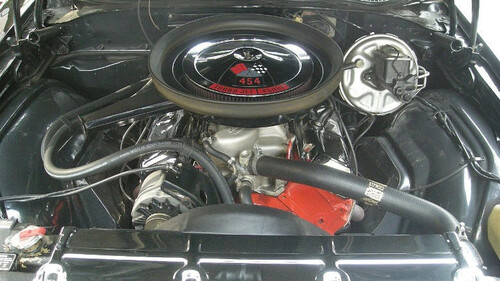
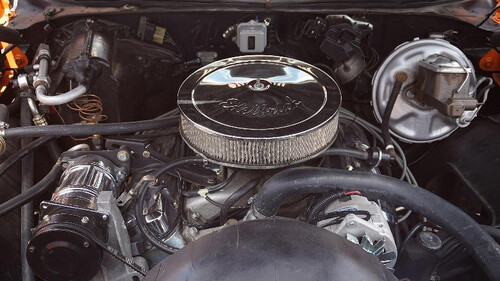
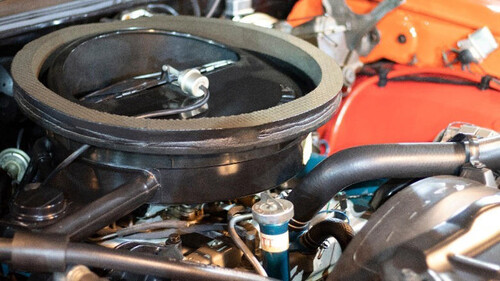
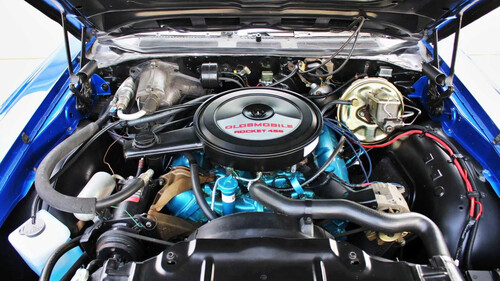
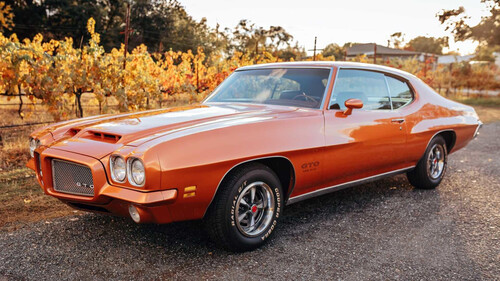
During the tail end of the golden age of the American muscle car era, Oldsmobile popped off with one of its rarest production cars, and one that rivaled the high-performing Pontiac GTO Judge Ram Air III. As seasoned gearheads might remember, Pontiac’s GTO had already established itself as the benchmark for factory-built street performance, forcing rival General Motors divisions to develop cars capable of matching its power and reputation.Thus, in an effort to compete, Oldsmobile decided to collaborate with Hurst Performance to create a limited-production rig that carried torque-focused engineering and Hurst Performance racing credibility. This rare rig demonstrated that Oldsmobile could compete directly in the muscle car arms race while still maintaining its reputation for precision engineering and balanced performance. Let’s get into it. What Made The 1969 Hurst/Olds 4-4-2 W-30 Different From Other Muscle Cars via Bring A TrailerThe height of the muscle era was coming to a close as the calendar flipped to 1970. While some probably didn’t see it coming, gearheads in the know understood that government and environmental crackdowns were coming, following the glorious muscle car run of the 1960s. And, really, that's what makes the 1969 Hurst/Olds 4-4-2 W-30 so special. It came out as a special time in muscle car history, as it was one of the last powerhouses of the golden age. But that’s not the only thing that made the Hurst/Olds W-30 stand out.Bring a Trailer In all honesty, the 1969 Hurst/Olds 4-4-2 W-30 stands out in the horsepower wars because it was different from other muscle cars. You see, this Hurst/Olds only exists because of some crafty behind-the-scenes work that led to the use of engineering loopholes, performance-focused hardware, and limited production exclusivity. As seasoned gearheads might remember, at the time, during this era, General Motors restricted midsize cars like this Hurst/Olds from running anything larger than 400 cubic inches under the hood.via Bring A TrailerAnd, yep, as you might have guessed by now, Oldsmobile actually partnered up with Hurst Performance to navigate a way out of this system to legally install a massive 455-cubic-inch Rocket V8 into its 4-4-2 platform. Interestingly, this collaboration with Hurst Performance allowed Oldsmobile to deliver big-block performance while still coloring inside the lines of GM’s corporate structure.Through this collaboration, this Hurst/Olds rig was able to position itself as a premium muscle car. Its specs speak for themselves, with a factory rating of 380 horsepower and a staggering 500 lb-ft of torque. The Hurst/Olds W-30’s drivetrain further heightened its performance credibility as most models were paired with a specially calibrated Turbo-Hydramatic 400 automatic transmission controlled through Hurst’s signature Dual-Gate shifter. Plus, its ability to launch from 0 to 60 in just 5.7 seconds and run a quarter mile time in 14.1 seconds is just icing on the cake here. How The Hurst/Olds W-30 Stacked Up Against The Pontiac GTO via Bring A TrailerIn terms of peak General Motors muscle performance, the 1969 Hurst/Olds 4-4-2 W-30 and the 1969 Pontiac GTO Judge Ram Air III represented two different sides of the same coin. You see, both of these rigs offered gearheads near identical performance numbers, as the GTO was set up to deliver 366 horsepower and 445 lb-ft of torque compared to the Hurst/Olds W-30’s 380 ponies and 500 lb-ft of torque.While the '69 Hurst/Olds W-30 excelled at delivering immediate torque and acceleration, the Pontiac GTO Judge appealed to gearheads looking to push deeper into the rev range and had an affinity for everything associated with manual transmission performance. You see, the Hurst/Olds W-30’s bread and butter hinged on its functional cold-air induction system, aluminum intake manifold, performance camshaft, and upgraded cylinder heads that supported reliable high-load operation. On the flip side, the Pontiac GTO Judge relied on its high-flow cylinder heads, functional Ram Air induction, and aggressive cam timing to generate power at higher engine speeds.Link Image Still, regardless of their minor discrepancies, both rigs serve as peak performers for their respective camps while also bringing light to the broad array of performance engineering during the last hurrah of the muscle car era. However, the Hursts/Olds W-30’s scarcity gives it a solid edge over the GTO Judge as it reinforces its exclusivity among collectors, enthusiasts, and gearheads in the buyers' market today. Why The 1969 Hurst/Olds W-30 Was Built In Such Small Numbers via Bring A TrailerNow, if you’re wondering why Oldsmobile decided to produce a limited number of models, given that this rig is so cool, the reasoning largely hinges on how the car was developed and assembled. You see, unlike traditional GM production vehicles, Oldsmobile’s partnership with Hurst Performance required additional assembly steps outside standard GM factory procedures, which added considerable length to each rig’s production time.Gearheads shouldn’t forget that market conditions also played a role in production numbers at this point in the muscle car era. You see, by 1969, rising insurance premiums and growing regulatory pressure were beginning to affect high-performance muscle car sales across the industry. Manufacturers were becoming more cautious about producing large volumes of high-output vehicles, especially rigs that featured large-displacement engines like Oldsmobile’s 455 Rocket V8. The Hurst/Olds W-30 represented a niche performance offering aimed at enthusiasts seeking exclusivity rather than mass-market appeal.via Bring A Trailer In total, Oldsmobile built roughly 906 Hurst/Olds models in 1969. More broadly, Oldsmobile sales jumped almost 100,000 units that same year, but only a small fraction were finished as Hurst/Olds collaboration models. Thus, the Hurst/Olds models are truly some of the rarest high-performance muscle cars built during the peak of the muscle era. Now, over five decades later, that limited production run has significantly contributed to the model’s long-term desirability. Unlike more widely produced muscle cars, the relatively small number of Hurst/Olds W-30 examples has made surviving vehicles highly desirable among collectors.The combination of documented production totals, factory-backed performance engineering, and the unique Oldsmobile-Hurst collaboration gives the 1969 model a strong reputation within muscle car history. Today, its scarcity only solidifies it as both a historically important performance vehicle and a collectible that represents the final peak years of factory-built American muscle performance. How Much A 1969 Hurst/Olds 4-4-2 W-30 Is Worth Today Bring a Trailer The 1969 Hurst/Olds 4-4-2 represents one of the most collectible Oldsmobile muscle cars ever produced, and its market value reflects both its limited production run and historical significance. With approximately 906 models built during 1969, the Hurst/Olds occupies a unique position in the muscle car collector world as a factory-backed collaboration between Oldsmobile and Hurst Performance during the peak of the American muscle era.Based on data collected by Classic.com, the average auction price of a 1969 Oldsmobile Hurst/Olds is averaging $76,500 in today’s market, with the lowest sale in the last calendar year sitting at just $30,000 and the highest soaring all the way to $110,000. Thus, it’s clear that the market value range varies significantly for these rigs, especially when mileage, originality, and overall condition are taken into account.via Bring A Trailer Looking at recent auction data, one of these rare 1969 Hurst/Olds W-30s was put up on the auction block, so to speak, via Mecum in January 2026. Finished in a pearly white and featuring gold graphics, one lucky gearhead was able to get their hands on this Hurst/Olds collaboration piece for a cool $55,000.A second example also went up for sale via Mecum in the same month as the former model. However, this 1969 Hurst/Olds W-30 was in quite a bit better condition, requiring the lucky gearhead who took top bidding honors to drop $99,000. This just shows the wide range of conditions and market prices that still surround this rare muscle car over five decades later.It’s also important for gearheads to note that the market demand for late-1960s muscle cars has remained stable, with rare collaboration models like the Hurst/Olds often outperforming more widely produced performance cars in long-term appreciation. Collectors tend to value these vehicles not only for performance but also for their historical significance within General Motors’ internal muscle car rivalry.As a result, the 1969 Hurst/Olds continues to hold strong collector demand, representing both a historically important performance milestone and one of the most exclusive muscle cars produced during the height of the American performance era.Sources: Classic.com, Hagerty, Hemmings.