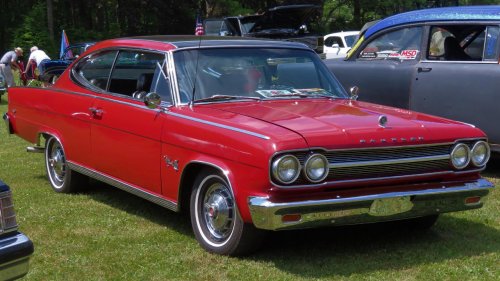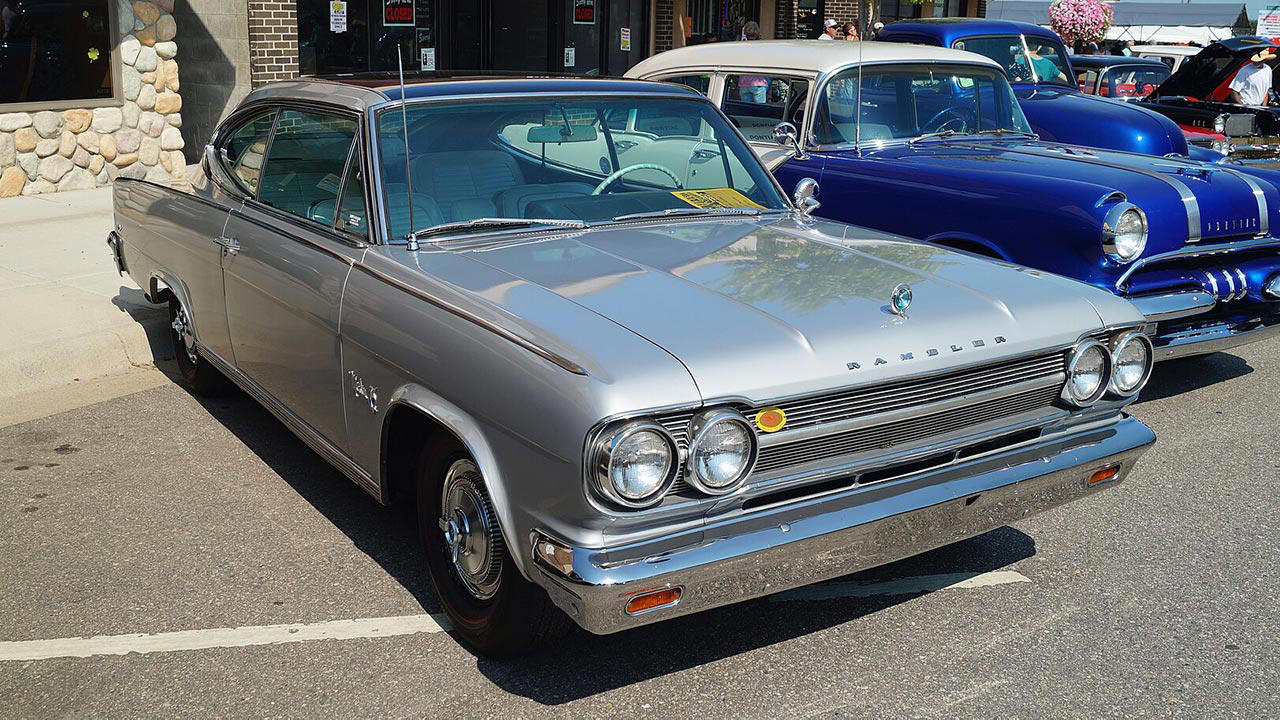



















AMC’s 1965 Marlin tried fastback flair before it was coolThe Marlin arrived in showrooms in the mid-1960s with a sweeping roofline and a promise that American Motors could do style as well as practicality. Marketed as a “swinging fastback” for buyers who wanted flair without giving up space, it tried to bring fastback fashion to the family-car set long before that look became a mainstream muscle car signature. The experiment lasted only three model years, yet the 1965 Marlin now reads like an early draft of trends that would later define Detroit performance design. From Rambler roots to fastback ambition The story starts with American Motors, a company better known for compact Ramblers than for bold design statements. The Marlin, built by American Motors from 1965 through 1967, was pitched as a sporty halo model that could sit above the sensible sedans in the showroom and pull younger buyers toward the brand. Period commentary described The Marlin as one of the more unfortunate misfits of the era, yet its basic mission was clear: wrap Rambler practicality in a dramatic fastback shell. Officially, the first cars carried the Rambler Marlin badge. The Rambler Marlin (later AMC Marlin) was a two-door fastback automobile produced in the United States by AMC, with a roof that flowed in one continuous arc from the top of the windshield to the tail. AMC tried to position it as a personal luxury car rather than a pure sports coupe, a rival for the likes of Ford’s stylish offerings but with a more spacious cabin and a softer edge. The Tarpon that never was The Marlin did not appear out of thin air. One early sign of American Motors’ changing philosophy came when AMC showed the Tarpon concept car, a compact fastback based on the smaller American platform. That show car previewed the idea of a sporty Rambler with a plunging roofline and a short rear deck, the basic proportions that would later reach production in the Marlin. Internal debates shaped what finally reached the street. Reporting on the program notes that AMC planners initially considered that petite American chassis for production, then realized that the compact platform could not accept the company’s V8 engine. As one account of American Motors’ decision making explains, the inability to fit a V8 on the smaller base pushed the team toward the mid-size Rambler Classic instead. That choice would give the car more interior room and proper eight-cylinder power, but it also meant a larger, heavier fastback than the lithe Tarpon preview had suggested. Styling credits go to a team that later left its mark across Detroit. Bob Nixon, later identified as chief of Jeep design for Chrysler, worked on the Marlin along with Vincent Geraci, Fred Hudson, Neil Brown and Don Stoker. According to period design commentary, they were asked to create a sports-type car that still satisfied AMC’s reputation for comfort and practicality, a tension that would define the finished product. Design: a dramatic roof over a sensible body Seen from the side, the Marlin’s proportions remain its calling card. Contemporary descriptions of the Features of the emphasize how photographs were carefully staged from a three-quarter rear view to highlight the smooth flowing roofline. The fastback arc was intended to signal speed and modernity, yet the car retained full-size doors, a usable rear bench and a trunk that opened under a large rear glass panel. Beneath that roof, the structure was closely related to the Rambler Classic. The nose and front fenders looked familiar to AMC customers, which kept costs down but also made the fastback appear grafted on to some eyes. The rear quarters swelled to meet the descending roof and framed a wide C-pillar, a shape that made the car look substantial but also visually heavy compared with later fastbacks from Detroit. Inside, the Marlin played the personal-luxury card. Bucket seats, a center console, bright trim and multi-tone paint treatments were all available. Coverage of the Marlin project notes that AMC tried to combine dramatic styling with economy-car roots, a mix that created one of the more intriguing domestic oddballs of the decade. The car was not a stripped-down performance special; it was a comfortable cruiser with a visual attitude. Powertrains and the V8 promise From the start, AMC wanted the Marlin to be more than a styling exercise. The 65 AMC Rambler Marlin was also designed to be powered by a V8 engine, and on launch the car was available with either a six-cylinder or V8 powerplant. A later enthusiast description of The AMC Marlin stresses that the model, introduced in 1965, was American Motors’ attempt to blend performance with its uniqueness and bold design. The six-cylinder option kept the price approachable for buyers moving up from a basic Rambler. The available V8s gave the car the muscle to match its fastback profile, especially once AMC’s newer eight-cylinder engines arrived. Even so, the Marlin never quite matched the raw performance image that surrounded cars like the Ford Mustang or the fastback versions of intermediate muscle machines that would follow later in the decade. Marketing a “swinging fastback” American Motors knew it needed to sell attitude along with sheet metal. Period promotional films presented the Marlin as “a swinging fastback” with “real go with style so spacious,” language that shows up in a surviving commercial where a narrator introduces the car as Marlin, symbolic of all that is fun and sporting and exciting. That pitch, preserved in a Marlin promotional clip, tried to reposition AMC from thrifty and conservative to fashionable and youthful. Print advertising followed the same theme. A 1965 Rambler Marlin ad campaign framed the car as a sign that AMC was no longer content to build only sensible transportation. The copy referenced the earlier Tarpon concept as a signal that the company had been thinking about sporty fastbacks, then pointed to the production Marlin as proof that the idea had reached the showroom. The goal was to put American Motors in the same conversation as Ford and other Detroit rivals that were suddenly chasing younger drivers. How it drove and how it felt Surviving road tests and modern video walkarounds paint a picture of a car that feels more grand tourer than track star. One in-depth look at a 1965 Marlin describes the car as fitting into the cool, quirky and definitely unusual categories, with dynamics that reflect its mid-size sedan origins rather than a pure sports coupe character. A separate presentation of a 1965 AMC Rambler Marlin with original paint walks viewers around the car, then fires it up and takes it on the road, highlighting the relaxed ride and straightforward mechanical feel of a mid-1960s American cruiser. More recent passenger-seat footage from a 1965 AMC Marlin road test shows the car starting from cold, idling with the gentle lope of a period V8 and then pulling smoothly through traffic. The commentator notes that this is a car to enjoy at a brisk cruise rather than to fling through corners, a reflection of AMC’s decision to prioritize space and comfort under that sleek roof. Reception: a misfit in its own time In spite of the marketing push and the fastback silhouette, the Marlin never found the audience AMC hoped for. Production lasted from 1965 through 1967, and even contemporary observers described Rambler and AMC fans as remembering the three-year run as a brief experiment. The car was marketed to compete with Ford’s sporty offerings, but it landed in a gray area between compact pony cars and full-on luxury coupes. Later enthusiasts have called the Marlin one of the unfortunate misfits of the period. The fastback roof arrived just ahead of a wave of similar shapes that would soon appear on mid-size muscle cars, yet AMC’s execution was tied to a more conservative chassis and market position. Buyers who wanted a hard-edged performance machine gravitated elsewhere, while traditional Rambler customers sometimes found the styling too radical. By 1967, AMC had shifted the Marlin to a larger platform and refined the proportions. Collector guides now often regard the 1967 version as the most appealing of the lot, as the car’s overall proportions and its curvaceous lines worked better on the bigger body. That change came too late to save the nameplate, which left production in its original form after that third season. Why the Marlin looks smarter in hindsight Viewed from the distance of six decades, the Marlin’s concept seems prescient. The idea of a fastback roof on a mid-size or full-size car would soon become a staple of Detroit design, from the sweeping profiles of later muscle coupes to the sloping rear glass of personal luxury models. The 1966 Rambler Marlin is often highlighted today as a distinctive and stylish entry in that emerging trend, even if it did not sell in large numbers at the time. Modern collectors who seek out early Marlins tend to celebrate exactly what once made the car a hard sell. A recent feature on a red first-year fastback describes it as one of only a few Marlins lucky enough to get a proper restoration and spend their retirement years in show condition. The writer calls the car rare and quirky, and suggests it might be the nicest 1965 AMC Rambler Marlin a reader will ever see, a far cry from the lukewarm reception the model often received when new. Online valuation tools now track the 1965 Rambler Marlin separately, with commentary that the later 1967 cars are generally regarded as the most attractive. Even so, first-year examples with original details and low mileage have begun to command more respect as enthusiasts recognize the model’s role in fastback history. Design details that set it apart Part of the Marlin’s appeal lies in details that do not show up on spec sheets. The roof’s leading edge flows cleanly from the windshield header, without the sharp break seen on some later fastbacks. The rear glass is large and steeply raked, which floods the cabin with light and makes the car feel more open than many coupes of the era. The tail treatment is equally distinctive. The rear deck is short, with the trunk lid cut into the slope of the fastback. Tail lamps sit wide on the rear panel, giving the car a planted stance. Side sculpting along the flanks helps visually reduce the bulk of the mid-size body under that sweeping roof. Inside, brightwork, patterned vinyl and available two-tone schemes underline the personal-luxury intent. Enthusiast walkarounds often linger on these touches. One detailed video on a 1965 rambler marlin in depth look points out the unusual rear seat headroom created by the high point of the roof, the generous trunk access and the way the rear fenders flare to meet the glass. Another clip from Autosport Designs that features a 1965 AMC Marlin road test showcases the car’s preserved interior and the way its gauges and switchgear reflect AMC’s mid-1960s design language. More from Fast Lane Only Unboxing the WWII Jeep in a Crate 15 rare Chevys collectors are quietly buying 10 underrated V8s still worth hunting down Police notice this before you even roll window down