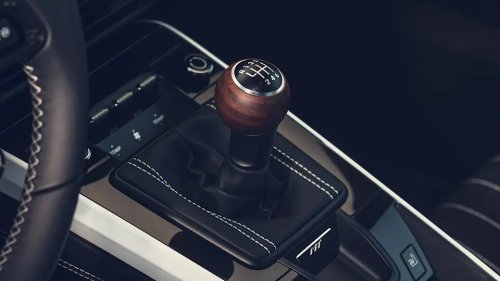
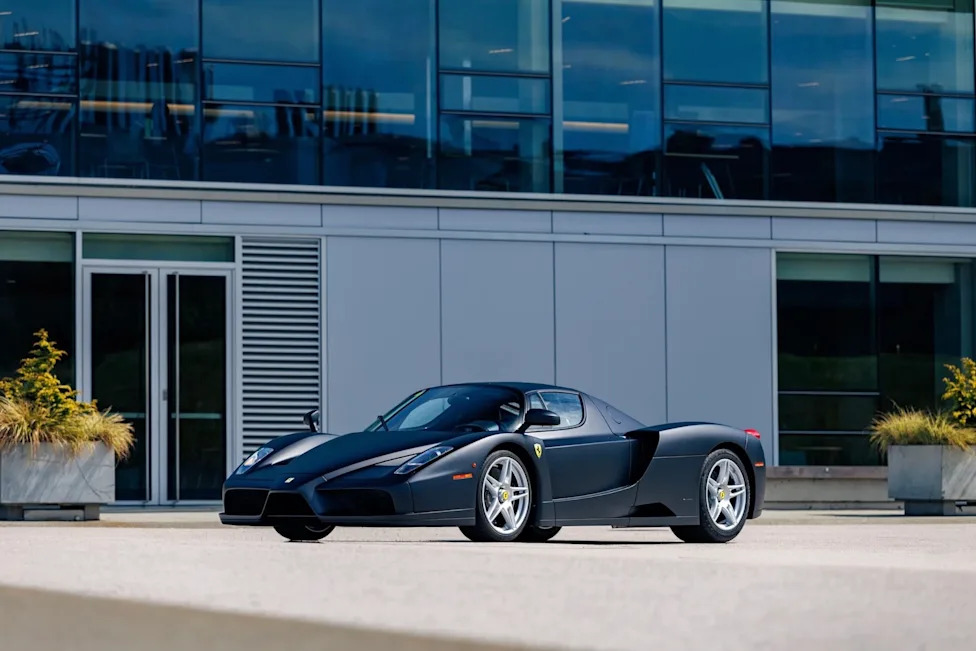
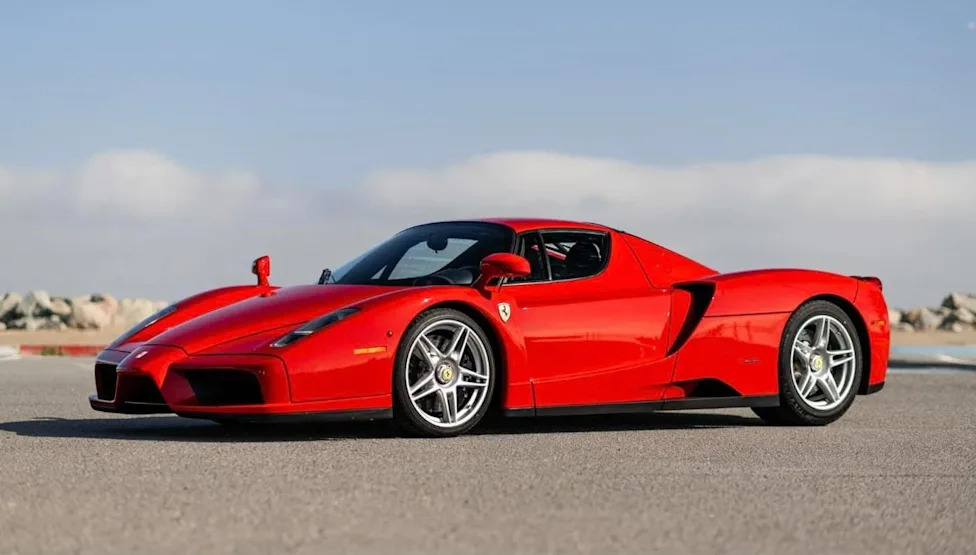
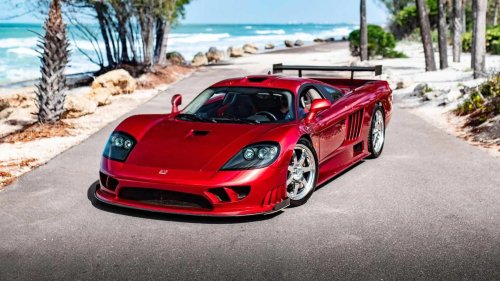
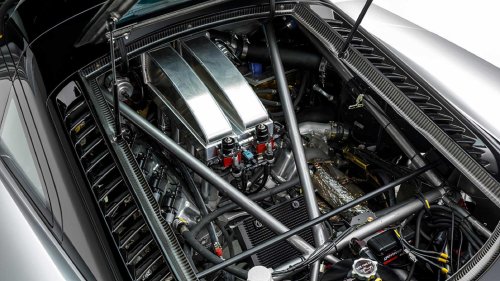
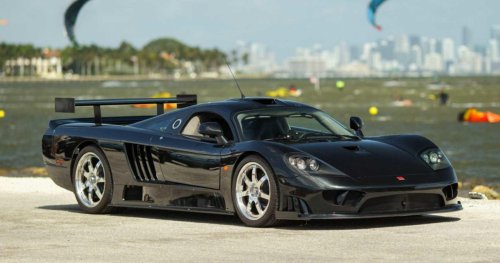
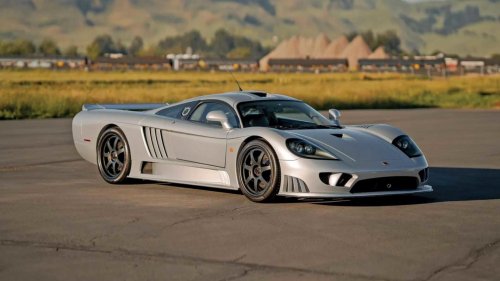
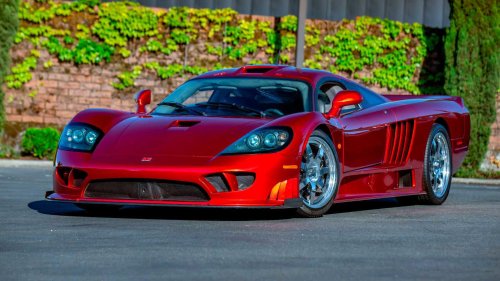
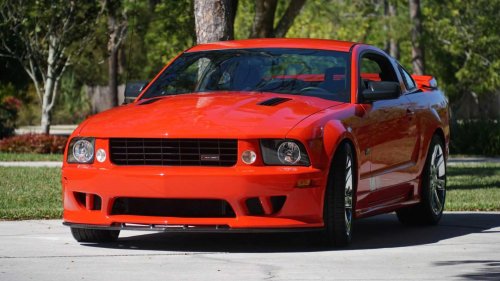
When it comes to mid-engined supercars, European manufacturers dominate the conversation. Ferrari, Lamborghini, and McLaren have long set the benchmark for exotic performance vehicles. American car culture, in contrast, has largely been defined by front-engined muscle cars and high-horsepower drag racers.Few American manufacturers have dared to challenge the European formula, and even fewer have succeeded. But in the early 2000s, one American company defied expectations and created a mid-engined supercar that could outrun some of the fastest Ferraris of its time. It was a car engineered for both road and track, boasting extreme aerodynamics and raw power. Yet, despite its groundbreaking performance, it remained a rare sight. The Saleen S7 Was An American Mid-Engined Supercar Faster Than Ferrari Bring a Trailer The Saleen S7 made its debut in 2000 as one of the first American-built (actually the sixth), mid-engined supercars designed to take on the best from Europe. Founded by Steve Saleen, a former racing driver and performance tuner, Saleen had already built a strong reputation for modifying Mustangs and racing cars. But the S7 was an entirely different beast – designed from the ground up to be a no-compromise, road-going race car.The S7 featured a lightweight carbon-fiber body designed with aerodynamics in mind. Its long, low stance and wide track gave it an aggressive presence, while its massive rear wing helped keep it planted at high speeds. It was engineered not just for straight-line speed but for handling prowess as well. Every element of its design was focused on high performance, from its racing-derived suspension to its advanced cooling systems.In 2005, Saleen introduced the S7 Twin Turbo, an even more extreme version of the car. With twin turbochargers boosting power, it could reach speeds that put it in the same league as the world’s fastest hypercars. The S7 Had A Massive V8, 6-Speed Manual, And Mind-Blowing Speed Bring a Trailer Under the engine cover of the Saleen S7 sat a monstrous 7.0-liter V8, originally naturally aspirated but later enhanced with twin turbochargers. The original S7 produced 550 horsepower, already making it one of the most powerful supercars of its time. But the 2005 Twin Turbo variant took things to another level, delivering an astonishing 750 horsepower.This powerplant propelled the S7 Twin Turbo from 0-60 mph in just 2.8 seconds, with a top speed of over 248 mph. That was enough to make it faster than most Ferraris and Lamborghinis of the era. Even the legendary Ferrari Enzo, one of the most celebrated supercars of the time, had a lower top speed. Saleen S7 Key Specs Source: SaleenVia Bring A Trailer The V8 engine wasn’t just about raw power – it was built for endurance and reliability as well. The all-aluminum V8 featured dry sump lubrication, allowing it to withstand the extreme G-forces of high-speed cornering. The unit was mated to a 6-speed manual transmission.Saleen didn’t just focus on straight-line speed, either. The S7 was engineered with a fully independent double-wishbone suspension for sharper handling and incredible grip. The lightweight carbon-fiber body helped keep its weight down at around 2,850 lbs for the naturally-aspirated variant, while the massive rear wing and ground-effect aerodynamics helped the car stay stable at high speeds. How Did It Compare Against Other Supercars Of Its Time? Bring a Trailer The early 2000s saw some of the most iconic supercars ever built, including the Ferrari Enzo, Lamborghini Murciélago, and McLaren F1. While these cars had the prestige of well-known European brands, the Saleen S7 had the numbers to back up its performance claims.Ferrari Enzo: Powered by a 6.0-liter V12, the Enzo produced 651 horsepower and had a top speed of 217 mph. The S7 Twin Turbo outperformed it in both horsepower and top speed; Lamborghini Murciélago: With a 6.2-liter V12 and 572 horsepower, the Murciélago was fast, but not as fast as the S7; McLaren F1: Considered one of the greatest supercars of all time, the F1 held the record for the fastest naturally aspirated car with a top speed of 240 mph. However, the S7 Twin Turbo exceeded even that, reaching 248 mph. Saleen S7 Against Ferrari, Lamborghini, And McLaren Via MecumSource: Saleen, Ferrari, Lamborghini, McLarenDespite its superior performance figures, the Saleen S7 never achieved the same level of recognition as these European legends. Limited production numbers, a high price tag, and the lack of an established luxury brand behind it meant it remained an elusive and exclusive machine. The Saleen S7 was, in fact, an incredibly rare car and still is. From 2000 to 2009, an estimated 100 Saleen S7s were built, including both naturally aspirated and Twin Turbo variants.When new, the S7 cost just shy of $300,000 but most of the original S7s sold for between $375,000 to $395,000. If you want one now, prepare to spend at least $500,000, according to recent evaluations by Hagerty. Other Notable Saleen Products Bring a TrailerLong before the S7, the Saleen Mustang series has been a cornerstone of the brand’s success. The Saleen S281, introduced in the late 1990s, featured an upgraded 4.6-liter V8 producing up to 550 horsepower in its supercharged variants. Later, the Saleen S302 continued the tradition, boasting a 5.0-liter Coyote V8 with over 760 horsepower in high-performance trims. These Mustangs received not only engine enhancements but also upgraded suspension, aerodynamics, and interior refinements, making them true track-capable muscle cars.The , introduced in 2017, marked the company’s return to mid-engine sports cars. Unlike the S7, the S1 was designed as a more accessible alternative (starting at about $100,000), featuring a producing 450 horsepower. Weighing around 2,685 lbs, the S1 was built with an aluminum and carbon-fiber chassis to maximize performance while keeping costs relatively low. With a 0-60 mph time of under 3.5 seconds, the S1 provided supercar-like thrills at a fraction of the price of elite European rivals.



















 +1 others