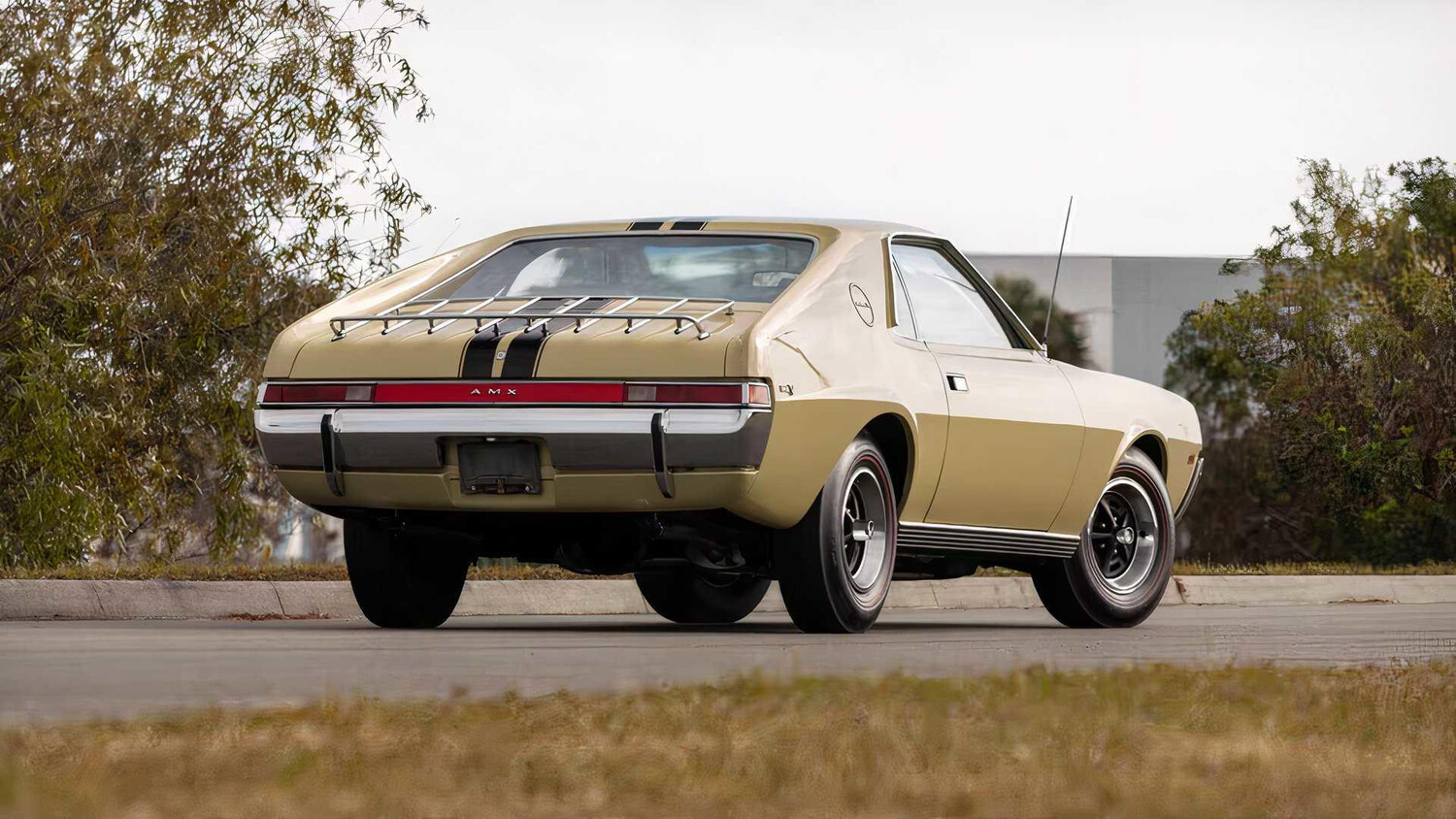
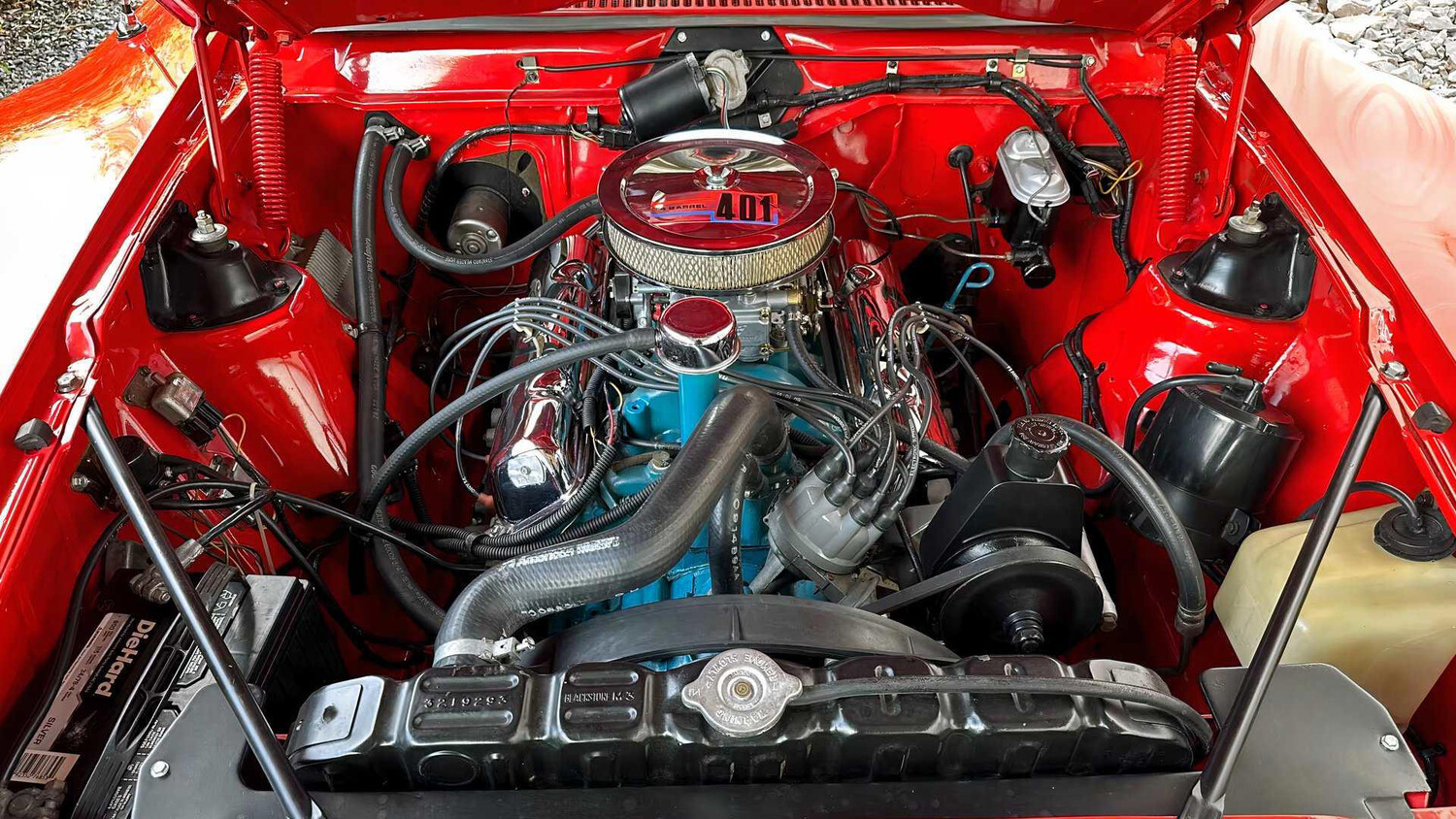
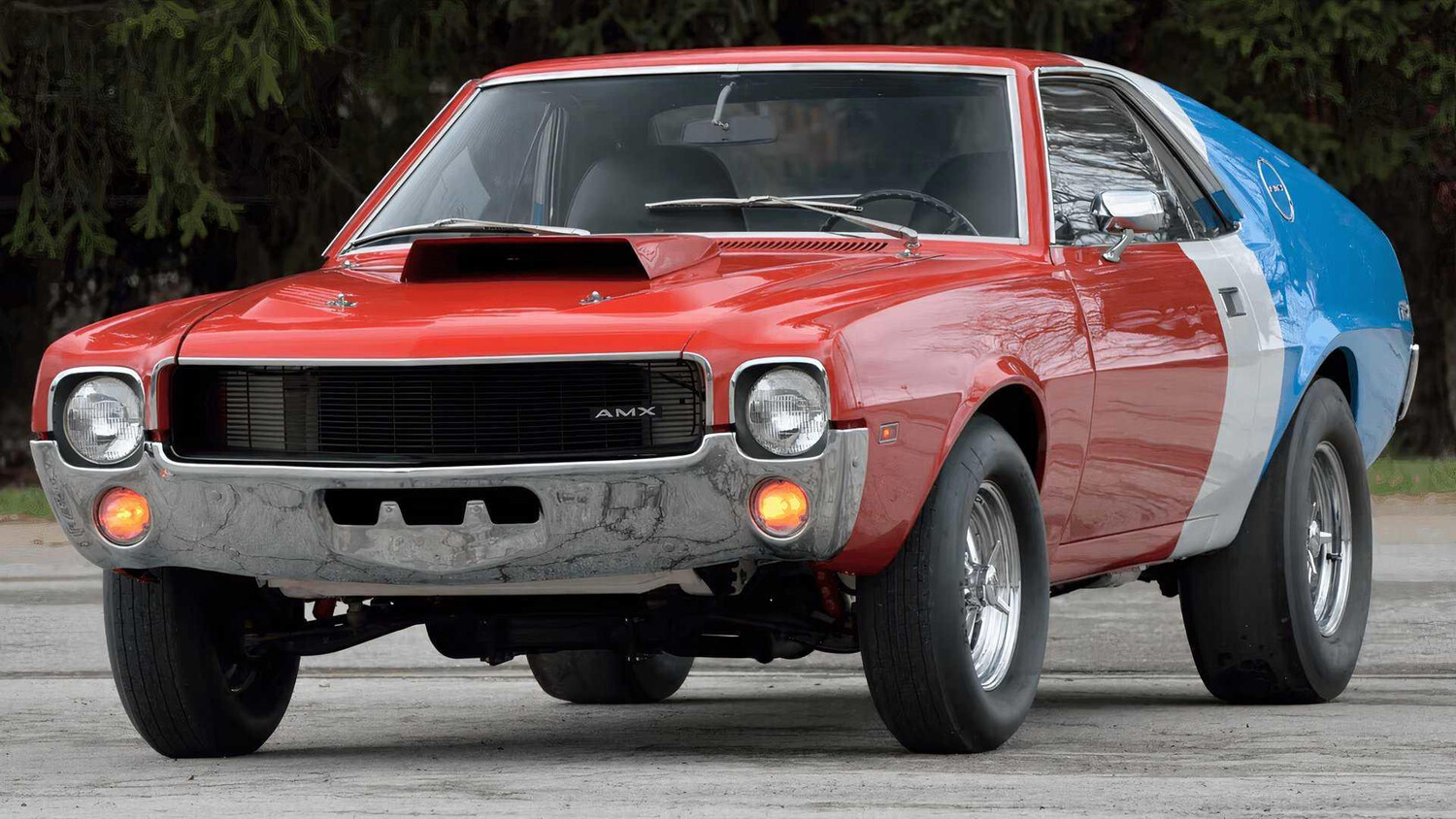
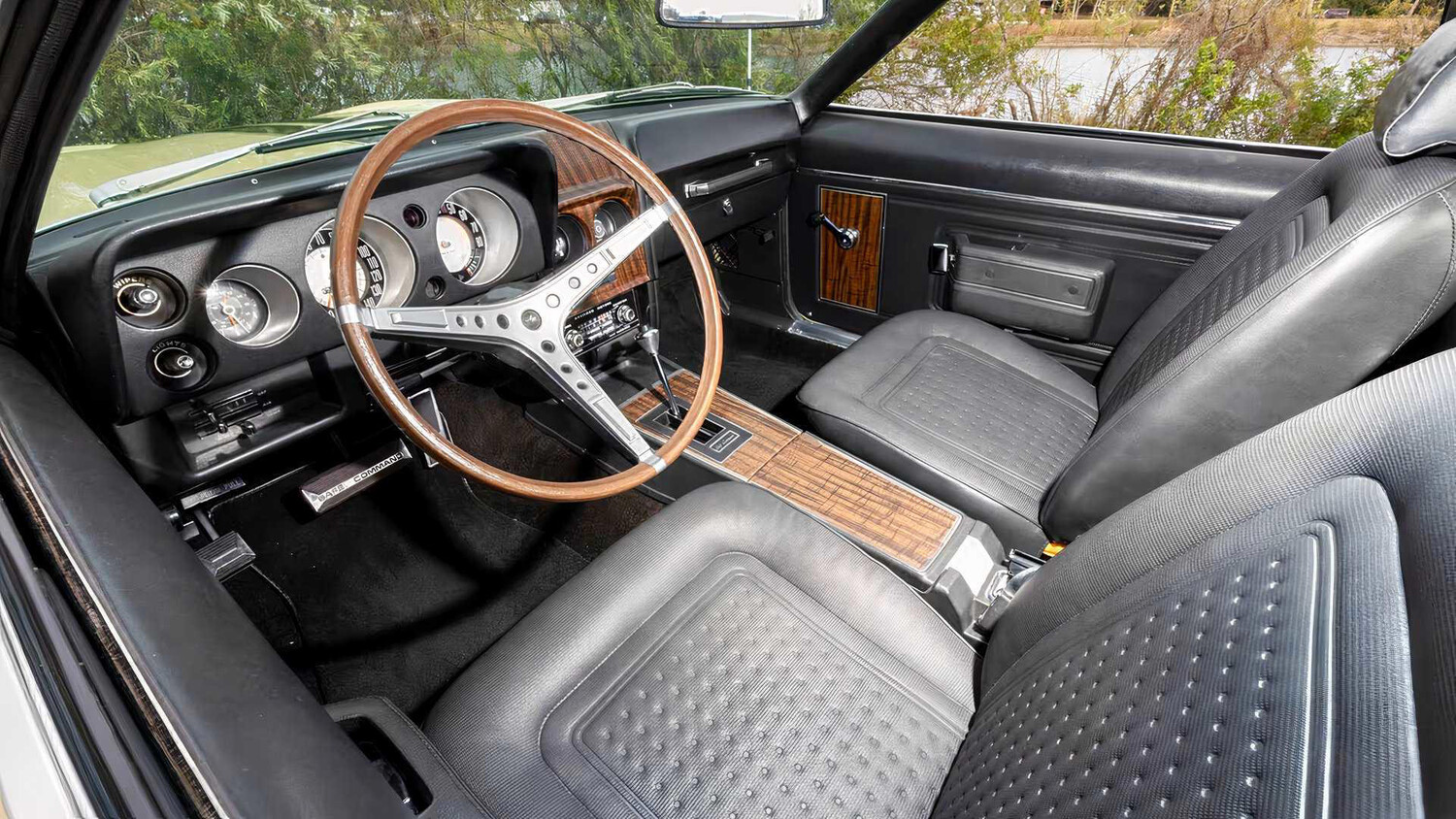
Detroit's Big Three have forever dominated when it comes to the conversation of the drag strip and dealer lot. Throughout this seemingly perpetual heyday, there have been other American automakers that have dared to crash this muscle car party in a David versus Goliath scenario.In the story of the AMX, AMC didn't have much budget, nor the same prestige, but it believed in a prophecy that it could build a better muscle car than its mainstream rivals. The result was a peppy and characterful muscle car that may go down in history as America's most underrated ever. The AMX Was Proof That AMC Could Build A Real Muscle Car MecumBy the late 1960s, muscle cars were America’s favorite automotive export. Pontiac had basically written the rule book with the 1964 GTO, Dodge and Plymouth were building quarter-mile missiles, and Ford’s Mustang had turned performance into pop culture. It really was a simple process, devoid of any excessive engineering and production costs. The formulaic approach almost always went by plonking a big V8 into a mid-size body with a cheap sticker price that can disappear in a plume of its own tire smoke.MecumSo, when American Motors Corporation (AMC), best known for building reliable Ramblers and family sedans, unveiled the AMX in early 1968, it wasn't taken all that seriously. What's more, its launch took place at the Daytona International Speedway to serve as a prophecy of its performance credentials. This garnered some interest from its rivals. Had AMC done it? Had they built a rivalling muscle car? There was very little reason for this sensible automaker to build a two-seat muscle coupe. But the engineers encompassed the best of what AMC did; compact. The AMX was short, light, and followed the muscle car ethos with some serious firepower up front.MecumUnlike the big, burly GTO or Chevelle, the AMX was derived from AMC’s Javelin pony car, but with a wheelbase shortened by nearly a foot. At just 97 inches, it was one of the most compact American performance cars of its time. The design was sleek and purposeful, its fastback profile and long hood giving off hints of Corvette aggression, which was a comparison AMC was happy to invite. A Big V8 Gave The AMX As Much Punch As A Mach 1 Mustang Mecum 1971 AMC AMX 401 V8 Specs Beneath that bulging hood, the AMX packed a punch throughout its production run. AMC offered up to three V8 options for each model year for prospective buyers and their respective pocket sizes. A 225 hp 290 cubic-inch was the base engine, a mid-range 290-hp 343 was the middle of the road, and the headline was a 390 cubic-inch behemoth.Mecum The 390 was good for 315 horsepower and 425 lb-ft of torque, which weren't numbers that exactly rivaled the GTO and Mustang Mach 1, but AMC had an ace up its sleeve. In its debut year, AMC partnered with Hurst to create the Super Stock AMX, which utilised the factory 390 with upgraded ancillaries that pushed its horsepower rating to a conservatively claimed 340, which was enough to rival the Detroit heavies like the (also conservatively rated) 335 hp Mustang Mach 1.Independent tests of the day saw AMXs run the quarter-mile in around 14 seconds flat. In 1971, the three engine options to choose from were the 290-hp 360 cubic-inch, 325-hp 390 cubic-inch, and the massive 330-hp 401 cubic-inch V8, which was the most powerful factory engine fitted in a production AMC.But power was only part of the AMX’s mechanical story. Its shortened Javelin platform gave it exceptional handling balance for a late-’60s muscle machine. Weighing just over 3,100 pounds, the AMX was nearly 400 pounds lighter than a comparably equipped Chevelle SS or Torino GT. That meant better acceleration, quicker turn-in, and a livelier driving experience. AMC even offered a performance-oriented “Go Package” on the Javelin-based products, which included upgraded suspension components, dual exhausts, heavy-duty cooling, power front disc brakes, and wide Goodyear Polyglas tires. Buyers could pair these with a close-ratio four-speed manual or AMC’s unique “Shift-Command” automatic transmission that allowed manual gear selection. A far cry from the lightning-fast torque converters of today, but cutting-edge for its time nonetheless. Why The AMX Remains More Underrated Than Its Big Name Competitors Today MecumPerformance-wise, the AMX deserved to be in conversation with some of Detroit's big names. But, reputation is built on more than performance. As it is today, presence and prestige are as important as they ever were. Pontiac and Ford had enormous marketing budgets, race teams, and cultural cachet. The GTO starred in songs and movies, while the Mustang was practically a celebrity on wheels. AMC, by contrast, was the underdog with a marketing department that had significantly less budget.That underdog status made it hard for the AMX to gain traction. Its two-seat layout, though distinctive, also limited its market appeal. Most buyers wanted a car that had a decent dollop of power, and the ability to haul more than 1 friend. As fast as it was, it was simply not as practical as the GTO, nor as glamorous as the Corvette it somewhat resembled. A deeper dive into this may be because buyers of the Corvette would have likely had a more practical daily driver, while the typical AMX owner would probably use it as their sole mode of transportation.Mecum The AMX’s production numbers tell the story. Between 1968 and 1970, just over 19,000 units were built, which is a fraction of the hundreds of thousands of Mustangs and Camaros that rolled off assembly lines. It also makes the AMX one of the most rare cars ever produced by AMC. By 1971, AMC shifted the AMX badge onto a performance version of the Javelin, ending the run of the two-seat model entirely. That low production and limited marketing meant the AMX never built the same mythology as its rivals. It had the muscle and looks in spades, and it even had a touch of Corvette-style exclusivity, but without racing success or pop-culture fame, it faded from the spotlight. The AMX Is Finally Getting Its Due With Modern Day Collectors MecumHalf a century later, the AMX seems to be getting some of the recognition its engineers would have wanted in its heyday. Once overlooked, it is now one of the most collectible American cars of its era, for many reasons. The first would be its rarity. Unlike its rivals, which sold in droves, this was far less popular, which makes it more exclusive today, particularly in finding clean, running examples. It was also not short on performance, which could still run toe to toe with some sports cars of today. The last reason would be the story of AMC, and owning a small piece of its defunct history.Market data from Classic.com shows steady appreciation over the last decade. Depending on specification and condition, AMX models typically trade between $25,000 and $65,000, with high-quality Go Package cars occasionally surpassing $80,000 at auction. The limited “Super Stock” AMXs built for drag racing (fewer than 60 cars) can command six figures when they surface. The value trajectory reflects what collectors are discovering, considering the AMX offers genuine 1960s muscle performance without the inflated price tag of its GM and Ford peers. Where mid-level Mustangs or GTOs can fetch six figures, the AMX remains a comparatively attainable piece of muscle car history.Hagerty’s classic car index also ranks the AMX as one of the few muscle cars still offering “investment upside,” citing its unique two-seat configuration, strong drivetrain, and scarcity as major appeal points. Restoration support is improving, too. AMC specialists and clubs across the U.S. have made parts availability far easier than it once was, and online communities help preserve historical documentation and authenticity.Half a century later, the AMX is finally being appreciated for what it is as arguably America's most underrated muscle car of all time.