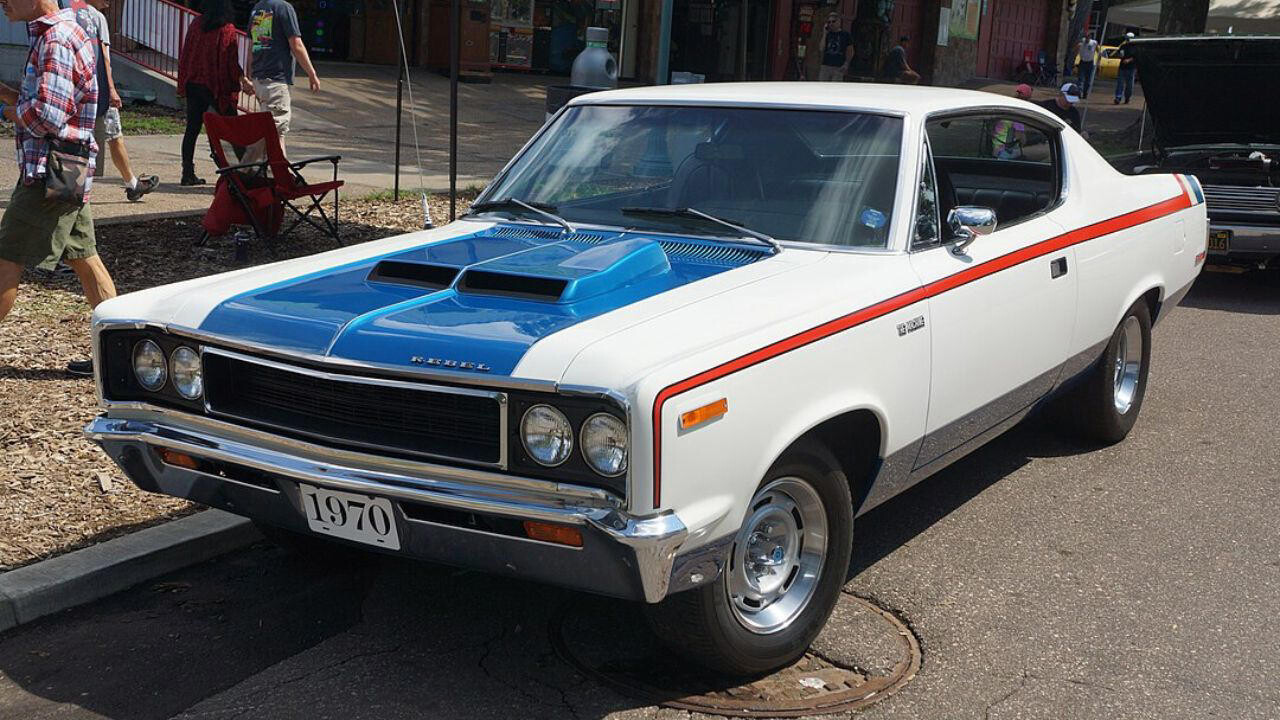
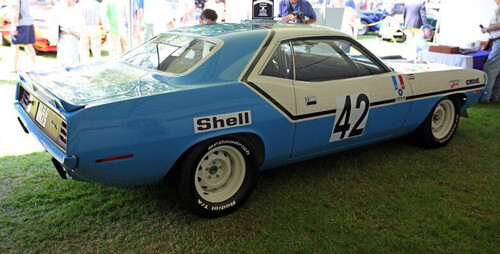
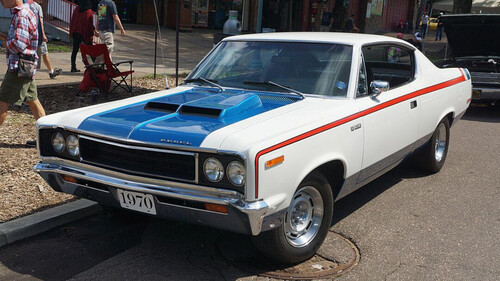
AMC painted the Rebel Machine loud so no one would ignore itThe 1970 AMC Rebel Machine was not designed to blend into traffic. American Motors splashed it in patriotic colors, bolted a factory scoop on the hood, and tuned its 390 cubic inch V8 so the numbers matched the visual noise. The result was a one-year special that treated subtlety as the enemy and used paint and attitude to force the muscle car world to pay attention. Half a century later, that strategy still works. The Rebel Machine remains one of the most instantly recognizable American performance cars of its era, a red, white, and blue exclamation point that turned a sensible mid-size sedan into a rolling protest against conformity. From sensible Rebel to “The Machine” American Motors had built its reputation on compact thrift, not quarter-mile bravado. The Rebel was a straightforward mid-size, aimed at families who needed space more than speed. Inside the company, though, there was a desire to prove that American Motors could run with Detroit’s heavy hitters. Development of what became the Rebel Machine was already underway by the time a photo was taken on June 27th, 1967 that showed the As the concept well along, a clear sign that performance ambitions were not an afterthought tacked onto the regular line Rebels. The production car arrived as a one-year-only 1970 AMC Rebel edition that enthusiasts came to know simply as The Machine. American Motors positioned it as a full package rather than a menu of options. Buyers did not have to chase individual performance parts because the company bundled engine, suspension, and visual identity into a single, loud statement. That approach made the car easy to order and hard to ignore. Period coverage of American Motors at the drag strip captured how determined the company was to prove the point. A clip that describes a race event in Dallas Texas the National Hot Rod Associ frames the story as a turning point for American Motors, with the commentator explaining how the car changed expectations for the brand and treating the October 25th 1969 appearance as a declaration that AMC intended to be taken seriously on the strip as well as the street, a moment preserved in a widely shared Dec video. Patriotic paint as rolling protest If the engineering made The Machine competitive, the paint made it unforgettable. American Motors launched the car with a flamboyant red, white, and blue layout that turned the Rebel’s slab sides into a mobile billboard. One enthusiast description calls the 1970 AMC Rebel Machine a Red White Blue Red White Blue screaming pure American rebellion, a color scheme built for attention that signaled defiance as clearly as any exhaust note, a sentiment echoed in a Dec social post that ties the look directly to American identity. The core palette for the launch cars combined Frost White bodywork with Electric Blue accents and vivid red striping. That combination, seen on surviving originals and restorations, made The Rebel Machine highly recognized even among a sea of bright muscle cars. Later in the run, American Motors expanded the catalog into an almost completely new palette, but the Frost White and Electric Blue Poly pattern remained the signature layout that collectors chase today, a fact highlighted in coverage of a survivor finished in Frost White and Electric Blue Poly that still wears its original stripes, described as a rare color example of The Rebel Machine. American Motors did not stumble into that loudness. When American Motors Corporation started accepting orders as early as October 4, 1969 for their 1970 supercar, the company offered THE MACHINE in the patriotic scheme first, then later opened up an almost completely new palette for buyers who wanted less flag and more stealth, a strategy documented in a period-correct breakdown of When American Motors set the exterior finishes. The patriotic approach was not subtle marketing. One social clip describes the 1970 AMC Rebel Machine as a red-white-and-blue fist in the face of conformity, powered by 390 cubes and 340 horses with a factory hood scoop that left no doubt about its intent, a description that captures how the car’s visual aggression matched its mechanical specification, as seen in a Nov video clip. Factory muscle: 390 CID, 340 horsepower The Machine was more than paint. Under the hood sat a special 340 horsepower version of the 390 CID engine that American Motors had already proven in other performance models. Official literature explains that The Machine offers, at no extra cost, a full array of performance equipment including this special 340 HP version of the 390 CID engine, along with supporting hardware that made the package more than a cosmetic upgrade, a combination detailed in the The Machine specification sheet. That engine output, paired with a relatively straightforward chassis, gave the Rebel Machine the kind of straight-line performance buyers expected from the era’s supercars. Enthusiast accounts describe 390 cubes and 340 horses with a factory hood scoop feeding cold air to the carburetor, a setup that delivered both numbers and theater. The scoop itself became a calling card, sitting high on the hood with bold graphics that broadcast the car’s identity even when the engine was off. American Motors also backed the power with suspension and gearing choices that suited drag strip work. Contemporary descriptions of the package emphasize that it was not just a cosmetic trim level, but a genuine performance car that could compete with rivals from Detroit’s larger brands. The company’s decision to rate the engine at 340 horsepower placed it squarely in the muscle car arms race, even as some later commentators debated whether the real output might have been higher. One retrospective on the AMC Machine notes that what makes the documentation interesting is that no other journalist from that era whose work has survived reported the same numbers, and that when the cars were announced the figures were already part of a marketing battle for the domestic car companies, a perspective captured in an AMC Machine entry. Regardless of the exact dyno truth, owners experienced The Machine as a brutally quick sedan that could embarrass larger, more established nameplates. A short video montage describes the 1970 AMC Rebel machine as American Motors loud declaration that it could run with the big dogs of the muscle era, powered by a thundering V8 and dressed in unmistakable colors, a sentiment echoed in a Dec clip that pairs imagery of the car with that narrative. One-year wonder with lasting impact The Rebel Machine lasted only for the 1970 model year, which has amplified its mystique. Enthusiast groups and auction listings repeatedly cite a production figure of 2,326 examples for this one year only 1970 AMC Rebel edition, describing the car as AMC’s bold, red-white-and-blue answer to the muscle car wars that did not come to play nice, a perspective shared in a Sep post aimed at classic car fans. Survivors are rare enough that each documented car attracts attention. A feature on a well preserved example emphasizes how the Rebel Machine is highly recognized due to its striking color scheme that combines Frost White, Electric Blue Poly, and red striping, and notes that this particular car is one of only a handful believed to have left the factory in that exact configuration. The scarcity of such cars, paired with the one-year production window, has turned The Machine into a halo model for AMC enthusiasts who might otherwise focus on Javelins or AMXs. Modern auction houses have leaned into that exclusivity. One listing points out that the 1970 AMC Rebel Machine was 1 of 2,326 produced and reminds potential bidders that the Rebel Machine was not just about brawn, it was attitude on four wheels. From the factory, it wore the patriotic livery and aggressive stance that made it instantly recognizable in period and still instantly identifiable in a crowded auction hall, language that appears in a Rebel Machine promotion. Dealers who specialize in classic muscle cars also trade on the car’s visual drama. One retail listing describes a 1970 AMC Rebel Machine that brings raw American muscle to the table, with iconic Frost White paint, Electric Blue accents, and red racing stripes that deliver a show car presence even before the engine fires. That description aligns with what collectors see when they encounter a well kept example of the Rebel Machine in person. A loud legacy in the digital age The Machine’s visual and cultural impact has extended far beyond the small number of cars built. Enthusiast communities on social platforms continue to trade photos, restoration tips, and period documentation. One group dedicated to AMC performance cars highlights the American Motor Rebel MACHINE Specifications and uses that factory data as a baseline for restorations, an exchange that surfaces in a Discovered community page linked from archival material. The same archival trail leads into modern web infrastructure, where content about the car is managed and preserved using tools that trace back to the American Motor Rebel MACHINE Specifications pages. The link between historic documentation and current content systems appears in references to Discovered and related platforms that host and structure information about classic models. Video creators have also embraced the car’s story. One channel features an extremely rare 1970 AMC Rebel The Machine and invites viewers to like and subscribe, explaining that the support helps the channel grow and is greatly appreciated, a reminder that even niche muscle cars now live inside algorithms and recommendation engines, as seen in a Mar clip focused on a survivor. Another video revisits how American Motors, in Dallas Texas the National Hot Rod Associ context, used the car to change perceptions of the brand, reinforcing the idea that track appearances were central to the car’s original mission. Gaming has given the Rebel Machine a second youth as well. The car appears in virtual garages where players can experience its Red White Blue Red White Blue livery and American rebellion aesthetic without the risk of rust or mechanical failure. Social posts tied to these games describe how respect comes instantly when the 1970 AMC Rebel Machine shows up on screen, a testament to how distinctive the design remains for audiences who were not alive when the car was new. Even product data systems have a role in keeping the car visible. Modern shopping platforms aggregate Product information from brands, stores, and other content providers, which means parts, die-cast models, and memorabilia related to the Rebel Machine can surface alongside contemporary items. That aggregation, described in an overview of how shopping data is organized inside the product graph, helps niche vehicles stay in front of potential buyers and collectors. Why the loud paint still matters The Rebel Machine’s enduring appeal rests on a simple equation. American Motors took a practical mid-size platform, gave it a serious 390 CID engine rated at 340 horsepower, and wrapped it in a paint scheme that dared people to roll their eyes. That mix of performance and provocation captured the spirit of a company that knew it was an underdog and leaned into that identity instead of hiding it. More from Fast Lane Only Unboxing the WWII Jeep in a Crate 15 rare Chevys collectors are quietly buying 10 underrated V8s still worth hunting down Police notice this before you even roll window down