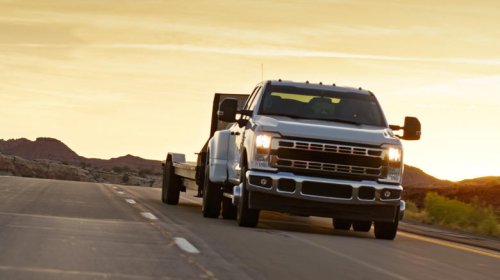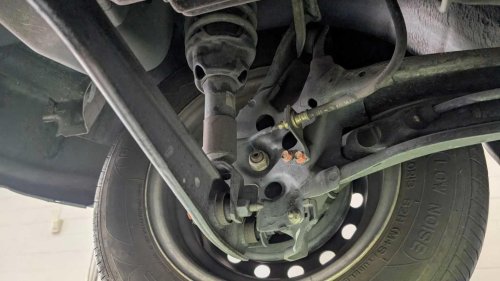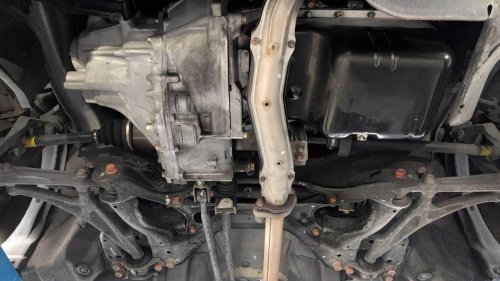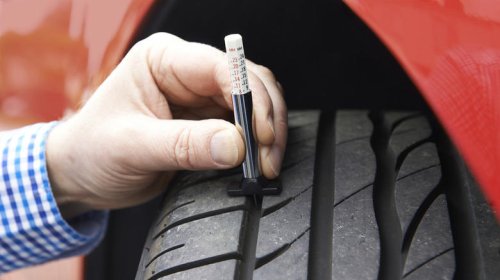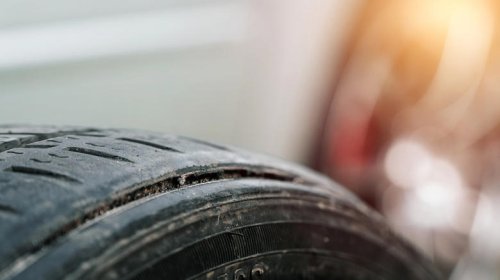
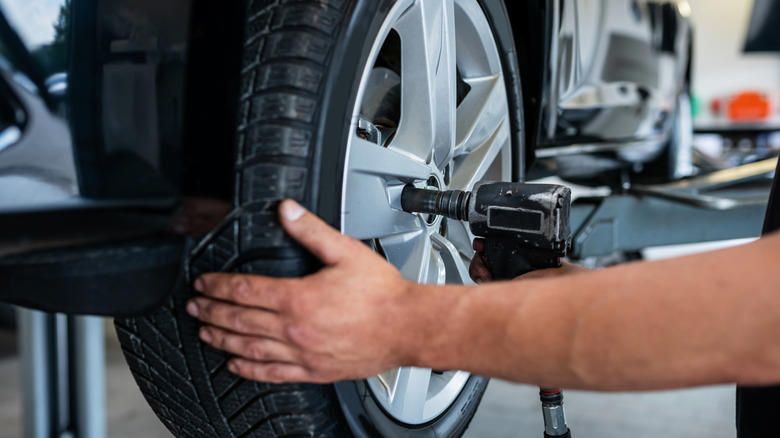



















Low angle side view of car rushes along the highway at sunse - Igoriss/Getty ImagesCar enthusiasts and everyday drivers with a working knowledge of their vehicle likely know the factors that can impact the tires' tread-wear and overall fuel economy. After all, understanding these factors can help make your tires last longer and save money on gas as well. But the drivetrain also plays a bigger role than you might think, as it determines how power is delivered from the engine to the wheels.Depending on whether a vehicle is front, rear, or all-wheel drive, different tires carry more of the workload. This can lead to uneven tread-wear over time, as tires doing the driving tend to wear faster. All-wheel drive cars wear out tires faster, since they handle both steering and power, or continuous acceleration. The drivetrain's design itself can also impact fuel efficiency, since more complex and heavier all-wheel and four-wheel drive systems require more energy to move the vehicle.The same effects occur in heavy-duty vehicles as well, but on a larger scale. In long-distance trucking, newer technology allows engines to produce higher torque at lower speeds to improve fuel efficiency. This changes how force moves through the drivetrain and into the tires. But that force still has to pass through the tires when the truck speeds up, slows down, or turns. Over time, this can increase tread-wear.AdvertisementAdvertisementRead more: 8 Cheap Tires That Are High Quality, According To Consumer ReportsThe link between tires and fuel economyA mechanic changes a tire in a car repair shop - Taikrixel/Getty ImagesA drivetrain can impact a tire's fuel economy, but the reverse is true as well. If tires are not in good condition, the vehicle can become less efficient overall. Uneven tread wear or poor wheel alignment can interfere with the consistent contact tires need with the road, increasing rolling resistance and thus forcing the vehicle to use more energy in order to keep moving. Over time, this can reduce fuel efficiency while also leading to additional tire wear.Tires are the only point of contact with the road, so their ability to affect a vehicle's fuel economy is obviously important. It goes beyond that, however, as keeping your tires in good condition is also critical for safety and overall performance. Underinflated tires can reduce fuel efficiency, but they can also increase stopping distances. This leads to a bigger risk of tire failure such as tread separation or even blowouts.The best way to ensure consistent performance is with routine tire care, beginning with maintaining the right amount of air pressure. This will prevent excessive heat buildup and reduced stability on the road. Regularly checking the tread depth is also important, as worn tires lose grip and become less effective, especially in bad weather. Of course, rotation helps tires wear more evenly over time, and correct alignment can prevent quick and uneven wear altogether.AdvertisementAdvertisementWant the latest in tech and auto trends? Subscribe to our free newsletter for the latest headlines, expert guides, and how-to tips, one email at a time. You can also add us as a preferred search source on Google.Read the original article on SlashGear.