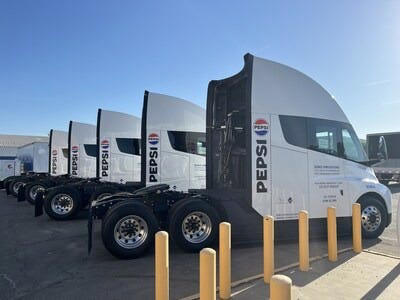
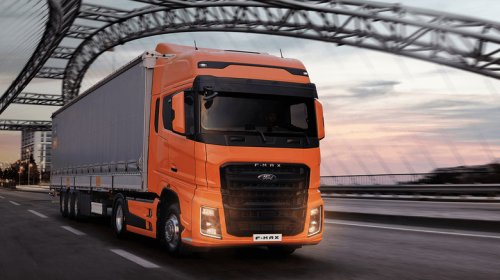
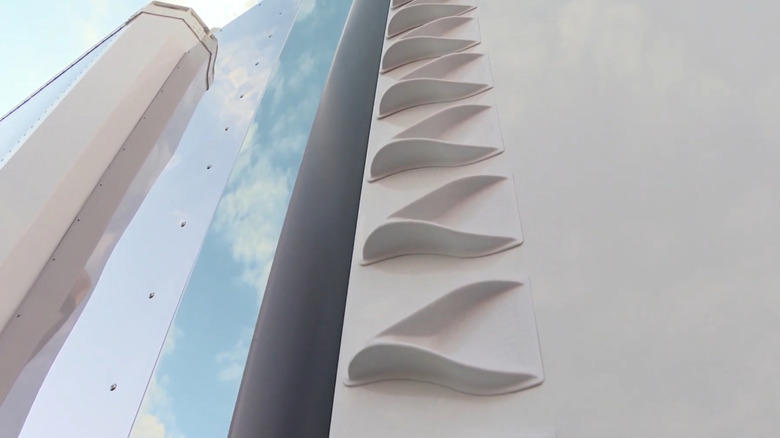
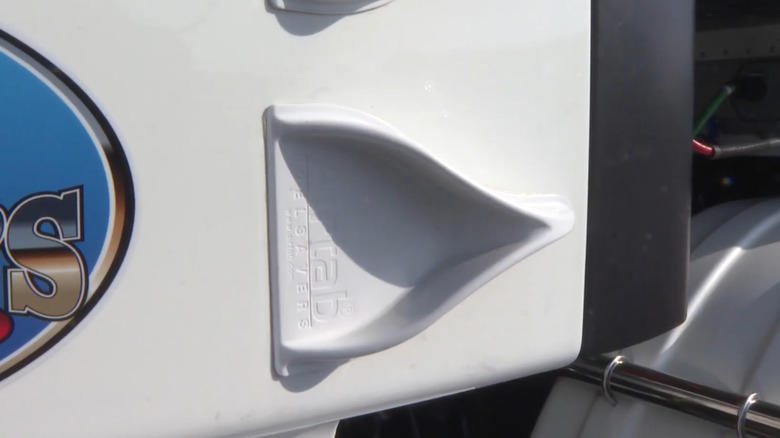
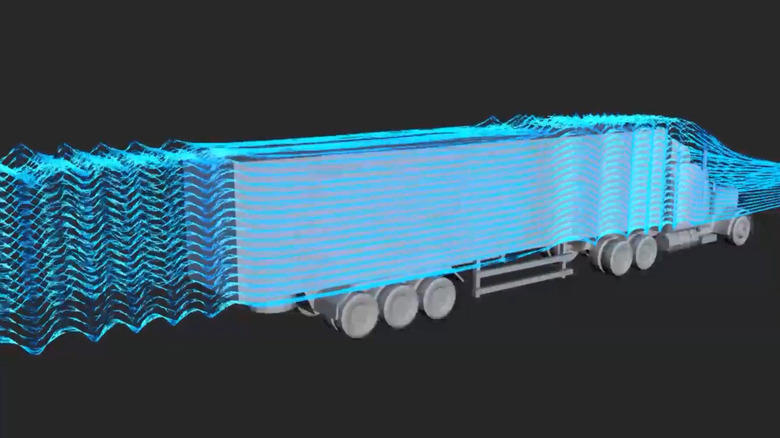
A line of Airtabs on the side of a truckAirtabs are wishbone-shaped vortex generators often seen on the roof and on the rear of tractor trailers, trucks, vans, and RVs. They may look small and somewhat trivial, but Airtabs are neatly arranged like a spoiler chopped into many pieces for a reason. Airtab vortex generators can marginally improve airflow and reduce aerodynamic drag by forcing the wind to move around the truck, ignoring gaps between it and the trailer. This helps out with things like fuel economy, vehicle stability, and visibility in rain, snow, or inclement weather.Many large vehicles are the exact opposite of what we all describe as aerodynamic, and it took a bike ride to work in 1973 for someone to improve how a truck's boxy shape can interact better with wind forces. Aerospace engineer Edwin J. Saltzman did exactly that after a tractor-trailer overtook him while heading to work at the NASA Dryden Flight Research Center. He noticed how the air pushed him to the side as the truck approached, and how the exact opposite took place as it went by, drawing him near the middle of the road. Armed with this knowledge and lessons from early space shuttle designs, he worked on something that would morph trucks from giant shoe boxes on wheels to the sleeker road trains we see today.Unlike aftermarket rear spoilers (which belong to our list of mods that could do more harm than good), Airtabs are essentially optimized ducts in a three-dimensional shape designed to shape the flow of wind around them, lessening resistance. Initially, the marketers behind them only focused on how they improved fuel efficiency. But actual users revealed other significant benefits of the improved airflow, with larger vehicles staying more stable and windshields being less obscured in rough weather. From rounded corners to vortex generatorsA close-up of an Airtab on a truckA report about Saltzman and his team at NASA mentions how their research led to the creaton of Airtabs. They wrapped an old Ford delivery van with sheets of aluminum at 90-degree angles and proceeded to round up the corners and edges as they went on. They ran tests at each stage of the build, and they found out that rounding the edges produced a 52% reduction in drag, which was enough to improve fuel economy by as much as 25%. All in all, using these Airtabs on a truck can lead to savings of nearly 7,000 gallons of fuel across 100,000 miles. The purpose of these tabs isn't too different from why trucks have that big plastic scoop under trailers, but the people making them banked on their smaller size and versatility to appeal to a wider audience of truckers. Studies that commenced in the late '80s doubled down on researching airflow improvements, and they made use of vortex generator research from before NASA was even founded. This eventually led to Aeroserve Technologies — the company behind Airtabs — being created in 1997, and the reported efficiency and fuel economy improvements were truly put to the test. What is an Airtab and how does it work?A 3D graphic showing airflow around a model of a truckEach Airtab splits the air moving around it, causing the wind to move along the truck's body and trailer smoothly. Today, they're manufactured from the same plastic material as lawn furniture. Installing a neat row of Airtabs between the cab and the trailer will significantly reduce wind resistance by virtually sealing their gap and taming airflow. Meanwhile, using them on the back of the trailer or box van will help shift the turbulent vertical airflow into tamer horizontally-flowing air. All of this enables the truck to sip less fuel, since less power is required to slice through the wind. Taming the wind also benefits handling and stability, and it's an effective way to optimize tire life and reduce wear. Another benefit of the smoother airflow over and around the truck is the reduction of spray in wet, snowy, or grimy pavements, helping keep the truck clean while preventing road grime from covering the reflectors and taillights. You could say they aren't any different from the factory roof-mounted vortex generators of Mitsubishi's Lancer Evolution IX MR FQ-400 and Evo X. Those also help to extend the airflow surrounding those models, improving grip, stability, and balance. Want more like this? Join the Jalopnik newsletter to get the latest auto news sent straight to your inbox, and add us as a preferred search source on Google.



















 +60 others