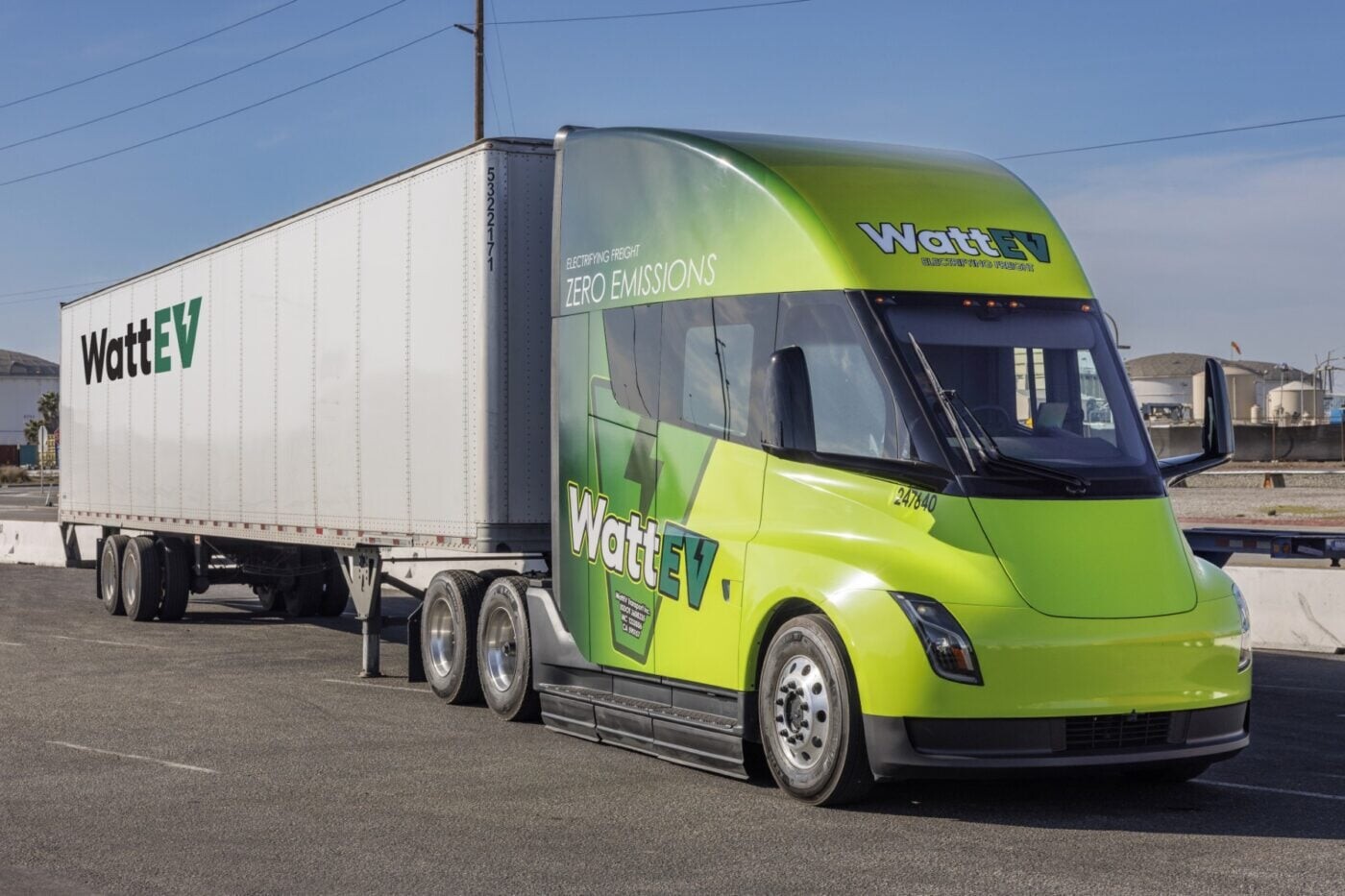
Oliver Bouchard · 5 months ago@oliverbouchard14WattEV orders 370 Tesla Semi trucks for operations in California Liked byteslaPost commentRelated PostsTesla Scores Deal To Help Double The US Electric Semi-Truck Fleet 76 · Isabelle Bouchard · 27 days agoAustralian Plugin Vehicle Sales, September Update — Are Mainstream Media Finally Waking Up?Jackson Labelle · 12 days agoTesla Opens First Dedicated Semi Factory as Diesel Hits Record High 33 · Samuel Tremblay · 27 days agoAre Aero Caps A Worthwhile Upgrade for Electric Vehicles? Testing the HALOBLK HALODISCSAva Macdonald · 12 days agoElon Musk A No-Show At Tesla Semi Event Because… 82 · Logan Harris · 27 days agoStudy Finds Many New Cars Share Your Data With Third-Party CompaniesAdam Turner · 12 days agoPodcast: Tesla Semi launch, Geely's battery healing fast-charging, Rivian R3, and more 54 · Ava Gagnon · 29 days agoAll the Great Car Names Have Been TakenAva Labelle · 13 days ago9 Years Late, The Tesla Semi Officially Hits The Road 81 · Madeleine Roy · 29 days agoBack in the real world: electric equipment is saving job sites BIG MONEYMia Walker · 13 days agoTesla Semi finally enters volume production, 7 years behind schedule 74 · Annabelle Bouchard · 29 days agoAs electric semi truck race heats up, SoCal is getting another charging hubAudrey Wilson · 13 days ago2027 Tesla Semi First Drive: We Get Seat Time in Tesla’s 500-Mile Electric Big Rig 91 · Caleb Johnson · 29 days agoTesla owner drove 1,857 miles in 31 days, says charging cost $136 and saved $235 on gasClaire Fortin · 13 days agoTesla Semi launch sneak peek: several customers are being announced 98 · Hannah Hill · 1 months ago6 New Cars With Payments That Cost Less Than $500 Per MonthOliver Lewis · 13 days agoTesla Semi wins 2,500-truck order, doubling US electric Class 8 fleet 96 · Henry Brown · 1 months agoIn the US, new Tesla Model 3 and Model Y orders can now back up a home during outagesLiam Girard · 13 days agoThe Tesla Semi Had This Reviewer Skeptical. Now He Thinks It’s A Game Changer 28 · Madeleine Campbell · 1 months agoKia Bets the $30,000 EV3 Becomes Its Top U.S. SellerJenna Carter · 14 days ago