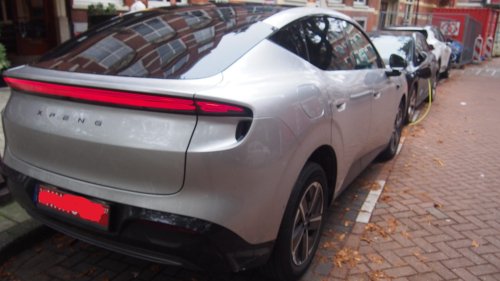
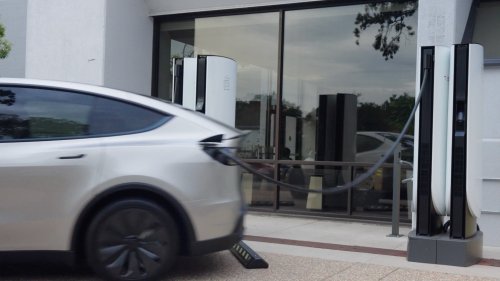
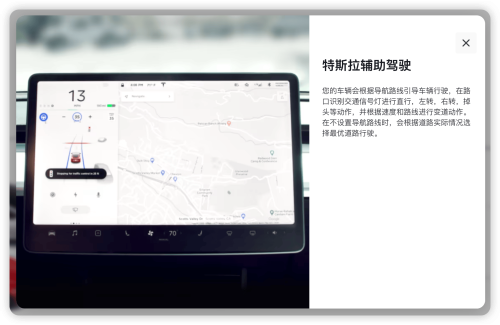
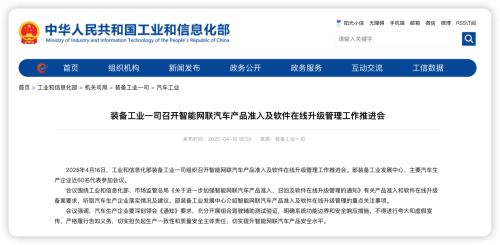
Tesla’s official China website recently updated the Chinese name for FSD (Full Self-Driving) to “Tesla Assisted Driving” (TAD). The product pricing remains unchanged at 64K RMB ($9.4K). According to the feature list on the official website, the rebranded system bundles all capabilities from the Basic Autopilot and Enhanced Autopilot suites. It handles multi-scenario assisted driving operations, including urban navigate-on-pilot, automatic lane changes, highway ramp entry/exit, traffic light and stop sign recognition, Autopark, and Smart Summon. TAD introductory page This isn’t the first time Tesla China has tweaked the naming of its advanced driver-assistance system. Back in March 2025, Tesla dropped the phrasing “Full Self-Driving Capability” in favor of “Intelligent Assisted Driving.” Now, it has completely scrubbed both “Intelligent” and “FSD” from the title. The previous name changes were primarily driven by tightening domestic regulatory policies. In February 2025, the Ministry of Industry and Information Technology (MIIT) alongside the State Administration for Market Regulation (SAMR) issued guidelines drawing a clear line on marketing claims. By April’s internal working meetings, the mandate was further clarified: for L2 driver assistance, automakers are strictly banned from using misleading buzzwords like “autonomous driving,” “fully automated,” “driverless,” or “hands-free.” China’s regulatory requirements for smart driving marketing Compared to past tweaks, however, this latest rebranding looks more like laying the groundwork for FSD (Supervised) to officially enter the domestic market. On May 21, Tesla’s official social media accounts disclosed the rollout roadmap for FSD (Supervised), confirming that this version of the system will be available for use in China. Connecting the dots with the Q1 earnings call, CFO Vaibhav Taneja noted that Tesla aims to secure full domestic approval by Q3 2026. Having cleared only a portion of the auditing process so far, this official announcement reflects the specific scope approved for the current phase. Tesla has been making frequent moves lately to push the localization of its smart driving business. It has already posted a massive wave of smart driving test-related positions across nine major cities, including Beijing, Shanghai, Guangzhou, and Shenzhen—all flagged as urgent hires. Tesla China recruitment page featuring multiple smart driving roles The computing infrastructure is keeping pace as well. In February, Tesla’s AI training center in Shanghai went live, dedicated to building a localized training system tailored specifically to handle the data complexities of China’s road conditions. However, the new system comes with strict hardware prerequisites. Only vehicles equipped with HW4.0 hardware can fully unlock the entire feature set, while older HW3.0 hardware will be capped at a stripped-down, streamlined version. Model Y equipped with HW4.0 hardware This means early owners who paid upfront for the FSD package will be limited by their hardware specs and unable to experience the full smart driving capabilities. To get the complete experience, their only real option is to trade up to a newer model. Disputes over unfulfilled features have already escalated to the courtroom. According to a lawyer familiar with the matter, a lawsuit against Tesla for allegedly infringing on owners’ rights regarding FSD is scheduled to be formally heard at 16:30 this afternoon. Rumors of FSD finally landing in China have surfaced multiple times. But looking at the progression—from official signals to heavy hiring and building out a local data center—these concrete actions show that the rollout this time has a very high level of feasibility. Right now, the domestic NEV market is hyper-competitive. Homegrown automakers like Huawei, XPeng, and NIO mostly bundle advanced driver assistance as a standard, free perk, with Xpeng even offering lifetime free usage. NIO’s smart driving system running on NWM (NIO World Model) After years of real-world iteration on domestic roads, Chinese brands’ smart driving systems are also naturally more in tune with local driving habits and road characteristics. In contrast, Tesla’s upfront buyout price of 64K RMB ($9.4K) doesn’t hold a lot of appeal in the current market layout. Moving forward, whether Tesla will follow its overseas playbook and introduce a monthly subscription model to lower the barrier for regular users will be the key thing to watch.














 +2 others