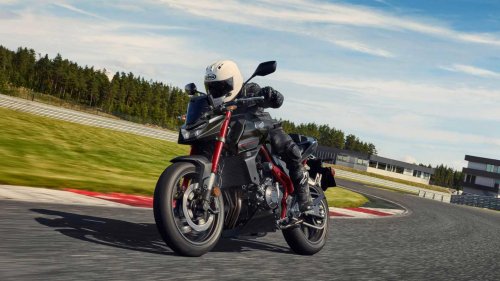
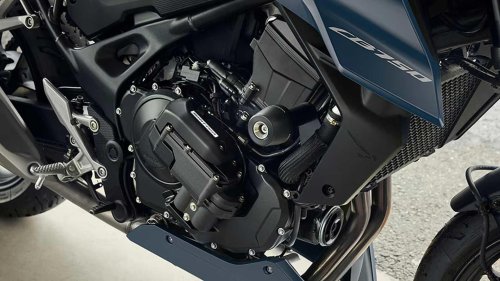
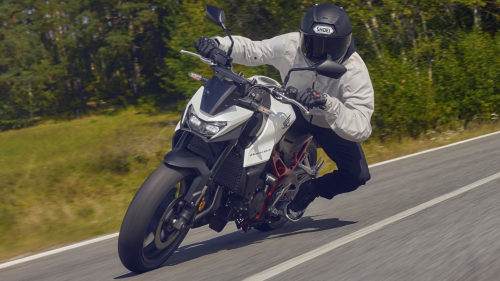
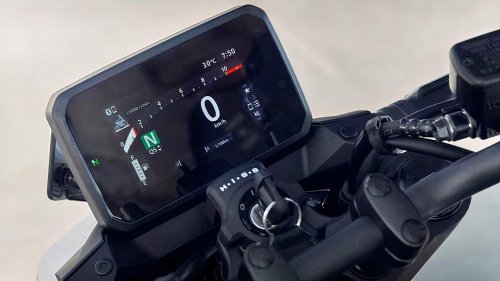
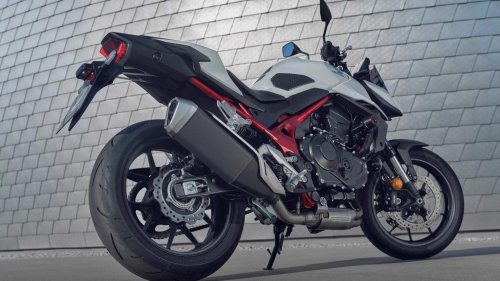
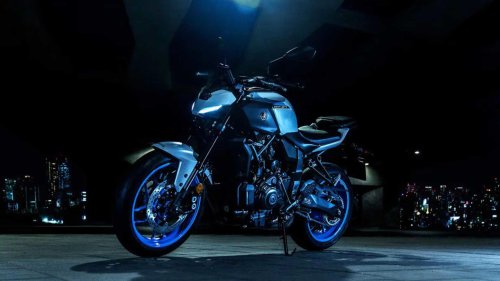
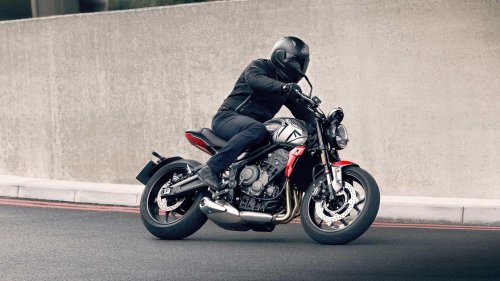



















The middleweight motorcycle segment operates on an all-too-familiar dilemma that boils down to two flavors. Riders on the performance side want a bike that rewards hard riding, precise throttle response, and a power band that pulls to the redline. A supersport ticks these boxes just right. Riders on the other side of the spectrum prioritize the utility side of things and want a friendlier ride. Most manufacturers building bikes in this displacement range resolve the dilemma by picking one need over the other and engineering toward it. The result is often as expected. Either a flat bar version of the supersport emerges, while still being hardcore, or a mixed bag, jack of all trades, and a master of some comes out. A smart option, mind you, but it could leave a little or more to be desired. The one that covers the full week of varied riding, without asking the rider to compromise, tends to be the elusive exception. Why Most Middleweights Make You Choose Between Character And Practicality SuzukiA peaky engine is an engineering choice, not just the outcome of the parts chosen. Performance numbers produced by a middleweight multi-cylinder bike make a liter-class seem a bit much. A peaky parallel-twin for maximum top-end output also narrows the usable powerband, which means the rider works harder to stay in the right gear through commuter traffic. A neutral engine character, tuned purely for urban tractability, removes the urgency that makes a middleweight exciting, utilizing its lower weight. Neither approach is wrong on its own terms, but the problem is that buyers rarely use a motorcycle in only one context. And a bike that only performs well in one area creates a second purchase down the line rather than a first-buy solution.TriumphService intervals compound the issue further. A 5,000-mile oil change schedule on a bike covering in excess of 8,000 miles per year means the owner is at the dealership twice annually. For this rider, additional consumables create a build-up of cost over the years of ownership. Combine a service schedule that punishes regular riders with a powerband that requires effort to stay in, and the middleweight segment's appeal starts to look conditional, based on how little you ask of it. The 2026 Honda CB750 Hornet Balances Smooth Power, Efficiency, And Reliability Honda PowersportsHonda and its love for this displacement dates back to the 70s, when the CB750 revolutionized motorcycling, creating a solid base for bigger, high-performance machines. Many decades on, and among the plethora of motorcycles now produced by the brand, the nameplate lives on, albeit in a modern avatar. First offered in Europe for the 2023 model year, the CB750 Hornet naked-bike validated the platform there before Honda decided to bring it to the American shores for 2025. For 2026, Honda added its E-Clutch technology to the platform while holding the price at $7,999. A 755cc Twin That Offers Mid-Range Torque HondaThe 755cc liquid-cooled parallel-twin runs an 87.0mm bore and 63.5mm stroke through a Unicam SOHC head with eight valves, shared with the XL750 Transalp for its compact dimensions and weight efficiency. Output figures are modest with 91 hp at 9,500 rpm and 55.3 lb-ft of torque at 7,250 rpm. But look past the numbers, and the oversquare bore reveals momentum through the mid-range and rewards corner exits with a clean pull, not leaving the rider hunting for a gear. Add to that Honda's Vortex flow duct system that holds intake-charge response consistent between 3,000 and 8,000 rpm, and a 270-degree firing order gives the engine a characterful uneven pulse without the coarseness of a 360-degree twin. Why Honda's Chassis Geometry Makes The CB750 Hornet Feel Nimble HondaThe diamond-type steel frame comes in at 36.6 pounds, 4.2 pounds lighter than the CB650R's unit, and is achieved through optimized main tube thickness and pivot geometry. A 25.0-degree rake, 3.9-inch trail, and 55.9-inch wheelbase keep the steering neutral and stable at highway pace. A Showa 41mm SFF-BP inverted fork handles 4.7 inches of travel up front, and the Pro-Link single shock runs 5.1 inches at the rear with seven-stage preload adjustment.And all-in, at 432 pounds, mass centralization through the low-mounted engine means the chassis responds with less physical effort than the number suggests. The specs make it an easy-to-miss motorcycle, given Honda’s range of bikes on offer, but it’s definitely one worth considering for all its practicality. Electronics And Everyday Equipment That Come Standard HondaFive ride modes cover Sport, Standard, Rain, and two fully customizable User settings, each of which can be independently adjusted for power level, engine brake character, and Honda Selectable Torque Control threshold. And yes, the settings are stored even after the ignition is turned off. The E-Clutch isn’t exactly new, as it has previously featured on the CB650R and CBR650R.The tech automates clutch operation through a two-motor actuator in the right engine cover and is the first Honda E-Clutch application paired with throttle-by-wire in the U.S. A five-inch TFT display with Honda RoadSync handles navigation, calls, and music through a backlit four-way toggle, with dual-channel ABS and an assist/slipper clutch completing the suite at a very affordable price point. A 4.0-Gallon Tank And A Long Service Interval Make The Ownership Math Work HondaHonda's EU specification sheet lists fuel consumption at 4.3 L/100km under the World Motorcycle Test Cycle (WMTC) under the standardized test conditions for the CB750 Hornet E-Clutch. That figure converts to approximately 54.7 mpg, and at that rate, the 4-gallon tank covers roughly 220 miles per fill. For a rider covering 6,000 to 8,000 miles per year on a bike with a 16,000-mile valve clearance interval, the service schedule adds to the overall savings in fuel consumption as well as service costs. Across a five-year ownership period, these figures accumulate into a considerable cost advantage, a huge plus for new riders looking for a tame performance middleweight. 2026 Honda CB750 Hornet Against The Rivals Yamaha MotorsportsThe MT-07 at $8,599 is the CB750 Hornet’s strongest challenger on price. Yamaha's 689cc CP2 twin, while entertaining enough, is marginally more fuel efficient, but the Honda edges out on the performance and electronics suite. The Kawasaki Z650RS ABS at $8,999 adds retro styling to a 649cc twin but trades a lot of power against the Hornet for $1,000 more, a premium that the aesthetics don’t seem to justify enough. And for that premium, there’s always the in-line four-equipped CB650R E-Clutch to consider.Triumph MotorcyclesThe Triumph Trident 660 is another strong challenger on the technical front and a spec sheet boasting a 660cc inline-triple producing 94 hp and 50.2 lb-ft. It also adds cornering ABS, a six-axis IMU, and a standard quickshifter. The Trident, however, costs $1,146 more than the Hornet without the convenience of an E-Clutch equivalent. For a rider whose weekly use spans stop-and-go traffic and open-road pace equally, neither the MT-07's weight advantage nor the Trident's horsepower would make the argument against the very affable and capable CB750 Hornet that loves to work and play in equal measures.