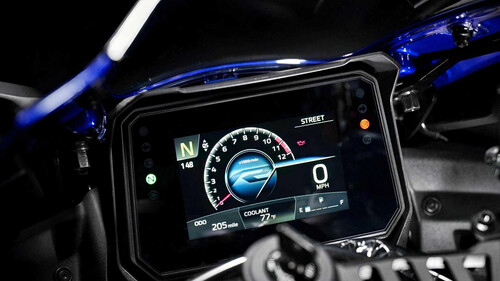
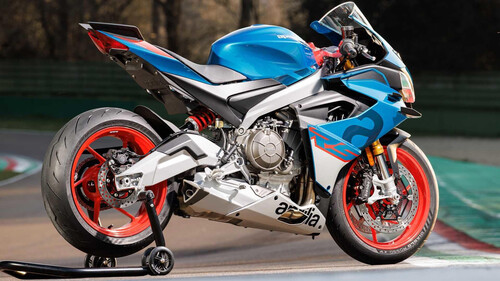
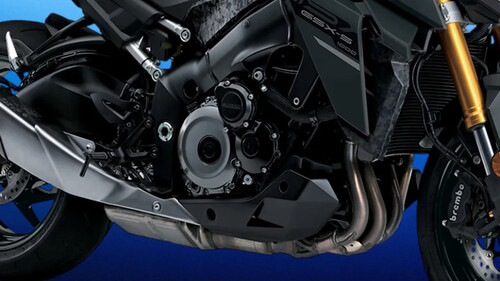
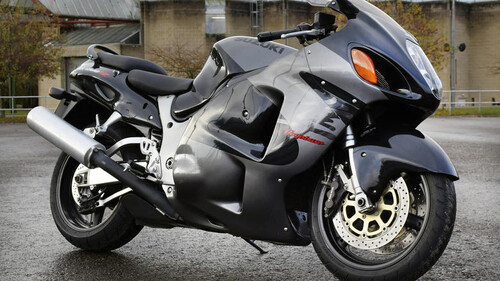
The middleweight sports bike class is not quite what it once was. With emissions restrictions clamping down on all forms of motorcycles, it was the smaller-displacement inline-four engines that served as the canary in the coal mine (yes, lame pun intended). This was by far the most popular engine configuration for the supersport class, but it wasn’t as though these bikes simply vanished overnight.Several supersport bikes are still around, unchanged for years, offering buyers a more simplified riding experience. Others have since been replaced with bikes that make use of other, more efficient engines. Then there is the bike in question, which was never part of the old guard at all. A Pair Of Supersports That Offer Equally Impressive Agility Suzuki Of late, the supersport class has been divided into two distinct halves. One side offers us several value-based options, all of which offer a little more comfort and practicality at the expense of overall performance. The other side is where you will find the more dedicated performance bikes. While more expensive, if you are serious about canyon carving – or chasing lap times – these are the machines you will be looking at.The Suzuki GSX-R750 has not been updated in almost two decades. Some will argue that it is outdated, and others will argue that there simply isn’t a way to improve upon perfection. In many ways, it is the perfect sport bike. With a razor-sharp chassis and very nearly 150 horsepower, it really is a precision instrument. It is, however, an analog instrument devoid of modern safety features. Mistakes will be punished severely.Ducati If you are willing to take a step down in power in the name of getting some potentially life-saving electronic rider aids, the Ducati Panigale V2 S comes sharply into focus. While it might be a step down in terms of power, it more than makes up for that with all its tech features. It is a bike that will save you from yourself, yet still remains fantastically light and nimble. The MV Agusta F3 RR Is An Attainable Dream Bike MSRP: $22,098 MV Agusta*EU-spec F3 RR shownPrice is rarely not a factor. We all usually want some sort of value out of anything we purchase. The cold, hard reality of the matter is that the F3 RR is not an affordable motorcycle. What it is is a lightweight, high-performance supersport that offers a riding experience like no other. It is a dream bike for those who love the idea of hitting the apex of every corner, and while expensive, it is still attainable. An Impressive Triple Makes The F3 RR One Of The Most Powerful Sport Bikes In Its Class Power 147 - 155 Horsepower MV Agusta By the time the 675cc version of the F3 was launched back in 2012, the supersport glory days were already in the rearview mirror. Development had halted on most models, and stricter emissions and noise restrictions were coming into effect. This curbed performance on the popular inline-fours, but left the twins and triples largely unaffected. In many ways, the F3 was actually part of the new-era supersport motorcycles. Other manufacturers have also since moved to twins or triples, but this triple – in its 798cc, 147-horsepower configuration – is more powerful than any of those bikes. With the race kit added, it will make up to 155 horsepower! A Race-Spec Engine With Race-Spec Problems MV Agusta Naturally, this much power from such a small displacement engine comes at a cost. While overall reliability has proven to be relatively good for a high-performance motorcycle, for those looking to explore its limits on track, a word of caution is required. There have been cases where older engines have dropped valves. This issue was not common enough to merit a recall, nor has MV publicly acknowledged it. It is nonetheless something that is important to be aware of. Suffice it to say, you need to take the valve clearance service very seriously. All these bikes come with a long, 5-year warranty, so if something does go wrong, MV will still take care of it. An Advanced Chassis Gives The F3 Razor-Sharp Handling MV Agusta*EU-spec F3 RR shownBack in the 00s, twin-spar aluminum chassis dominated the supersort class. Ducati was the exception to this rule in that period, opting for a steel trellis design. MV Agusta, on the other hand, opted for a best of both worlds solution. While other designs have drifted in and out of fashion, the combination of a steel trellis chassis and aluminum plates has proven to be rather exceptional. So exceptional, in fact, that Kawasaki’s WorldSBK team ditched the tried and true twin-spar aluminum chassis – with well over a decade's worth of R&D baked into it – in favor of a Bimota-developed chassis of the same design as the MV.It is rigid in the right places, yet retains just the right amount of flex in others. It is currently the best chassis available to the buying public. To go along with its top-shelf chassis, it gets top-shelf suspension components. The Marzocchi fork is fully adjustable, and so is the Sachs rear shock. While neither Marzocchi nor Sachs has the same brand power as their fancy Swedish competitor, their products are no less effective. Advanced Electronics Will Save You From Yourself MV Agusta Its class-leading chassis and high-performance chassis are a recipe for success. But, if that is all that you are after, the aforementioned Suzuki will do the same job for almost $10k less. The MV adds a layer of control to the mix that the old GSX-R simply can’t compete with. It gets lean-sensitive traction control, cornering ABS, ride modes, a quickshifter, and a TFT dash. All things most modern bikes in this class get, but none of those bikes are as powerful, and none look quite this good. The F3 RR won't be for everyone, but that is precisely the point. It is an exclusive dream machine that just so happens to look like rolling art. Chassis, Suspension, And Weight Specifications