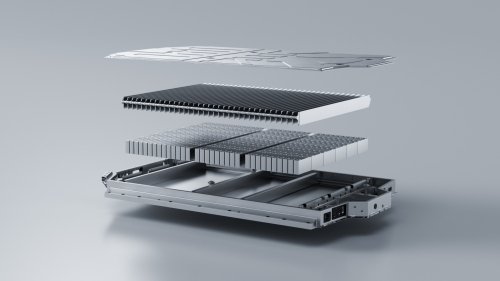
















Image: NexperiaUntil now, the performance of a traction battery has often been determined by its weakest cell. If a single cell underperforms, it can limit the performance of the entire battery system. IAV and Nexperia have therefore developed a software-controlled architecture that manages each battery cell individually. Rather than treating the battery as a single unit, the system dynamically controls individual cells, enabling each one to deliver the level of performance it can currently provide.This dynamic control is made possible by Nexperia’s specialised wide-bandgap semiconductor technologies, particularly a bidirectional gallium nitride (GaN) device. This technology enables efficient and rapid switching at the battery cell level, making the approach both technically and economically viable. According to the two partners, other semiconductor solutions would significantly increase system complexity and costs. Additionally, further components from Nexperia’s semiconductor portfolio, including bipolar devices, support the overall system design.“IAV’s strength lies in translating technological innovation into system-level solutions for our customers. Together with Nexperia, we are exploring how software-defined battery architectures can unlock new levels of efficiency, flexibility and resilience for future software-defined vehicles,” said Jörg Astalosch, CEO IAV.“Strong partnerships are key to driving innovation in next-generation vehicle architectures. By combining our wide bandgap semiconductor expertise – spanning both SiC and GaN – with the advanced system concepts of our partner IAV, we are enabling new approaches to e-mobility design from the ground up. Close collaboration at an early stage allows us to align semiconductor and system requirements and translate innovative ideas into scalable, high-performance solutions,” said Edoardo Merli, SVP and Head of Business Group Wide Bandgap, IGBT & Modules (WIM), Nexperia.iav.com