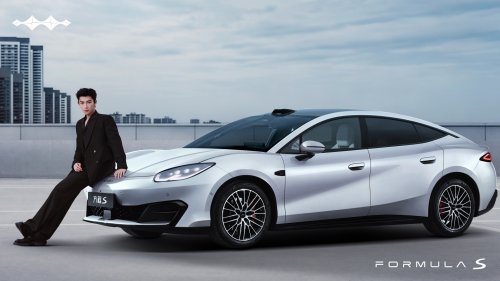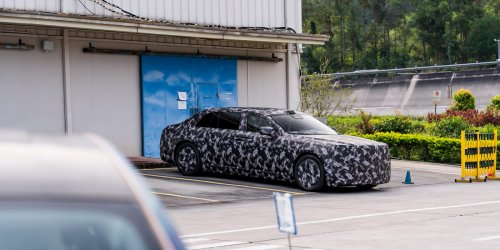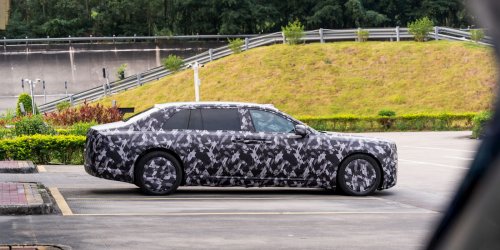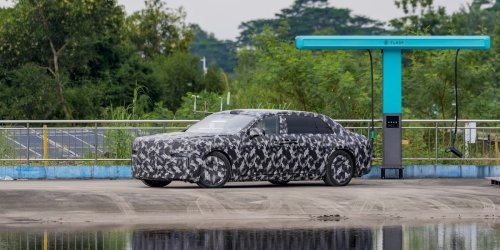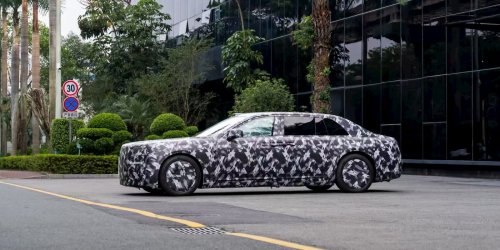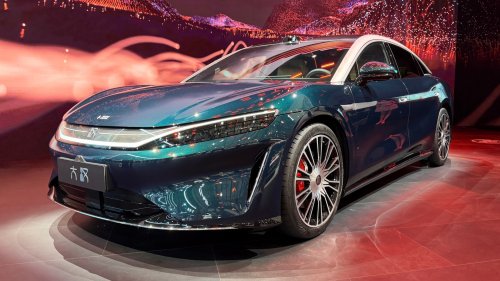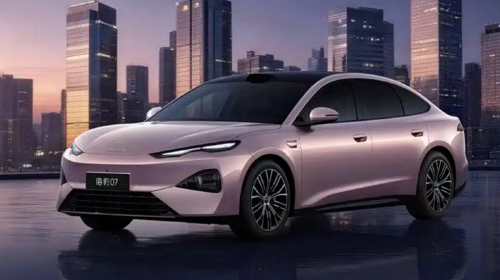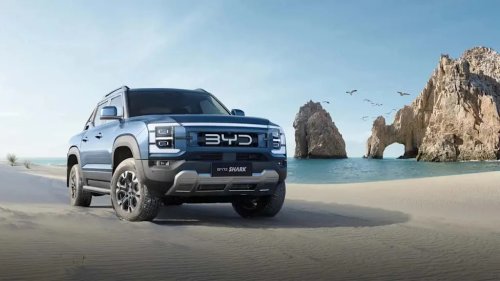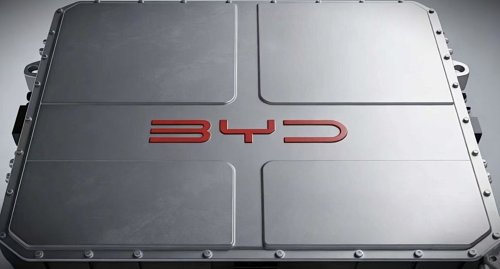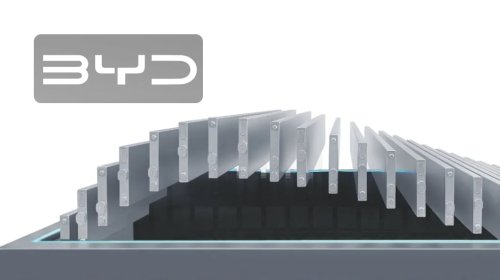
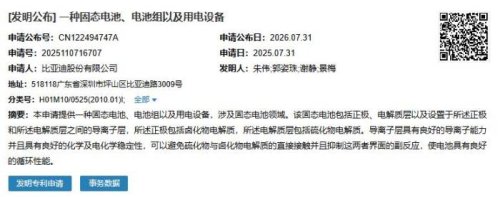
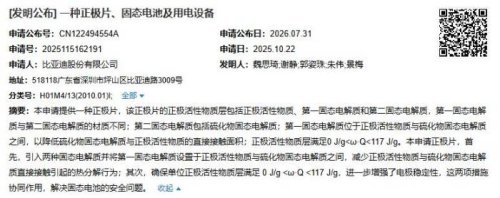
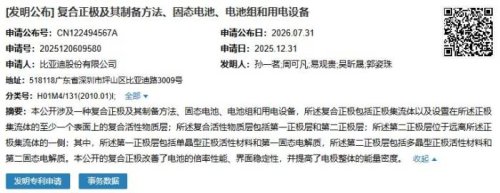
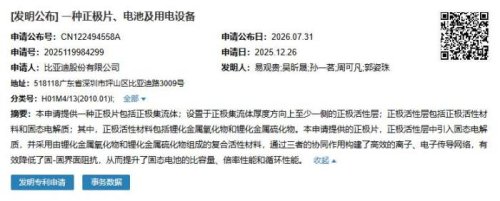
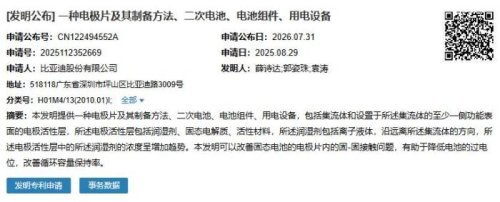
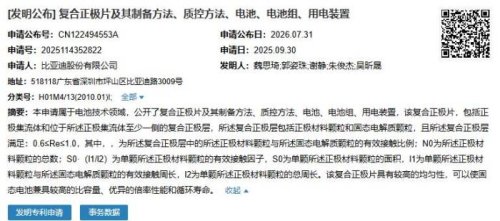


















Known for its LFP Blade Batteries, BYD is continuing its work on solid-state batteries. Image modified by CarNewsChina. Understand China EV’s Market Real-time notifications when critical EV data is released All important data in one place 2,000,000+ data points Become a member BYD is doubling down on solid-state battery (SSB) development, with a particular focus on utilising a dual-electrolyte cathode approach. It aims to replace traditional liquid electrolytes by combining halide and sulfide electrolyte components. After the Chinese auto giant was granted a patent on cathode composite structures by the China National Intellectual Property Administration (CNIPA) in late July, libattery.net reports that BYD published an additional 6 patents on SSB tech. The new patents all address the same issue: preventing poor interface between solid electrolytes and electrodes, or maintaining reliable contact between solid materials during battery cycling. The patents cover material chemistry, manufacturing, and quality control. Doubling down on double electrolytes CarNewsChina previously reported on BYD’s patent on cathode composite materials (publication number CN122474592A). The patent describes using small-particle halide electrolytes and large-particle sulfide electrolytes, combining them with an active cathode material to create a composite electrode. Among BYD’s new patents, four of them cover material chemistry. CN122494747A continues the halide-sulfide approach but proposes adding an ion-conducting, electrochemically stable interlayer between the two materials. This prevents direct contact and avoids any unwanted chemical reactions, increasing cycle life. CN122494554A proposes using a first solid electrolyte as a buffer layer, positioning it between the active cathode material and a second sulfide electrolyte to prevent direct contact. It also aims to avoid thermal runaway and suggests that the active cathode layer should not thermally release more than 117 joules/gram. Patents CN122494747A and CN122494554A. Credit: libattery.net CN122494567A advances to the active cathode and proposes a dual-layer composite structure. The inner layer mixes a mono-crystal cathode material with a solid electrolyte, while the outer layer pairs a poly-crystal cathode material with a solid electrolyte of another composition. Monocrystal materials resist fracturing during charge-discharge cycling. Polycrystalline materials offer better rate performance due to their large surface area, but are more prone to fracturing along grain boundaries during cycling. Rate performance refers to how well a battery maintains its capacity under large charge and discharge loads. The patent claims that this approach leverages both monocrystals and polycrystals while mitigating their respective weaknesses. Patents CN122494567A and CN122494558A. Finally, CN122494558A describes a tri-material approach for the active cathode. Metal oxides and metal sulfides are first treated with lithium, then mixed with a solid electrolyte. The patent claims that the mix of materials reduces electrical resistance in the solid-solid interface, raises rate performance, increases specific capacity, and boosts cycle life. Baby steps towards commercialisation The patents above focus on chemistry and structure, and do not provide much insight into progress towards production readiness. The two remaining patents, though, reveal details on BYD’s work towards this goal. CN122494552A concerns the application of ionic liquid wetting agents in the active electrode layer. A gradient distribution is used, with outer regions of the electrode receiving more agents than the central inner zones. The patent claims that this improves solid-solid interfacing, prevents complications caused by poor ion transport, and increases cycle life. As for CN122494553A, it proposes a quality control metric, named Re, for the contact ratio between cathode and electrolyte particles. The patent claims that at a minimum, 60% of the perimeter of a cathode particle should be in contact with electrolyte particles. Again, this metric claims to boost rate performance, specific capacity, and cycle life. Patents CN122494552A and CN122494553A. This contact ratio metric aligns with current SSB research. CarNewsChina previously reported on research conducted by the Chinese Academy of Sciences’ Institute of Physics, in which Professor Wu Fan concluded that smaller sulfide particles in the electrolyte improved capacity retention by almost 18 percentage points. Smaller electrolyte particles would allow more of them to stick to one particular cathode particle, increasing the contact ratio and the Re metric proposed by BYD. When will SSBs actually hit the market? In addition to the patent filings, libattery.net also reports that BYD is aiming to begin small-scale production of its dual-electrolyte cathode SSB cells in 2027. These trial cells will undergo evaluations first inside camouflaged test mules. Even BYD’s rivals have poured cold water on the rapid deployment of SSBs in consumer EVs. CATL’s chairman dropped a reality check on the technology in June 2026, claiming that engineering and manufacturing constraints meant that mass-market adoption of SSBs remained “years away”. Compared with traditional cells, SSBs offer higher energy density and charge-discharge performance, and their solid electrolytes provide greater safety, reducing the risk of thermal runaway. Their promise of more “battery” for the same weight often leads to claims of future EVs with 1500 or even 2000 km of range. It is evident, though, that there remains a plenitude of formulaic, technical, and practical hurdles before SSBs can finally step into the limelight. Source: libattery.net Most important news in your inbox. Recaps · scheduled All you need, in one email. Instant alerts · real-time Ping me when an article goes live. 0 of 27 topics selected Bundle into one email per day — instead of one email per article No spam · Unsubscribe with one click · Change settings anytime