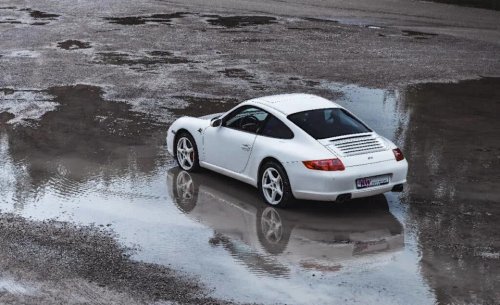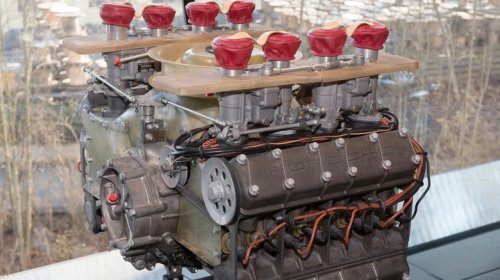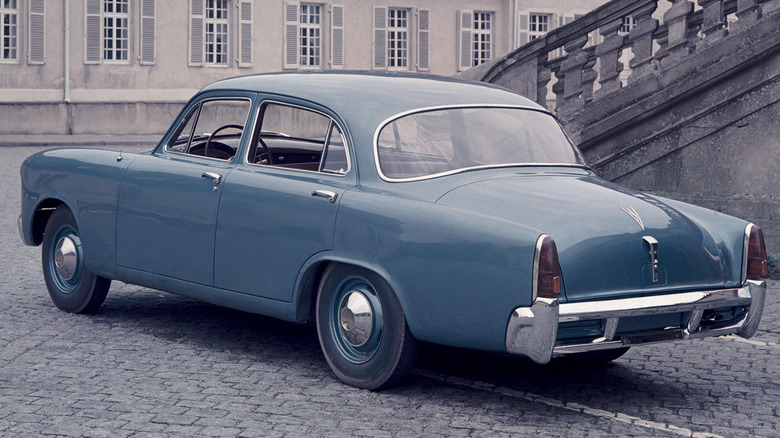


















Porsche Before Porsche became the Porsche we know today as one of the finest sports car makers on the planet, it was an engineering firm. Porsche built all sorts of products, car components, and even entire cars for other companies, as well as itself. That's actually where its early naming structure came from, as the iconic 356 sports car was just the 356th project it had worked on. Same for the 550 Spyder. However, one of those early projects almost created one of the most unlikely partnerships in automotive history: Porsche and Studebaker. In the early 1950s, Porsche built a prototype sedan for Studebaker that never went into production, due to poor timing. Porsche was still paid for the project, though, which helped it open its first major factory in Stuttgart, Germany, and helped keep the struggling engineering firm on its feet. It's unfortunate that the unusual brand team-up never came to be, though, as the car it produced not only looked great, but it would have been one of the coolest cars on sale in America. How did Porsche and Studebaker ever come together to begin with? Sjo/Getty Images In the early '50s, Studebaker wanted to go global, building a plant in Ontario, Canada and even looking to sell cars in Europe. However, it needed a car. It originally considering taking control of Volkswagen, as the British government occupied some of Germany following World War II, including Wolfsburg, and was going to hand Studebaker the people's car for free. But VW had a rather unpleasant reputation tied to the Nazis, so the brass in South Bend, Indiana declined. However, like with most American/German partnerships of the era, Max Hoffman got involved. The American businessman and European car importer stepped in to convince Studebaker execs to meet with the team from Porsche. So Ferry Porsche (son of founder Ferdinand) and his team of engineers and designers traveled to South Bend with a 356 and a prototype Type 530, which was just a stretched 356. While neither Hoffman nor Studebaker's team liked the 530, they did see promise in Porsche's engineering skill, so they offered the plucky German upstart a contract: build a front-engine, rear-wheel drive sedan with a six-cylinder engine, more power, and less weight than a Studebaker Champion. Studebaker also wanted Porsche to make both air and water-cooled versions of the engine. What Porsche ended up creating was the Type 542 sedan (known by Studebaker as the Z-87). It met almost all of Studebaker's targets. Its fascinating 120-degree V6 engine hit the target power figures, with 98 horsepower for the air-cooled version and 106 horses when water-cooled. It was admittedly 550 pounds heavier than it was supposed to be, but it also had a removable front end, which made it easier to ship and cheaper to fix, along with independent front and rear suspension, and was solidly built. If it looked great and was designed by Porsche, why didn't it work out? kasakphoto/Shutterstock Ferry Porsche took a completed prototype to the Geneva Motor Show in August 1954 (even though it wasn't presented there), and then drove it to St. Moritz with Studebaker's engineering vice president Harold Churchill and German-born chief engineer Klaus von Rücker. According to a story by Karl Ludvigsen from 1974, via Bob's Studebaker Resource, Churchill called the 542 "an excellent job," and Studebaker's proving grounds director, Ed Reynolds, called it a "solid little thing." So if the Indiana crew liked it so much, why didn't they build it? Studebaker's internal politics mostly prevented the 542 from becoming reality. John Z. DeLorean, Studebaker's head of advanced engineering, in particular didn't like it. He felt it had too much vibration and was too prone to understeer, which actually makes it sound fun. Way to be a buzzkill, John. Finances hurt, too. Within a month of the 542 finally being delivered in Indiana, Packard acquired Studebaker. Subsequently, the 542 and its V6 engine were killed. Ironically, while Porsche was developing the 542, Studebaker conducted focus groups on what American car buyers wanted. Turns out, they wanted an American Volkswagen, a rear-engine, air-cooled, two-door sedan, like Ferry Porsche originally proposed. So Porsche presented its proposal for a Type 633, which would had a rear-mounted, flat-four, air-cooled engine. Studebaker couldn't afford it. Ironically, a car with a similar layout did very well for GM, the Chevy Corvair. Porsche's Studebaker project was lost to time. No known prototypes exist and Porsche only has one 542 engine on display at its museum in Stuttgart. Studebaker didn't last much longer, either. But it's fun to wonder what could have been.