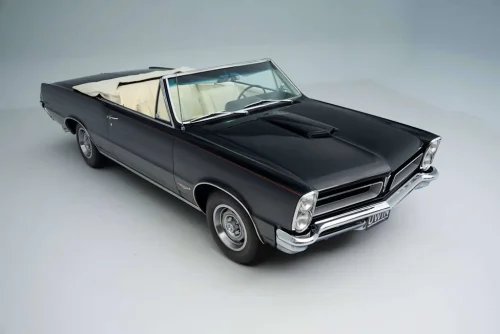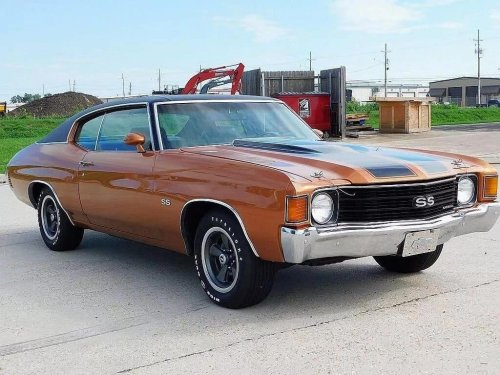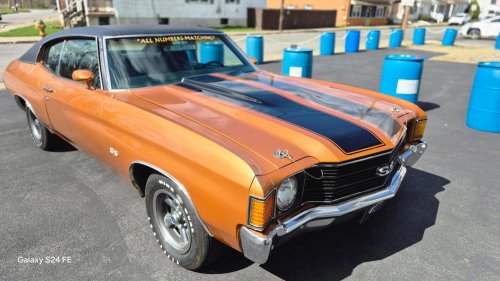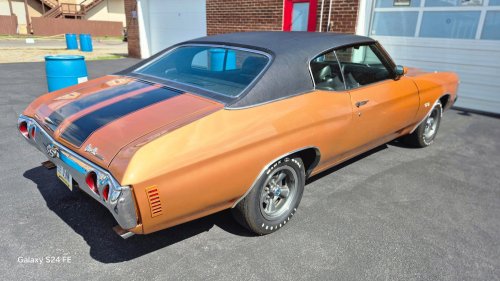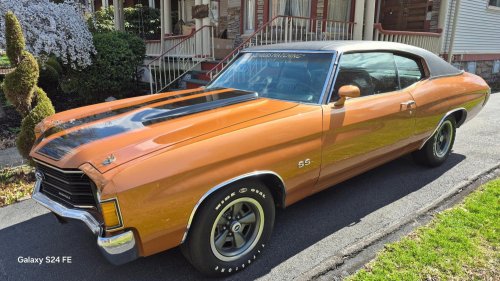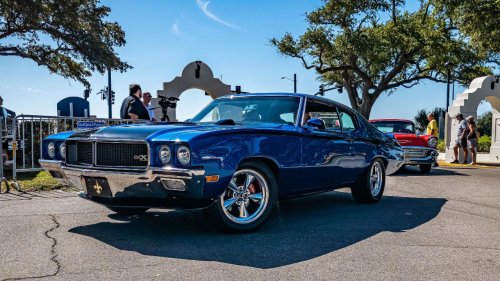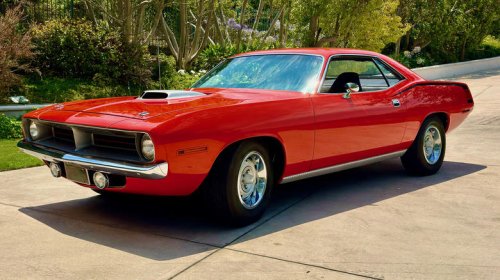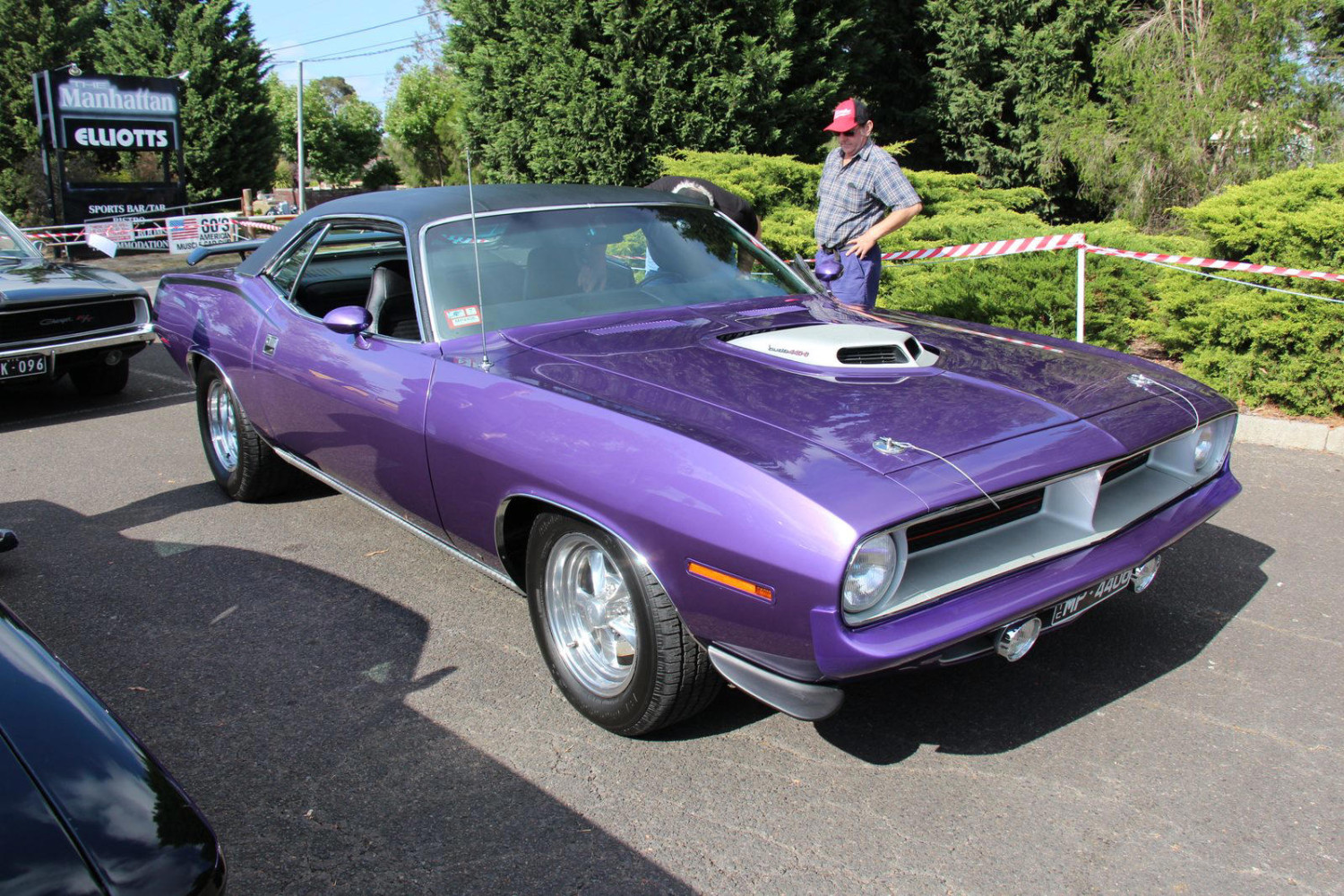


















Why the Cars Built Between 1965 and 1972 Will Never Be Replicated Key Takeaways Detroit's Big Three ran an all-out engineering arms race during this window that produced legendary powerplants almost as an accidental byproduct of corporate competition. Automakers deliberately understated horsepower figures on many muscle cars to help buyers dodge insurance surcharges, meaning the cars were even faster than their specs suggested. Federal emissions regulations and the 1973 oil embargo didn't just slow performance — they ended an entire manufacturing philosophy that depended on cheap fuel and regulatory freedom. The skilled factory workers who hand-fitted and road-tested these cars took a craft culture with them when they retired, one that no amount of robotics can recreate. There's a reason a pristine 1970 Plymouth Hemi 'Cuda stops conversation at any car show, while a brand-new Dodge Challenger gets a polite nod. It's not just nostalgia. Those seven years between 1965 and 1972 produced machines that couldn't have existed before them and couldn't survive past them — a collision of industrial ambition, cheap fuel, raw materials, and craftsmen who took genuine pride in what rolled off the line. The window opened fast and closed hard. Understanding exactly why reveals something most car enthusiasts sense but rarely hear spelled out clearly. The Golden Window That Closed Forever Seven years when Detroit had money, freedom, and something to prove By the mid-1960s, the Big Three were flush with postwar prosperity and locked in a competition so intense it bordered on reckless. Ford, GM, and Chrysler were each pouring record research and development budgets into performance — Ford alone invested what would amount to over $9 billion in today's dollars into performance development during this stretch. The goal wasn't just to sell cars. It was to humiliate the competition on the street and at the dragstrip, because that's what sold cars. The cultural timing was just as important as the money. Baby Boomers were turning 16 and 17 in enormous numbers, and they wanted speed. Gas cost less than 35 cents a gallon. Insurance regulations hadn't yet caught up with what engineers were building. Environmental oversight was minimal. For one brief stretch, the engineers, the accountants, and the culture were all pointing in the same direction at the same time. That alignment never happened again. By 1973, every one of those conditions had reversed. What got built between 1965 and 1972 was less a planned product line than a historical accident — the result of a perfect set of circumstances that no boardroom could manufacture today even if it wanted to. Steel, Chrome, and No Apologies Why that extra weight felt like confidence, not a flaw Pick up a door handle from a 1969 Chevelle SS and compare it to anything on a modern car. The difference is immediate — the old part has heft, a solidity that communicates something before you even open the door. Full-body stamped steel construction, body-on-frame architecture, and hand-fitted chrome trim weren't just stylistic choices. They were a manufacturing philosophy that prioritized feel and durability over weight savings. The common assumption today is that heavier equals worse. For performance engineering, that's often true. But the weight of a 1960s muscle car wasn't dead weight — it was road presence. The low center of gravity from a heavy iron-block V8 sitting ahead of the front axle, combined with the mass of a full steel body, created a planted, communicative driving experience that modern unibody construction with aluminum panels simply doesn't replicate. You felt every input. The car talked back. Chrome was also labor-intensive in ways that would be cost-prohibitive today. Bumpers were stamped steel, triple-plated, and hand-polished at the factory. Trim pieces were fitted by workers who adjusted them until the gaps were right — not by a robot programmed to within a tolerance. That hand-fitting culture produced a consistency of quality that modern production lines achieve differently but not necessarily better. Engines Built Like No Algorithm Could Design Tuned by ear and feel, not by simulation — and often faster than advertised The Chrysler 426 Hemi wasn't designed on a computer screen. Neither was Ford's 428 Cobra Jet or Chevy's L88 427. These engines were developed by engineers who stood next to dynamometers and listened — who adjusted carburetor jets by hand, who recognized a healthy engine by the sound of its exhaust note. The feedback loop was direct and human, and it produced powerplants with a character that modern computer-optimized engines, for all their measurable superiority, don't quite match. Then there's the insurance angle, which most people don't know about. By the late 1960s, insurance companies were raising premiums sharply on high-horsepower cars. Automakers fought back quietly by understating output figures on paper. The Pontiac GTO's 360-horsepower rating was widely understood in the industry to be closer to 400 actual horsepower. The Ram Air IV engine Pontiac sold as a 370-hp unit was dynoed by independent testers at well over 400. Buyers who knew, knew — and the ones who didn't find out learned quickly at a stoplight. This kind of institutional wink-and-nod between automakers and their customers is simply impossible in today's regulatory environment, where every horsepower claim is subject to standardized testing and emissions certification. The result was an era of cars that were faster than their window stickers suggested — which made them even more legendary in hindsight. When Regulations Hadn't Caught Up Yet The exact moment the era ended — and why 1971 was the turning point The 1970 Clean Air Act didn't kill the muscle car instantly. It set a timer. Engineers knew that meeting the new emissions standards would require dropping compression ratios industry-wide, because high-compression engines demanded high-octane leaded fuel — and leaded fuel was on its way out. The 1971 model year became the concrete turning point: across Detroit, compression ratios that had been running at 10.5:1 or higher were slashed to 8.5:1 or lower almost overnight. The effect on performance was immediate and brutal. A 1971 Chevelle SS 454 made 365 horsepower. The same engine in a 1972 model, detuned for lower-octane fuel and fitted with emissions equipment, was rated at 270. That's not a small adjustment — that's a fundamentally different car wearing the same badge. Then the 1973 oil embargo arrived and removed the last argument for keeping big-block performance engines in production at all. These two events — one regulatory, one geopolitical — compressed what might have been a gradual decline into something closer to a cliff. The engineers who had spent a decade building the fastest street cars in the world suddenly found themselves designing economy cars. The window didn't just close. It slammed shut. The Craftsmen Who Never Came Back The line workers who road-tested your car before it left the factory At Pontiac's assembly plant in the late 1960s, finished cars didn't go straight onto a transport truck. They went out on a road test first — driven by workers who knew what a properly adjusted carburetor felt like under hard acceleration, who could hear a valve train that wasn't quite right, who understood the difference between a car that was assembled and a car that was ready. That culture of final human verification was standard practice at several plants during this era. Retired UAW workers from that period describe something that sounds almost foreign today: a genuine investment in the product. Line workers who built GTOs and Chevelles knew the cars by name. They argued about them. Some drove the same models they built. That personal connection to the product created an informal quality check that no inspection protocol fully replaces. Automation and cost reduction in the 1980s and 1990s retired that workforce and that culture together. Modern production lines are more consistent in measurable ways — panel gaps are tighter, paint application is more uniform. But the human judgment that caught the things a checklist couldn't measure walked out the door with the last generation of those workers. You can train a new workforce, but you can't recreate 20 years of accumulated feel for a specific machine. Modern Muscle Tries Hard, Falls Short Faster on paper, but something got traded away in the bargain A 2024 Dodge Challenger Hellcat will outrun a 1970 Plymouth 'Cuda on every measurable axis — 0-60, quarter mile, braking distance, cornering grip. This is not a debate. Modern engineering, modern tires, and modern electronics have made today's muscle cars objectively superior machines by the numbers. And yet the experience is different in ways that matter to anyone who has driven both. A 4-barrel carburetor on a big-block V8 has a throttle response that is mechanical, immediate, and slightly unpredictable in a way that drive-by-wire systems are specifically engineered to eliminate. Solid lifters produce a valve train clatter at idle that sounds alive — not refined, but present, like the engine is doing something. Modern variable valve timing is quieter and more efficient, but it's also managed by software that sits between the driver and the machine. The 1969 Camaro Z/28's 302 small-block didn't make the most power. It made the most noise and the most drama per horsepower of almost anything on the road. Buyers of original muscle cars consistently describe the sensory experience — not speed — as the primary draw. Modern cars are built to minimize sensation. Classic muscle was built to maximize it, sometimes recklessly. Why Collectors Keep Paying Impossible Prices Three and a half million dollars for a 'Cuda tells you everything you need to know In 2014, a numbers-matching 1970 Plymouth Hemi 'Cuda convertible crossed the block at a Barrett-Jackson auction and sold for $3.5 million. It wasn't the fastest car at the sale. It wasn't the rarest by production numbers alone. It sold for that price because the people in that room understood exactly what they were looking at — an artifact from a window that will never reopen, in the most desirable possible configuration. The collector market for 1965–1972 American muscle has not cooled the way some analysts predicted it would as the Baby Boom generation aged. If anything, the prices for the best examples have continued to climb, driven by a combination of genuine scarcity, emotional attachment, and the growing recognition that these cars represent a specific intersection of culture and manufacturing that is genuinely unrepeatable. What makes this particularly poignant is that the primary guardians of this legacy — the generation that grew up watching these cars roll off showroom floors — are now in their 60s and 70s. The question of what happens to these collections over the next two decades is one the hobby is actively wrestling with. Younger buyers are entering the market, but in smaller numbers. The cars are holding their value partly because the people who love them most understand, on some level, that they are preserving something that cannot be rebuilt from scratch — only maintained, restored, and passed on. Practical Strategies Prioritize Numbers-Matching CarsA car with its original engine, transmission, and rear axle commands a premium for good reason — those combinations are finite and irreplaceable. When evaluating a classic from this era, always request a VIN decode and compare it against the broadcast sheet or trim tag before making any decisions. A numbers-matching 1970 SS 454 is a fundamentally different purchase than a clone, regardless of how good the clone looks.: Document Everything You KnowProvenance matters more as these cars age. If you own a car from this era and know its history — previous owners, racing history, factory options — write it down and keep it with the car. Auction houses and serious buyers place real value on documented history, and that paperwork becomes harder to reconstruct with every passing year.: Use Specialty Insurance EarlyStandard auto insurance values classic muscle cars at replacement cost for a comparable vehicle, which often drastically undervalues a well-preserved original. Agreed-value policies from specialty insurers like Hagerty or Grundy lock in a set payout figure that reflects actual collector market value. Get coverage in place before you need it — not after an incident forces the conversation.: Join a Marque-Specific ClubPontiac, Mopar, and Chevelle registries maintain databases of known surviving cars, factory option codes, and restoration standards that no general automotive resource matches. Membership connects you to people who have spent decades accumulating knowledge about specific models — the kind of institutional memory that answers questions no manual covers.: Buy the Best Example You Can AffordIn the classic muscle car market, a well-preserved original almost always costs less in the long run than a project car that needs restoration. Labor costs for proper bodywork, chrome replating, and engine rebuilding on a 1960s muscle car can exceed the purchase price of a driver-quality example. Most experienced collectors will tell you: the money you save buying cheap gets spent twice restoring it.: The cars built between 1965 and 1972 weren't the product of a plan — they were the product of a moment, one that required cheap fuel, a young country with money to spend, engineers with freedom to build, and workers who cared about what they made. Every one of those conditions disappeared within a decade, and none of them has fully returned. What survived is a collection of machines that the market keeps valuing higher precisely because more people are starting to understand what made them possible in the first place. If you have access to one of these cars — whether you own it, restore it, or simply know where one lives — you're holding a piece of American manufacturing history that no factory on earth could reproduce today, even with unlimited resources and the best intentions.