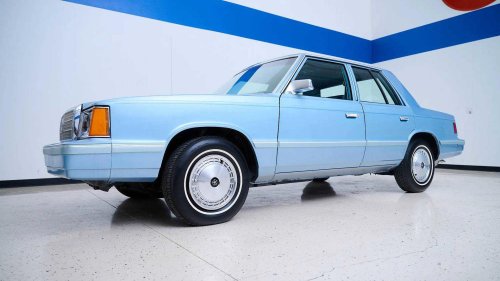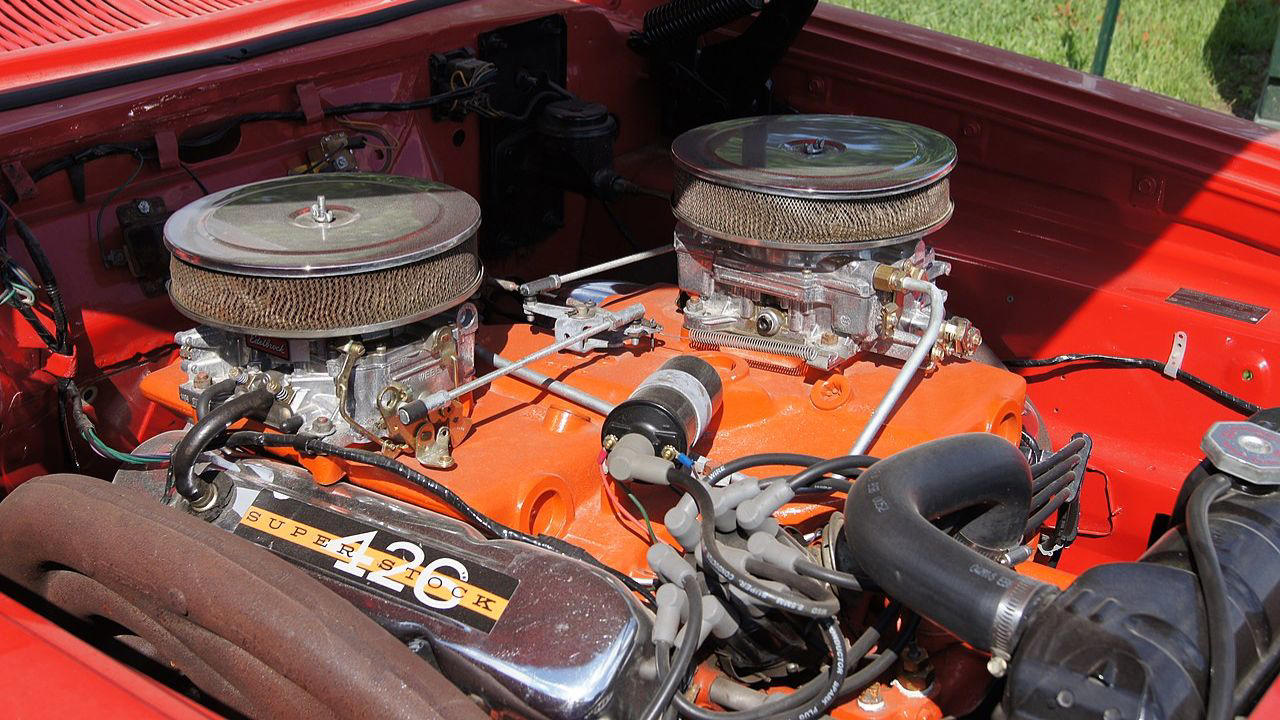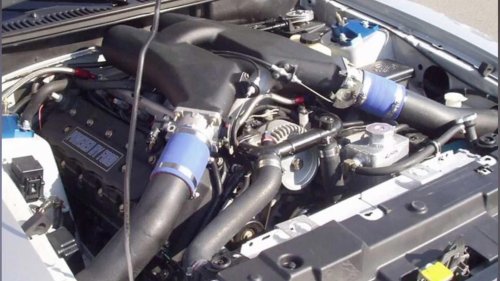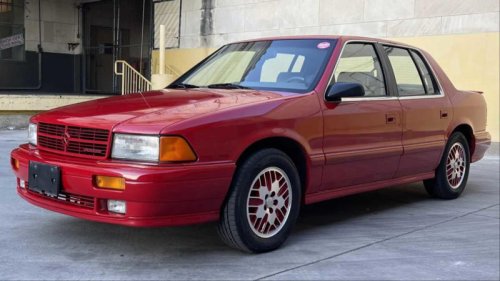
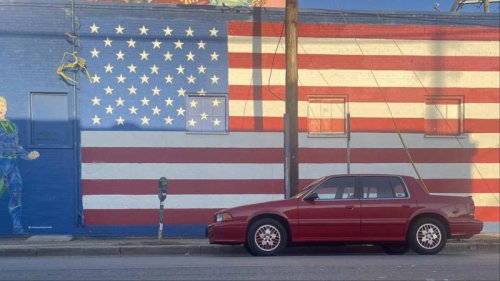
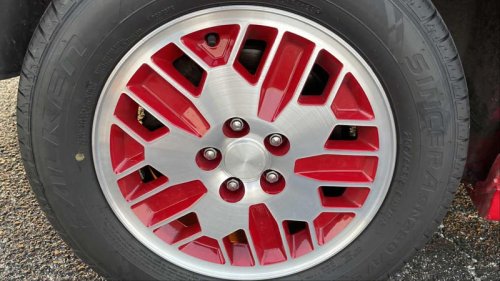
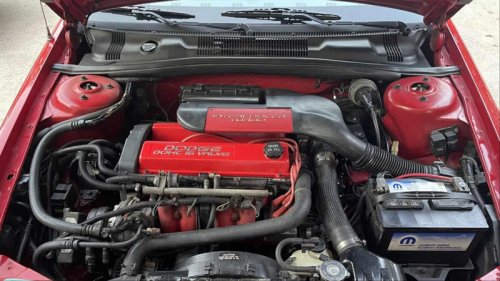
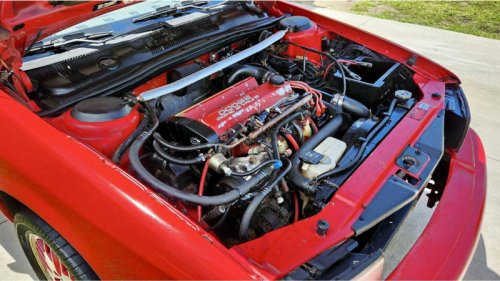
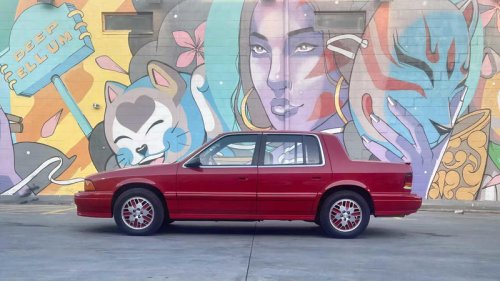
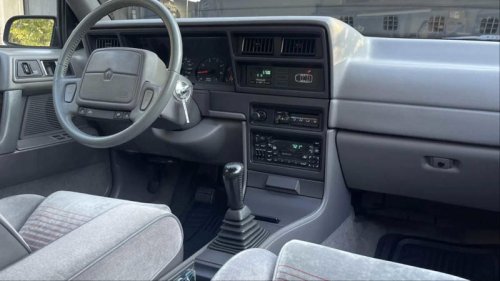
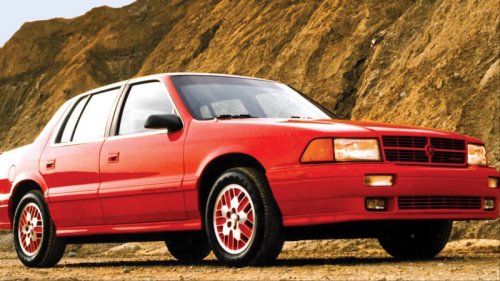
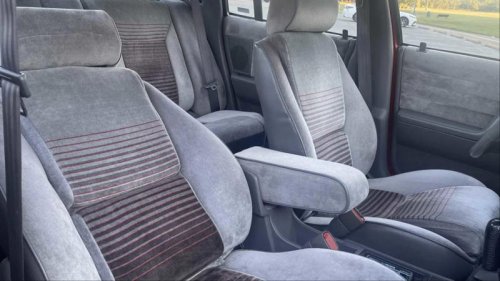



















Some performance cars broadcast who they are with spoilers, hood vents, and exhaust tips the size of soda cans (you know the type). Others hide in plain sight with a casual set of four doors, conservative wheels, and paint colors borrowed from rental fleets. The kind of car that disappears in traffic.In the early 1990s, there was a brief moment when manufacturers experimented with dropping serious performance hardware into ordinary family cars. Emissions rules were tightening, fuel prices were unpredictable, and muscle cars were in a transitional phase.Turbocharging became the shortcut to speed. A few engineers used that shortcut in ways their marketing departments barely understood. The result was a sedan that looked forgettable, sounded modest at idle, and then surged forward with an urgency that made drivers laugh out loud the first time boost hit. Today, most people have no idea it existed. Which is exactly why it still feels special when you discover one. The Dodge Spirit R/T And Its Turbocharged Shock Factor Bring a TrailerThe car behind the surprise is the Dodge Spirit R/T. On paper, it reads like a basic early-90s front-wheel-drive sedan. In reality, it carried one of the most aggressive factory turbo setups Chrysler ever sold to the public. A true sleeper of the '90s.Under the hood sat a 2.2-liter intercooled turbocharged inline-four developed by the same performance group responsible for Shelby-tuned Mopars and the wild Turbo Dodge experiments of the 1980s. Factory output was 224 horsepower and 217 lb-ft of torque. In 1991, those numbers were shocking for a small sedan. Many V8 pony cars of the same era were struggling to match it, and I find that hilarious.Bring a TrailerPower went through a five-speed manual transmission to the front wheels. The car weighed under 2,900 pounds. That power-to-weight ratio is what made the Spirit R/T feel unruly in the best way. That meant that the boost built quickly and the torque arrived early, so the car lunged forward with a sense of urgency that contradicted its appearance. A Family Sedan That Could Embarrass Sports Cars The Spirit R/T's bland and understated design became a part of the whole sleeper car experience. The body was shared with ordinary commuter versions. The stance was modest, and the wheels were simple. There were no wide fenders or aggressive aero tricks. You'd think this car was slow and boring until you hit the gas pedal. The turbo spools quickly, torque arrives in a thick wave, and the car surges forward with a pace that feels disproportionate to its appearance.Period testing recorded 0-to-60-mph runs in the mid-five-second range, quicker than a brand-new 2026 Subaru BRZ or a Mazda Miata. That put it ahead of contemporary Mustangs, Camaros, and plenty ofsports cars wearing far louder styling. But unlike those cars, the Spirit R/T did its work without drawing attention. This combination of light weight, strong turbo output, and short gearing is the foundation of why the car still feels faster than it should.Fun Fact: Chrysler engineers nicknamed the project “the last hot rod K-car” inside the company.Bring a TrailerThe front-wheel-drive layout also adds to the drama (as do those wheels, let's be serious). Under hard acceleration, the steering wheel tugs slightly as power works through the front tires. Modern performance cars filter that out. The Spirit R/T leaves it in.That rawness makes the speed feel more dramatic than the numbers suggest. Chassis tuning was also more serious than most economy sedans of the time. It was not a track car, but it was far from soft. When pushed on a back road, it responds eagerly rather than reluctantly.Fun Fact: The turbo boost gauge in the R/T reads in PSI, not BAR, because the engineers expected owners to increase boost. Built By The Same Team That Created Legendary Turbo Mopars Bring a TrailerThe Spirit R/T did not appear out of nowhere. It was the final chapter of Chrysler’s turbo performance era that began in the early 1980s. Engineers who worked on Shelby Chargers, Omni GLH models, and various Turbo Dodge projects were still inside the company. They understood boost. They understood intercooling. They understood how to extract performance from small-displacement engines before that became industry-standard practice.eBayThe 2.2-liter turbo engine used in the R/T was reinforced to handle high boost pressure. The internals were stronger than those of ordinary production engines. Dodge updated the cooling systems, and fuel delivery was designed for sustained load. These were not fragile show builds by any means; they were engineered to survive real driving.Fun Fact: Factory wheelspin in second gear was common, even on dry pavement.The five-speed manual gearbox was deliberately chosen. Automatic transmissions of the time struggled with high turbo torque. A manual solved the issue and gave drivers direct control over boost. That mechanical honesty is part of the appeal today, especially as we move into a smooth, all-electric future. This engineering lineage gives the Spirit R/T credibility beyond its forgotten reputation. It is the product of a performance team applying everything it learned over a decade of turbo experimentation, right before corporate priorities shifted away from this kind of project. Market Prices And Current Value Trends Bring a TrailerCollector car pricing has cooled from its pandemic-era frenzy, settling into a more predictable rhythm. Buyers are still paying for condition and originality, but impulse bidding has faded. That stability matters for overlooked cars like the Spirit R/T because it allows genuine enthusiast demand to surface rather than noise-driven hype. Maybe your dad had one back in the day, and you want to relive those memories, you'll probably be able to find a reasonably priced option somewhere.Classic.com’s aggregated auction and private-sale data show the Spirit R/T sitting in an interesting place. Despite being rare finds, average examples still trade for used-car money at around $8k to $9k, while the cleanest low-mile cars occasionally bring surprisingly strong results. It has not become an expensive collectible, but it has clearly graduated from forgotten sedan to recognized niche performance car. That gap between ordinary resale pricing and standout auction results is exactly what early-stage collectibility looks like, even with the outlier $18,500 sale on Bring a Trailer.Recent sales show that most Spirit R/Ts still trade cheaply, but standout cars are already earning collector-grade pricing. Condition and originality now matter more than hype, which is exactly where an overlooked performance car wants to be. Why Almost Nobody Remembers It Today Bring a Trailer Despite its performance, the Spirit R/T never received the spotlight it deserved. Dodge did not heavily market it. The early 1990s were crowded with emerging Japanese performance icons like the Nissan 300ZX, Mitsubishi 3000GT, and Acura NSX. Muscle car attention was beginning to return. A turbo four-door sedan did not fit the popular performance narrative.Production numbers were low, and you may never actually see one of these on the streets. You might not even notice it if you did. Most buyers shopping for a Dodge Spirit wanted reliability and comfort, not boost gauges and manual transmissions. Many R/T models were sold to enthusiasts who drove them hard. Others were used as daily commuters and slowly disappeared into used car lots without anyone noticing their significance.Time was also not kind to many early turbo cars. Poor maintenance, aging electronics, and a lack of enthusiast awareness sent many Spirit R/Ts to scrapyards before collectors paid attention. Survivors today are rare, especially unmodified examples. That obscurity is exactly why the car fits the overlooked category so well. It is not a cult classic everyone already knows. It is a genuine sleeper hiding in plain sight in automotive history. Why It Feels Even Faster Than The Numbers Suggest On paper, mid-five-second 0-to-60 mph times are quick but not shocking by modern standards. What makes the Spirit R/T feel faster than it should is how it delivers that speed. Turbo lag is present, the boost builds, and then torque arrives suddenly rather than gradually. That surge pushes you back into the seat more forcefully than a modern car with linear torque management.HemmingsThe car is also light by today’s standards. There are no heavy driver-assist systems. No thick sound insulation. No large infotainment screens. That lack of mass means acceleration feels more intense. Road noise enters the cabin. Engine sounds are unfiltered. Steering feedback comes through clearly.Expectations also play a role. When you climb into a plain early-90s sedan, you do not expect modern performance. When the car is close to something, the contrast amplifies the impression. That combination of boost behavior, low weight, mechanical feel, and visual understatement is why drivers who experience a Spirit R/T often describe it as faster than the numbers suggest. It is speed delivered with personality.Bring a TrailerThe Dodge Spirit R/T is one of those rare cars whose story is better than its reputation. A turbocharged four-door sedan built by serious performance engineers, lightweight, with real power and honest mechanical character. And styling so normal that almost nobody noticed what they were looking at.It embarrassed sports cars of its era, then vanished from memory. Today, it stands as one of the purest sleeper cars of the early 1990s. Not because it was marketed that way, but because the engineering genuinely delivered surprise speed. For enthusiasts who value character, boost drama, and cars that feel alive rather than polished, the Spirit R/T remains a hidden gem worth rediscovering.Sources: Chrysler archives, Dodge archives, Car and Driver, Mopar historical archives, Classic.com, Cars & Bids, Bring a Trailer