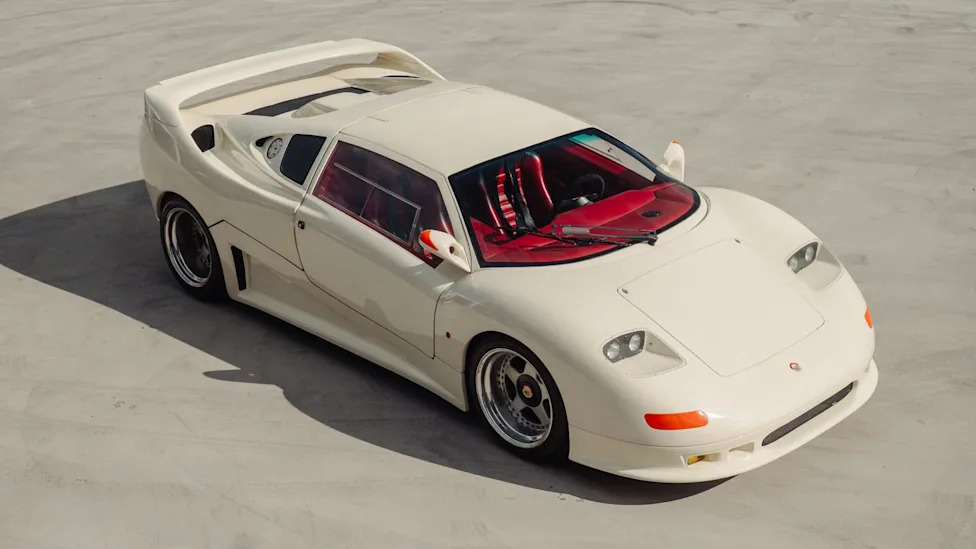
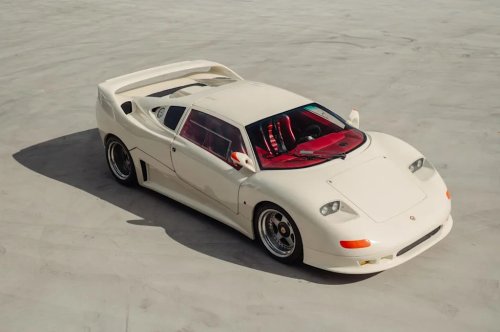
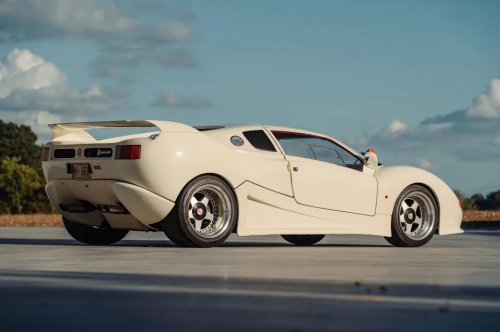
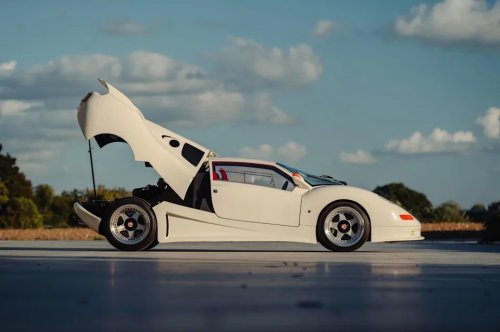
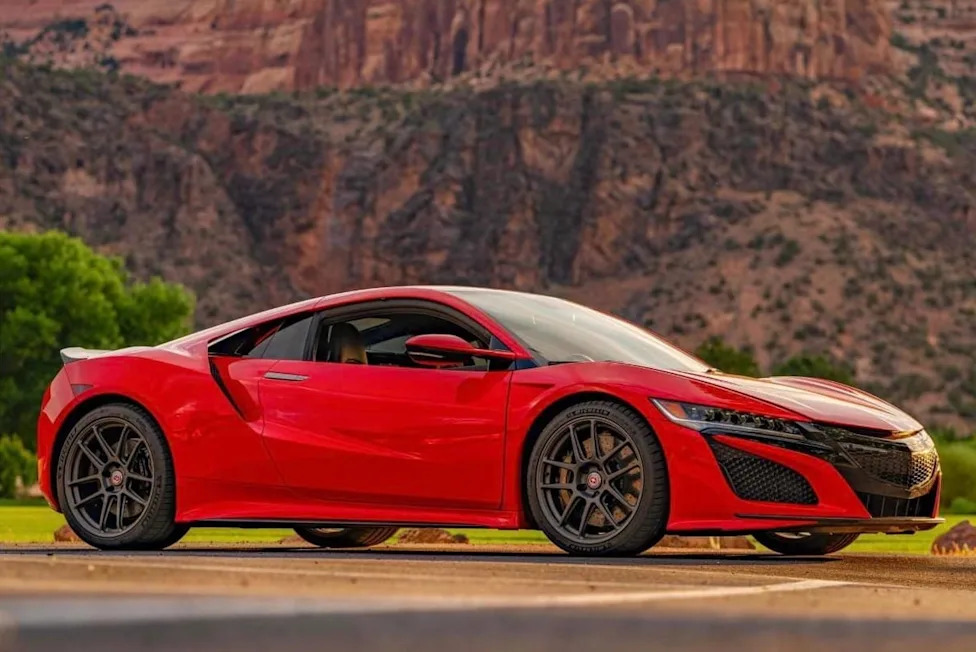
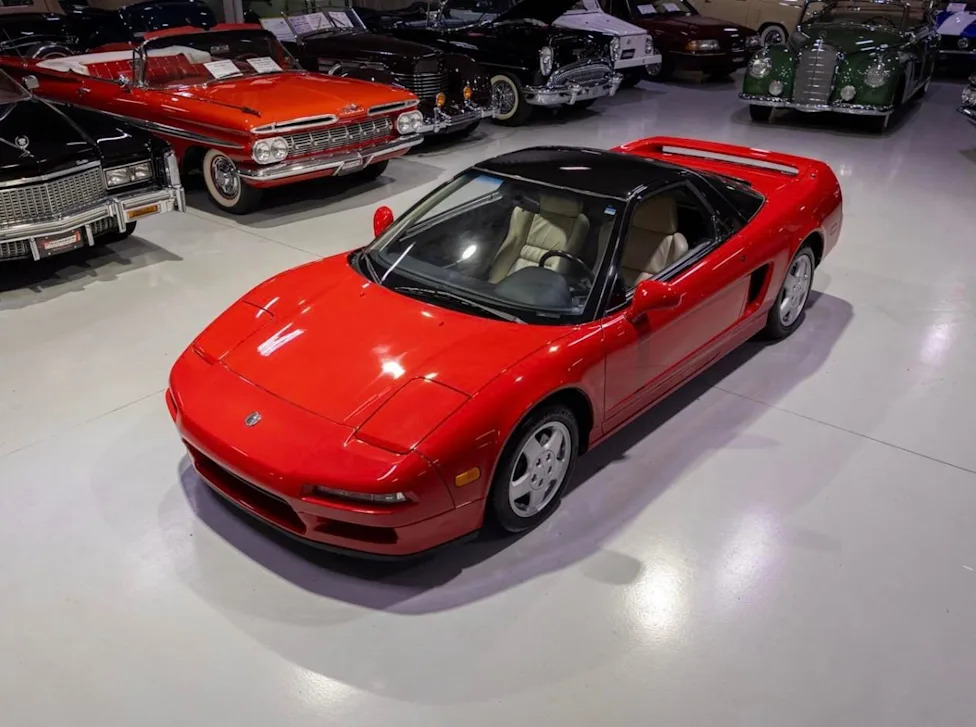
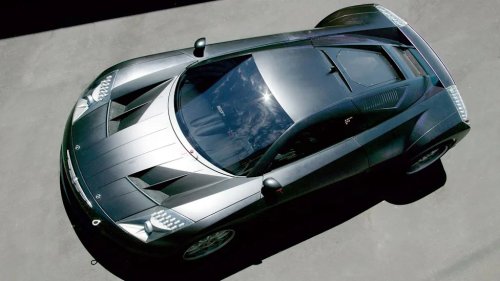
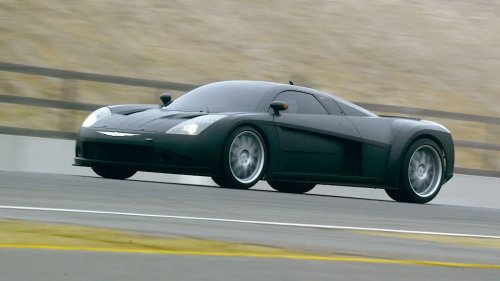
Depending on when you grew up, the British car firm MG will have a very different meaning. In the '60s, it seemed MG could do no wrong. The MGB was a simple, not particularly fast roadster, but everyone fell in love with it. During the flower power era, if you didn't want a muscle car, you could buy an MGB and a flat cap and blatt about like you were Terence Stamp or Audrey Hepburn. In the '90s, MG had become a badge for warmed-up Metros and Maestros, popular with pensioners who wanted something zippy to get to the bingo. Ask a Gen Z what the MG brand is about, and they will probably tell you that MG is a Chinese car brand that makes cars that are cheap, and then ask if they can get back to looking at TikTok.Somewhere in between all of this was a time called the '80s. MG was owned by British Leyland, and since the '70s, nothing had been going right for the British car industry. There was industrial action, poor build quality, and a general sense that UK cars really weren't cool anymore. Probably the hottest model that British Leyland had in its showrooms was the Mini, a car that was launched in the '50s. MG seemed to be dwindling, with no real models of its own – then someone decided they should make a supercar. It wasn't such a bad idea, either. The MG EX-E Was A Rally Car Dressed As A Supercar Neil Simon Things weren't all bad over at British Leyland – the Metro, Maestro and Montego were moving out of showrooms and the company was tentatively finding its foothold. The trouble was that MG, the badge, was exactly that – just a badge that was applied to the sportier models in the range. This was a firm that had a rich back catalog of sports cars, and it didn't feel right that it was best associated with red stripes on a Mini Metro.MG decided to create a concept that would show the world that MG was back on the map and had a bright future. Aiming high, the company decided they would position the concept as a Ferrari 308 challenger – it was almost by accident that they ended up inspiring the next generation of supercars, rather than battling the old – but more on that later. The MG EX-E Has A V6 And Four-Wheel Drive Neil Simon Even though Group B rallying wouldn't be banned until 1987, the MG EX-E perhaps inadvertently promised to be an answer to all the mid-engined rally monsters that would soon be lying around.Despite its supercar looks and an impressive drag coefficient of 0.24, underneath the EX-E was a Metro 6R4 chassis and drivetrain. This was no bad thing as the Metro 6R4 was a beast.Created for Group B, this Metro had a 3.0-liter V6 that was related to the Cosworth DFV unit mounted in the middle. Designed for rally stages in all conditions, this was a car that was capable, surefooted, and fast, which was good news for a supercar.The 6R4 had some success, but like the other Group B rally cars, it would soon be banned, and so turning it into a sleek supercar made good sense. The EX-E featured an aluminum spaceframe, covered in plastic body panels, and the look seemed to nod towards the Pininfarina-designed Honda HP-X concept of a year before. MG was excited by its new creation, running ads to show it off with the strapline "MG EX-E: The Concept Car That's Too Exciting To Keep Secret." The EX-E Ushered In A New Generation Of SupercarMG EX-E front It may have been a bit of an accident, but the EX-E was actually way ahead of its time. It only had 250 horsepower and 225 lb-ft of torque from the 6R4 engine, but thanks to its light weight, it was estimated to hit 60 mph in less than five seconds and reach a top speed of 170 mph. Chances are, the de-stressed smaller engine and low curb weight would have also translated into reasonable fuel economy compared to supercars with larger V8s.Then there was four-wheel-drive, which would have made it surefooted and easier to drive in all conditions. If all this (OK, apart from the four-wheel-drive part) sounds familiar, then it may come as no surprise that there were rumors that Honda had taken a particular interest in the car around about the time it was developing the NSX. This Japanese model would come to change the way we viewed supercars, with low weight, easy driveability, and modest power. The MG EX-E Was Full Of Pioneering Tech For Its Time Inside, the MG EX-E was a vision of the future. The sci-fi cockpit was accessed with a key card that automatically adjusted the seats and climate settings depending on the driver. The gray two-tone interior featured digital screens and touchscreen-style controls, with a head-up display that used aircraft thinking – it was all achingly futuristic stuff. There was an auto-dimming mirror and auto, rain-sensing wipers – all things that were only available on luxury models. Design director Roy Axe was quoted in Aronline.co.uk as saying: "We wanted the interior to feel like a nightclub on wheels. It was the Eighties, after all." Here's What Happened To The Groundbreaking EX-E Concept The official word from MG was that the concept was always going to remain a concept, with the intention of showcasing what was possible from the company. The press and public loved it when it was displayed at the 1985 Frankfurt Motor Show, but ultimately it was deemed just too ambitious for MG to take on the supercar establishment. That could have been a mistake, as the NSX showed that a forward-thinking supercar could be a great success, and cars like the Audi R8 showed decades later that all-wheel drive in a supercar makes a lot of sense.Ultimately, the EX-E project was axed, and MG went on to build the MG F, a small mid-engined sports car that hoped to capture the spirit of the MGB. Look carefully at the MG F, and in particular the later MG TF, and you will notice shades of the EX-E project, especially around the rear. The EX-E is now on display at the British Motor Museum. There Is Another Forgotten Supercar With Group B Tech PeugeotBritish Leyland wasn't the only company that was playing with the idea of repurposing a Group B rally car into a streamlined supercar. The Peugeot Quasar concept of 1984 was also a rally car in a sharp suit, using the WRC-dominating Group B 205 T16 as its basis. The Quasar is a compact supercar with scissor doors and styling that is a clear nod to Peugeot's hatchbacks and sedans of the era, albeit turned up to 11. Its party piece is an exposed rear engine compartment so that the person you just overtook could have a good look at the 600-horsepower, twin-turbo four that sits between the rear lights that are taken directly from a 205. Sadly, like the MG EX-E, the Quasar also never made it to production.























 +41 others