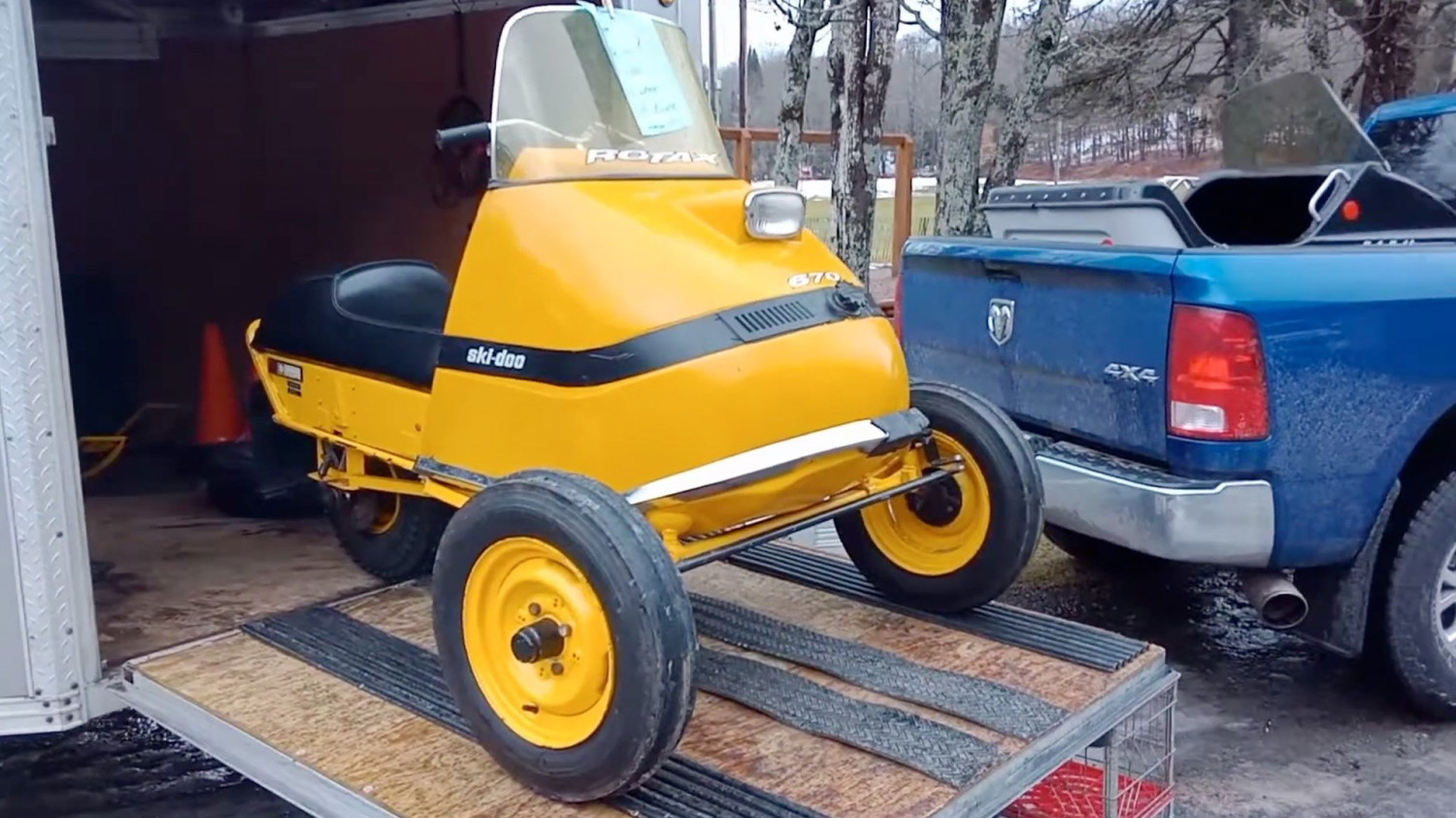
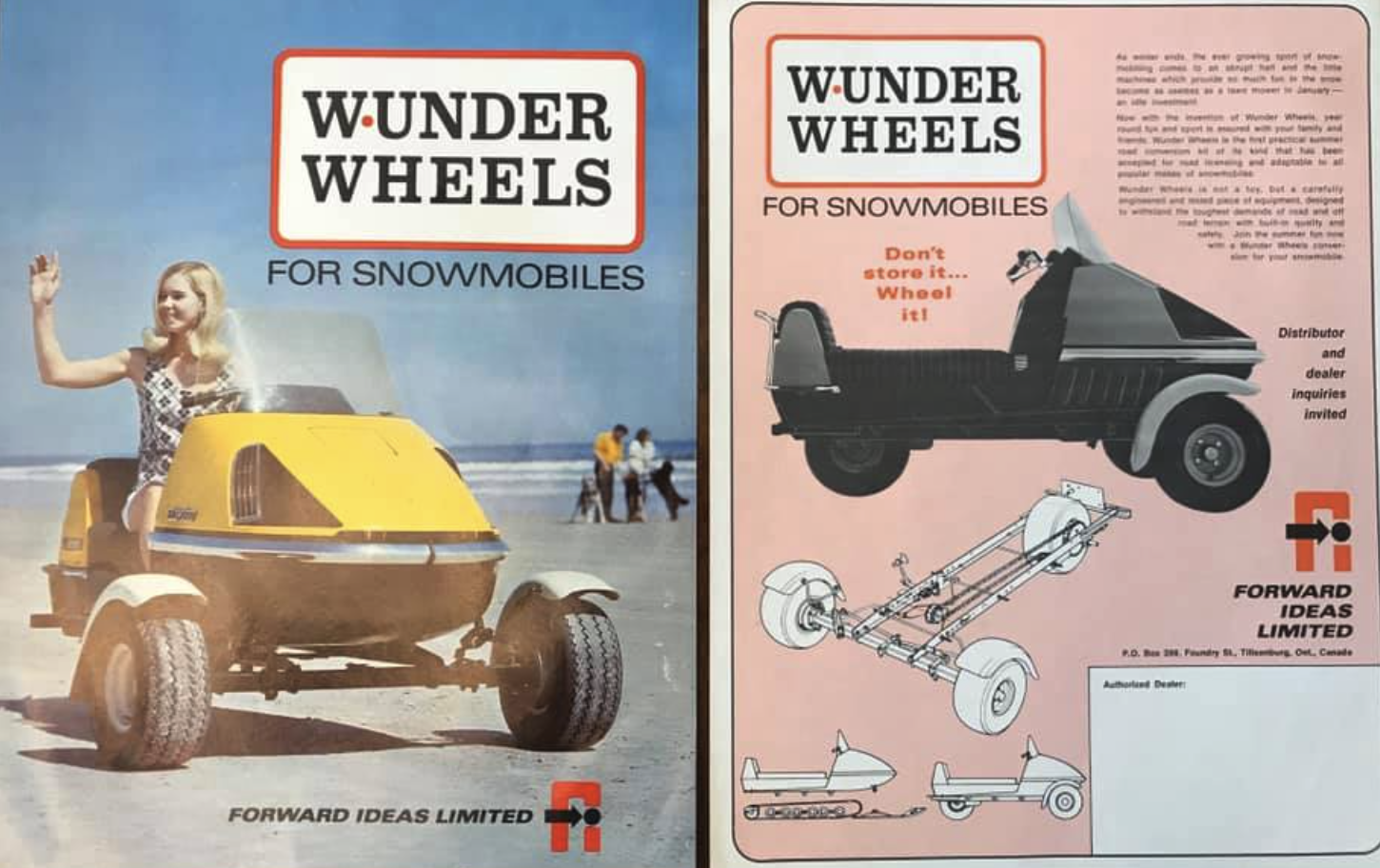



















Herbie Jett's Garage via YouTube Snowmobiles are great until the snow runs out. Unless you live in a specific part of the world (the list of which is only getting shorter), your snowmobile probably spends a good part of the year taking up garage space. This is a problem that has existed as long as the snowmobile, of course, and decades ago, tinkerers and entrepreneurs came up with some interesting solutions. In the late 1960s and early 1970s, you could buy kits that would turn a snowmobile into a three-wheeled ATV during the warmer months. The rise of purpose-built ATVs in the 1970s seems to have killed this idea, but the Internet bestows immortality on all. If you spend enough time on Facebook, you might stumble upon the Wunder Wheels/Skat Trak Registry and Help Line, a group dedicated to this small corner of powersports history. This group also seems to be the biggest repository for information on Wunder Wheels and Skat Trak, the two brands of snowmobile conversion kit that seemed to be most prolific back in the day. Wunder Wheels was the product of Forward Ideas Limited, a Canadian company founded in 1968 by Andry Balazs. According to a period newspaper article posted in the Facebook group, Balazs wanted to hire an inventor to make something cool. The inventor was Brit Donald Sessions, and what he came up with was a steel frame that could slide under a snowmobile, with steering gear for two front wheels and a drive sprocket for the single rear wheel. Skat Trak started out in 1952 as a company called Acricast. Its snowmobile conversion was a little simpler, with independent front suspension fitted to the pickup points of a snowmobile’s skis, rather than an entirely separate frame. But Skat Trak also manufactured its own line of paddle tires that could turn a snowmobile into a sand rail. Those tires are apparently still for sale, but the company’s website is down. The utility of these kits is obvious—converted snowmobiles could even be driven on some public roads in Canada at the time—but it’s unclear how popular they actually were. A poster in the Facebook group, citing conversations with company insiders, claims 1,751 Wunder Wheels kits were manufactured at Forward Ideas’ shop in Tillsonburg, Ontario. That explains why they’re rarely seen today. If you want to put wheels on your snowmobile, you’ll need to do it yourself. Kits like these aren’t just interesting for the pragmatic way in which they make the most out of the vehicle. They’re also a window into a time when starting a new niche business didn’t just mean locking some coders in a room to develop an app. Quirky ideas like this helped the aftermarket grow.