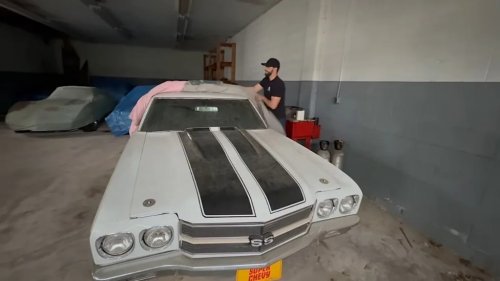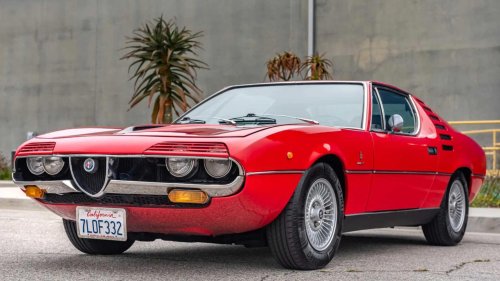
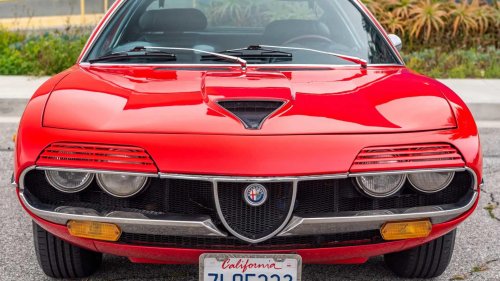
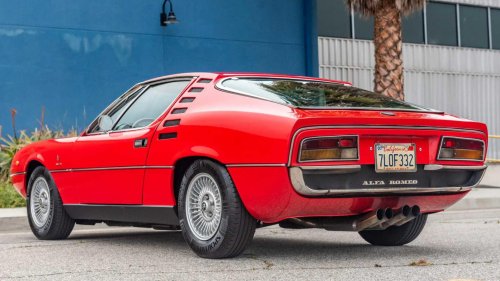
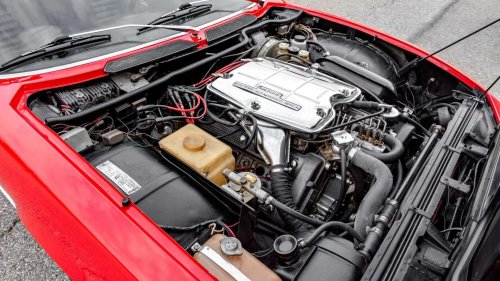
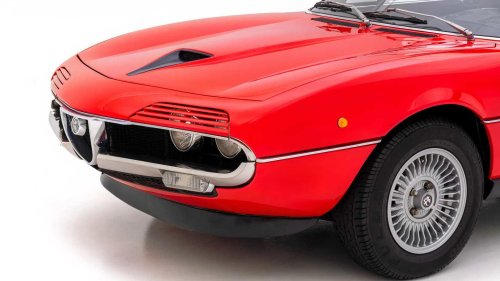
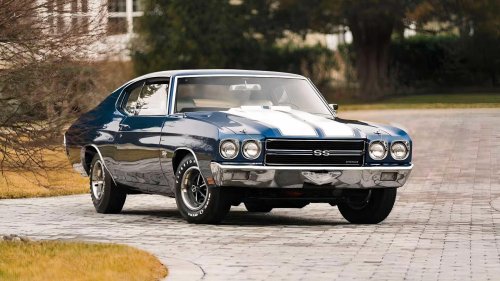
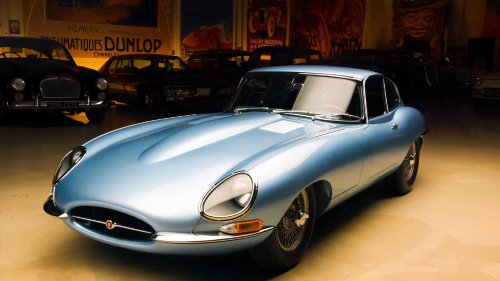
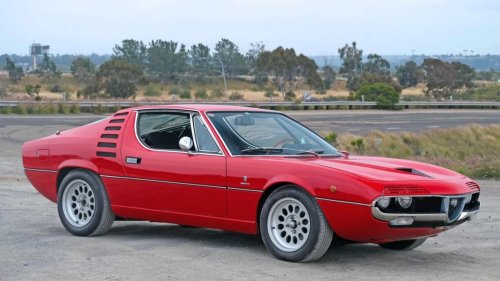
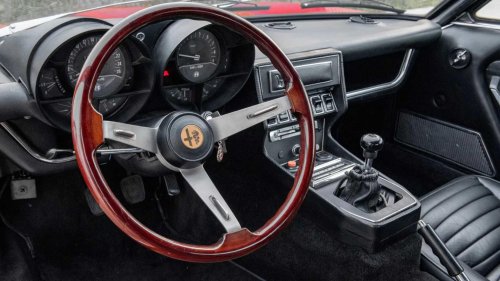
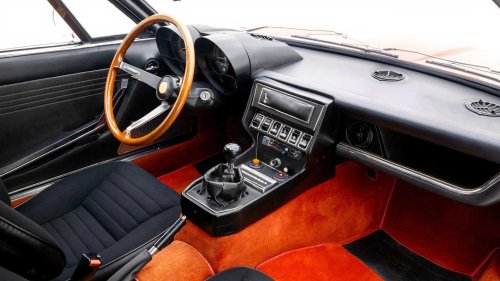


















The Italians have been known throughout their illustrious and long history to make some of the most beautifully sculpted sports cars out there, but the thought of a brutish and boxy muscle car to match America's '70s aesthetic would have been on nobody's bingo card. Regardless, one Italian automaker endeavored to do so and unveiled a four-cylinder concept in North America in 1967, before doubling the cylinder count for its production run, which would start in earnest three years later.This gorgeous classic is now rarer than a Chevelle LS6, surprisingly attainable, and somewhat forgotten – except among collectors who can't seem to appreciate it enough. The Alfa Romeo Montreal Was Italy’s Take on the Muscle Car Formula Bring a TrailerThe mind will always be cast to Detroit upon thinking of the words "1970s muscle car." A vague silhouette or specific monikers may emerge in the mind... Long hood, short deck, rumbling V8 and rear wheel drive are some non-negotiables. But nestled inside that formula, Italy quietly dialled in its own version towards the end of the 1960s that was penned by the young man who would later bring to life the revolutionary Countach and Diablo. It was the Alfa Romeo Montreal, and it was named after the Canadian city that hosted the 1967 World’s Fair (where two pearl-white prototypes made their debut).Bring a TrailerIt came to life because Alfa Romeo was asked to present a car at Expo 67 to represent “man’s highest aspiration” and the theme “Man and his World”. In response, Alfa and legendary Bertone designer Marcello Gandini created a sleek, low, show-car based on the Giulia Sprint GT platform, but with an eye to something beyond the usual Alfa fare. The original model, like the platform it was based on, utilized a throaty 1.6-liter four-cylinder engine, which isn't very muscle car-like, but in the years that would follow, that would change.Bring a TrailerBack then, one of the most beautiful cars of all time and one of the fastest of its era, the Alfa Romeo 33 Stradale (the original, not the new one) had a V8 mounted behind the cabin. The decision makers at the Italian automaker decided it would be more fitting for a similar unit to be placed in the stately Montreal instead (which was somewhat more sizable than the Euro-sized Giulia Sprint on which it was based). What's more, the production version used a 2.6-litre V8 derived from Alfa’s racing hardware. Thus, the Montreal had all of the ingredients required for a traditional muscle car, and the 70s were set for a star-studded showdown, and this would be Italy's take on what a Eurocentric American muscle car could be. The Montreal Had a Racing Heart and a Designer’s Soul Bring a Trailer Alfa Romeo Montreal Specs So, the underpinnings of the Gandini-Bertone body were more exotic than a typical muscle car, and the powertrain followed a similar approach. Beneath the low and muscular hood lay a V8 which was derived from the 2.0-litre quad-cam engine used in the Alfa Romeo 33 Stradale and Tipo 33 prototype sports racers. In road guise, it was bored/stroked to 2.6 liters with dry-sump lubrication and SPICA fuel injection, producing around 200 hp in early guise.At the top of their game, Alfa managed this impressive power rating from the meagre displacement from a 90° cross-plane arrangement, aluminium block and heads, racing-derived internals. Mechanically, the Montreal retained some serious sports car bits for the time, including double-wishbone front suspension, live rear axle with limited-slip differential, ZF five-speed manual transmission. It certainly wasn't on par in a straight line with many of its American counterparts of the day, but Alfa's racing credentials meant that it was competent and surpassed them in almost every other performance metric.Bring A Trailer Some of Gandini's finest work, the Montreal introduced some dramatic styling to the era with hidden-look headlamps behind louvred grilles, a NACA-duct style bulge on the bonnet (which in fact was blocked off and served mostly aesthetic duty), slatted vents behind the doors, and a fastback tail. The amalgamation of all of this, at least for the concept car, was such strong public acclaim in 1967 that Alfa committed to production, which wasn't at all expected for a rare event, prepared show-car styled piece. The Alfa Romeo Montreal Is Rarer Than The LS6 Chevelle SS 454 Mecum According to Alfa Romeo, only 3,925 units were ever made, making this significantly more rare than almost all mainstream American muscle cars of the time. The production run spanned between 1972 and 1977, but there are some other American derivative rarities from the time, including the Ford Mustang Boss 429, and limited runs of Mopar’s big-block machines. The ubiquitous Chevrolet Chevelle, outfitted with the LS6 and wearing the 454 badge, only had 4,475 cars produced in 1970, for example.There are a few reasons behind the Alfa's limited production run, but as with all motoring conversations around the early 70s, it came down to the 1973 oil crisis. Alongside this, the Montreal demanded a high purchase price, more expensive than competitors like Porsche's 911 and Jaguar's E-Type of the time, despite sharing performance and luxury parity with both. Over its 7 years, there were also minimal updates to ensure market competitiveness, and it ultimately fell on deaf ears, particularly in the European context, where the impetus was for more prudent and meek vehicles.Jay Leno's Garage YouTubeThese cars all carry high collector value precisely due to low numbers and iconic performance, but the Montreal occupies an exclusive niche in the European realm, being a rare GT coupe with American muscle bravado. Further, Alfa Romeo never officially exported the Montreal to the U.S. or Canada (despite its name) because of emission compliance costs. So while it had muscle intentions, its footprint remained small; had they opened it up to the markets across the Atlantic, perhaps rarity would be significantly different, but then that wouldn't add to its exclusivity today. It's Reasonably Cheap Too (For Now) Bring a TrailerThe combination of Italian styling and the race-inspired V8 created a unique appeal unlike anything else the American market had on offer at the time. It has also seen the limelight, after a cameo in the 2017 film Atomic Blonde, alongside actress Charlize Theron. Collectors have taken notice, too, and Montreal is somewhat of a model of mystique among Alfa Romeo's own endearing fan base. Regardless, all who know it, the Montreal is now firmly on their radar, with an ever-so gradual uptick over the past several years. The limited early uptake and the early poor sales have transformed into collector strength.Bring a Trailer Market listings show asking prices typically ranging into the tens of thousands of dollars, and occasionally even flirting with the six-figure mark. According to market aggregators, recent listings for “original & highly original” Montreal examples ranged about $70,000 to $90,000, with some higher depending on condition, provenance and rarity. These are pristine examples. However, the average sale price for all models recorded on Classic.com is just over $50,000.The cheapest model year, though, seems to be 1975, with two recently sold units averaging just $40,378 (Classic.com), one of them selling in decent condition for just $21k. So, there are definitely bargains to be had. Plus, there are anecdotes of barn-find cars, in some cases, cars that spent 20+ years in storage that were uncovered and underwent a meticulous restoration process, which adds to the aftermarket appeal even further. Bring A Trailer While market awareness is growing, the Montreal still offers a relatively off-radar status compared to mainstream Italian exotics or American icon muscle cars. The Alfa Romeo Montreal may not have the brute‐force “quarter-mile” reputation of Detroit’s big block machines that it is being compared to here, and it may not have built as deep a motorsport legacy as some pure supercars of its era, but its grand touring ethos is precisely the niche that makes it compelling. It took the muscle car formula of a front-engine V8-driven rear wheel drive coupe and interpreted it through the lens of Italian design and racing heritage. In doing so, it became arguably the most beautiful European muscle car of the ’70s, too.Source: Hagerty, Franschoek Motor Museum, Hemmings, Classic.com