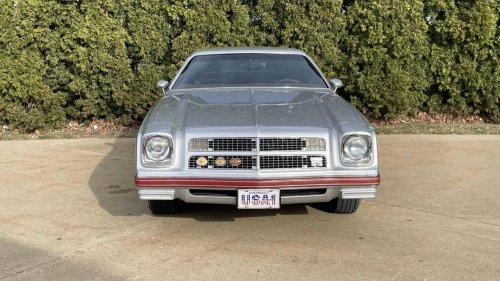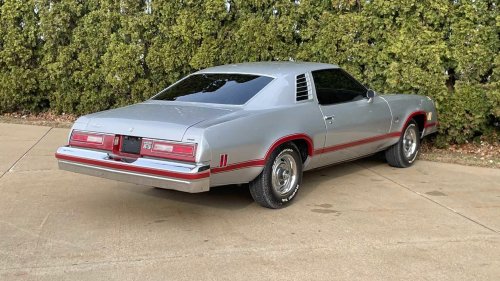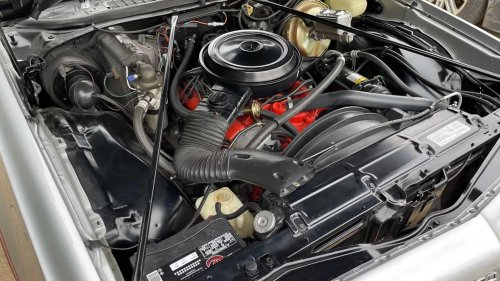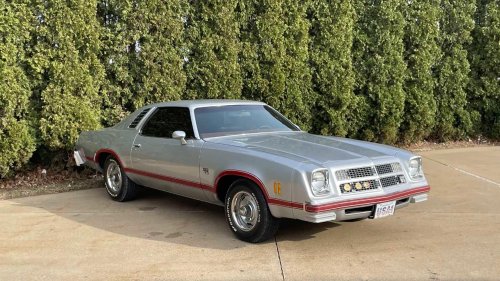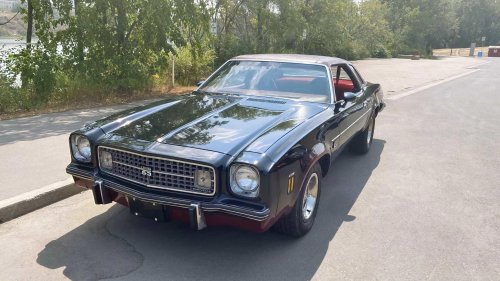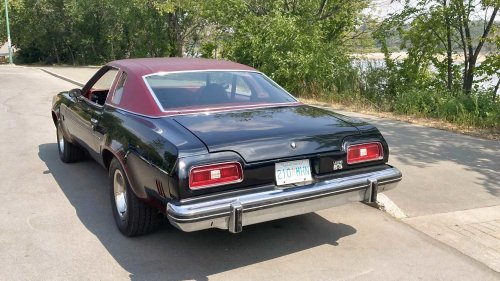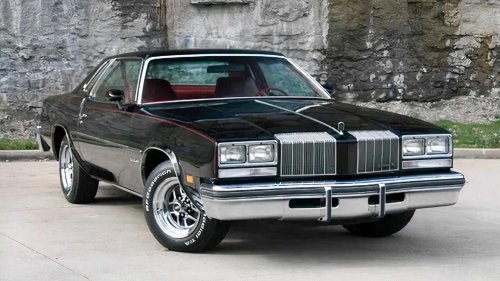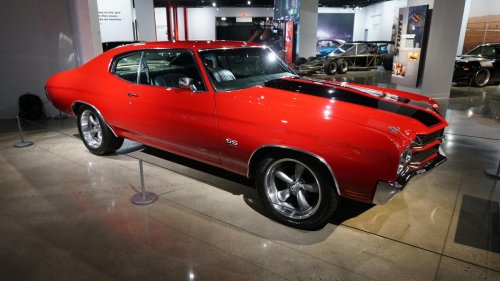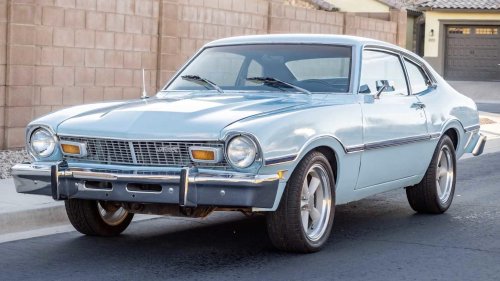
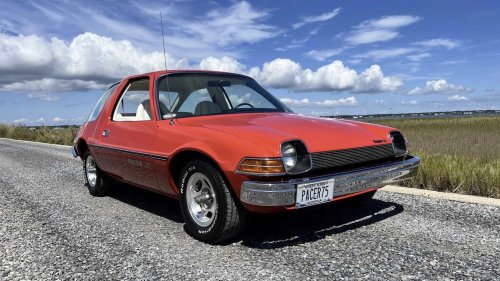
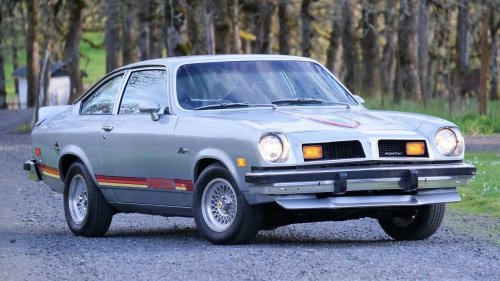
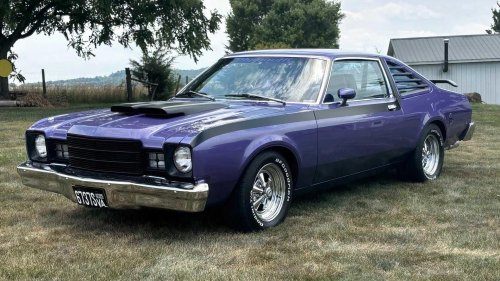
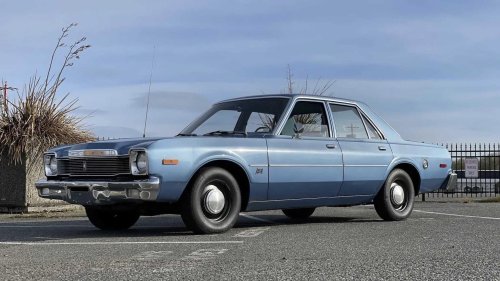
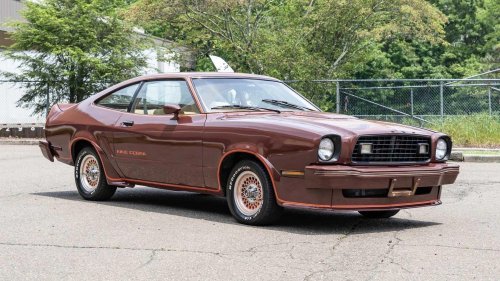
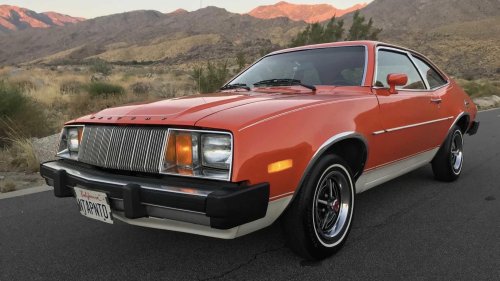
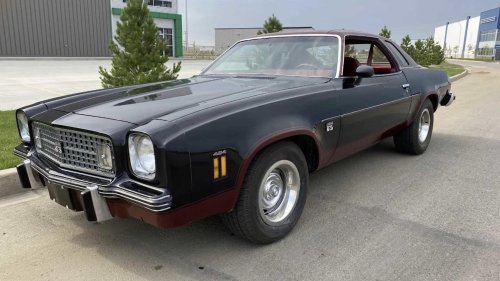
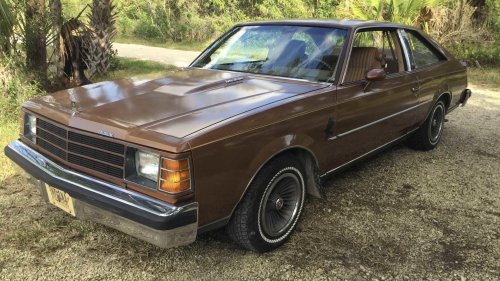
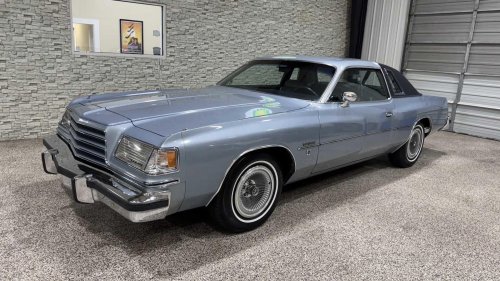



















In the 70s, American auto companies had a habit of finding ways to save a few pennies in tough market conditions. With an international fuel crisis in the making, resulting in a new focus on fuel economy and emissions, customers were aiming to downsize their cars. Chrysler, Ford, General Motors and the former AMC all felt the financial pinch. Even the iconic Ford Mustang was feeling the heat, the Mustang II not managing to find favor with the Ford faithful.Where research meets the right dealBrowse This ModelThis list features the American cars from the 1970s that didn't quite make the popular cut. These are the lesser-known cars that did not set the sales charts on fire, or made kids stare through dealership windows, dreaming about owning them when those kids grow up. As a result, these are also the cars that don't feature in any particular way on collectors' 'to buy' lists.A deeper dive into some of the lesser-spotted American classics from the Seventies, when platform shoes, bell-bottom pants and punk rock were popular. The cars on this list, though, never ranked very highly on the cool meter, and as a result do not feature so much on collector folks' radar. Listed according to year of production. 1970 Ford Maverick Why It Is (Supposedly) Not Collectible: Lived In the Mustang's Shade. Also Lacked Performance 1977 Ford Maverick front, three-quarterThe theory seemed perfectly sound. Create a smaller, more economical and more affordable coupe, sharing some Mustang design ques and with a rear-wheel driven, sporty edge, aimed at sporty Japanese imports of the early 70s. Engines include various straight-six options, topped off with Ford's 4.9-liter Windsor V8, producing around 140 hp.But the Maverick was not particularly sporty to drive, and lived very much in the Mustang's shade. In 1973, the international oil crisis gave Maverick sales a bit of a boost, thanks to its lower running costs, compared to a full-fat Mustang. But it was never as popular as Ford's strategists had hoped, and it was discontinued by 1975. 1975 AMC Pacer Why It Is (Supposedly) Not Collectible: The 'Hatch Of The Future' Gone Rogue 1975 AMC Pacer front, three-quarterIn 1971, American Motor Corporation (AMC) hit the nail squarely on the head when it predicted that US consumers would increasingly opt for smaller, more efficient cars. Sadly, though, they went a bit overboard with the resulting Pacer, a car they described as the "hatch of the future," with a Wankel rotary engine even considered in the initial stages. Quirky styling with large glass areas resulted in a cooking effect in the cabin, and performance from the initial range of straight-six engines was just okay.Less than 300,000 Pacers were apparently made over a five-year production cycle. Today, niche models like the cool station wagon version, and the 140 hp V8 are the more collectible options. 1975 Pontiac Astre Li'l Wide Body Why It Is (Supposedly) Not Collectible: Big On Style And... Well, Nothing Else Really 1975 Pontiac Astre Li'l Wide Track front, three-quarterAh, the age of badge-engineering cometh. In the early Seventies, General Motors decided to give its Chevrolet Vega wings by rebadging it as the Pontiac Astre, with an initial focus on the Canadian market. Like the Vega, the Astre was powered by a 2.3-liter, four-cylinder engine, producing 87 hp. The performance was just about palatable. Less than 150,000 Astre cars were made between 1975 and 1977.The coolest and most collectible of the lot is the "Li'l Wide Track" version. It was created in 1975 to try and help boost sales, and features a unique body kit with a front air dam, special rims, a chrome exhaust tip, rear spoiler and special decal package. Around 3,000 Li'l Wide Tracks were made. 1976 Plymouth Volare Why It Is (Supposedly) Not Collectible: Major Reliability Issues 1976 Plymouth Volare front, three-quarterThe Plymouth Volare, which shares its architecture with the Dodge Aspen (also on this list), apparently started off on a high note when it went on sale in 1976. Powered by a 122 hp, 5.2-liter V8 engine, the Volare received good reviews, with reference to its performance.But then reports of major quality issues, a lack of reliability and rust problems started rolling in, taking the shine off the new Volare. Sales slowed down, and the Volare, along with its cousin, the Dodge Aspen, would eventually be relegated to the "oh dear" chapter of American automotive history books. 1977 Dodge Aspen Why It Is (Supposedly) Not Collectible: Performance, Poor Build Quality, Safety Issues & Rust 1977_dodge_aspen_IMG_7077-15730-scaled-1The lesser-spotted Dodge Aspen, along with its brand-engineered cousin, the Plymouth Volare, were created as part of Chrysler's drive to create a new line of luxurious but fuel-efficient cars. Great idea, right? But the execution of said plan was far from ideal. In 1977, the Dodge Aspen's so-called slant-six engine produced just 90 hp, resulting in just about adequate performance. But the nail in the Aspen coffin was its quality issues, including some reported rust problems on early models.With a damaged reputation, almost straight out of the box, the Aspen never managed to sell in significant numbers. The later Aspen Super Coupe was cool, but it was too little, too late. 1978 Ford Mustang II King Cobra Why It Is (Supposedly) Not Collectible: All Show, And No Go 1978 Ford Mustang II King Cobra front, three-quarterLaunched in 1973, Ford's Mustang II was not a car the company would likely brag about. Smaller than the original Mustang, in line with the down-sizing trend of the 70s, this Mustang was also heavier. And it came with a 2.3-liter, four-cylinder gas engine, as well as an underwhelming 105 hp 2.8-liter V6. In short, it wasn't exactly a rocket ship, nor did it have any particular taste for corners.By 1975, Ford upped the game slightly with the King Cobra version. This version was powered by a 302 V8 delivering an equally underwhelming 122 hp. But the big V8 was also heavier than the other engines, largely negating the extra few horses. Not Ford's finest moment. 1979 Mercury Bobcat Why It Is (Supposedly) Not Collectible: A Ford Pinto With A Bobcat Badge, Quality Issues 1979 Mercury Bobcat front, three-quarterThe brand-engineering frenzy of the 1970s continues with the Mercury Bobcat, which is a rebadged Ford Pinto, on sale from 1974 to 1980. The two-door Bobcat certainly had a cool look about it. Pity then, that it suffered the same quality and safety issues as the Pinto, which made a big dent in its reputation, mainly through association with the Pinto.With guel system leakages, safety issues (the location of the fuel tank, for one), and criticism leveled at the suspension and drum brakes, to name a few issues, the Bobcat only achieved moderate sales success. 1972 Chevrolet Chevelle Laguna Why It Is (Supposedly) Not Collectible: An Expensive Barge At A Time When Everyone Was Scaling Down 1974 Chevrolet Chevelle Laguna S3 front, three-quarterThe Chevrolet Chevelle Laguna was introduced in 1972. The NASCAR racing version became an icon in the Seventies, winning three consecutive Winston Cup championships. As a result, the Laguna S3 version, the sporty version on which the NASCAR racer was based, was a strong seller. The stock Chevelle Laguna models did not fare as well.Big and thirsty, at a time when most customers went for smaller and more efficient options, the lumpy Laguna range did not sell up a storm. If you want to collect a Chevelle Laguna, the S3, complete with the optional Strato swiveling bucket seats, is the one to go for. 1979 Buick Century Turbo Coupe Why It Is (Supposedly) Not Collectible: 'Novelty' Turbocharged Engine, But It Is Actually Really Cool 1979 Buick Century Coupe Turbo front, three-quarterThe Buick Century was launched in 1973, with a number of body styles going on sale. There was the Gran Sport version, which resembled the Ford Mustang, the Regal, and the Luxus. General Motors had specially created a new 3.8-liter V6 engine for the Century, aiming to reduce fuel consumption over the regular V8s, but also offer a reasonable amount of performance. The Century initially fared really well, but sales started tapering off sharply after a few years on the market. Enter the 1979 Turbo Coupe version.With a turbocharger in the game, the engine produced a really handy 175 hp, but drank less fuel than V8s that delivered the same level of power. Only about 2,700 Turbos were made over two years, making it a lesser-known rarity. 1979 Dodge Magnum XE Why It Is (Supposedly) Not Collectible: The Charger Replacement Didn't Cut It, In Any Way 1978 Dodge Magnum XE front, three-quarterIn 1978, the Magnum was supposed to replace the legendary Dodge Charger. Yet it seems to fail miserably at doing so. Dodge based the 'new' Magnum on the Charger's chassis, adding some cool new flip-up headlights, but also installing a 150 hp V8 under the hood. Large and heavy, the Magnum proved to be a moving chicane for the road. In 1978, NASCAR legend Richard Petty tried to turn the Magnum into a racing car.Although the team reputedly reached 190 mph, the Magnum was deemed virtually uncontrollable at that speed. Petty, and other Dodge teams, eventually switched to other brands. After just two years, and with around 70,000 cars made, GM pulled the plug on the Magnum, shelving the name for future models.