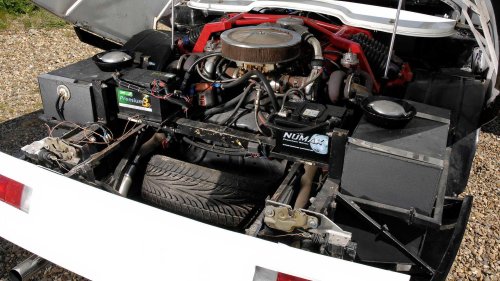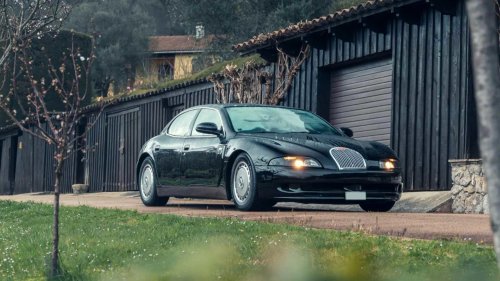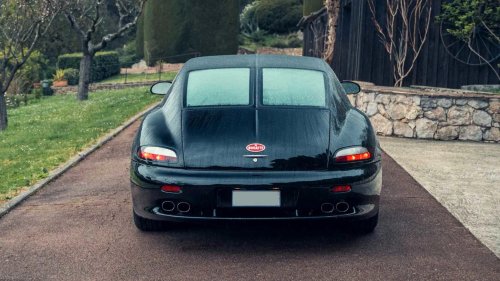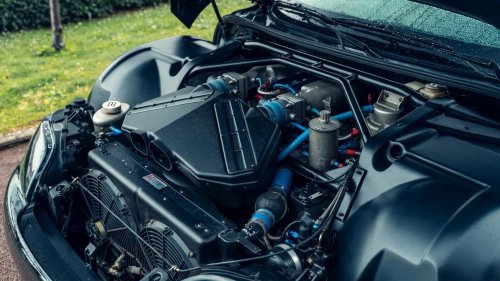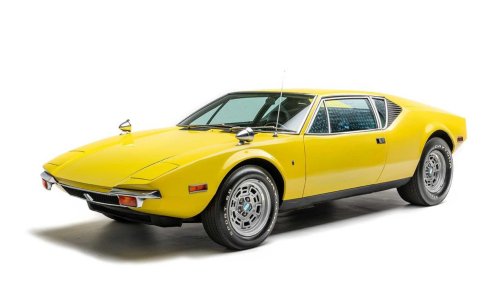
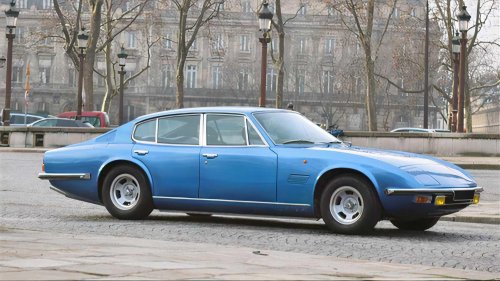
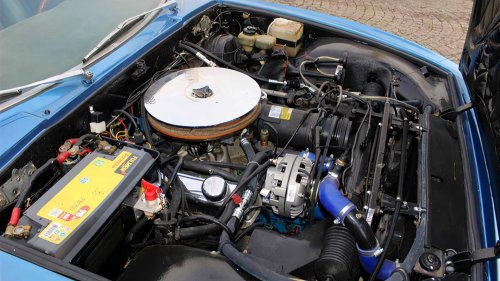
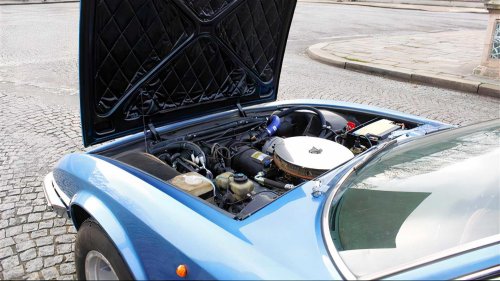
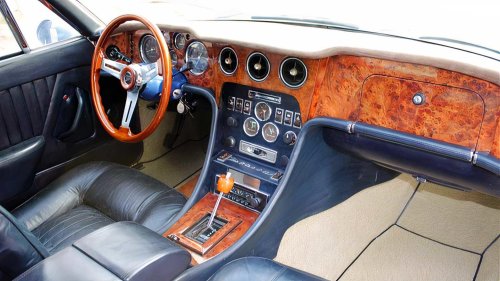
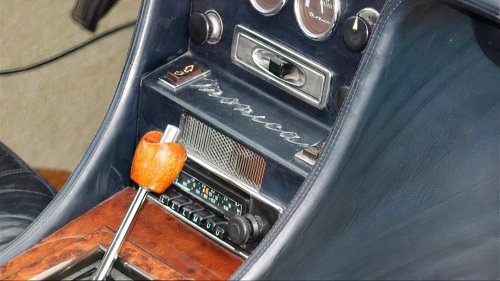
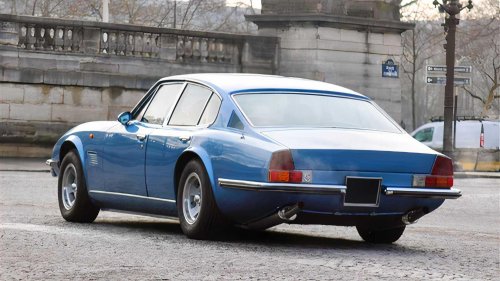



















Jump LinksQuick Facts About The Monica 560 BerlineAn Excellent Display Of Franco-US RelationsCurrent PricingWhile it's not so much the case these days, automakers from around the world used to borrow engines produced by American manufacturers regularly. Think of brands like Rover, a now-defunct English carmaker, which bought the rights to the all-aluminum Buick 215 CID V8 back in the mid 1960s. Rover ended up using this basic design for decades, and only stopped in the early 2000s. Other brands, like ISO, a small Italian outfit, and De Tomaso, also heavily relied on American mills.During such times, the American automotive market was firmly planted within the era of V8s, a period of time that lasted until the 1980s or so. Many of these engines were also used in American muscle cars in some capacity, meaning many of those cars that borrowed our engines had muscle car blood running through them. Another such model to do this was called the Monica 560 Berline, a French car of which there were only a tiny number ever produced. Under its hood lived a fully-fledged Chrysler V8. A French Passion Project Artcurial.com Quick Facts About The Monica 560 Berline Introduced in 1971 Employed the use of a Chrysler LA V8 Originally meant to use a 2.6-liter Triumph engine Approximately 22 to 35 produced Axed following the 1975 model year The Monica 560 Berline's story begins much earlier than its first year of production. At the start, the Monica brand was born out of an interest in cars by a man called Jean Tastevin, the son of a railroad and mining equipment manufacturer. The groundwork for the as-yet-unnamed carmaker was first laid in 1955, when Tastevin was made chairman of the board of his father's company, which provided him with the necessary means, financial and otherwise, to actually start and run his own car company.Tastevin was, reportedly, an avid automobile enthusiast, and had been since childhood. He'd owned several European sports cars, including a French-made model produced by automaker Facel Vega. However, once Facel Vega was put out of business in the early 1960s, Tastevin was forced to buy a Jaguar, which didn't sit well with him due to it not being of French origin. So, rather than try and find a suitable French replacement for his English sports car, Tastevin set about creating his own car company out of scratch. He hatched a plan to utilize a portion of his inherited railway car production factory as the place where his sports car would be built.YT: Under the Radar Cars The Monica company — named after Tastevin's wife, Monique — was officially founded in 1966. Almost immediately, Tastevin realized he needed an engine to power his prototype, which was still in its preliminary sketch phase. He enlisted a company called LawrenceTune, an England-based engine builder, in order to import a 2.6-liter Triumph engine for use in his first prototype. LawrenceTune was also commissioned to help build the initial chassis and other components of Tastevin's prototype. Its engine was swapped out for a 3.0-liter Rover mill early on, and the prototype was first tested in 1968. An Excellent Display Of Franco-US Relations Artcurial.com Several more prototypes were built with a few different engine configurations over the course of three years, until Tastevin settled on a Chrysler LA V8 and a model name of "560." The production 560 was unveiled at the 1973 Geneva Motor Show. Its preliminary price tag was set at 164,000 francs, just 1,000 francs less than a brand-new Rolls-Royce. In total, 14 prototypes were produced before a production model would finally be decided on. Assembly commenced in France in 1973, following nearly seven years of costly pre-production testing, research, and development.Artcurial.com However, more problems arose once production of the Monica 560 was officially underway. Tastevin had hired a director to oversee the car's production, as he was otherwise occupied with running his inherited company. This unnamed director, reportedly, stalled the Monica 560's production for over a year while he made changes to the car's design without permission. Eventually, Tastevin fired this director and turned over the responsibility of production to LawrenceTune for the time being. Unfortunately, the Monica 560 would be short-lived, and LawrenceTune would oversee its production for the duration of its life. In-Depth Specs & Features Artcurial.comThe Chrysler V8 underneath the hood is part of one of the brand's longest-lasting engine groupings, the LA family, which can trace its roots back to 1964. The Monica 560's engine itself is a 340 CID iteration, which was first introduced to the market in 1968. At first, the Chrysler 340 was deemed too unreliable for use within the 560. However, Monica decided to contract an American tuning company called Racer Brown to supe-up the engines and make them more robust and better-equipped for handling Europe's higher speed limits. These tuned 340s featured things like stage three camshafts, an improved Edelbrock intake, and upgraded hydraulic lifters.Artcurial.com Surprisingly, a pair of transmissions were made available for selection. A five-speed ZF-bred manual gearbox was the more-common selection, while a three-speed Chrysler-built TorqueFlite automatic was also on the Monica 560's options list. Rear-wheel drive is the sole drivetrain option. Its chassis was designed and built by LawrenceTune, and was composed of a steel tubular space frame. It also benefited from a De Dion-type self-leveling suspension setup. A full set of disc brakes handled the Monica 560's stopping.Artcurial.comIn total, there were a reported five paint options, including Atlantic Blue, Azure Blue, Purple Amaranth, Chestnut Brown and Beige Sand. Inside, the Monica 560's seats are trimmed with Connolly leather, a type of material commonly found in ultra-luxury vehicles of the time. In addition, the 560's floor is finished with Shetland Wool carpeting, which is another hallmark of old-school European luxury. A full complement of Jaeger instruments sit in its gauges cluster, and its dashboard and center console are finished in real burl elm wood. Current Pricing Artcurial.comIn total, only eight pure production examples of the Monica 560 exist, so popping over to Classic.com to try and find an average sale price is virtually impossible. However, we can use pricing from a recently-sold example to give us some sort of idea. On a European auction house website called Artcurial.com, a 1975 model sold for roughly 108,000 Euros, or approximately $125,188 in today's money. When you think about it, for a one-in-eight bespoke, French luxury car with pop-up headlights and four doors, that price isn't all that astronomical. What Happened To The Rest Of The 560s? Artcurial.comAt least one Monica 560 still exists due to the recent auction sale. However, where did the other seven production models go, and what about the litany of prototypes? As of today, we know that at least three prototype models still exist today somewhere in England, most likely in the hands of a private collector. Three more were in the hands of Tavestin's estate for an unknown amount of time. Chris Lawrence of LawrenceTune owned one of the production models until his death, when it was sold to an unknown buyer shortly after his estate was dissolved. Five other production models were sold to Cliff Davis and Bernie Ecclestone in order to raise funds for LawrenceTune following the close of the 560's production.As for the remaining prototypes and production models, your guess is as good as ours as to their whereabouts.