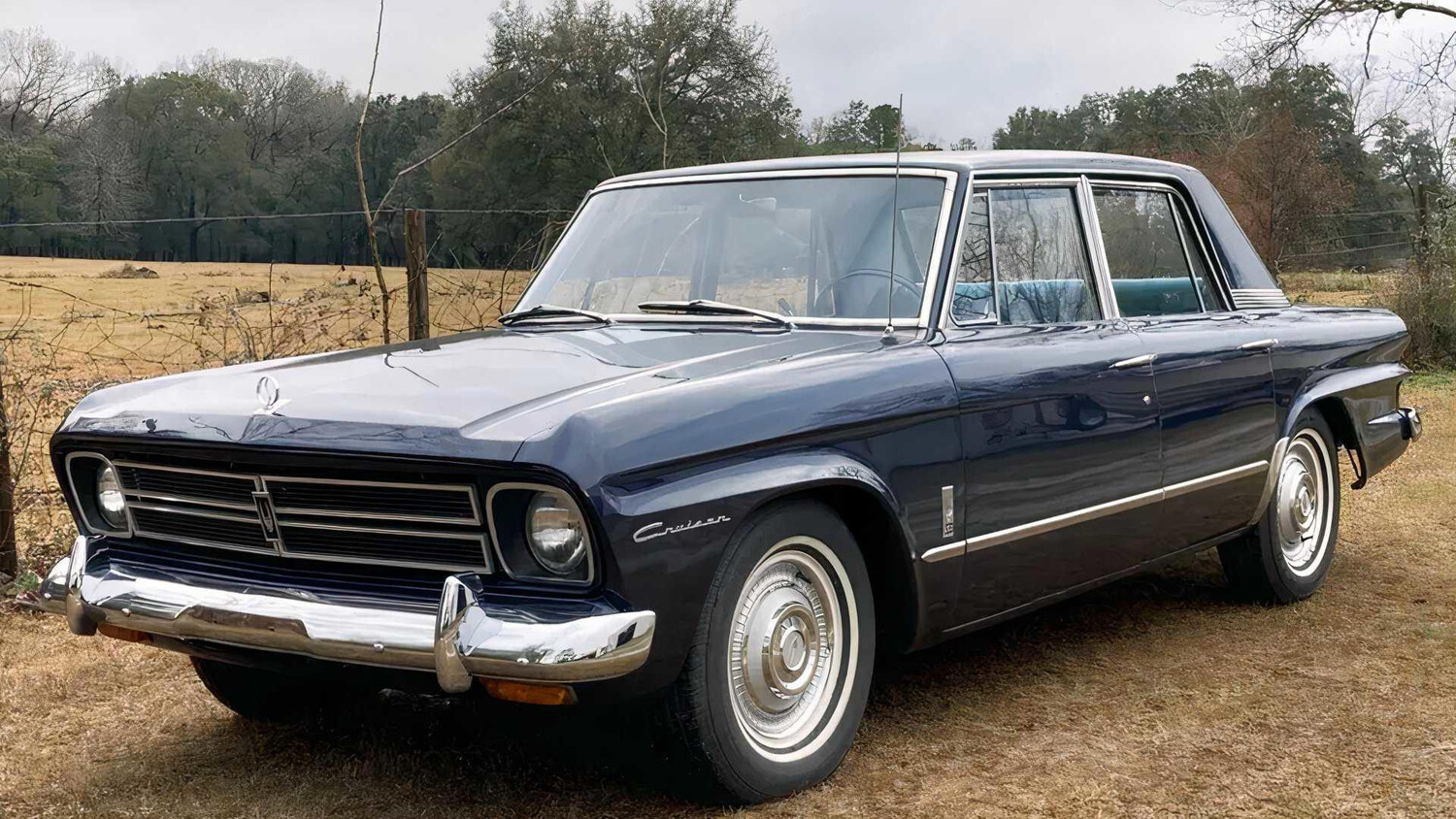
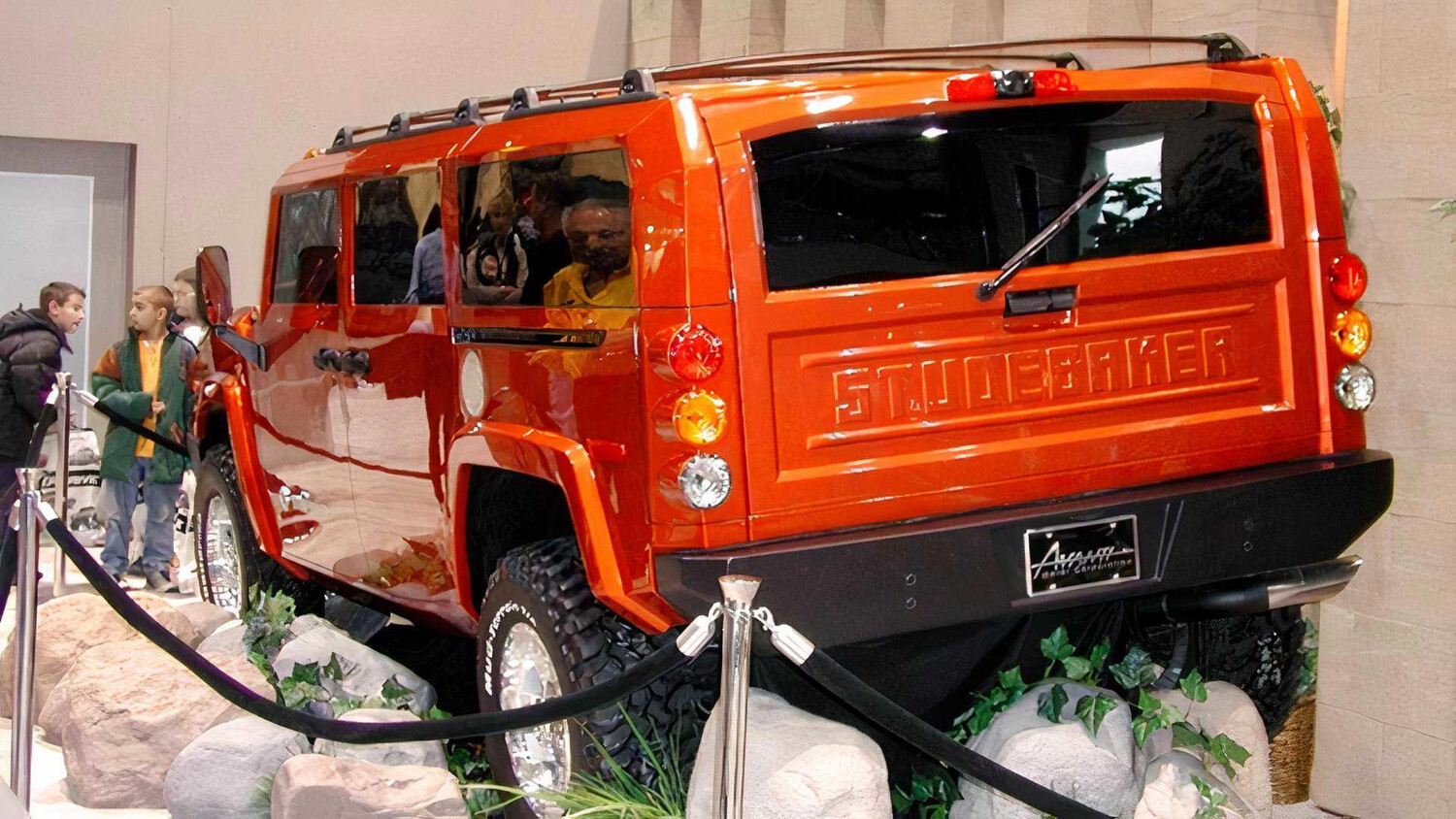
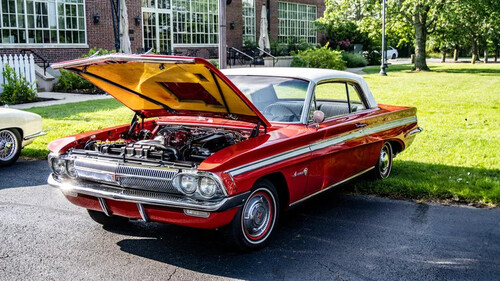
How many times have you seen a YouTuber or auto journalist elsewhere run the headline “Here’s Why We Should Revive Studebaker” or something to that effect? It’s only natural to want a classic American automaker to come back from the dead, and that’s why people still speculate about it endlessly. But little do most know, someone actually did try to do just that with Studebaker. The only problem is, almost nobody at all remembers it. Mostly, that's down to it being one of the most under-the-radar automotive disasters of the 21st century. Studebaker: Gone But Never Forgotten Bring a TrailerBy the time a turquoise 1966 Cruiser, the last Studebaker, left the factory floor in Ontario, Canada, the company had already been on the rocks for years, if not decades. After the end of World War II, These Are The Rarest Muscle Cars The 'Big Three' Ever Madethe established “Big Three” US automakers in GM, Ford, and Chrysler, did everything possible to consolidate their power in Detroit.It meant increasing production volumes to levels smaller OEMs like Studebaker couldn’t hope to keep up with, and it spelled a slow, drawn-out doom for the brand over time. Subsequent labor strikes in the early 1960s did little to help affairs. In the end, Studebaker would undergo a corporate merger of sorts with another American automaker perpetually on the ropes, Packard.The merger was finalized in 1954. But even then, the new Studebaker-Packard Corporation found itself perpetually on its back foot trying to compete with the Big Three. Had proceedings gone even slightly differently, Studebaker-Packard would’ve merged again with George Mason’s American Motors Corp. bringing Nash and Hudson into the fold. Ultimately, this never happened, and Studebaker was left all but irrelevant for the rest of the 20th century. One “Eccentric” Man’s Quest to Bring Back Studebaker Hemmings If there were ever a man ambitious or more likely foolish enough to try and revive Studebaker, look to none other than Michael Eugene Kelly. A charismatic firebrand of an entrepreneur, the dual Mexican-American citizen grew up in South Bend, Indiana, Studebaker's historic home. Kelly had his hands in everything from Cancun resorts to a small chain of mini marts, an auto body shop, and even a startup ethanol fuel additive manufacturer among others.In 1987, Kelly acquired the rights to the Avanti Motor Company of South Bend. It made him the owner of all the surplus tooling and equipment tied to the old Studebaker trucks, as well as the much-beloved and still in-production Avanti sports car. This put Kelly in a particularly advantageous position for reviving the old brand. But not before a round of corporate hot potato that almost seemed humorous in the moment. Kelly sold his stake in the company in 1988, only to buy the brand back in 1999, with the goal of making Studebaker a force to be reckoned with.Kelly moved the outlet’s manufacturing base to Georgia, and commissioned an automotive designer to provide him a viable alternative to the Hummer H2, a man named Rusty Meier. Meier’s design credentials originate in the luxury RV space, which Kelly believed would translate well into the boxy, brutish 4x4 he’d envisioned in his mind. The chassis underneath came from a first-generation F-250 Super Duty, as did the choice of a 6.8-liter V10 gas engine or a 6.0-liter Power Stroke turbodiesel V8, the same you’d find in a full-size Ford Excursion. In the end, Kelly got his Hummer rival, but he should’ve been careful what he wished for. Studebaker XUV: A GM Copyright Lawyer’s Dream Come True theavanti.com (run by Studebaker National Museum)On first impressions alone, what ultimately became the Studebaker XUV makes a big impact, and not necessarily in ways that flatter. It’s like someone attempted to pair the back three-quarters of a Hummer H2 to a front clip someone designed in Blender or Photoshop. At the back, the first prototype looked equal parts like a scaled-down H1 and a Chinese copy of an H2. From every angle but the front, the copycat allegations were hard to ignore.Studebaker’s new bosses did at least attempted to market the XUV as having similar or superior features and refinements compared to the Hummer. Material from the era touted exterior paint color options as being nearly limitless, with a wide range of colors for the leather seats inside. Press release material from the time preserved by theavanti.com detail features like “an in-dash CD changer, solar tinted glass, roof cargo tie-downs, step bars, tow hooks and a stainless steel exhaust system.”Further options included GPS navigation, an extended roof rack, a retractable moon roof, a front bumper winch, heated seats, and undercarriage brush guards. All-in-all, it sounded awfully similar to what Hummer offered with their H2. Just as much as the clearly plagiarized exterior, one could see how GM’s legal team got giddy like the it's Tucker 48 all over again. The Empire Strikes Back, Hard theavanti.com (run by Studebaker National Museum)Through some miracle of oversight, the initial XUV concept managed to land exhibit space at the 2003 Chicago Auto Show. In relative terms, it took all of five minutes post-debut for GM to send a team of suits and briefcases after Kelly’s little upstart. In reality, it only took a week or so after the XUV’s debut in Chicago for the first federal trademark infringement notices to start pouring in. Among a slew of provocative accusations, GM alleged that the XUV blatantly “knocks off and misappropriates the shape,” of their own Hummer.So brazen was the XUV copying Hummer, that GM trademark attorney Charles Ellerbrock told the Wall Street Journal “The Studebaker XUV is so similar to the H2 that the public will be confused by the knock off of the H2,” and that “GM will not allow its world-famous trademark rights to be violated.” Certainly, some scary things to hear out of a company as large and powerful as General Motors. But Avanti Motors did not fade into the night as GM might’ve expected.Instead, Michael Kelly’s outlet responded back, and hard, stating that “Put both vehicles side by side, and there's no question that the Studebaker XUV is distinctly different. There are no parts of an H2 Hummer that fit on a Studebaker XUV, Furthermore, the Studebaker is based on original concepts and designs developed by Avanti Motor Corporation. The Studebaker XUV has a completely different body style, from the front end to the rear gate, and it has sliding rear side doors and a sliding rear roof, that are the same as a 1963 Studebaker Wagonaire." A Panicked Redesign, All for Nothing theavanti.com (run by the Studebaker National Museum)Avanti Motors and GM ultimately settled out of court. But subsequent XUV prototypes attempted to widen the gap between the H2 and the XUV by altering the front clip. Ostensibly, to keep GM’s trademark enforcement team from repossessing the houses and assets of everybody on the XUV’s design team. As a result, the truck looked markedly different the second time it showed up to the Chicago Auto Show in 2004. Evidently, the spectacle it provided a year earlier only drew much-needed foot traffic to the McCormick Place convention center.This time around, the XUV genuinely looked closer to the ‘63 Wagonaire. It was the only way to comply with GM’s strict mandate against building an XUV that bore even a passing resemblance to the Hummer H2. GM even reviewed the updated XUV prototype’s design, allowing it to be displayed in public without a swarm of lawyers descending once again. From there, the XUV was theoretically free and clear to start production in the near future.Michael Kelly aspired to build as many as 1,000 XUVs a year out of its Georgia facility, at a base MSRP of a hefty $75,000. Keep in mind, that’s early 2000s money. Adjusted for inflation, that figure is north of $130,000.Compared to the $48,000 base price an H2 sold for back then, or $84,000 and change in modern money, the Hummer almost looks like a bargain. Of course, it’s the only context in human history where that’s ever been the case. Ultimately, the XUV never made it to production. But not for the reasons you might think. A Wacky Idea Goes Up in Smoke Rear-shot of Studebaker XUVIt’d be easy to write off the XUV’s failure as down to GM’s cartoonishly argumentative trademark team. In truth, that’d be giving them an awful lot of undue credit. The real downfall of Avanti Motors, the XUV, and Studebaker in that form, came down to Michael Kelly’s own almost comical lack of scruples. In December 2006, federal authorities arrested Kelly at the Mayo Clinic in Minnesota. He was charged with running a $342 million Ponzi scheme that siphoned new investments from duped clients to satisfy years-old debts.Shockingly, Kelly’s victims were vulnerable, often elderly individuals in states like Illinois, New York, California, and Florida, among others. The scheme left utter devastation behind for those impacted, making the XUV debacle seem insignificant, almost routine, compared to the very human impact elsewhere. Kelly was held at Chicago’s Metropolitan Correctional Center without bond, and was convicted of federal securities fraud at the end of his trial.Michael Kelly was sentenced to five years in federal prison, with his historic Avanti/Studebaker assets he’d since moved to Cancun seized and sold off to help compensate the victims of his crimes. In 2013, while released on house arrest to undergo treatment for cancer, Michael Kelly died in South Bend. It’s the same place Studebaker itself met its end 47 years prior. Meanwhile, the XUV, in Hummer clone form or otherwise, was never sold to the public. Its assets were acquired by a Colorado-based clothing store owner named Ric Reed. As of 2026, the Studebaker name has never been revived again. In all likelihood, it never will be.Source: theavanti.com (run by Studebaker National Museum), Wall Street Journal