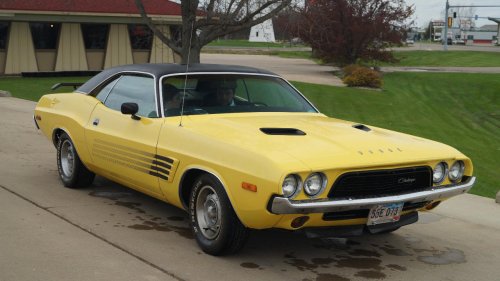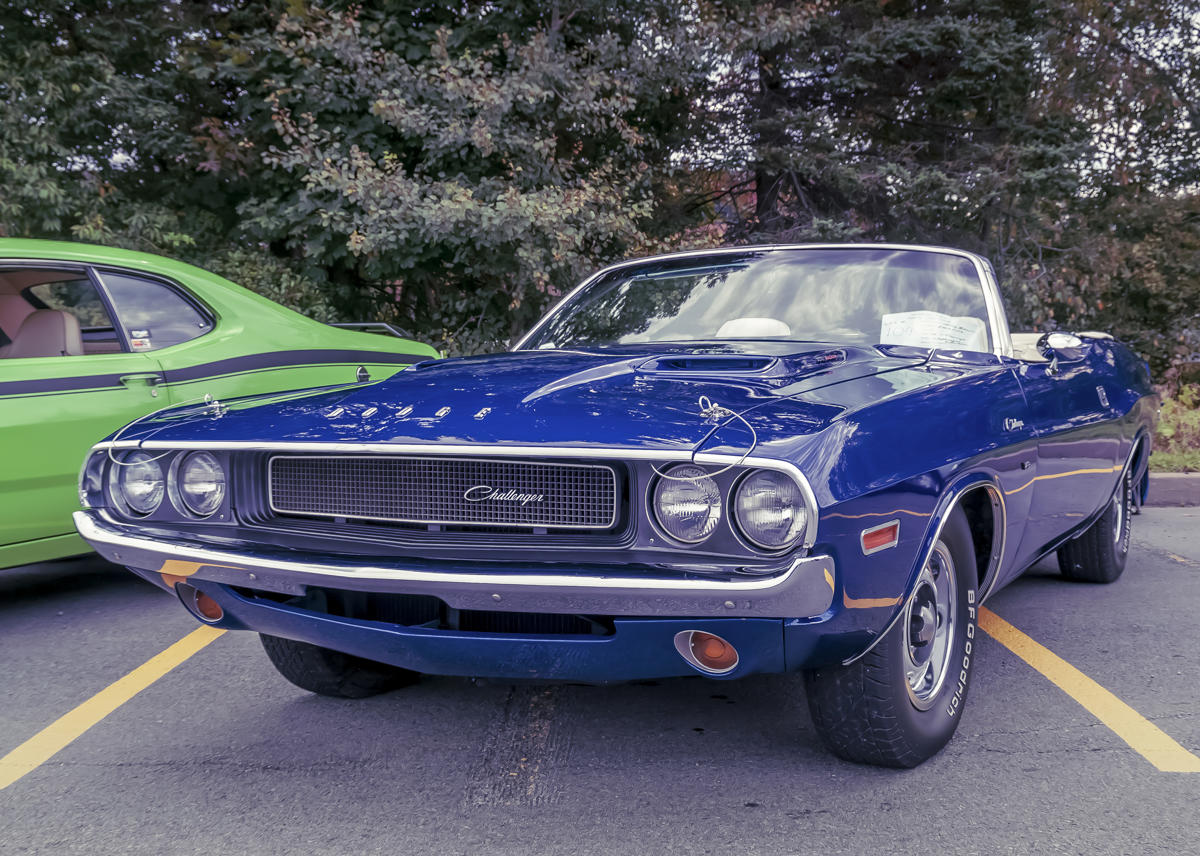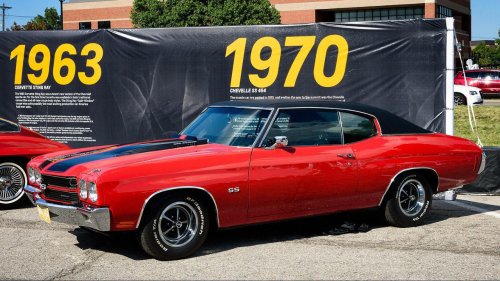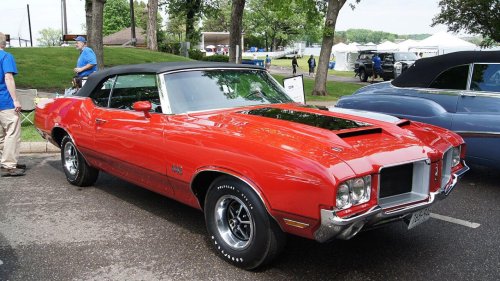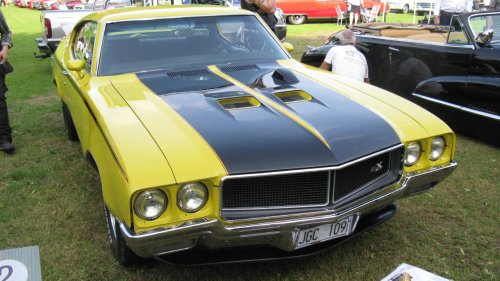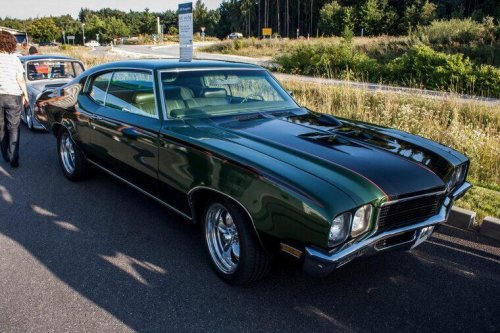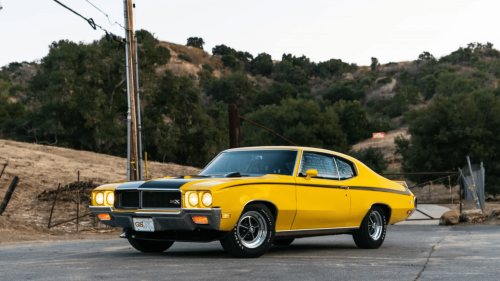
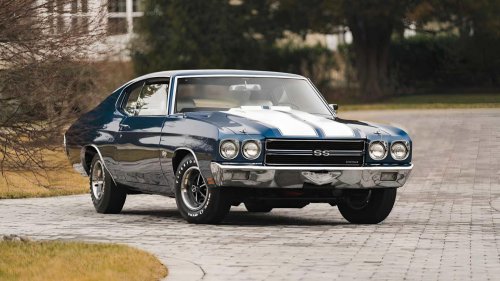
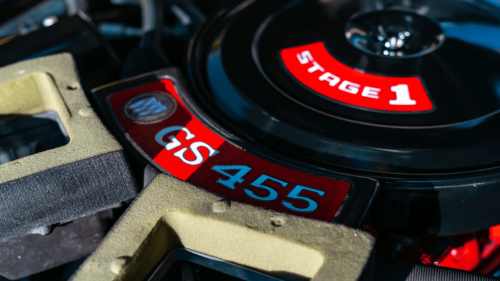
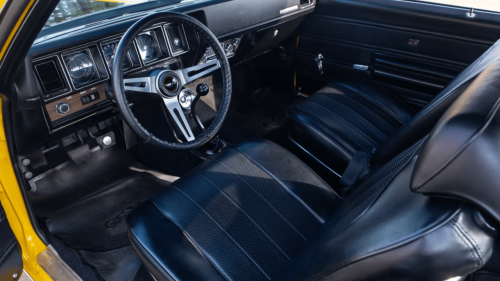
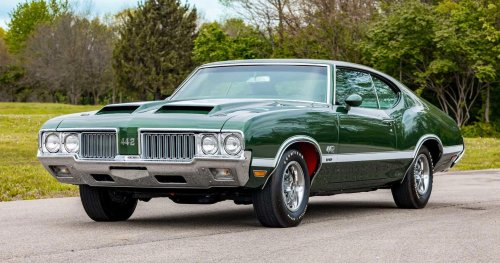
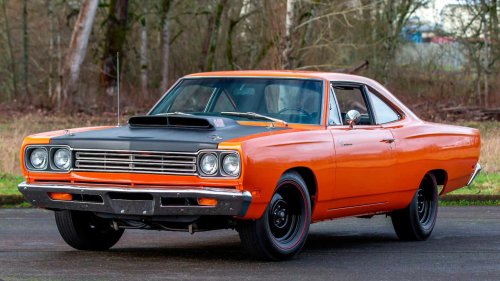



















The early 1970s were a golden era for American muscle cars. It was a time in automotive history defined by massive V8 engines, quarter-mile supremacy, and torque-heavy leviathans that could humble just about anything else on the road. Among the heavy hitters of the time, the Chevrolet Chevelle SS 454 LS6 often takes center stage as one of the most powerful and iconic muscle cars ever built. But lurking in the shadows of GM’s lineup was another heavyweight, and it was one that managed to out-muscle even the Chevelle when it came to torque.The brand, which is the shadow of its former self within the General Motors (GM) stables, has made the transition into SUVs, crossovers and electric vehicles and dominates sales charts in China, but before all of this, it manufactured some brutes that went up against some muscle greats. The Buick GSX Stage 1 Out-Torqued The Mighty Chevelle SS 454 1970 Buick GSX 455 Stage 1 If you couldn't already decipher, that car was the Buick GSX Stage 1. Known as a gentleman’s muscle car, the GSX combined Buick’s flair for comfort and luxury with a devastatingly powerful V8 that delivered 510 lb-ft of torque, making it the single most torque-rich muscle car of the early ’70s. While its legend has long been overshadowed by Chevrolet, Pontiac, and Dodge rivals, the GSX Stage 1 remains one of the most underappreciated machines to come out of Detroit’s horsepower wars.Of course, the Chevy Chevelle SS 454 LS6 is often the first name to come up in conversations on ultimate twist. Its big-block 454-cubic-inch V8 was rated at a staggering 450 horsepower and 500 lb-ft of torque which was enough to ensure almost certain supremacy on the quarter mile. It featured era-distinct muscular styling and a reputation as Chevrolet’s ultimate muscle car. It was an instant legend, and also, later, a pop star icon in the Fast and the Furious franchise.Mecum Auctions But Buick had something up its sleeve. The 1970 Buick GSX Stage 1 was tuned specifically to deliver torque, with the motor being outfitted with an upgraded valvetrain compared to the stock 455. Officially, Buick rated the engine at 360 horsepower, but its torque output came in at an earth-shaking 510 lb-ft, beating the Chevelle SS 454 by 10 lb-ft. That difference may not sound massive on paper, but torque is what launches a car off the line, and the GSX Stage 1 had no shortage of that acceleration punch. Contemporary road tests clocked it at around 13 seconds in the quarter mile at over 105 mph, making it one of the quickest stock muscle cars of its day. That figure is still a wildly impressive feat for faux performance cars in 2025.Where the Chevelle SS 454 was seen as the raw, bare-knuckled brawler of the GM family, the GSX Stage 1 was positioned to carry itself a little bit differently. Buick launched it as a more refined but no less potent alternative. It was a muscle car that ran with all the competition while still coddling its driver with comfort and posh amenities. And while the Chevelle produced more peak horsepower, the GSX’s mountain of torque gave it a crucial edge in real-world usability. It didn’t need to be revved as hard, and contemporary reviewers claim it delivered its full potential with effortless authority. In hindsight, Buick might not have been the most obvious performance brand, but with the GSX Stage 1, it built a car that could go toe-to-toe with the muscle car elite. The GSX Stage 1 Was A Thoroughbred And Stylish Piece of American Muscle 1970 Buick GSX Stage 1 engine bayPart of what makes the Buick GSX Stage 1 so interesting is how it attempted to combine refinement and aggression in a way few other muscle cars of the time ever managed. Buick had long been regarded as GM’s “doctor’s car” brand, which means it was the kind of vehicle you’d expect to see in the driveway of a well-to-do professional instead of being driven by a greased-up blue-collar worker, on his way to the local drag strip.The GSX package was available only on the Gran Sport 455, and in 1970, it came in just two colors: Apollo White and the now-iconic Saturn Yellow. Both featured bold black striping, a hood-mounted tachometer, front and rear spoilers, and distinctive GSX badging. Inside, the car leaned toward comfort with plush seating, full instrumentation, and available air conditioning, which seem commonplace in 2025 but were not features always prioritized by other muscle car manufacturers of the era. Road testers of the day were impressed at how it could deliver low 13-second quarter-mile times while still offering comfort features unheard of in rivals like the Plymouth Road Runner or Dodge Super Bee.Production numbers added to its exclusivity. Just 678 GSX Stage 1s were built in 1970, making it far rarer than Chevelle SS or Pontiac GTO rivals. Its power output was also widely believed to be underrated. While Buick claimed just 360 horsepower, many historians and dyno results suggest the Stage 1 produced closer to or well over 400 horsepower. The understated rating likely had more to do with insurance companies clamping down on high-performance cars than the engine’s true capability. The GSX Stage 1 Remains A Potent Buick That Still Flies Under the Radar Today 1970 Buick GSX Stage 1Despite its performance credentials, the GSX Stage 1 never achieved the same mainstream fame as the Chevelle SS, Plymouth Hemi ’Cuda, or Dodge Charger. Buick’s image as a more reserved, older-skewing brand meant that muscle car buyers didn’t flock to dealerships in the same numbers. That lack of recognition, however, has turned the GSX Stage 1 into something of a hidden gem today.Collectors who know their muscle cars recognize their rarity and capability, and as a result, prices have steadily climbed over the years. Well-documented examples of the 1970 GSX Stage 1 have sold for between $150,000 and $250,000, with especially pristine or historically significant cars pushing well beyond that. While Chevelle SS 454s and Hemi ’Cudas often dominate headlines with multi-million-dollar sales, the GSX offers a relative bargain considering its rarity, parity of performance, and unique identity. Finding an original, numbers-matching GSX Stage 1 has become increasingly difficult, as many were raced, modified, or simply driven hard, which makes surviving examples all the more desirable. Other ‘70s Muscle Cars That Played The Same Torque Game Bring a TrailerWhile the GSX Stage 1 stood alone in its torque supremacy, it wasn’t the only muscle car of the era that delivered massive twisting force. The early ’70s were packed with torque-heavy V8s that defined the muscle car ethos, and Buick was not the only brand making engines capable of rearranging your spine when the light turned green.Oldsmobile’s 442 W-30, for example, shared the 455-cubic-inch engine architecture with Buick and was tuned to deliver 370 horsepower and 500 lb-ft of torque. Pontiac followed a similar path with the GTO 455 HO, which offered 480 lb-ft and added to the legend of the “goat.”Mecum AuctionsOver in Mopar territory, Dodge’s Challenger R/T equipped with the 440 Six Pack produced 390 horsepower and nearly 500 lb-ft of torque. Plymouth also kept the fight alive with the GTX 440, another big-block brute with 480 lb-ft that emphasized both power and style.These cars all delivered extraordinary torque figures that kept them competitive in the horsepower wars of those specific years, but the Buick GSX Stage 1’s 510 lb-ft remained unmatched on paper.The 1970 Buick GSX Stage 1, therefore, stands as a unique chapter in the muscle car story as one that dared to challenge the biggest names of its time and, in one key metric, beat them all. It also gave buyers the best of both worlds, with Buick's reputation for refinement paired with that 455's drag-strip-ready performance package. Even by today's standards, the 510 lb-ft that dethroned its rivals is still impressive, and a reason as to why it needs to go down as one of the most impressive muscle cars ever built.Sources: Classic.com, Audrian Auto Museum