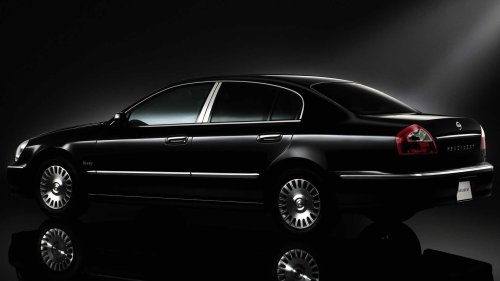
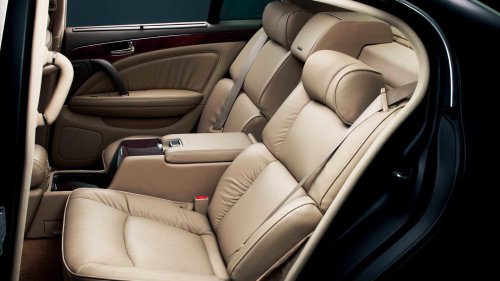
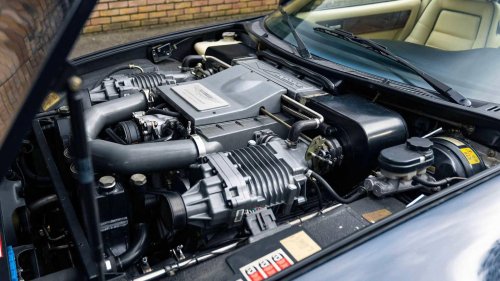
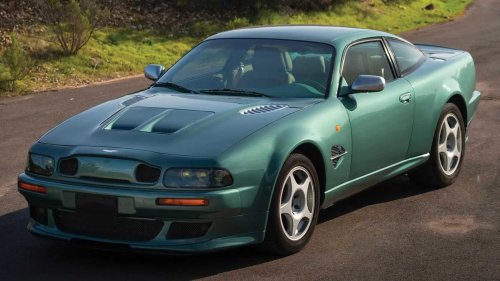
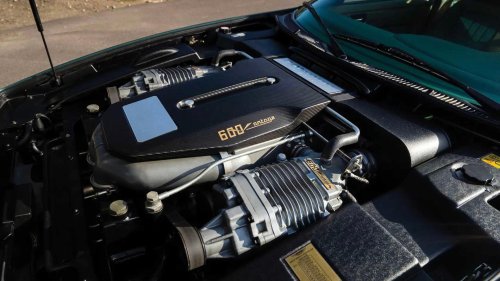
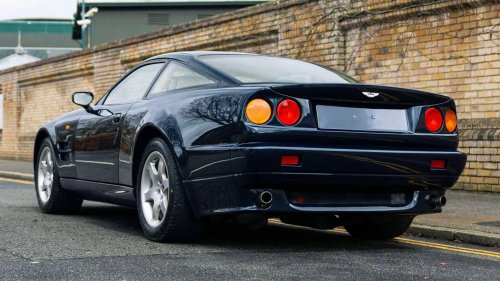
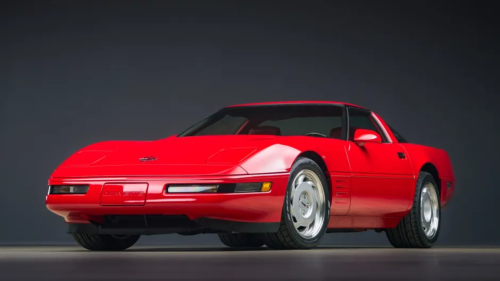
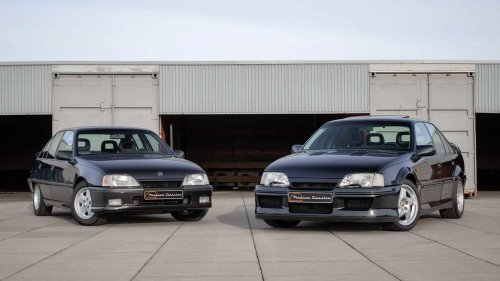
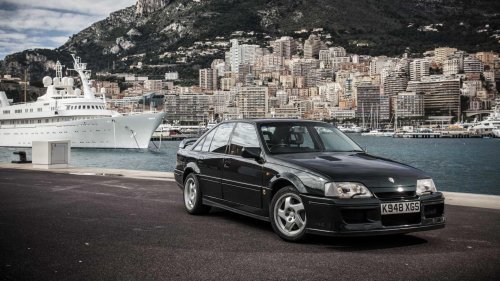
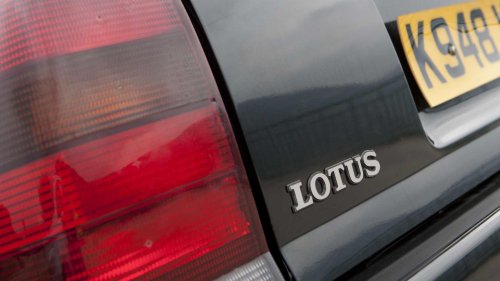
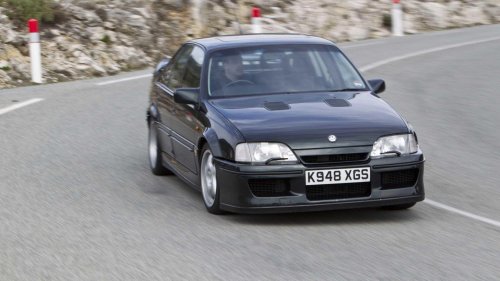
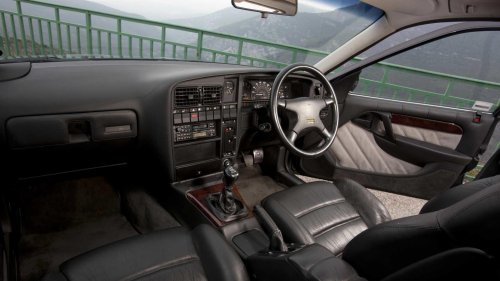
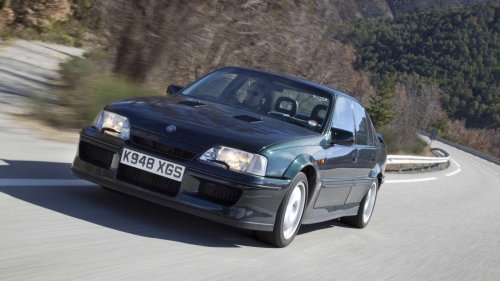
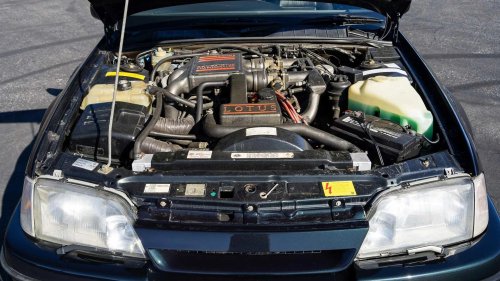
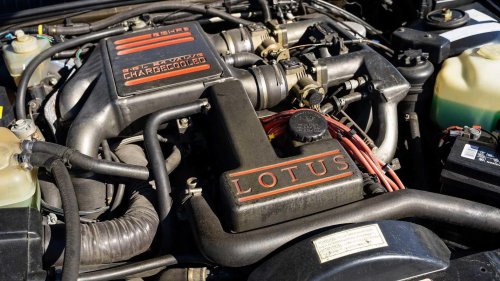
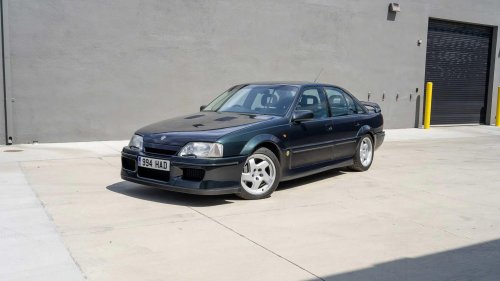
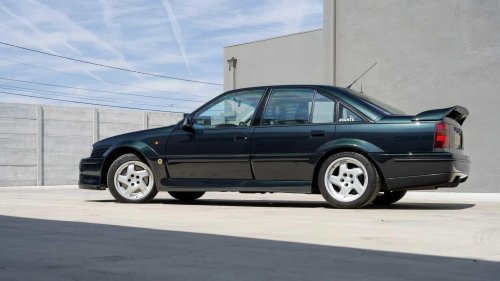
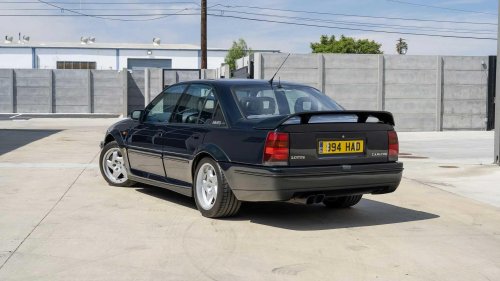
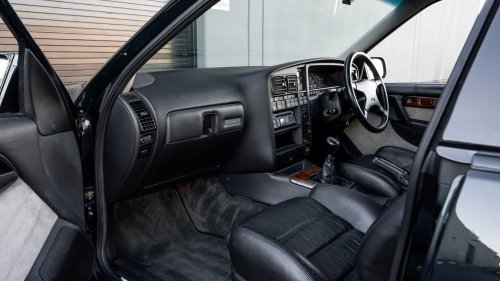
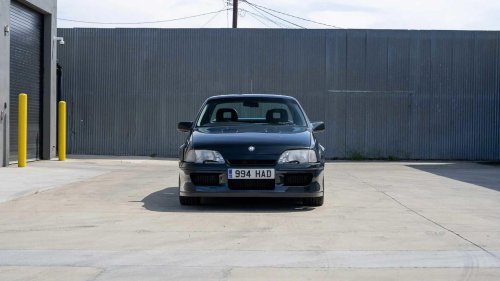
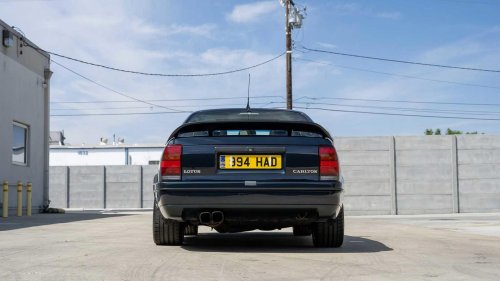
On November 16, 1990, the House of Commons held a debate about a family sedan. Not a pharmaceutical. Not a controlled substance. A road car, finished in paint so dark it reads as black in anything less than direct sunlight, with enough rear seat space for two adults and a trunk that could handle a supermarket run.The Association of Chief Police Officers had already gone on record: this car was too fast for public roads and needed to come off them. The tabloid press was running it as a national outrage. By the time that Parliamentary session ended, the car's own advertising had been separately condemned from the floor of the chamber.The Vauxhall Lotus Carlton had been on sale for less than a year. It had already been stolen and used as a getaway vehicle in a string of UK ram raids, netting the thieves around £20,000 worth of cigarettes and alcohol. Police couldn't pursue it. Its top speed was nearly double what any patrol car in the country could match. The campaign to ban it was real, it reached Parliament, and it failed completely. For gearheads who've followed this car for decades, that failure is precisely the point. The C36GET: What Lotus Actually Built Bring A TrailerLotus engineers started with Opel's 3.6-liter inline-six and treated it as raw material, not a foundation to tune around. What came out the other side was the C36GET, fed by a pair of Garrett T25 turbos. The external additions are only part of it. Lotus reinforced the cylinder block, fitted forged pistons throughout, and upgraded the connecting rods. This wasn't a chip tune and a new exhaust. They rebuilt the engine from the bottom end up.The project carries Lotus's internal type designation, Type 104, which tells you this wasn't a badge job commissioned with a brochure deadline. It was a full Lotus engineering program, and the Norfolk operation treated it exactly that way.Bring A Trailer Getting 419 lb-ft of torque to the rear wheels meant sourcing a gearbox from outside Europe entirely. The six-speed manual came from the Chevrolet Corvette ZR-1, because it was the only production unit at the time capable of handling the load without folding. The gearing runs tall enough that first gear takes the Carlton to around 55 mph before you reach for second. Lotus also fitted AP Racing brakes at both ends and reworked the suspension geometry so the chassis could realistically keep up with what the engine was doing.The body communicated almost none of this. A rear spoiler, hood cooling vents, wider wheel arches, and Lotus badges on the front fenders and trunk lid. From across a parking lot, it looked like the standard Carlton it was based on. What 377 Horsepower Meant In 1990 Bring A Trailer Run those numbers against the rest of the world in 1990 and they stop looking impressive and start looking genuinely unreasonable. The BMW E34 M5 was the benchmark European performance sedan, the car serious buyers stretched their budgets to own. It made 311 hp. The Ferrari Testarossa, a mid-engine Italian supercar that existed largely as a poster on every car-obsessed teenager's wall, made 385 hp. The Lotus Carlton, a four-door road car sold at Vauxhall dealers, made 377 hp.The torque advantage over the M5 was more significant than the power number: 419 lb-ft against 266 lb-ft, a 58 percent margin. Three hundred and fifty of those pound-feet were available from 2,000 rpm, which means the power wasn't buried at the top of the rev range where you'd need to row through the gears and commit fully to find it. It was just there. Zero to 60 mph in 5.1 seconds. Zero to 100 mph in 11.1 seconds.It had a top speed of 176 mph, making the Carlton the fastest four-door production sedan in the world at launch.Would you have believed any of that standing in a Vauxhall showroom? A slightly wide family car in dark paint, badged Vauxhall. That gap between the car's appearance and what it could actually do on a road is exactly why the tabloid press decided it was a public menace. Two Badges, One Recession, 950 Cars Bring A Trailer Opel's original production target was 1,100 units. The early 1990s recession didn't respect that figure. When Lotus halted the production run in December 1992, around 950 cars had been completed, 150 short of the plan. At £48,000 in the UK, roughly ten percent above the E34 M5 at the time, the Carlton wasn't shifting fast enough in a collapsing economy to justify continuing.The badge split matters if you're buying or researching seriously, because the 950-unit total covers two distinct market identities. Three hundred and twenty cars were sold in the UK as Vauxhall Lotus Carltons. The remaining 630 went to continental Europe as Opel Lotus Omegas. Mechanically identical across every meaningful spec: same C36GET engine, same ZR-1 six-speed, same AP Racing brakes. For UK buyers and UK collectors, though, the relevant pool is 320 cars, not 950.Bring A Trailer Every one of them left the factory in a single color: Imperial Green. It reads as a named paint option but is dark enough that it photographs as straight black in anything other than direct sunlight. That understated, borderline-sinister finish suited the car perfectly. It was making Ferrari-adjacent horsepower under a Vauxhall badge. There was nothing to prove in the paint. Parliament, ACPO, and the Campaign That Came To Nothing Bring A Trailer The Association of Chief Police Officers didn't issue a polite advisory. They formally called for the Lotus Carlton to be banned or restricted from UK roads. The campaign gained real traction through late 1990: tabloids were running it as a public safety crisis, ACPO framed it as a policing problem, and by November it had cleared the threshold into a Parliamentary debate on the floor of the House of Commons. During that November 16 session, the car's own advertising had been separately condemned.The press had a specific, hard-to-argue incident to anchor the coverage. A Lotus Carlton registered '40 RA' had been stolen and used as the getaway car in a series of UK ram raids, with the thieves lifting approximately £20,000 worth of cigarettes and alcohol across multiple jobs. Police pursuit was not attempted.The Carlton's top speed was nearly double what any patrol vehicle in the country could produce, and that gap wasn't a driver-skill question. It was a capability gap, full stop.Parliament debated. ACPO pushed. Tabloids ran front pages. And then nothing was legislated. No speed limiters required. No sales restrictions imposed. No formal ban of any kind. The campaign failed, the car remained entirely legal to buy and drive, and the Lotus Carlton continued being sold at Vauxhall dealerships to anyone who could write a £48,000 check. It was never banned. The establishment tried, and the car outlasted the attempt. What The Survivors Are Worth Now Bring A Trailer A Vauxhall Lotus Carlton in average condition is valued at around £45,000 today, and at least one pristine example has sold for nearly $150,000. For a 320-unit UK production run that's now more than thirty years old and has been living on British roads all that time, 'average condition' covers genuine territory. It means a driving example with some documentation, not a freshly restored show car.The top of the market tells a different story. A 1991 Carlton sold at Historics at Mercedes-Benz World in Weybridge in November 2023 for £111,524. A 1993 example with under 29,000 miles, dry-stored from new, presented in first paint and accompanied by a substantial history file, came to auction in August 2025. The listing described it as 'a rare and possibly unrepeatable opportunity for collectors,' which is exactly the language that moves serious money.Bring A Trailer The supply side is not getting better. Thirty-year-old cars leave the usable pool every year through modifications, accident damage, and attrition, and the 320-unit UK figure only moves in one direction. Documented, low-mileage, single-color-from-factory Carltons are becoming genuinely difficult to find at any price point. Anyone who has watched this market over the past decade isn't surprised by the trajectory, and the November 2023 hammer price suggests the ceiling is still being discovered.The Lotus Carlton was never banned. But a four-door family sedan that put ACPO on the record, brought a debate to the floor of Parliament, and outran every pursuit vehicle in the country as a stolen getaway car has a biography that most performance cars never get close to matching. These cars belong with people who understand what Lotus actually built here. With 320 UK examples in the world and a market tracking steadily upward, anyone serious about getting into one should be watching the auction listings closely right now.Sources: The Classic Valuer, UK Parliment, Evo Magazine, Glenwatch Auction Database

















 +15 others