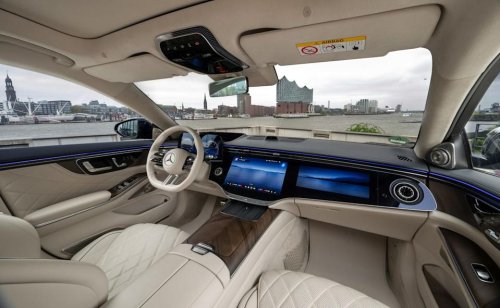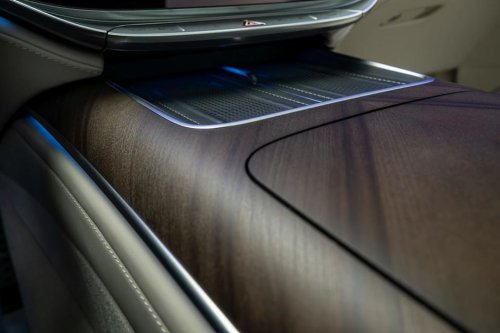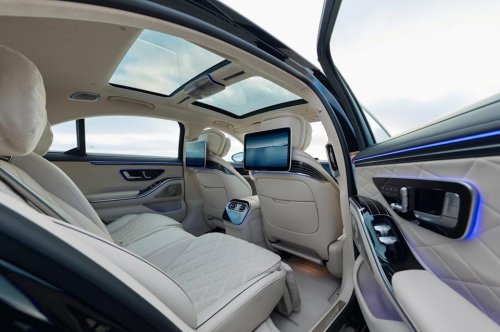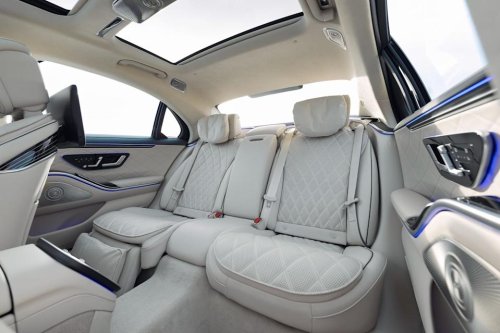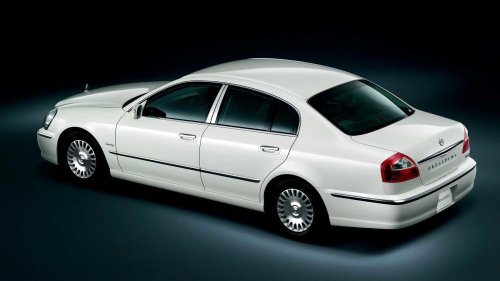
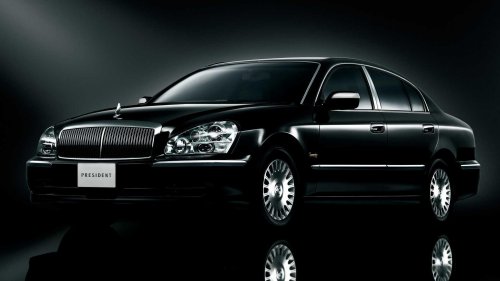
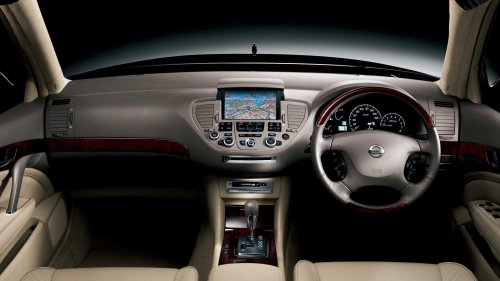
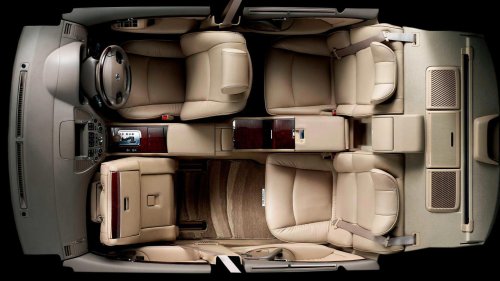
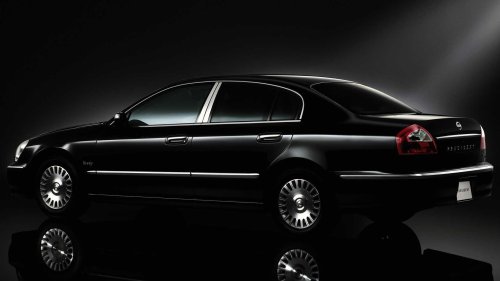
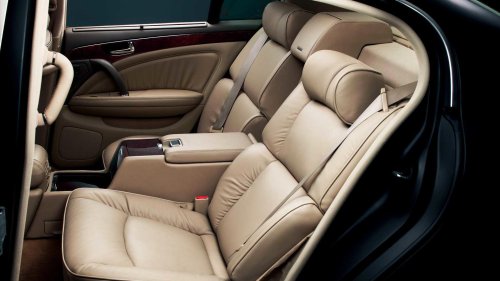
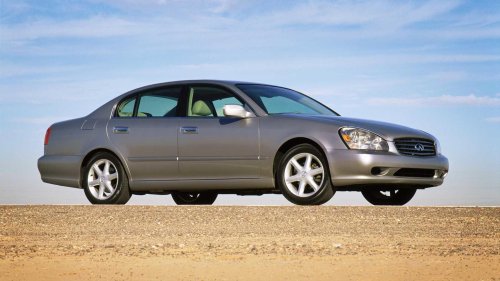
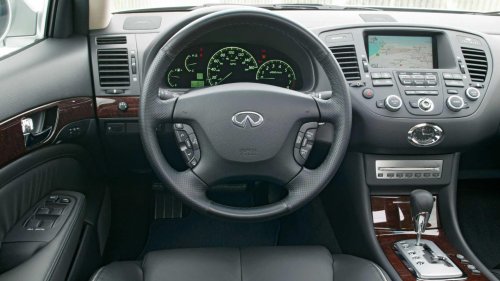
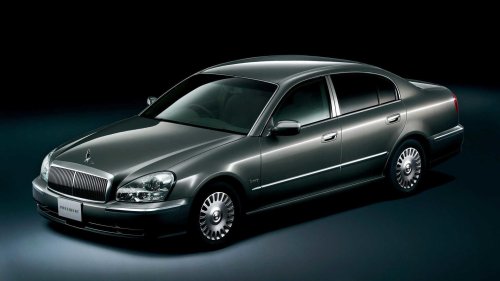



















UPDATE: 2026/03/31 10:44 EST Fourth-Generation Nissan President Nearly Eligible For US ImportAdditional information has been added to this article about the eligibility for the import of the Nissan President to the US under the 25-year import rule.Everybody knows how the original Lexus LS put Germany's automakers on notice with the Japanese sedan's luxury, refinement, and, as the world came to know in later years, its bulletproof reliability. However, Lexus wasn’t the only Japanese brand to build a credible alternative to hallmark luxury sedans such as the BMW 7 Series and Mercedes-Benz S-Class.Nissan also engineered its own answer, one that didn’t chase headlines but instead focused on the fundamentals that matter most when the road stretches long, and expectations run high. That car was a fourth-generation Nissan President, built between 2003 and 2010. Sold primarily in Japan, it flew under the radar despite delivering an interior that rivaled Europe’s finest, a dynamic chassis, and a smooth, powerful V8 engine.But with that model now approaching 25 years since it entered production, it's about to become legal for import to the US under the 25-year import law. So before you find one to ship over to the US, here's what you need to know. Nissan President: A Little-Known Luxury Flagship Nissan Key Facts Debuted at the 2003 Tokyo Motor Show Shared a platform and styling with the third-generation Infiniti Q45 Had the option of two individual rear seats with reclining function The Nissan President, first launched in 1965, was conceived as a statement of domestic prestige, emphasizing comfort, craftsmanship, and the understated elegance that would come to define Japanese luxury sedans in later decades. Nissan wanted to prove it could keep pace with Toyota, while also offering its own flagship sedan that would appeal to Japanese government officials and other dignitaries.NissanMuch like Toyota with its ultra-luxury Century sedan, which arrived two years after the first President, Nissan didn’t use a separate luxury brand to market its ultimate offering. Nissan didn’t have a dedicated luxury brand at the time, and Infiniti wasn't around until 1989. Even after Infiniti’s launch, however, the President remained a Nissan nameplate, retaining its role as the company’s domestic flagship.Following the first President, Nissan introduced second- and third-generation models in 1973 and 1989, respectively. The third-generation President, with some revised styling and a slightly shorter wheelbase, served as the basis for the first Infiniti Q45, giving American buyers a taste of Nissan’s flagship luxury offering. Similarly, the fourth-generation President, launched in 2003 and quietly retired in 2010 without a successor, shared a close relationship with the third-generation Q45 while remaining focused on Japanese-market priorities, including being offered only with right-hand drive.A V8 engine has always been central to the President lineup, becoming the standard powertrain starting with the third generation. In its early years, offering a V8 was a mark of extravagance, particularly in Japan, where punitive taxes on larger engines made it rare and prestigious. By the fourth generation, the V8 was tuned not for spirited performance but for smoothness and refinement, producing 276 horsepower in accordance with the “gentlemen’s agreement” among Japanese automakers.NissanInside, the fourth-generation President exuded a level of luxury that rivaled, and in some respects surpassed, its German rivals. This was especially the case for models configured with the available four-seat layout. Rear passengers enjoyed two individual power-adjustable seats with reclining, massage, and leg-rest functions, complemented by a stowable front passenger seat for added comfort. Such was the attention to detail that the rear center console was slightly offset to the right, creating one of the widest rear seats in the class for the lucky person sitting behind the front passenger. A large, multifunctional center console, a retractable rear-seat table, and an 8.0-inch digital display – connected to a DVD player – further added convenience and a little entertainment.Nissan Beyond its opulent cabin, the car also featured an impressive suite of advanced technology rare for its time. The list included automatic emergency braking and active headlights that adjusted their beam based on steering angle and vehicle speed, improving visibility at night. An active damper suspension system was also included, helping to deliver a smooth yet controlled ride. When Does The President Become Eligible For American Import? Nissan As the Nissan President was never sold in the US, the few examples you’ll find for sale here are typically the result of imports under the 25-year rule. For the uninitiated, the rule allows vehicles to be imported and fully registered without meeting modern safety and emissions standards once they reach 25 years of age, essentially when they’re considered classic cars. Since the fourth-generation President was only launched in 2003, it won’t become eligible until 2028.Crucially, that will only be for models produced in 2003, and later models would require you to wait until 25 years have passed since the specific car you're eyeing was produced. However, the good news is that earlier Nissan Presidents are still fantastic cars, and are eligible for import as long as they were produced in or before 2001. Third-Generation Presidents And What They Cost A search of popular classic car classifieds shows mostly third-generation Presidents (built from 1990 to 2002) for sale here, along with a handful of second-generation examples (built from 1973 to 1990). Sale prices average around $6,000, according to Classic.com. Fourth-generation examples in Japanese classifieds start as low as $3,000 and can reach up to $10,000 for low-mileage models. The prices aren't bad considering the car's rarity, with even Nissan's own press release for the fourth-generation President stating that the annual sales target was a mere 240 units.NissanHigh mileage shouldn't worry prospective buyers. The fourth-generation President should hold up well thanks to the commonality of many parts with other Nissan models. The situation might make sourcing some parts a little easier than for a more exotic European sedan, and the cost of repairs potentially lower than for a 7 Series or S-Class of the same vintage. As noted above, the platform and powertrain are shared with the third-generation Infiniti Q45.Regarding the Infiniti, CarComplaints reports very few issues across model years, with only minor complaints such as electrical glitches or seat-motor problems. Some years, like 2003, recorded zero reported problems, which bodes well for the President's reliability. Nissan’s 4.5-liter V8 is also widely regarded as strong and durable when properly maintained, having been used successfully in multiple Nissan and Infiniti models sold in the US, with many examples reaching high mileage without major failures. Infiniti Q45: Close, But Not Quite Nissan For anyone not willing to wait until the fourth-generation Nissan President becomes eligible for import under the 25-year rule, or simply not keen on driving a right-hand-drive car, the third-generation Infiniti Q45 presents a compelling alternative. Introduced to the US for the 2002 model year and sold through 2006, the Q45 was effectively a twin of the Japanese-market Nissan Cima, itself a little brother to the President.The Q45 (and Cima) used a shortened version of the President’s platform and the same 4.5-liter V8. However, Infiniti tuned the Q45 with a sportier chassis, firmer suspension, and extra horsepower, giving it a more dynamic feel, while the President’s focus was on effortless, chauffeur-driven refinement.InfinitiWhere the Q45 falls short is in interior luxury. Its cabin, while well-appointed, doesn’t match the President’s lavish materials, rear-seat amenities, or overall sense of occasion.On the used market, examples with fewer than 100,000 miles start around $10,000. At the same time, higher-mileage cars can be had for as little as $5,000, making it a surprisingly accessible taste of Nissan’s flagship DNA with a sportier edge. Japanese For Stealth Wealth Nissan The Nissan President proves that luxury doesn’t need a flashy badge. With unmatched comfort, reliable engineering, and a refined V8, it quietly outclasses many European rivals while staying under the radar. This makes it a true testament to understated Japanese excellence.