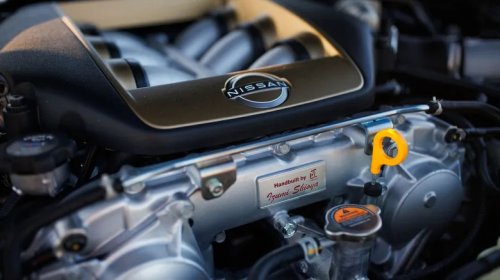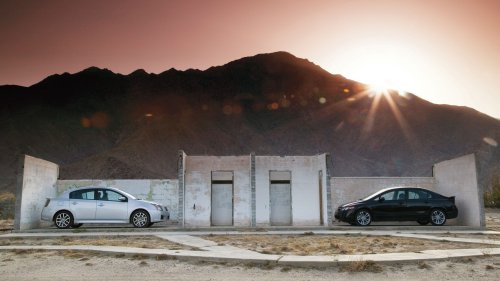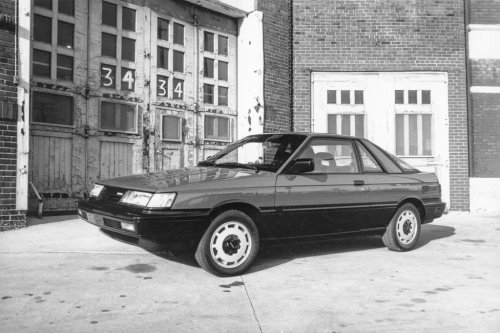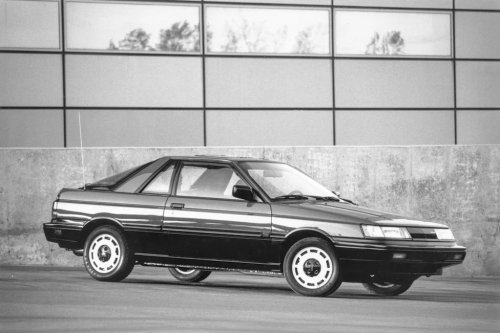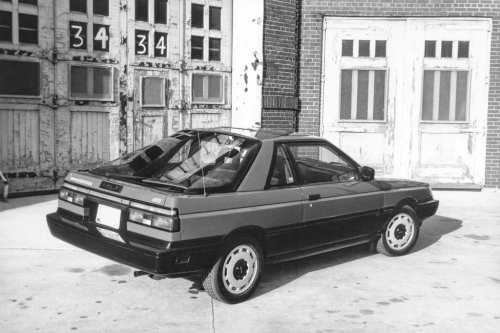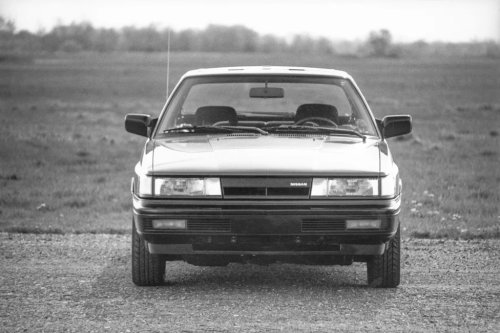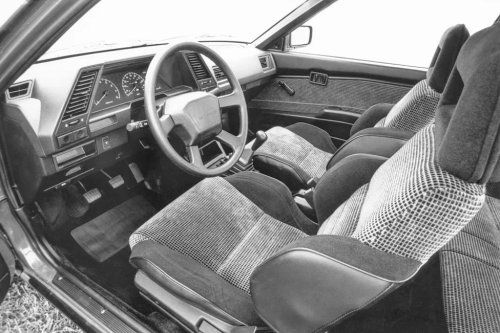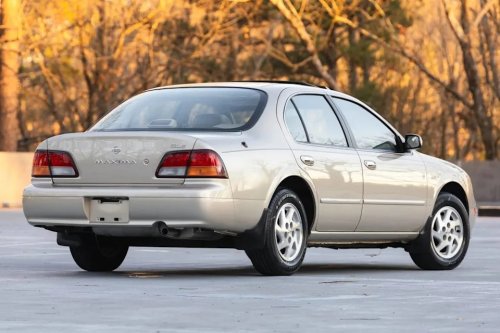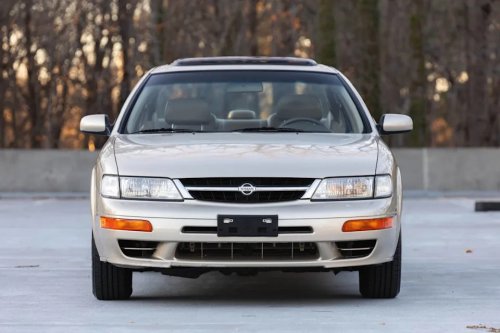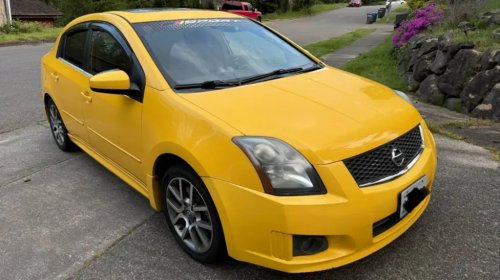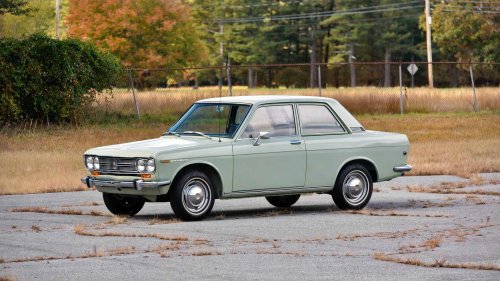
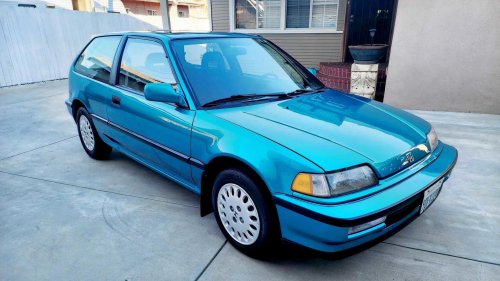
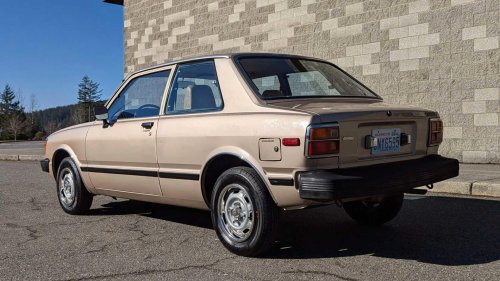
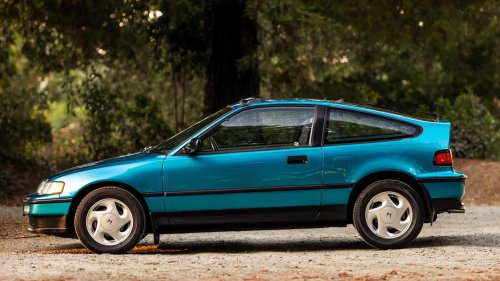
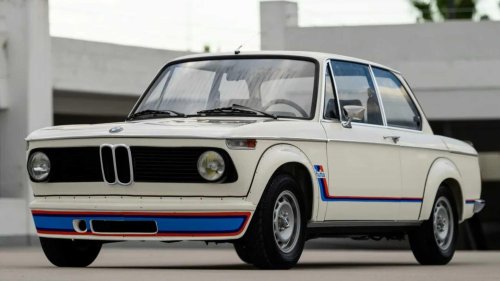
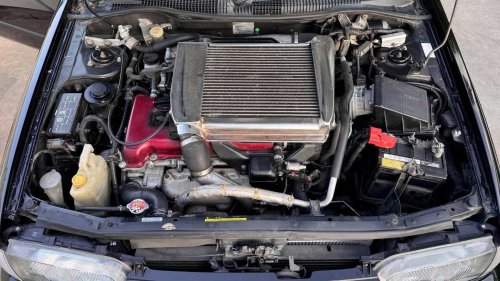
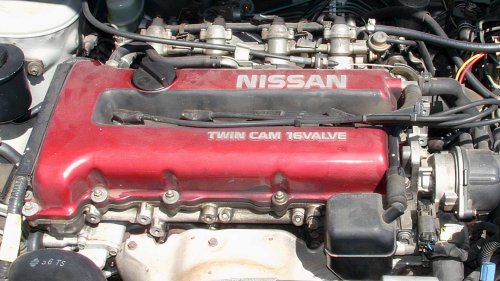
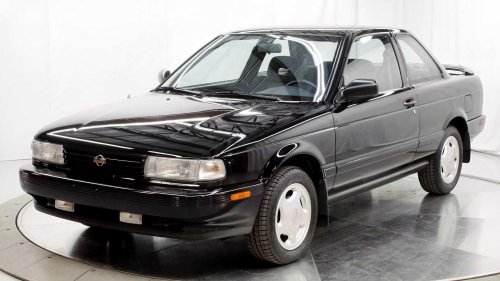
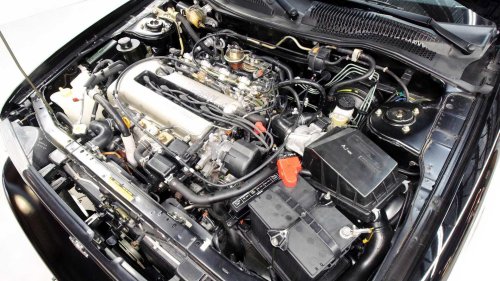
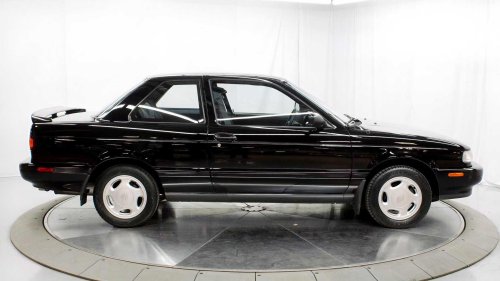
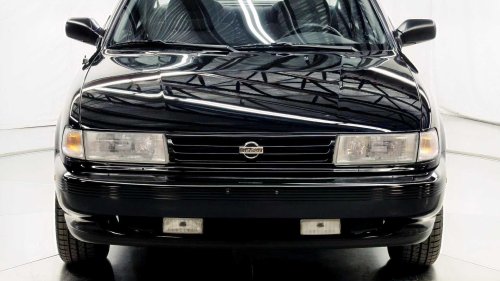
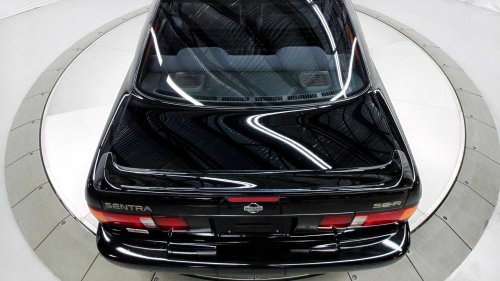

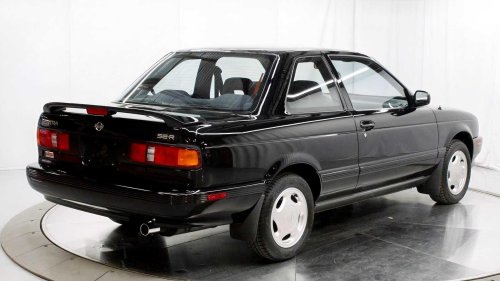

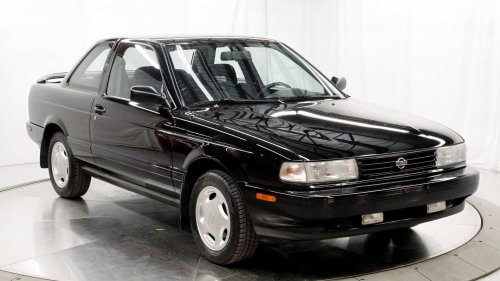



















Some cars are built to go unnoticed. They sit on the showroom floor next to base-trim specials, wear the same sheet metal, and give no reason to look twice. During the 90's, there was a car that fit perfectly into this description, better than anything else on the market. It was an early '90s compact two-door sports sedan (yes, they exist) that almost nobody recognized for what it actually was. The tuners figured it out, though, and once they did, the legend never stopped growing. The Early '90s Sport Compact Scene Locked Sedan Buyers Out Via Mecum The early 1990s compact market had sport covered, as long as you were happy with two doors. There were coupes and hatchbacks everywhere you looked. If you wanted something fast that also held four people, the segment simply did not always have an answer. That gap had sat open since the Datsun 510 went out of production in 1973, and nobody seemed to be in any hurry to fix it. The Hot Compacts Were All Coupes And Hatchbacks Via BaT The 1991 Honda Civic Si was a hatchback. The Acura Integra GS was a coupe. So was the Honda CRX. Run down any budget performance car from the era and the pattern holds: the one that actually went fast probably came with two doors, not four. These were the cars setting the bar for the sport compact segment: lightweight, sharp, and flat-out fun to drive. But the spec sheet always ended at two doors. If you needed four, none of these cars acknowledged your existence, and the segment had not offered a convincing answer since the Datsun 510 went out of production 18 years earlier. The Two-Door Sedan Existed Bring a TrailerMany people today assume sedans have always been four-door vehicles, but that wasn't always the case. The term "sedan" originally referred to the body style's enclosed, fixed-roof structure rather than its door count, and two-door sedans were genuinely common well into the latter half of the 20th century. Automakers regularly offered the same model in both two- and four-door configurations, giving buyers a choice without sacrificing the classic three-box sedan shape. Over time, as consumer demand shifted toward practicality and four-door variants consistently outsold their two-door counterparts, manufacturers quietly phased out the two-door sedan altogether. The coupe eventually took full ownership of the two-door space, and the word "sedan" gradually became synonymous with four doors by default — to the point where most drivers today don't even know the two-door version ever existed.The Honda Accord, Toyota Corolla, and Ford Tempo were all sold with four and two-door variants, but were always considered sedans. Jst like this cheap 90s sedan that we are about to talk about. The Cheap Family Car Had Nothing Worth Driving Via BaT The compact sedan of the early 1990s had settled into comfortable dullness. Whatever hit the cost target went under the hood. Drum brakes at the rear axle, suspension calibrated for compliance rather than corners, and no limited-slip differential anywhere in the price bracket. These were cars built to move people from A to B without causing any drama, and manufacturers were not wrong to build them that way. The appliance segment had a ready market. But the buyer who wanted four doors and real driving credentials had been sitting in the waiting room since 1973 with nobody calling their number. One Manufacturer Spotted The Gap And Quietly Filled It Bring a Trailer One manufacturer figured it out. The strategy was not complicated: take the cheapest platform already in production, drop in the biggest engine that would fit, and add hardware that the segment had no right to expect. The result was a car whose engine had no business being in the same body as the commuter trims sharing showroom space with it. The BMW 2002 had done exactly this 20 years earlier. It was a classic, compact two-door sedan. An Engine That Didn't Belong At This Price via Bring A Trailer The engine came from a more expensive sibling already in Nissan's lineup, a unit with a proven track record in a roomier, pricier body. Dropping it into the cheapest two-door sedan available required no fundamental engineering changes. The block fit, the management systems were compatible, and the specs were already proven. Period press read the move correctly and drew the comparison right away. The strategic logic was the same BMW engineers had used when they stuffed the M10 into the 1600 sedan body to create the 2002. Take the cheapest chassis, install the best available engine, price it low. Hardware The Segment Had No Right To Expect Haltech The hardware list is where things got strange. Factory limited-slip differential, four-wheel disc brakes where the rest of the segment was still running drum rears, spring rates roughly ten percent stiffer than the base car, and independent rear suspension on a platform that cost less than a decent vacation. The only transmission offered was a five-speed manual, with no automatic option on the order sheet. This was the kind of spec list that belonged on cars costing considerably more. The cheap compact showed up in 1991 with performance hardware the segment had no business expecting, and the press made sure everyone knew it. The Nissan Sentra SE-R Was The Sleeper Hiding In Plain Sight Via Mecum The car was the Nissan Sentra SE-R. Built from 1991 to 1994 on the B13 platform, assembled at Nissan's Smyrna, Tennessee plant right alongside the standard Sentra range. From the outside, almost nothing told you it was different: a small front lip, a restrained spoiler at the rear, and three letters on the trunk lid. Two-door sedan body only. Five-speed manual only. Sticker price at launch: approximately $11,370. That was roughly half of what the BMW 318is demanded. How The SR20DE Made The Commuter Run Like A Driver's Car Via Mecum Here was the math. The SE-R packed a 2.0-liter SR20DE twin-cam four-cylinder, making 140 horsepower at 6,400 rpm and 132 pound-feet of torque at 4,800 rpm. The redline sat at 7,500 rpm, which was exceptional for anything at this price point in 1991. Contemporary road tests put the 0-60 sprint at 7.4 seconds, with the quarter mile done in 15.8 seconds at 87 mph. The BMW 318is, stickering at just over $22,000, needed more than a second longer to hit 60 mph and crossed the quarter at 16.4 seconds at 82 mph. For roughly half the price. The Chassis That Earned The BMW 2002 Comparison Via Mecum The BMW 2002 comparison was not something the internet built up years later. It was the verdict of the period press at launch, in print, in 1991. They called it a genuine sport sedan at econobox money, put it on back-to-back annual top-performance lists, and kept reaching for the 2002 parallel because nothing else fit as well. The independent suspension, viscous limited-slip differential, four-wheel disc brakes, and MacPherson strut front setup were the hardware behind the verdict. The chassis earned the comparison the same way the 2002 earned it: by driving better than anything at the price had any right to. The Tuner World Got Hold Of It And Never Let Go Via BaT The 140 hp was never the full story. The SR20DE shared its architecture with one of the most heavily turbocharged four-cylinders Nissan ever built. Once the tuner world spotted that connection, the SE-R stopped being an overlooked economy car and became one of the most cost-effective performance platforms in grassroots motorsports. The parts already existed. They just needed moving from one Nissan to another. The Engine Family That Unlocked Big Power Cheap Via Mecum The turbocharged sibling was the SR20DET. Same architecture, same bore and stroke, but with forced induction. In the Nissan Pulsar GTi-R, the WRC homologation hatchback produced from 1990 to 1994, the DET made 227 horsepower at 6,400 rpm and 210 pound-feet of torque. Enough shared DNA existed between the naturally aspirated and turbocharged versions that turbo hardware and supporting parts crossed between them. Full SR20DET swaps into the SE-R chassis became a tuner staple that has now lasted for decades. For those who preferred to stay naturally aspirated, the JDM-only SR20VE with variable valve lift produced over 190 horsepower without a single pound of boost. A Cult Community That Outlasted The Production Run Via Mecum The annual SE-R Convention has run since the late 1990s, pulling together B13, B14, and B15 owners for track days, autocross events, and a shared enthusiasm for a car that stopped being made thirty years ago. In SCCA competition, the B13 found a natural home in D Stock autocross. The B15 Sentra SE-R Spec V competed in the SCCA Pro Racing SPEED World Challenge Touring Car series from 2003, with six-time SCCA champion Peter Cunningham behind the wheel for Team R.T.R. Here was a car out of production since 1994, still fielding racing entries a decade later. Not bad for a grocery getter. Why The Legend Still Holds Three Decades On Via Mecum The B13 SE-R went out of production in 1994. Three decades on, clean examples are harder to find and the good ones are commanding real money. This was never a car people set aside for collectibility: it got driven hard, raced on weekends, salted through Midwestern winters, and forgotten until the market caught up. What survived is worth considerably more than anyone expected. Survivors Are Disappearing Faster Than You Think Via Mecum A 445-mile 1992 Sentra SE-R sold on Bring a Trailer in April 2022 for $33,500, absurd to anyone who bought one new for $11,370. That was essentially the best B13 SE-R still alive. An 87,500-mile 1992 example sold at auction in November 2024 for $19,547, close to the cost of a brand-new base Sentra. Classic.com puts the B13 average at $13,165, with clean SE-Rs typically running from $4,896 to $15,834. Cheap when new, raced hard, salted heavily. That is why a clean one today commands what a base 1.6-liter Sentra cost new. The Cheap Sedan Tuner Hero That Defined An Era Via Mecum The B13 SE-R is the reference every sleeper sedan conversation still reaches for, thirty years after the last one rolled out of Smyrna. Not because it was the fastest compact of its era, or the most technically sophisticated. Because it asked the simplest question in the sport compact playbook and answered it without compromise: how much driver's car can you pack into a commuter sedan body at commuter sedan money? The period press called it the automotive revelation of the decade at launch. No one argued. The SE-R did not become a tuner icon despite being a cheap sedan. It became one because it was the only cheap sedan that ever bothered to take the driver seriously.