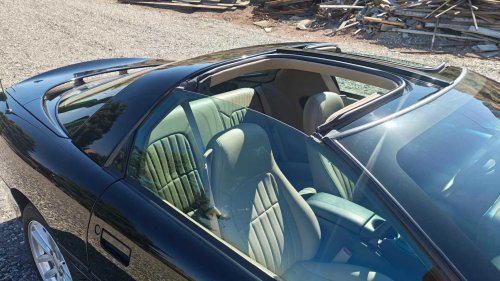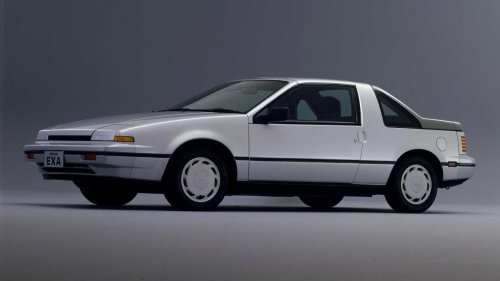
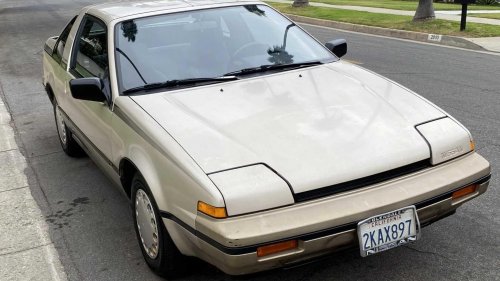
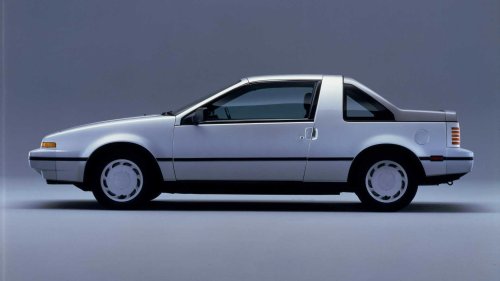
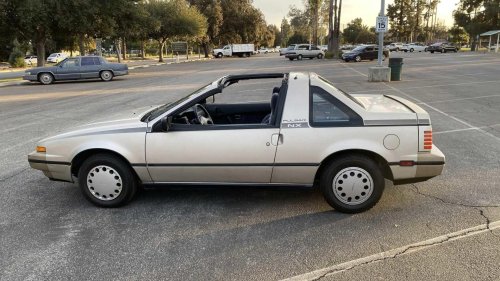
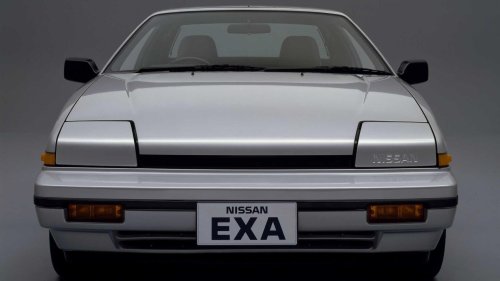
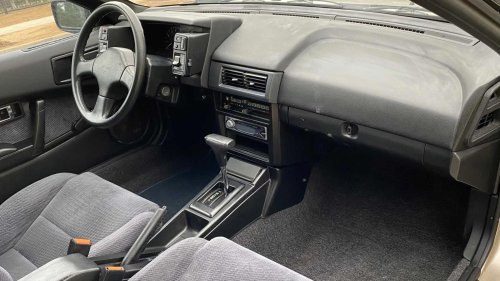
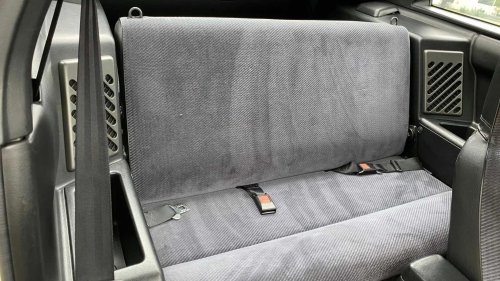
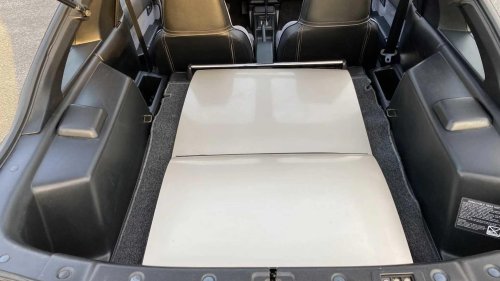
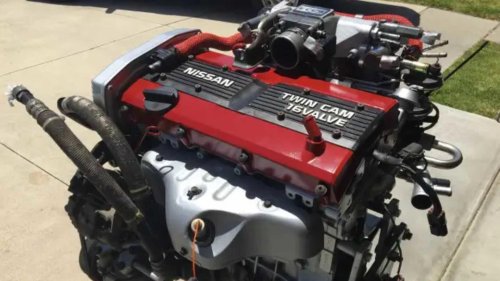
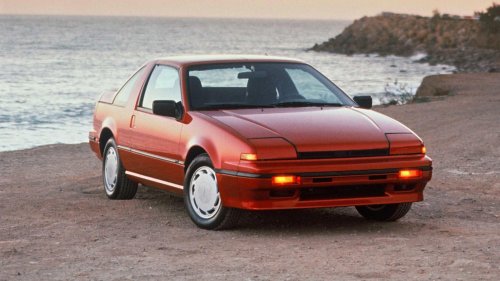
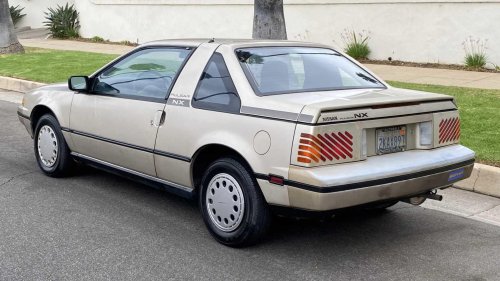



















For those of us who grew up in the '80s, cars like the Nissan Pulsar NX feel like the epitome of what that time represented: experimentation, pushing the boundaries of what is new and cool, and standing out (whether due to big hair and bright makeup, or crazy ideas about music and film).Some have called it the Swiss Army Knife of cars, while others say it's a chameleon - we prefer a more appropriate analogy for the era that sees the Pulsar NX as a little bit like a Transformer. It came with removable and interchangeable parts you could switch out in your driveway.This week, we're celebrating the 1980s on CarBuzz, from the wildest supercars to the coolest daily drivers. Take a trip back in time with us to then the colors were bright, the cars were loud, and EVs weren't even a dream yetNissan introduced the Pulsar nameplate in the '70s with various body styles and versions carrying the badge, including hatchbacks and sedans. But in 1986, the Japanese brand undertook a brave revamping of the Pulsar, using the time to experiment and do something a little different. The era was one of experimentation, with advancements in technology making personal computers accessible to Joe Everyman, for example, while movies about time-traveling cars were hitting it big in Hollywood.1986 Nissan EXA aka Pusar NX (4)The result was the world's first truly modular production car - a sporty coupe that you could turn into a targa-top convertible, a station wagon, and even a pickup truck of sorts. Marketed at the time as a "multiple convertible" in Japan under the EXA name, the Pulsar NX was sold in the USA between 1986 and 1990. But would that clever design prove to be its downfall?Used car values and availability are reflected accurately at the time of writing, and may vary depending on your location. Modular Car Or Design Marvel 1988-nissan-pulsar-nx-xe-bat-1The Pulsar NX was introduced at the Nissan Design International Show (later called Nissan Design America), where the brand consciously set out to develop a car with styling that would be "hypertrendy" and offer the benefits of various body styles to consumers. The '80s was a time of breaking new ground in fashion, music, and cinema (think Star Wars and Back to The Future) and on the technology front, personal computers, gaming and entertainment systems were blowing up in homes across America. Nintendo and the Sony Walkman spring to mind, so it stands to reason that Nissan wanted to make a bold move.Starting with the very wedge-shaped Pulsar that was already on the market, designers kept the pointed nose and steeply raked windshield, tweaked the rear side window angle (using the two-door Pathfinder of the time as a guide) and turned all of their attention - and creativity - to the rear end. Business In The Front, Party In The Back The hatchback is sharply notched, and courtesy of a unique roof design, can show off two distinct hatches: either the standard coupe liftback-style lid, or a bulging, squared off canopy - called the Sportbak - that turned the coupe into a station wagon/shooting brake. Opting for the fiberglass Sportbak cover naturally increases cargo capacity, turning your coupe into a much more practical hauler.1986 Nissan EXA aka Pusar NX (1)The main roof design is also unique: a T-bar structure supports two removable panels that can be taken off entirely, turning the Pulsar NX into a targa top convertible - and what's more '80s than that? Cars like the Ferrari 308 GTS and C4-generation Corvette sport similar removable roofs, which Nissan designers emulated in this mainstream coupe.With or without the roof panels, the rear hatch could also be removed completely, leaving the rear hatch open in a mini-pickup truck kind of way. Admittedly, the trunk isn't as deep or spacious as you'd get in a proper pickup, but it is unique, especially for that time period. Today there are convertible SUVs that can offer similar practicality, but you won't find this kind of versatility in any modern-day coupe or sedan. On the Pulsar NX, removing the hatch and roof panels proved to cause a few concerns with the car being street legal, so Nissan had to design a high-mounted brake light that only worked when the hatch was removed.1988-nissan-pulsar-nx-xe-bat-3The unique modular design allowing for all this customization wasn't the only interesting element on the exterior of the Pulsar NX, though, because it also came with something the era is much beloved for: pop-up headlights, and vinyl graphics along the side.The popups on the Pulsar NX are slightly hooded, but it works well to distinguish the little coupe from anything else of that time. At the back end are equally distinctive taillight designs - slatted cutouts over the lights scream '80s, creating a unique lighting signature you'd recognize anywhere.1986 Nissan EXA aka Pusar NX (6)And if the flush door handles with the vertical recesses for access look familiar, it's likely due to another Japanese car from that time - the Honda CRX, which had popularized that design a few years prior. '80s Interior - But With A Splash Of Class 1988-nissan-pulsar-nx-xe-bat-14Those of us who grew up in the '80s know all too well that the aesthetic of the time included bright colors (with neon preferable above all else), vibrant patterns, and layered textures, and cars of that vintage tended to follow suit with glossy surfaces inside and vivid color palettes. Who can forget the velour seats we used to draw patterns on?But continuing the theme of being different and hypertrendy, the Pulsar NX came with a clean, uncluttered cabin with close-grained matte-finish plastics, classy cloth inserts on the doors, sculpted armrests, and demure color schemes. The dashboard - a study in '80s instrument clusters - is your typical tachometer, speedometer, and control buttons for headlights and wipers, and not much else.Bring-A-Trailer The rear seat, really just a glorified parcel shelf, has barely enough room for kids, and is the most bench-like rear bench seat we've ever seen. In some models, this was covered in vinyl just to remind you of your grandma's plastic-covered couches.Test drives of the time reflect that the rear bench was, more often than not, folded out of the way to make more space for cargo in the back, or used to carry a duffel bag or two.Bring-A-Trailer Speaking of cargo space, if you wanted to targa your Pulsar NX, the two roof panels fit perfectly in the back. Unlike modern targas and convertibles that make all of the removing and storing easy, the Pulsar NX needs two people to unbolting and remove the hatchback - which, adorably, Nissan punted as something for couples to do together. Courteously, Nissan supplied a little tool kit for this date night activity. Under The Wedge-Shaped Hood The Pulsar NX came to the USA in two trims, the XE and the SE, with the base model represented by the Champagne Beige car in the images above. Mechanically, the Pulsar NX shared some similarities with the Nissan Sentra of the time: XE trims had a 1.6-liter four-cylinder as standard, making just 70 horsepower, while SE models offered a more potent 1.6-liter engine with 113 hp. In 1988, Nissan switched the latter to the CA18DE dual overhead cam 1.8-liter four-cylinder with fuel injection, a powertrain that was quite advanced for its time.Bring-A-Trailer Featuring a split-plenum intake manifold with an electronically controlled butterfly valve that opened to increase airflow above a certain rpm, the engine was able to boost low-end torque while keeping high-rpm power to redline. In all cases, power was fed to the front wheels through a standard five-speed manual gearbox, although three-speed automatics were available for the base model.Still, due to all the wizardry designers implemented for that multiway rear hatch, the Pulsar NX was heavy, and the result was a lethargic, ten-second-plus 0-60 time. For a sporty coupe, there seemed little performance to boast about, but that doesn't mean it wasn't a pleasant car to drive:"In the real world of blind hairpins, sweeping on-ramps, and putty-colored Cadillacs drifting aimlessly into your apex, it is a predictable if not exactly breathtaking performer. Its suspension is firm and well damped, and its steering wheel feeds you the right amount and quality of information from the road. The Pulsar lets you know that turning heads at the mall is not its only goal in life."- Car And Driver Test Drive, 1987 Nissan Pulsar NXThe engine options were relatively efficient, and being easy and fun to pilot made the Pulsar NX a good buy back then. If you were to find one for sale today, it would deliver a truly authentic, analog '80s experience. The Rarest Of The Rare Nissan The Pulsar NX was replaced in 1991 with the Nissan NX Coupe, a car that was aimed in just one direction (that of being a sports car) rather than trying to be unique and multi-purpose. While we can't deny we love the adventurous design of the Pulsar NX, it really existed as more of an experiment for the brand than any sort of sales success; Nissan's sales figures from the time suggest around 20,000 units were sold in the course of its lifespan, with sales peaking in 1987. The Sportbak hatch was very quietly swept away just two years after it was introduced, although the car itself pushed on for another three years.The Pulsar NX starting price recorded by test drives from the archives is said to be around $11,500 (although some sources suggest it was $1,000 less), which compares to around $35k by today's standards. There are precious few examples of this unique '80s experiment on the used car market today, with just three examples having been sold at auction since 2020. The Champagne Beige car in these images is one of those, and it's not in the best shape, with 56,000 miles on the clock; it sold for a little over $3,000. On the other end of the spectrum, a pristine, unmodified version with all the various roof and canopy bits and pieces was sold for over $20k just last year, likely to a collector who appreciates that Nissan was developing cars for a golden era, and nothing like the Pulsar NX existed then - or now. More Nissan Pulsar NX Images: 1988-nissan-pulsar-nx-xe-bat-25